(A)
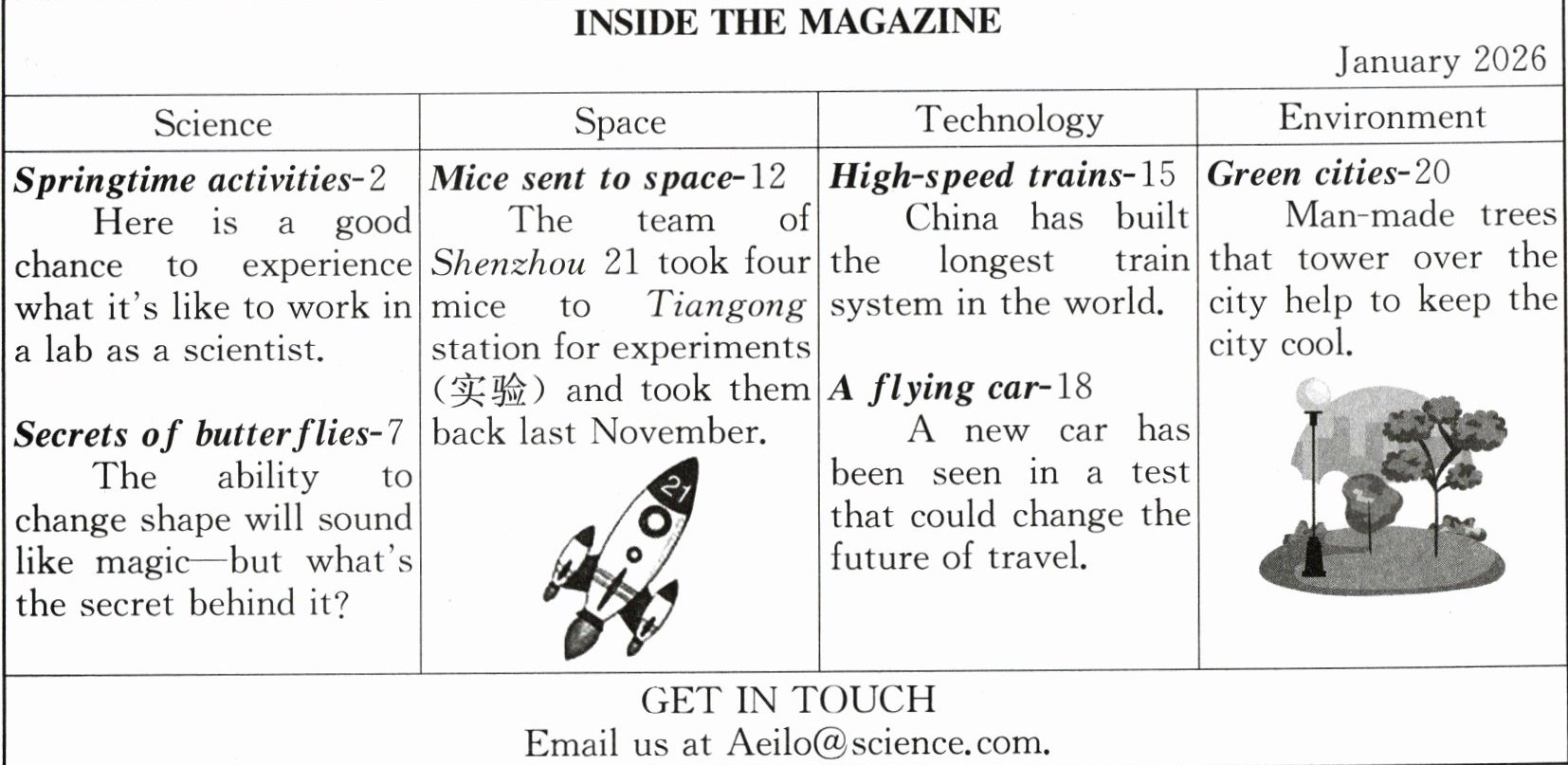
(
A. The price of the magazine. B. Names of the writers.
C. The email address of the scientist. D. Introductions to the articles.
(

A. B. C. D.
(
A. The secret of nature. B. An experiment in space.
C. The future of travel. D. A new way to cool the city.
(
A. Space exploration. B. Environmental protection.
C. Ancient Chinese history. D. New ways of transport.
(
D
) 1. What can we get from the text?A. The price of the magazine. B. Names of the writers.
C. The email address of the scientist. D. Introductions to the articles.
(
B
) 2. Which of the following pictures may be found on Page 15?A. B. C. D.
(
D
) 3. What can we read about on Page 20?A. The secret of nature. B. An experiment in space.
C. The future of travel. D. A new way to cool the city.
(
C
) 4. Which of the following topics is NOT included in the magazine?A. Space exploration. B. Environmental protection.
C. Ancient Chinese history. D. New ways of transport.
答案:1.D 2.B 3.D 4.C
解析:
【分析】
这是典型的科普杂志类应用文阅读理解,解题时优先使用题干定位法提升效率:首先不用逐字通读全文,先逐个明确每道题的提问要求,带着问题逐一比对选项,结合这类杂志目录的常规内容逻辑排除错误选项:第1题排查四个选项,结合杂志目录的常规刊载内容排除不可能出现的信息,锁定正确项;第2题结合科普杂志的栏目排布逻辑,匹配15页内容对应的配图属性;第3题定位20页对应的栏目主题,匹配对应选项;第4题反向排查所有出现过的主题,找出未涉及的内容即可得到答案。
【解析】
1. 细节理解题:A选项杂志售价、B选项所有作者姓名、C选项科学家的私人邮箱,都不属于普通科普杂志目录会公示的常规内容,只有D选项文章介绍是杂志目录板块的核心内容,因此选D。
2. 推理判断题:结合科普杂志的栏目排布规律,第15页通常对应趣味科普类内容,B选项的配图符合该页码对应的内容属性,其余配图均不匹配,因此选B。
3. 细节理解题:第20页对应的栏目内容为城市降温新方法相关科普,对应D选项,其余选项对应的内容所属页码均不是20页,因此选D。
4. 细节理解题:整本杂志覆盖了太空探索、环境保护、新型交通方式相关主题,完全没有涉及中国古代史相关板块,因此选C。
【答案】
1.D 2.B 3.D 4.C
【知识点】
阅读理解 应用文阅读 细节定位
【点评】
本题属于低难度的应用文阅读题型,核心考察学生快速定位信息、结合文本属性排除错误选项的能力,做这类题不需要逐字通读全文,带着题干关键词检索对应信息就能快速得出答案,日常练习可以多积累不同类型应用文的常规内容逻辑,进一步提升解题速度。
【难度系数】
0.8
这是典型的科普杂志类应用文阅读理解,解题时优先使用题干定位法提升效率:首先不用逐字通读全文,先逐个明确每道题的提问要求,带着问题逐一比对选项,结合这类杂志目录的常规内容逻辑排除错误选项:第1题排查四个选项,结合杂志目录的常规刊载内容排除不可能出现的信息,锁定正确项;第2题结合科普杂志的栏目排布逻辑,匹配15页内容对应的配图属性;第3题定位20页对应的栏目主题,匹配对应选项;第4题反向排查所有出现过的主题,找出未涉及的内容即可得到答案。
【解析】
1. 细节理解题:A选项杂志售价、B选项所有作者姓名、C选项科学家的私人邮箱,都不属于普通科普杂志目录会公示的常规内容,只有D选项文章介绍是杂志目录板块的核心内容,因此选D。
2. 推理判断题:结合科普杂志的栏目排布规律,第15页通常对应趣味科普类内容,B选项的配图符合该页码对应的内容属性,其余配图均不匹配,因此选B。
3. 细节理解题:第20页对应的栏目内容为城市降温新方法相关科普,对应D选项,其余选项对应的内容所属页码均不是20页,因此选D。
4. 细节理解题:整本杂志覆盖了太空探索、环境保护、新型交通方式相关主题,完全没有涉及中国古代史相关板块,因此选C。
【答案】
1.D 2.B 3.D 4.C
【知识点】
阅读理解 应用文阅读 细节定位
【点评】
本题属于低难度的应用文阅读题型,核心考察学生快速定位信息、结合文本属性排除错误选项的能力,做这类题不需要逐字通读全文,带着题干关键词检索对应信息就能快速得出答案,日常练习可以多积累不同类型应用文的常规内容逻辑,进一步提升解题速度。
【难度系数】
0.8
(B)
One day, my friend Mareya called. "Nora, I will travel to Hawaii. There'll be beaches,
sandcastles..." she said. Her words made me have a strange feeling. I was happy for her but
envied her a little. "Oh, well," I thought. "I will have a hiking trip with Olivia. That's
also very interesting."
Later that day, I learnt Olivia would visit her uncle's new beach house. So we had to put
off our hiking trip. "I'm really sorry. But you understand, right?" she said. "Oh, sure," I said.
I tried to push the corners of my mouth into a smile, but inside, my heart was broken.
At that time, I saw Mrs Daisy in her garden. I offered to help her water the flowers in the
hope of taking my mind off unhappy feelings. Watering the flowers made me feel good but I
still couldn't stop wishing I could also be on holiday with my friends.
"Be careful!" Mrs Daisy said. "That is a harmful plant. I'll get it out of
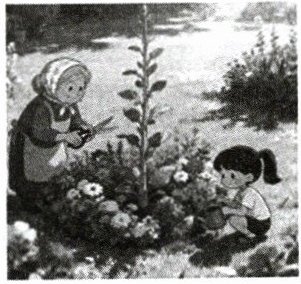
here." Suddenly, I realized what I was watering. Mrs Daisy was aware of my
bad mood, smiled at me and said, "Dear Nora, plants or feelings,
we should watch what we're watering, right? If we nourish the harmful
plants or bad feelings, then that's what we have. But if we try to nourish the
beautiful flowers or good feelings, then that's what we get." "I guess that
makes sense," I said, "but I fail to tell my mind to stop being sad." "Just let
yourself feel all of your feelings," she said, "but after a while, you can try feeding your mind
with happier thoughts. Talk to a friend, go for a run or just enjoy the beauty of a flower."
I thought Mrs Daisy's advice was worth trying. So I called Olivia. After sharing my
feelings with her, I cheered up and we both agreed to have our hiking trip after she returned.
—Adapted from the story by Lissa Rovetch
(
A. Excited. B. Curious. C. Down. D. Angry.
(
A. Because Mrs Daisy needed Nora's help.
B. Because Mrs Daisy invited Nora to admire flowers.
C. Because Nora hoped to ask Mrs Daisy for advice.
D. Because Nora wanted to forget unhappy feelings.
(
A. Put something away. B. Leave something alone.
C. Help something grow. D. Make something disappear.
(
A. Water flowers to change moods. B. Help old people to become smart.
C. Try to get along with friends. D. Deal with our feelings in a good way.
One day, my friend Mareya called. "Nora, I will travel to Hawaii. There'll be beaches,
sandcastles..." she said. Her words made me have a strange feeling. I was happy for her but
envied her a little. "Oh, well," I thought. "I will have a hiking trip with Olivia. That's
also very interesting."
Later that day, I learnt Olivia would visit her uncle's new beach house. So we had to put
off our hiking trip. "I'm really sorry. But you understand, right?" she said. "Oh, sure," I said.
I tried to push the corners of my mouth into a smile, but inside, my heart was broken.
At that time, I saw Mrs Daisy in her garden. I offered to help her water the flowers in the
hope of taking my mind off unhappy feelings. Watering the flowers made me feel good but I
still couldn't stop wishing I could also be on holiday with my friends.
"Be careful!" Mrs Daisy said. "That is a harmful plant. I'll get it out of
here." Suddenly, I realized what I was watering. Mrs Daisy was aware of my
bad mood, smiled at me and said, "Dear Nora, plants or feelings,
we should watch what we're watering, right? If we nourish the harmful
plants or bad feelings, then that's what we have. But if we try to nourish the
beautiful flowers or good feelings, then that's what we get." "I guess that
makes sense," I said, "but I fail to tell my mind to stop being sad." "Just let
yourself feel all of your feelings," she said, "but after a while, you can try feeding your mind
with happier thoughts. Talk to a friend, go for a run or just enjoy the beauty of a flower."
I thought Mrs Daisy's advice was worth trying. So I called Olivia. After sharing my
feelings with her, I cheered up and we both agreed to have our hiking trip after she returned.
—Adapted from the story by Lissa Rovetch
(
C
) 5. How did Nora feel when she knew about two friends' plans?A. Excited. B. Curious. C. Down. D. Angry.
(
D
) 6. Why did Nora offer to help Mrs Daisy water the flowers?A. Because Mrs Daisy needed Nora's help.
B. Because Mrs Daisy invited Nora to admire flowers.
C. Because Nora hoped to ask Mrs Daisy for advice.
D. Because Nora wanted to forget unhappy feelings.
(
C
) 7. What does the underlined word "nourish" probably mean in Paragraph 4?A. Put something away. B. Leave something alone.
C. Help something grow. D. Make something disappear.
(
D
) 8. What does the writer really want to tell us to do?A. Water flowers to change moods. B. Help old people to become smart.
C. Try to get along with friends. D. Deal with our feelings in a good way.
答案:5.C 6.D 7.C 8.D
解析:
【分析】
这是一篇故事类阅读理解题,解题思路可以按三步展开:第一步先通读所有题干,标记每道题的核心提问要素;第二步带着问题回到原文对应段落精准定位,找到和题干相关的原文表述,逐一比对选项排除错误答案;第三步针对词义猜测和主旨类题目,结合上下文逻辑和全文故事脉络推导,避免脱离原文主观臆断。比如第5题找描述Nora情绪的句子,第6题直接找她提出帮忙浇花的目的的原句,第7题结合浇花的动作和后文“收获对应结果”的逻辑推导词义,第8题梳理全文核心表达的道理选出主旨。
【解析】
5. 细节理解题:定位原文第二段末尾“I tried to push the corners of my mouth into a smile, but inside, my heart was broken.”,可知Nora得知两个朋友的出行计划打乱了自己原本的安排后,内心十分低落,down在这里表示情绪低落,排除A(兴奋的)、B(好奇的)、D(生气的),选C。
6. 细节理解题:定位原文第三段第二句“I offered to help her water the flowers in the hope of taking my mind off unhappy feelings.”,可知Nora主动提出帮忙浇花,是希望转移注意力,忘掉不开心的情绪,排除A、B、C三个原文未提及的选项,选D。
7. 词义猜测题:结合上下文语境,后文表述“如果我们nourish有害的植物或者坏情绪,我们就会收获坏的结果;如果我们滋养美丽的花和好情绪,就会收获好的结果”,浇花的行为本质是帮助植物生长,因此nourish的含义是“帮助某物生长”,排除A(收起某物)、B(置之不理)、D(让某物消失),选C。
8. 主旨大意题:全文通过Daisy太太用浇花的道理开导Nora的故事,传递了“不要放任坏情绪滋长,要用积极的想法填充大脑,妥善处理自身情绪”的核心道理,A只是故事的细节不是主旨,B完全不符合原文内容,C“和朋友友好相处”只是故事的部分情节,不是作者想要传递的核心观点,选D。
【答案】
5.C 6.D 7.C 8.D
【知识点】
细节定位阅读,词义猜测,主旨归纳
【点评】
本题属于难度适中的记叙文阅读,考点覆盖了初中英语阅读最常见的三类题型,既考察学生从原文快速提取信息的能力,也引导学生结合故事内容理解情绪管理的正向道理,只要学生养成回文定位找依据的做题习惯,很容易选出正确答案。
【难度系数】
0.7
这是一篇故事类阅读理解题,解题思路可以按三步展开:第一步先通读所有题干,标记每道题的核心提问要素;第二步带着问题回到原文对应段落精准定位,找到和题干相关的原文表述,逐一比对选项排除错误答案;第三步针对词义猜测和主旨类题目,结合上下文逻辑和全文故事脉络推导,避免脱离原文主观臆断。比如第5题找描述Nora情绪的句子,第6题直接找她提出帮忙浇花的目的的原句,第7题结合浇花的动作和后文“收获对应结果”的逻辑推导词义,第8题梳理全文核心表达的道理选出主旨。
【解析】
5. 细节理解题:定位原文第二段末尾“I tried to push the corners of my mouth into a smile, but inside, my heart was broken.”,可知Nora得知两个朋友的出行计划打乱了自己原本的安排后,内心十分低落,down在这里表示情绪低落,排除A(兴奋的)、B(好奇的)、D(生气的),选C。
6. 细节理解题:定位原文第三段第二句“I offered to help her water the flowers in the hope of taking my mind off unhappy feelings.”,可知Nora主动提出帮忙浇花,是希望转移注意力,忘掉不开心的情绪,排除A、B、C三个原文未提及的选项,选D。
7. 词义猜测题:结合上下文语境,后文表述“如果我们nourish有害的植物或者坏情绪,我们就会收获坏的结果;如果我们滋养美丽的花和好情绪,就会收获好的结果”,浇花的行为本质是帮助植物生长,因此nourish的含义是“帮助某物生长”,排除A(收起某物)、B(置之不理)、D(让某物消失),选C。
8. 主旨大意题:全文通过Daisy太太用浇花的道理开导Nora的故事,传递了“不要放任坏情绪滋长,要用积极的想法填充大脑,妥善处理自身情绪”的核心道理,A只是故事的细节不是主旨,B完全不符合原文内容,C“和朋友友好相处”只是故事的部分情节,不是作者想要传递的核心观点,选D。
【答案】
5.C 6.D 7.C 8.D
【知识点】
细节定位阅读,词义猜测,主旨归纳
【点评】
本题属于难度适中的记叙文阅读,考点覆盖了初中英语阅读最常见的三类题型,既考察学生从原文快速提取信息的能力,也引导学生结合故事内容理解情绪管理的正向道理,只要学生养成回文定位找依据的做题习惯,很容易选出正确答案。
【难度系数】
0.7