[2026 南通期末改编]At St. John's Church of England Primary School in
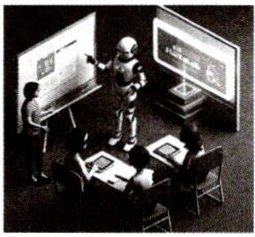
Wigan, Year 8 students were busy with a science class yesterday. When the science teacher was explaining the 1.
This school is one of the first to guide the use of AI in the classroom in history. The system analyzes(分析) each 3.
For students, they can express their feelings about the lessons with an emoji button(表情按钮). If a boy clicked a frustrated(沮丧的) emoji, the AI could find it 6.
With the new system, they can also learn by 7.
While you might think the children are glued to their screens all day, Laura James, the principal, explained that this was not true. The children still write in workbooks as 9.
Wigan, Year 8 students were busy with a science class yesterday. When the science teacher was explaining the 1.
importance
( important ) of vitamins for body protection, some students were listening carefully and taking notes, while others 2. were inventing
(invent) a simple AI quiz game about how our bodies work at that time. Each student used a tablet, following some easy lessons made by AI.This school is one of the first to guide the use of AI in the classroom in history. The system analyzes(分析) each 3.
child's
(child) work and points out where they need to improve. With detailed reports from the AI, teachers can adjust (调整) their teaching methods 4. to develop
(develop) a better learning plan for every student in time. Parents can check these plans and progress reports through the online system. In this way, both teachers and parents could 5. easily
(easy) see how every student is doing in each subject.For students, they can express their feelings about the lessons with an emoji button(表情按钮). If a boy clicked a frustrated(沮丧的) emoji, the AI could find it 6.
impossible
(possible) for him to follow, so it immediately adjusted the lesson.With the new system, they can also learn by 7.
themselves
(they) anytime, anywhere instead of waiting for the teacher. Holly Graham, a Grade 8 student, said, "I used to give up when I 8. met
(meet) hard math problems, but now I can try to work them out."While you might think the children are glued to their screens all day, Laura James, the principal, explained that this was not true. The children still write in workbooks as 9.
carefully
(care) as before. "It sounds fantastic," she says. "And for teachers, AI means 10. less tiring
(tire) marking work and shorter lesson preparation time—and more time to help the children with their weak subjects."答案:D 1. importance 2. were inventing 3. child's 4. to develop
5. easily 6. impossible 7. themselves 8. met 9. carefully
10. less tiring
5. easily 6. impossible 7. themselves 8. met 9. carefully
10. less tiring
解析:
【分析】
本题为用所给词的适当形式填空,需结合句子结构、时态要求、词性变化规则及语境逻辑确定答案。解题时,先分析空格在句中的成分,判断所需词性;再结合时态标志词、固定搭配、语境含义等,对所给词进行合理变形。
【解析】
1. 空格前有定冠词the,后需接名词,故将形容词important转换为名词importance,意为“重要性”。
2. 由句中“at that time”及while连接的并列结构(前半句用过去进行时),可知此处用过去进行时,主语是others,故填were inventing。
3. 空格后是名词work,需用名词所有格修饰,child的所有格为child's,意为“孩子的”。
4. 此处表目的,用不定式作目的状语,故填to develop,表“来制定”。
5. 空格处修饰动词see,需用副词,形容词easy的副词形式是easily,意为“容易地”。
6. 根据语境,点击沮丧的表情说明AI发现他可能跟不上,故填possible的反义词impossible,意为“不可能的”。
7. 固定搭配learn by oneself,主语是they,反身代词用themselves,意为“独自”。
8. 主句是一般过去时,从句对应用一般过去时,meet的过去式是met。
9. 空格处修饰动词write,需用副词,care的副词形式是carefully,意为“仔细地”。
10. 此处修饰名词短语marking work,结合语境“更少累人的批改工作”,用tiring的比较级less tiring,意为“更少累人的”。
【答案】
1. importance 2. were inventing 3. child's 4. to develop 5. easily 6. impossible 7. themselves 8. met 9. carefully 10. less tiring
【知识点】
词性转换、时态运用、名词所有格
【点评】
本题考查初中英语基础语法的综合应用,涵盖词性变形、时态、所有格等核心知识点,需结合语境灵活判断变形方向,是初中英语的常见题型,侧重基础能力的考查。
【难度系数】
0.5
本题为用所给词的适当形式填空,需结合句子结构、时态要求、词性变化规则及语境逻辑确定答案。解题时,先分析空格在句中的成分,判断所需词性;再结合时态标志词、固定搭配、语境含义等,对所给词进行合理变形。
【解析】
1. 空格前有定冠词the,后需接名词,故将形容词important转换为名词importance,意为“重要性”。
2. 由句中“at that time”及while连接的并列结构(前半句用过去进行时),可知此处用过去进行时,主语是others,故填were inventing。
3. 空格后是名词work,需用名词所有格修饰,child的所有格为child's,意为“孩子的”。
4. 此处表目的,用不定式作目的状语,故填to develop,表“来制定”。
5. 空格处修饰动词see,需用副词,形容词easy的副词形式是easily,意为“容易地”。
6. 根据语境,点击沮丧的表情说明AI发现他可能跟不上,故填possible的反义词impossible,意为“不可能的”。
7. 固定搭配learn by oneself,主语是they,反身代词用themselves,意为“独自”。
8. 主句是一般过去时,从句对应用一般过去时,meet的过去式是met。
9. 空格处修饰动词write,需用副词,care的副词形式是carefully,意为“仔细地”。
10. 此处修饰名词短语marking work,结合语境“更少累人的批改工作”,用tiring的比较级less tiring,意为“更少累人的”。
【答案】
1. importance 2. were inventing 3. child's 4. to develop 5. easily 6. impossible 7. themselves 8. met 9. carefully 10. less tiring
【知识点】
词性转换、时态运用、名词所有格
【点评】
本题考查初中英语基础语法的综合应用,涵盖词性变形、时态、所有格等核心知识点,需结合语境灵活判断变形方向,是初中英语的常见题型,侧重基础能力的考查。
【难度系数】
0.5