四、将括号内的内容连词成句,完成对话。
A: 1.
B: Yes. 2.
A: It's 15 yuan.
B: 15 yuan? That's a little expensive. 4.
A: That one is 12 yuan.
B: Hmm ... I only have 10 yuan with me. 5.
A: (Thinks for a moment) OK! Because you're my classmate. Here you go.
B: Thank you! My sister will love it.
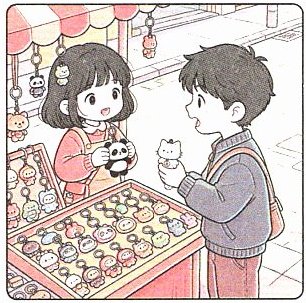
A: 1.
Can I help you
(help, I, you, can)?B: Yes. 2.
I'd like to buy a gift for my sister
(to, sister, my, I'd, like, buy, a, for, gift). These keychains look nice! 3. How much is the panda one
(is, one, panda, how much, the)?A: It's 15 yuan.
B: 15 yuan? That's a little expensive. 4.
What about the white cat keychain
(white, what about, cat, the, keychain)?A: That one is 12 yuan.
B: Hmm ... I only have 10 yuan with me. 5.
Can I have the keychain for 10 yuan
(for, I, can, have, the, 10 yuan, keychain)?A: (Thinks for a moment) OK! Because you're my classmate. Here you go.
B: Thank you! My sister will love it.
答案:1. Can I help you 2. I'd like to buy a gift for my sister 3. How much is the panda one 4. What about the white cat keychain
5. Can I have the keychain for 10 yuan
5. Can I have the keychain for 10 yuan
解析:
【分析】
本题是购物场景下的连词成句题,需结合日常购物交际用语的固定表达,以及句子标点判断句型类型,再将括号内单词按语法和句意排列。第一步,根据标点确定是疑问句还是陈述句;第二步,回忆购物常用固定搭配,如“Can I help you?”“I'd like to...”等;第三步,调整单词顺序,注意修饰词位置,确保句子通顺符合语境。
【解析】
1. 括号内单词为help、I、you、can,标点是问号,购物服务用语固定为“Can I help you?”,故组合为Can I help you。
2. 括号内单词为to、sister、my、I'd、like、buy、a、for、gift,标点是句号,固定搭配“I'd like to do sth”“buy sth for sb”,故组合为I'd like to buy a gift for my sister。
3. 括号内单词为is、one、panda、how much,标点是问号,询问价格用“How much is...”,故组合为How much is the panda one。
4. 括号内单词为white、what about、cat、the、keychain,标点是问号,“What about...”为固定表达,修饰“the white cat keychain”,故组合为What about the white cat keychain。
5. 括号内单词为for、I、can、have、the、10 yuan、keychain,标点是问号,“Can I have...for...”表示用多少钱买某物,故组合为Can I have the keychain for 10 yuan。
【答案】
1. Can I help you 2. I'd like to buy a gift for my sister 3. How much is the panda one 4. What about the white cat keychain 5. Can I have the keychain for 10 yuan
【知识点】
连词成句,日常交际用语
【点评】
本题结合购物场景,考查日常交际用语的运用与连词成句能力,需掌握购物相关固定句型,难度适中。
【难度系数】
0.5
本题是购物场景下的连词成句题,需结合日常购物交际用语的固定表达,以及句子标点判断句型类型,再将括号内单词按语法和句意排列。第一步,根据标点确定是疑问句还是陈述句;第二步,回忆购物常用固定搭配,如“Can I help you?”“I'd like to...”等;第三步,调整单词顺序,注意修饰词位置,确保句子通顺符合语境。
【解析】
1. 括号内单词为help、I、you、can,标点是问号,购物服务用语固定为“Can I help you?”,故组合为Can I help you。
2. 括号内单词为to、sister、my、I'd、like、buy、a、for、gift,标点是句号,固定搭配“I'd like to do sth”“buy sth for sb”,故组合为I'd like to buy a gift for my sister。
3. 括号内单词为is、one、panda、how much,标点是问号,询问价格用“How much is...”,故组合为How much is the panda one。
4. 括号内单词为white、what about、cat、the、keychain,标点是问号,“What about...”为固定表达,修饰“the white cat keychain”,故组合为What about the white cat keychain。
5. 括号内单词为for、I、can、have、the、10 yuan、keychain,标点是问号,“Can I have...for...”表示用多少钱买某物,故组合为Can I have the keychain for 10 yuan。
【答案】
1. Can I help you 2. I'd like to buy a gift for my sister 3. How much is the panda one 4. What about the white cat keychain 5. Can I have the keychain for 10 yuan
【知识点】
连词成句,日常交际用语
【点评】
本题结合购物场景,考查日常交际用语的运用与连词成句能力,需掌握购物相关固定句型,难度适中。
【难度系数】
0.5
五、新素养 自我管理 阅读短文,选择正确的答案。
When we think about what we need to buy, we have to plan carefully. Each month, we should think about the money we have. We can decide how to use money for our needs and wants. Needs are things we must have to live. Clothing, food and water are needs. Wants are things we want to have, but not necessary(必需的). We can estimate(估计) how much money we will need for groceries(食品杂货) and other needs. And we can put aside(存储) some money for savings. Sometimes, we should give up what we want. A good shopper will make smart choices so they can buy the best food at the lowest(最低的) price. Sometimes there isn't so much money, and it is the job of every shopper to think carefully about what they are going to buy.
(
A. plans B. needs C. wants
(
A. wear B. eat and drink C. want
(
A. the only things we like B. the basics of life C. not important for living
(
A. they can buy what they want B. money can make people happy C. sometimes money is limited(有限的)
When we think about what we need to buy, we have to plan carefully. Each month, we should think about the money we have. We can decide how to use money for our needs and wants. Needs are things we must have to live. Clothing, food and water are needs. Wants are things we want to have, but not necessary(必需的). We can estimate(估计) how much money we will need for groceries(食品杂货) and other needs. And we can put aside(存储) some money for savings. Sometimes, we should give up what we want. A good shopper will make smart choices so they can buy the best food at the lowest(最低的) price. Sometimes there isn't so much money, and it is the job of every shopper to think carefully about what they are going to buy.
(
A
)1. People should make careful A
about what to buy.A. plans B. needs C. wants
(
C
)2. To save money, people sometimes can't buy things that they C
.A. wear B. eat and drink C. want
(
B
)3. Needs are different from wants because needs are B
.A. the only things we like B. the basics of life C. not important for living
(
C
)4. People plan how to spend money carefully because C
.A. they can buy what they want B. money can make people happy C. sometimes money is limited(有限的)
答案:1. A 2. C 3. B 4. C
解析:
【分析】这是一道英语阅读理解选择题,解题思路为:先通读短文,把握短文核心内容(消费规划、区分生活必需品与非必需欲望、合理理财),再针对每道题目定位原文对应语句,分析选项与原文的匹配度,从而选出正确答案。
【解析】
1. 定位原文第一句“When we think about what we need to buy, we have to plan carefully.”,可知人们应仔细规划购买的东西,对应选项A。
2. 定位原文“Sometimes, we should give up what we want.”,可知为省钱有时不能买自己想要的东西,对应选项C。
3. 定位原文“Needs are things we must have to live. Clothing, food and water are needs.”,可知needs是生活的基础,对应选项B。
4. 定位原文最后“Sometimes there isn't so much money, and it is the job of every shopper to think carefully about what they are going to buy.”,可知因钱有限需仔细规划,对应选项C。
【答案】1.A 2.C 3.B 4.C
【知识点】英语阅读理解、细节理解
【点评】本题围绕消费规划主题,考查学生对短文细节的查找与理解能力,难度适中,只要认真阅读原文即可轻松作答。
【难度系数】0.8
【解析】
1. 定位原文第一句“When we think about what we need to buy, we have to plan carefully.”,可知人们应仔细规划购买的东西,对应选项A。
2. 定位原文“Sometimes, we should give up what we want.”,可知为省钱有时不能买自己想要的东西,对应选项C。
3. 定位原文“Needs are things we must have to live. Clothing, food and water are needs.”,可知needs是生活的基础,对应选项B。
4. 定位原文最后“Sometimes there isn't so much money, and it is the job of every shopper to think carefully about what they are going to buy.”,可知因钱有限需仔细规划,对应选项C。
【答案】1.A 2.C 3.B 4.C
【知识点】英语阅读理解、细节理解
【点评】本题围绕消费规划主题,考查学生对短文细节的查找与理解能力,难度适中,只要认真阅读原文即可轻松作答。
【难度系数】0.8