重难点二 动词过去式的不规则变化
解析 常见的动词过去式的不规则变化有:
不规则变化的方式 示例 不规则变化的方式 示例
元音字母i改为a/o sing—sang,drive—drove ell改为old sell—sold,tell—told
元音字母o/u改为a become—became,run—ran an改为oo stand—stood,understand—understood
元音字母e改为o get—got,forget—forgot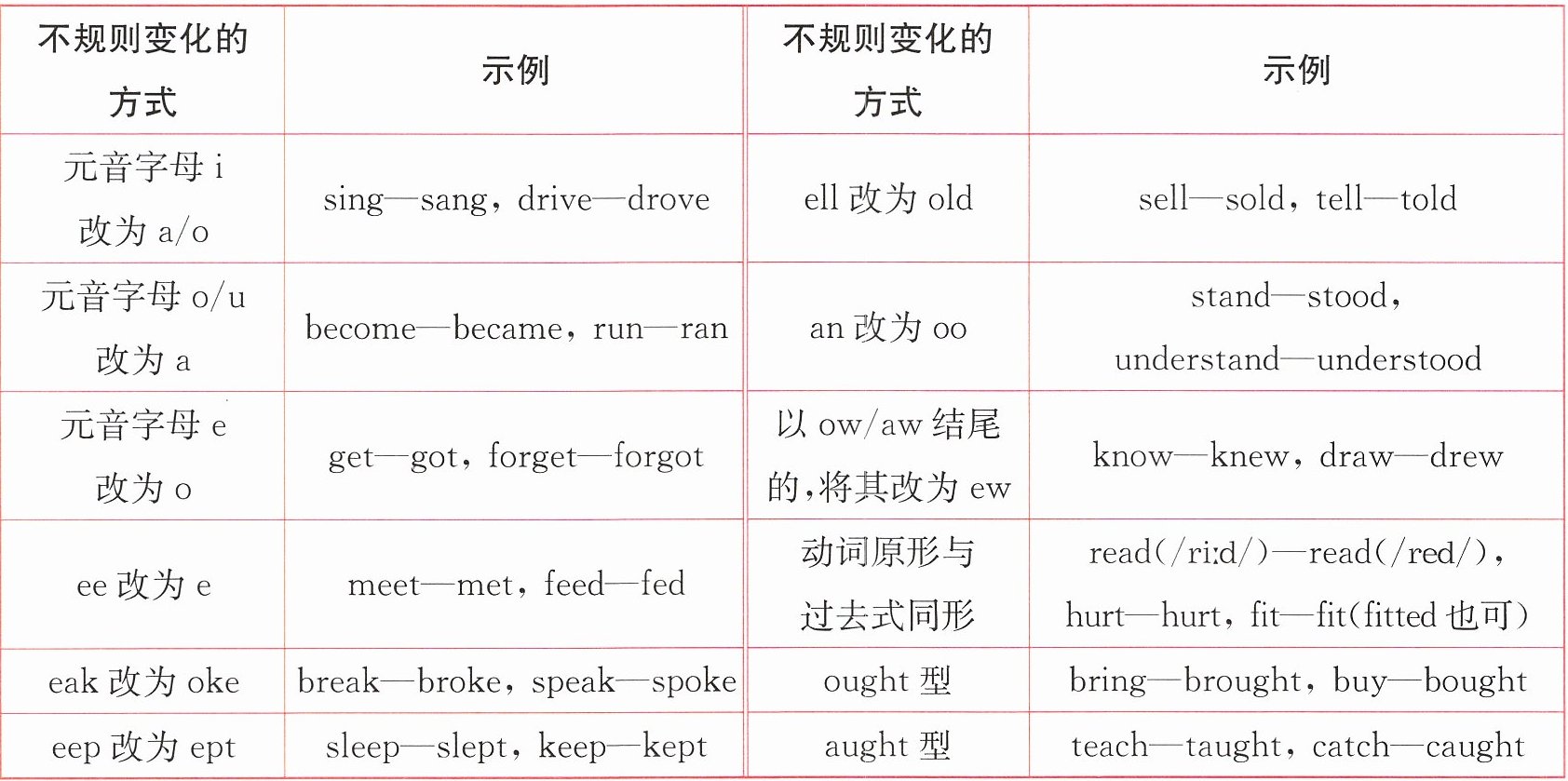 know—knew,draw—drew
ee改为e meet—met,feed—fed 动词原形与过去式同形 read(/riːd/)—read(/red/),hurt—hurt,fit—fit(fitted也可)
eak改为oke break—broke,speak—spoke ought型 bring—brought,buy—bought
eep改为ept sleep—slept,keep—kept aught型 teach—taught,catch—caught
[典例剖析] 用所给词的适当形式填空。
1. Everyone danced and (sing) happily at her birthday party.
2. The next day, Mr Smith (go) out and never came back.
点拨 第1小题,and连接的前后两个动词在时态上要保持一致,由danced可知,sing要用其过去式sang,故填sang。第2小题,由The next day和came可知,此句的时态是一般过去时,谓语动词go要用其过去式went,故填went。
[反馈练习] 写出括号内动词的过去式,并给下列句子排序,使之成为一个完整的故事。
()He (go) to the field every day to see the seedlings(秧苗). He wished that the seedlings in his field could grow quickly.
( 1 )Long ago, there (be) a farmer. He planted a lot of rice in his field.
()He (think) about this day and night, but the seedlings still (grow) slowly. “I have to find a way to help them grow fast,” he (say).
()One day, he (have) an idea and (run) to the field. He pulled(拔) his seedlings up one by one.
()His son (hear) about this and ran to the field. However, all the seedlings (die).
()He was tired after doing this for a whole day. But he (feel) very happy because he thought the seedlings would grow a lot.
解析 常见的动词过去式的不规则变化有:
不规则变化的方式 示例 不规则变化的方式 示例
元音字母i改为a/o sing—sang,drive—drove ell改为old sell—sold,tell—told
元音字母o/u改为a become—became,run—ran an改为oo stand—stood,understand—understood
元音字母e改为o get—got,forget—forgot
know—knew,draw—drewee改为e meet—met,feed—fed 动词原形与过去式同形 read(/riːd/)—read(/red/),hurt—hurt,fit—fit(fitted也可)
eak改为oke break—broke,speak—spoke ought型 bring—brought,buy—bought
eep改为ept sleep—slept,keep—kept aught型 teach—taught,catch—caught
[典例剖析] 用所给词的适当形式填空。
1. Everyone danced and (sing) happily at her birthday party.
2. The next day, Mr Smith (go) out and never came back.
点拨 第1小题,and连接的前后两个动词在时态上要保持一致,由danced可知,sing要用其过去式sang,故填sang。第2小题,由The next day和came可知,此句的时态是一般过去时,谓语动词go要用其过去式went,故填went。
[反馈练习] 写出括号内动词的过去式,并给下列句子排序,使之成为一个完整的故事。
()He (go) to the field every day to see the seedlings(秧苗). He wished that the seedlings in his field could grow quickly.
( 1 )Long ago, there (be) a farmer. He planted a lot of rice in his field.
()He (think) about this day and night, but the seedlings still (grow) slowly. “I have to find a way to help them grow fast,” he (say).
()One day, he (have) an idea and (run) to the field. He pulled(拔) his seedlings up one by one.
()His son (hear) about this and ran to the field. However, all the seedlings (die).
()He was tired after doing this for a whole day. But he (feel) very happy because he thought the seedlings would grow a lot.
答案:went, was, thought, grew, said, had, ran, heard, died, felt
排序:2 1 3 4 6 5
排序:2 1 3 4 6 5
解析:
【分析】
本题考查一般过去时中动词过去式的不规则变化,需先确定所有句子描述过去发生的故事,时态为一般过去时,因此要将括号内的动词变为对应的过去式;再结合故事的逻辑顺序对句子排序。第一步,逐个分析括号内动词的过去式:go的过去式是went,be动词(主语为单数)的过去式是was,think的过去式是thought,grow的过去式是grew,say的过去式是said,have的过去式是had,run的过去式是ran,hear的过去式是heard,die的过去式是died,feel的过去式是felt。第二步,梳理故事逻辑:先介绍很久以前有个农民(对应序号1),接着说他每天去田里看秧苗(对应序号2),然后他日夜想办法(对应序号3),之后有一天他想到办法去拔秧(对应序号4),然后他儿子听说了这件事(对应序号6),最后他累但开心(对应序号5),据此确定句子排序。
【解析】
1. 确定时态:所有句子讲述过去发生的故事,均使用一般过去时,括号内动词需转换为过去式:
go的过去式为went;
there be句型中主语a farmer是单数,be动词过去式为was;
think的过去式为thought;
grow的过去式为grew;
say的过去式为said;
have的过去式为had;
run的过去式为ran;
hear的过去式为heard;
die的过去式为died;
feel的过去式为felt。
2. 故事逻辑排序:按照“介绍农民→农民日常看秧苗→农民想办法→农民拔秧→儿子发现→农民累但开心”的顺序,句子排序为2 1 3 4 6 5。
【答案】
went, was, thought, grew, said, had, ran, heard, died, felt;排序:2 1 3 4 6 5
【知识点】
动词过去式不规则变化;一般过去时
【点评】
本题结合故事语境考查动词过去式的不规则变化,既需要学生掌握常见不规则动词的过去式,又要理解故事逻辑完成排序,是对基础知识的综合运用。
【难度系数】
0.5
本题考查一般过去时中动词过去式的不规则变化,需先确定所有句子描述过去发生的故事,时态为一般过去时,因此要将括号内的动词变为对应的过去式;再结合故事的逻辑顺序对句子排序。第一步,逐个分析括号内动词的过去式:go的过去式是went,be动词(主语为单数)的过去式是was,think的过去式是thought,grow的过去式是grew,say的过去式是said,have的过去式是had,run的过去式是ran,hear的过去式是heard,die的过去式是died,feel的过去式是felt。第二步,梳理故事逻辑:先介绍很久以前有个农民(对应序号1),接着说他每天去田里看秧苗(对应序号2),然后他日夜想办法(对应序号3),之后有一天他想到办法去拔秧(对应序号4),然后他儿子听说了这件事(对应序号6),最后他累但开心(对应序号5),据此确定句子排序。
【解析】
1. 确定时态:所有句子讲述过去发生的故事,均使用一般过去时,括号内动词需转换为过去式:
go的过去式为went;
there be句型中主语a farmer是单数,be动词过去式为was;
think的过去式为thought;
grow的过去式为grew;
say的过去式为said;
have的过去式为had;
run的过去式为ran;
hear的过去式为heard;
die的过去式为died;
feel的过去式为felt。
2. 故事逻辑排序:按照“介绍农民→农民日常看秧苗→农民想办法→农民拔秧→儿子发现→农民累但开心”的顺序,句子排序为2 1 3 4 6 5。
【答案】
went, was, thought, grew, said, had, ran, heard, died, felt;排序:2 1 3 4 6 5
【知识点】
动词过去式不规则变化;一般过去时
【点评】
本题结合故事语境考查动词过去式的不规则变化,既需要学生掌握常见不规则动词的过去式,又要理解故事逻辑完成排序,是对基础知识的综合运用。
【难度系数】
0.5