B
「2026 浙江杭州拱墅期末」
①This month, the charity Parentkind made a survey among about 6,000 UK parents and found that fewer than half of children under the age of 15 help with chores. The most common chore that children usually do is tidying their bedrooms. Then come making their beds, cleaning around the home and doing the dishes.
②Yet Jason Elsom, the head of Parentkind, believes that children benefit from doing certain housework. “Chores are the first lessons in teamwork, responsibility and self-reliance,” he said. Helping out around the house teaches children important life skills. It will help make them feel more independent and confident when they’re older.
③Besides, looking after a home should be a team effort. Adults already have lots to do, so children should help them out. Moreover, doing chores together can be fun, especially if they make a game out of it. It also shows children’s care for other people.
④However, some people argue that children already have lots of other things they need to do, such as homework, activities and clubs. Doing chores on top of all that could make them feel stressed and tired. And free time is for relaxing, playing, exploring and hanging out with friends, not for doing boring housework. Besides, children might not know how to do the housework as well as adults. It could take them a long time to do it, or they might not do it properly. Some adults might have to do some of the tasks, which would take twice as long. It would just be easier and quicker for the adults to do it themselves instead.
⑤What do you think? Should children help around the home?
(
A. Making their beds.
B. Cleaning around the home.
C. Doing the dishes.
D. Tidying their bedrooms.
(
A. Doing chores.
B. Playing games.
C. Children’s care.
D. Having lessons.
(
A. Benefits of doing chores.
B. Advice on how to do chores.
C. Reasons for not doing chores.
D. Examples of meaningful chores.
(
C
「2026 浙江杭州拱墅期末」
①This month, the charity Parentkind made a survey among about 6,000 UK parents and found that fewer than half of children under the age of 15 help with chores. The most common chore that children usually do is tidying their bedrooms. Then come making their beds, cleaning around the home and doing the dishes.
②Yet Jason Elsom, the head of Parentkind, believes that children benefit from doing certain housework. “Chores are the first lessons in teamwork, responsibility and self-reliance,” he said. Helping out around the house teaches children important life skills. It will help make them feel more independent and confident when they’re older.
③Besides, looking after a home should be a team effort. Adults already have lots to do, so children should help them out. Moreover, doing chores together can be fun, especially if they make a game out of it. It also shows children’s care for other people.
④However, some people argue that children already have lots of other things they need to do, such as homework, activities and clubs. Doing chores on top of all that could make them feel stressed and tired. And free time is for relaxing, playing, exploring and hanging out with friends, not for doing boring housework. Besides, children might not know how to do the housework as well as adults. It could take them a long time to do it, or they might not do it properly. Some adults might have to do some of the tasks, which would take twice as long. It would just be easier and quicker for the adults to do it themselves instead.
⑤What do you think? Should children help around the home?
(
D
)44. According to the survey, what’s the most common chore children do?A. Making their beds.
B. Cleaning around the home.
C. Doing the dishes.
D. Tidying their bedrooms.
(
A
)45. 特色 考法 代词指代题 What does the underlined word “It” in Paragraph 3 refer to?A. Doing chores.
B. Playing games.
C. Children’s care.
D. Having lessons.
(
C
)46. 特色 考法 段落大意题 What does Paragraph 4 mainly talk about?A. Benefits of doing chores.
B. Advice on how to do chores.
C. Reasons for not doing chores.
D. Examples of meaningful chores.
(
B
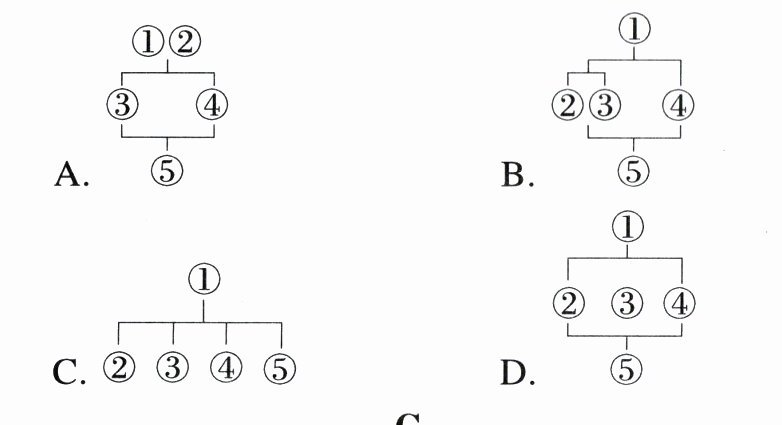
)47. 特色 考法 文章结构题 What’s the structure of this text?C
答案:B
[语篇解读] 本文主要探讨了孩子是否应帮忙做家务,呈现了支持和反对两种观点。
44.D 细节理解题。根据第一段中的“The most common chore that children usually do is tidying their bedrooms.”可知,调查显示孩子最常做的家务是整理卧室。故选D。
45.A 代词指代题。根据第三段中的“Moreover, doing chores together can be fun, especially if they make a game out of it. It also shows…”可知,“It”指代上文提到的“doing chores”。故选A。
46.C 段落大意题。根据第四段中的“some people argue that children already have lots of other things they need to do”可知,第四段主要介绍了反对孩子做家务的理由。故选C。
47.B 文章结构题。通读全文可知,第①段用调查引出孩子做家务的现状,第②③段介绍做家务的好处,第④段介绍反对孩子做家务的理由,第⑤段提问引发思考。故选B。
[语篇解读] 本文主要探讨了孩子是否应帮忙做家务,呈现了支持和反对两种观点。
44.D 细节理解题。根据第一段中的“The most common chore that children usually do is tidying their bedrooms.”可知,调查显示孩子最常做的家务是整理卧室。故选D。
45.A 代词指代题。根据第三段中的“Moreover, doing chores together can be fun, especially if they make a game out of it. It also shows…”可知,“It”指代上文提到的“doing chores”。故选A。
46.C 段落大意题。根据第四段中的“some people argue that children already have lots of other things they need to do”可知,第四段主要介绍了反对孩子做家务的理由。故选C。
47.B 文章结构题。通读全文可知,第①段用调查引出孩子做家务的现状,第②③段介绍做家务的好处,第④段介绍反对孩子做家务的理由,第⑤段提问引发思考。故选B。