1. 选择与句子或对话内容相符的图片。
A.
D.() (1) We watch a lion dance on Chinese New Year’s Day.
() (2) We eat mooncakes at the Mid-Autumn Festival.
() (3) —It’s the Double Ninth Festival today.
—Yes. I’m making Chongyang cakes!
() (4) —What do you know about the Lantern Festival?
—People usually enjoy the lantern show in the park.
A.
D.() (1) We watch a lion dance on Chinese New Year’s Day.
() (2) We eat mooncakes at the Mid-Autumn Festival.
() (3) —It’s the Double Ninth Festival today.
—Yes. I’m making Chongyang cakes!
() (4) —What do you know about the Lantern Festival?
—People usually enjoy the lantern show in the park.
答案:(1)B (2)D (3)A (4)C
解析:
(1) 句子描述春节看舞狮,匹配图B的舞狮画面。
(2) 句子描述中秋节吃月饼,匹配图D的月饼画面。
(3) 对话描述重阳节制作重阳糕,匹配图A的重阳糕画面。
(4) 对话描述元宵节赏灯,匹配图C的灯笼、汤圆的元宵节相关画面。
(2) 句子描述中秋节吃月饼,匹配图D的月饼画面。
(3) 对话描述重阳节制作重阳糕,匹配图A的重阳糕画面。
(4) 对话描述元宵节赏灯,匹配图C的灯笼、汤圆的元宵节相关画面。
2. 根据图片和上下文提示填空。
(1)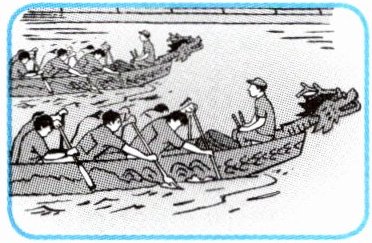
It’s the .
This festival is in or .
People zongzi .
(2)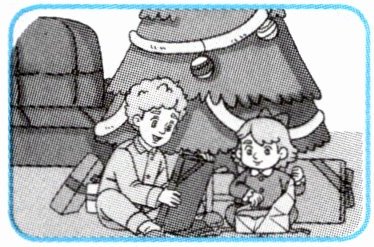
Mike and Helen always get up early on .
They want to their gifts.
(3)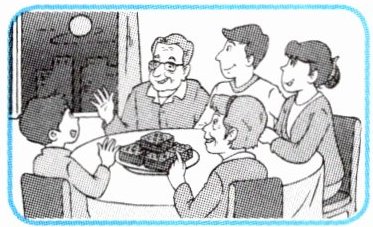
The Festival is in or . We always have a big dinner home.
(1)
It’s the .
This festival is in or .
People zongzi .
(2)
Mike and Helen always get up early on .
They want to their gifts.
(3)
The Festival is in or . We always have a big dinner home.
答案:(1) Dragon Boat Festival; May; June; eat; together(合理即可)
(2) Christmas Day; open
(3) Mid-Autumn; September; October; at
(2) Christmas Day; open
(3) Mid-Autumn; September; October; at
解析:
这道题结合图片和节日文化常识,考查五年级上册对应单元的节日相关英语表达:
1. 第一幅图呈现赛龙舟的场景,对应中国传统节日端午节,该节日的公历时间通常在五月或六月,节日核心习俗包含吃粽子,结合句子逻辑完成填空。
2. 第二幅图有圣诞树元素,对应圣诞节场景,孩子们会在圣诞节当天早起拆开礼物,符合西方圣诞节的经典习俗。
3. 第三幅图一家人围坐、桌上摆放月饼、窗外有满月,对应中秋节,该节日公历通常在九月或十月,大家会在家享用团圆大餐,at home是固定搭配,意为“在家”。
1. 第一幅图呈现赛龙舟的场景,对应中国传统节日端午节,该节日的公历时间通常在五月或六月,节日核心习俗包含吃粽子,结合句子逻辑完成填空。
2. 第二幅图有圣诞树元素,对应圣诞节场景,孩子们会在圣诞节当天早起拆开礼物,符合西方圣诞节的经典习俗。
3. 第三幅图一家人围坐、桌上摆放月饼、窗外有满月,对应中秋节,该节日公历通常在九月或十月,大家会在家享用团圆大餐,at home是固定搭配,意为“在家”。
1. 从方框中选择合适的句子,完成对话,将序号写在横线上。(有多余选项)
A. Look at our gifts!
B. Merry Christmas!
C. Do you have a Christmas tree at home?
D. What do you eat for lunch?
E. Christmas is a big festival in the UK.
Lu Ming: Hi, Lucy! (1)
Lucy: Hi, Lu Ming! Merry Christmas! Look! We’re at home now.
Lu Ming: (2)
Lucy: Yes, we do. My parents put the pretty things on the tree.
Lu Ming: Do you put your gifts under the tree?
Lucy: Sure! (3)
Lu Ming: They are so nice! (4)
Lucy: We eat turkey. It’s delicious.
A. Look at our gifts!
B. Merry Christmas!
C. Do you have a Christmas tree at home?
D. What do you eat for lunch?
E. Christmas is a big festival in the UK.
Lu Ming: Hi, Lucy! (1)
Lucy: Hi, Lu Ming! Merry Christmas! Look! We’re at home now.
Lu Ming: (2)
Lucy: Yes, we do. My parents put the pretty things on the tree.
Lu Ming: Do you put your gifts under the tree?
Lucy: Sure! (3)
Lu Ming: They are so nice! (4)
Lucy: We eat turkey. It’s delicious.
答案:(1)B (2)C (3)A (4)D
解析:
我们逐空结合对话上下文匹配选项:
1. 第(1)空后Lucy回应了“Merry Christmas!”,说明此处Lu Ming是先送出圣诞祝福,对应选项B。
2. 第(2)空后Lucy用“Yes, we do.”作答,说明此处是助动词do引导的一般疑问句,结合答句里提到的圣诞树相关内容,对应选项C。
3. 第(3)空前Lucy确认礼物放在圣诞树下,后句Lu Ming夸赞礼物很棒,说明此处Lucy是邀请对方看自己的礼物,对应选项A。
4. 第(4)空后Lucy回答“我们吃火鸡”,说明此处是询问对方相关的饮食内容,对应选项D。
剩余选项E不符合对话逻辑,属于多余选项。
1. 第(1)空后Lucy回应了“Merry Christmas!”,说明此处Lu Ming是先送出圣诞祝福,对应选项B。
2. 第(2)空后Lucy用“Yes, we do.”作答,说明此处是助动词do引导的一般疑问句,结合答句里提到的圣诞树相关内容,对应选项C。
3. 第(3)空前Lucy确认礼物放在圣诞树下,后句Lu Ming夸赞礼物很棒,说明此处Lucy是邀请对方看自己的礼物,对应选项A。
4. 第(4)空后Lucy回答“我们吃火鸡”,说明此处是询问对方相关的饮食内容,对应选项D。
剩余选项E不符合对话逻辑,属于多余选项。