二、完形填空(每小题1.5分,共15分)
For school students, making a homework plan is important. It can help you do your homework well.
First, be sure to understand 21 your teachers want you to do. Write it down in your notebook if you need to, and be sure to ask questions about your 22 if you really don't understand. It's much easier to take a minute to ask the teacher in or after class than to think 23 all the night!
Second, use any free time in the 24 to work on your homework. Many schools have study rooms. It's 25 to play with your friends and classmates after class at school, but the more homework you do at school, the less you'll have to do at 26.
Third, pace(调整) yourself. If you don't finish your homework at school, 27 how much homework you have and what else is going on that day, and then plan your time. Most school students have between 1 and 1.5 28 of homework a night. If it's not a hard homework day, you can 29 yourself more. Or, you'll have to say 30 to your game shows or films on TV. Homework is always the most important to students.
21. A. when B. what C. how D. where
22. A. plan B. wish C. homework D. time
23. A. hard B. easily C. happily D. luckily
24. A. classroom B. house
C. playground D. restaurant
25. A. sorry B. interesting
C. helpless D. angry
26. A. morning B. afternoon
C. night D. weekend
27. A. talk about B. ask for
C. learn from D. think about
28. A. minutes B. hours
C. days D. weeks
29. A. help B. teach C. show D. enjoy
30. A. yes B. OK C. sorry D. please
For school students, making a homework plan is important. It can help you do your homework well.
First, be sure to understand 21 your teachers want you to do. Write it down in your notebook if you need to, and be sure to ask questions about your 22 if you really don't understand. It's much easier to take a minute to ask the teacher in or after class than to think 23 all the night!
Second, use any free time in the 24 to work on your homework. Many schools have study rooms. It's 25 to play with your friends and classmates after class at school, but the more homework you do at school, the less you'll have to do at 26.
Third, pace(调整) yourself. If you don't finish your homework at school, 27 how much homework you have and what else is going on that day, and then plan your time. Most school students have between 1 and 1.5 28 of homework a night. If it's not a hard homework day, you can 29 yourself more. Or, you'll have to say 30 to your game shows or films on TV. Homework is always the most important to students.
21. A. when B. what C. how D. where
22. A. plan B. wish C. homework D. time
23. A. hard B. easily C. happily D. luckily
24. A. classroom B. house
C. playground D. restaurant
25. A. sorry B. interesting
C. helpless D. angry
26. A. morning B. afternoon
C. night D. weekend
27. A. talk about B. ask for
C. learn from D. think about
28. A. minutes B. hours
C. days D. weeks
29. A. help B. teach C. show D. enjoy
30. A. yes B. OK C. sorry D. please
答案:21. B 22. C 23. A 24. A 25. B 26. C 27. D 28. B 29. D 30. C
三、阅读理解(每小题2分,共30分)
A
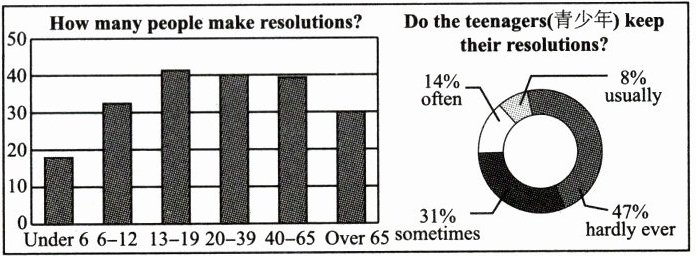
We asked 200 people of different ages about resolutions, and here are the results.
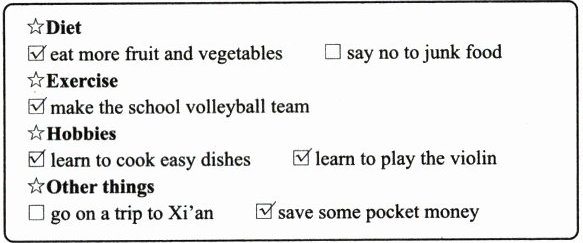
Mary’s resolutions (☑=finished)
☆Diet
☑ eat more fruit and vegetables say no to junk food
☆Exercise
☑ make the school volleyball team
☆Hobbies
☑ learn to cook easy dishes ☑ learn to play the violin
☆Other things
go on a trip to Xi’an ☑ save some pocket money
31. Which of the following age groups has the largest number of people who make resolutions?
A. Ages 6—12. B. Ages 13—19.
C. Ages 40—65. D. Over 65.
32. What percent of the teenagers hardly ever keep their resolutions?
A. 47%. B. 31%. C. 14%. D. 8%.
33. What might Mary be good at?
A. Growing fruit.
B. Playing volleyball.
C. Playing the piano.
D. Making money.
34. What does Mary need to do next to keep her resolutions?
A. Learn to cook.
B. Spend less money.
C. Visit Xi’an.
D. Eat more vegetables.
35. Which is TRUE about the reading material?
A. Children under 6 never make resolutions.
B. Most of the teenagers keep their resolutions.
C. Mary didn’t eat any junk food this year.
D. Mary can cook some easy dishes now.
A
We asked 200 people of different ages about resolutions, and here are the results.
Mary’s resolutions (☑=finished)
☆Diet
☑ eat more fruit and vegetables say no to junk food
☆Exercise
☑ make the school volleyball team
☆Hobbies
☑ learn to cook easy dishes ☑ learn to play the violin
☆Other things
go on a trip to Xi’an ☑ save some pocket money
31. Which of the following age groups has the largest number of people who make resolutions?
A. Ages 6—12. B. Ages 13—19.
C. Ages 40—65. D. Over 65.
32. What percent of the teenagers hardly ever keep their resolutions?
A. 47%. B. 31%. C. 14%. D. 8%.
33. What might Mary be good at?
A. Growing fruit.
B. Playing volleyball.
C. Playing the piano.
D. Making money.
34. What does Mary need to do next to keep her resolutions?
A. Learn to cook.
B. Spend less money.
C. Visit Xi’an.
D. Eat more vegetables.
35. Which is TRUE about the reading material?
A. Children under 6 never make resolutions.
B. Most of the teenagers keep their resolutions.
C. Mary didn’t eat any junk food this year.
D. Mary can cook some easy dishes now.
答案:31. B 32. A 33. B 34. C 35. D