三、阅读理解(16分)
A
How Bloody a Scene!
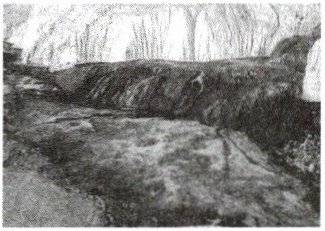
Blood Falls in Antarctica is a waterfall which pours blood-red water into a river. The sight is a perfect background for a horror(恐怖)film: full of mysteries(神秘)and of course bloody. Its special colour was long believed to be caused by red algae(红藻). Until 2017, the true cause of the so-called blood was proved to be oxidized iron(被氧化的铁)in saltwater.
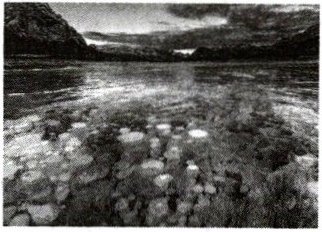
Amazing yet a dangerous sight, frozen bubbles can be seen in winter at Abraham Lake in Canada. When there is too much methane(甲烷)gas underwater and it is frozen, it will finally form this special sight—frozen bubbles. Such plenty of methane has a high risk. So even a lit match can cause an explosion(爆炸).
Mirror(镜子)of the Sky
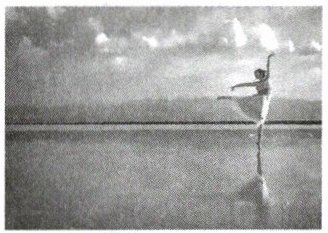
During the new moon and full moon times, tourists can see a clear reflection(反射)of the sky in the waters of Sasaran Beach in Malaysia. The smooth sand and lowest water level(水位)create such an unbelievable sight. Also known as the “Mirror of the Sky”, this water beach is an amazing place to take pictures.
(
A. PEOPLE. B. BIOLOGY. C. TRADITION. D. NATURE.
(
A. How Beautiful a Lake! B. Too Dangerous to Visit!
C. Special Frozen Bubbles! D. Here Come Explosions!
(
A. They can be seen only by the sea. B. They introduce places fit for visiting.
C. They are all very dangerous. D. They show causes of the special sights.
A
How Bloody a Scene!
Blood Falls in Antarctica is a waterfall which pours blood-red water into a river. The sight is a perfect background for a horror(恐怖)film: full of mysteries(神秘)and of course bloody. Its special colour was long believed to be caused by red algae(红藻). Until 2017, the true cause of the so-called blood was proved to be oxidized iron(被氧化的铁)in saltwater.
Amazing yet a dangerous sight, frozen bubbles can be seen in winter at Abraham Lake in Canada. When there is too much methane(甲烷)gas underwater and it is frozen, it will finally form this special sight—frozen bubbles. Such plenty of methane has a high risk. So even a lit match can cause an explosion(爆炸).
Mirror(镜子)of the Sky
During the new moon and full moon times, tourists can see a clear reflection(反射)of the sky in the waters of Sasaran Beach in Malaysia. The smooth sand and lowest water level(水位)create such an unbelievable sight. Also known as the “Mirror of the Sky”, this water beach is an amazing place to take pictures.
(
D
)1. In which part of the newspaper can we read the news?A. PEOPLE. B. BIOLOGY. C. TRADITION. D. NATURE.
(
C
)2. The best title for the second news would be “”.A. How Beautiful a Lake! B. Too Dangerous to Visit!
C. Special Frozen Bubbles! D. Here Come Explosions!
(
D
)3. What do the three pieces of news above have in common(共同地)?A. They can be seen only by the sea. B. They introduce places fit for visiting.
C. They are all very dangerous. D. They show causes of the special sights.
答案:1. D
2. C
3. D
2. C
3. D
Wetlands play an important role in the ecosystem. However, about 35 per cent of the wetlands have been lost in the past 50 years, said the UN. Hoping to protect the wetlands, Cui Luoyao and Lyu Haoyan, two 14-year-old girls from Beijing created a mudskipper(弹涂鱼)amphibious robot(两栖机器人). They won the Gold Award of the 19th Soong Chingling Award for Children’s Invention on August 17, 2024.
“Traditional robots faced problems in wetlands,” Cui said. As amphibious fish, mudskippers are small and can move freely in wetlands. Inspired(启发)by the little creatures, they added a special chest(胸腔)and tail fin(鳍)to their robot. The fin can help the robot move freely on land and swim underwater. They also learned coding to control(控制)the robot with their phones from far away, up to 300 metres. What’s more, they put in different sensors(传感器)to see plants and check water quality.
But things didn’t always go well. How to keep the main electronics(电子元件)dry when the robot went underwater was a big problem during testing. “The 3-D printed parts we used couldn’t seal(密封)well,” Lyu said. After trying different ways, they found that placing rubber rings in the gaps(缝隙)worked well in stopping water from getting in.
After successfully controlling their robotic mudskipper on land and underwater, they were happy with their success. “I feel so proud because our robot can help look into the places that people cannot reach,” said Cui.
(
A. protect wetlands
B. check water quality
C. complete their schoolwork
D. learn more about amphibious fish
(
A. Mudskippers.
B. Wetlands.
C. The robot fish.
D. The animals.
(
A. By sealing the robot with tape.
B. By putting rubber rings in the gaps.
C. By using more 3-D printed parts.
D. By adding a special cover to it.
(
A. Because mudskippers can clean the water.
B. Because mudskippers can talk on the phones far away.
C. Because mudskippers would make the robot look cool.
D. Because mudskippers can move freely on land and in water.
(
A. The Importance of Wetlands
B. How Sensors Help in Wetlands
C. Problems in Studying Wetlands
D. Students Build Robots to Save Wetlands
“Traditional robots faced problems in wetlands,” Cui said. As amphibious fish, mudskippers are small and can move freely in wetlands. Inspired(启发)by the little creatures, they added a special chest(胸腔)and tail fin(鳍)to their robot. The fin can help the robot move freely on land and swim underwater. They also learned coding to control(控制)the robot with their phones from far away, up to 300 metres. What’s more, they put in different sensors(传感器)to see plants and check water quality.
But things didn’t always go well. How to keep the main electronics(电子元件)dry when the robot went underwater was a big problem during testing. “The 3-D printed parts we used couldn’t seal(密封)well,” Lyu said. After trying different ways, they found that placing rubber rings in the gaps(缝隙)worked well in stopping water from getting in.
After successfully controlling their robotic mudskipper on land and underwater, they were happy with their success. “I feel so proud because our robot can help look into the places that people cannot reach,” said Cui.
(
A
)4. The two girls created the robot to .A. protect wetlands
B. check water quality
C. complete their schoolwork
D. learn more about amphibious fish
(
A
)5. What does “the little creatures” in Paragraph 2 refer to?A. Mudskippers.
B. Wetlands.
C. The robot fish.
D. The animals.
(
B
)6. How did the two girls keep the electronics dry when it was underwater?A. By sealing the robot with tape.
B. By putting rubber rings in the gaps.
C. By using more 3-D printed parts.
D. By adding a special cover to it.
(
D
)7. Why did the girls choose to make the robot based on a mudskipper?A. Because mudskippers can clean the water.
B. Because mudskippers can talk on the phones far away.
C. Because mudskippers would make the robot look cool.
D. Because mudskippers can move freely on land and in water.
(
D
)8. What would be the best title for the passage?A. The Importance of Wetlands
B. How Sensors Help in Wetlands
C. Problems in Studying Wetlands
D. Students Build Robots to Save Wetlands
答案:4. A
5. A
6. B
7. D
8. D
5. A
6. B
7. D
8. D