(
A. at; in
B. in; at
C. in; in
(
A. Are; living things
B. Is; living things
C. Are; living thing
(
A. The Moon; the Sun
B. The Moon; Earth
C. The Sun; Earth
(
A. microscopes
B. spaceships
C. telescopes
(
A. hours
B. months
C. minutes
B
) 1. We can see the blue sky the daytime and the Moon night.A. at; in
B. in; at
C. in; in
(
A
) 2. there any on Mars?A. Are; living things
B. Is; living things
C. Are; living thing
(
B
) 3. travels around .A. The Moon; the Sun
B. The Moon; Earth
C. The Sun; Earth
(
C
) 4. People can use to look into space from Earth.A. microscopes
B. spaceships
C. telescopes
(
B
) 5. Astronauts may live on a space station for , so they do exercise to keep healthy.A. hours
B. months
C. minutes
答案:1. B
2. A
3. B
4. C
5. B
2. A
3. B
4. C
5. B
Ⅶ. Complete the sentences.(按要求完成句子。)
1. I can see many stars in the sky.(对画线部分提问)
2. Taikonauts can see the sunrise and sunset 16 times a day.(对画线部分提问)
3. There is some water on Mars.(改为一般疑问句并作肯定回答)
—
—
4. What can you see in the picture?(根据图片回答问题)
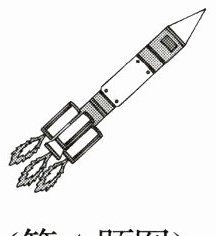
(第4题图)
5. travel, maybe, can, we, in, one, space, day (.)(连词成句)
1. I can see many stars in the sky.(对画线部分提问)
2. Taikonauts can see the sunrise and sunset 16 times a day.(对画线部分提问)
3. There is some water on Mars.(改为一般疑问句并作肯定回答)
—
—
4. What can you see in the picture?(根据图片回答问题)
(第4题图)
5. travel, maybe, can, we, in, one, space, day (.)(连词成句)
答案:1. What can you see in the sky?
2. How many times can taikonauts see the sunrise and sunset a day?
3. Is there any water on Mars?
Yes, there is.
4. I can see a spaceship.
5. Maybe we can travel in space one day.
2. How many times can taikonauts see the sunrise and sunset a day?
3. Is there any water on Mars?
Yes, there is.
4. I can see a spaceship.
5. Maybe we can travel in space one day.
Ⅷ. Read and choose.(阅读短文,选择正确答案。)
The Red Planet
Are you interested in Mars? This lesson will tell you some interesting facts about Mars. Get ready to explore the neighbour of Earth.
Time: Tuesday, 2:30 p.m. Place: Room 101
Names of China’s Space Rovers
Do you know how China’s rovers get their names? Join us and learn about the culture and history behind the naming of China’s rovers, from Yutu on the Moon to Zhurong on Mars.
Time: Wednesday, 3:15 p.m. Place: Room 102
Our Solar System
Join us on an amazing journey through our solar system. Learn about the planets, their moons, and other parts of our space family. Besides, you will also learn about the Kuiper Belt(柯伊伯带) and the Oort Cloud(奥尔特云).
Time: Thursday, 2:30 p.m. Place: Room 103
(
A. Earth.
B. Mars.
C. Venus.
(
A. Chang’e.
B. Zhurong.
C. Yutu.
(
A. Tuesday, 2:30 p.m.
B. Wednesday, 3:15 p.m.
C. Thursday, 2:30 p.m.
(
A. The Red Planet.
B. Names of China’s Space Rovers.
C. Our Solar System.
(
A. A school notice.
B. A science story.
C. A travel review.
The Red Planet
Are you interested in Mars? This lesson will tell you some interesting facts about Mars. Get ready to explore the neighbour of Earth.
Time: Tuesday, 2:30 p.m. Place: Room 101
Names of China’s Space Rovers
Do you know how China’s rovers get their names? Join us and learn about the culture and history behind the naming of China’s rovers, from Yutu on the Moon to Zhurong on Mars.
Time: Wednesday, 3:15 p.m. Place: Room 102
Our Solar System
Join us on an amazing journey through our solar system. Learn about the planets, their moons, and other parts of our space family. Besides, you will also learn about the Kuiper Belt(柯伊伯带) and the Oort Cloud(奥尔特云).
Time: Thursday, 2:30 p.m. Place: Room 103
(
B
)1. Which planet is called the Red Planet?A. Earth.
B. Mars.
C. Venus.
(
B
)2. What is the name of the Chinese rover on Mars?A. Chang’e.
B. Zhurong.
C. Yutu.
(
C
)3. When is the lesson in Room 103?A. Tuesday, 2:30 p.m.
B. Wednesday, 3:15 p.m.
C. Thursday, 2:30 p.m.
(
C
)4. Dan wants to know more about the planets in our solar system. Which lesson might he go to?A. The Red Planet.
B. Names of China’s Space Rovers.
C. Our Solar System.
(
A
)5. What is this text?A. A school notice.
B. A science story.
C. A travel review.
答案:1. B
2. B
3. C
4. C
5. A
2. B
3. C
4. C
5. A