第5页

信息发布者:
flowers
culture
activities
festivals
work
400 km
Mount Fuji
landscape
Japanese holidays
bullet train
make wishes
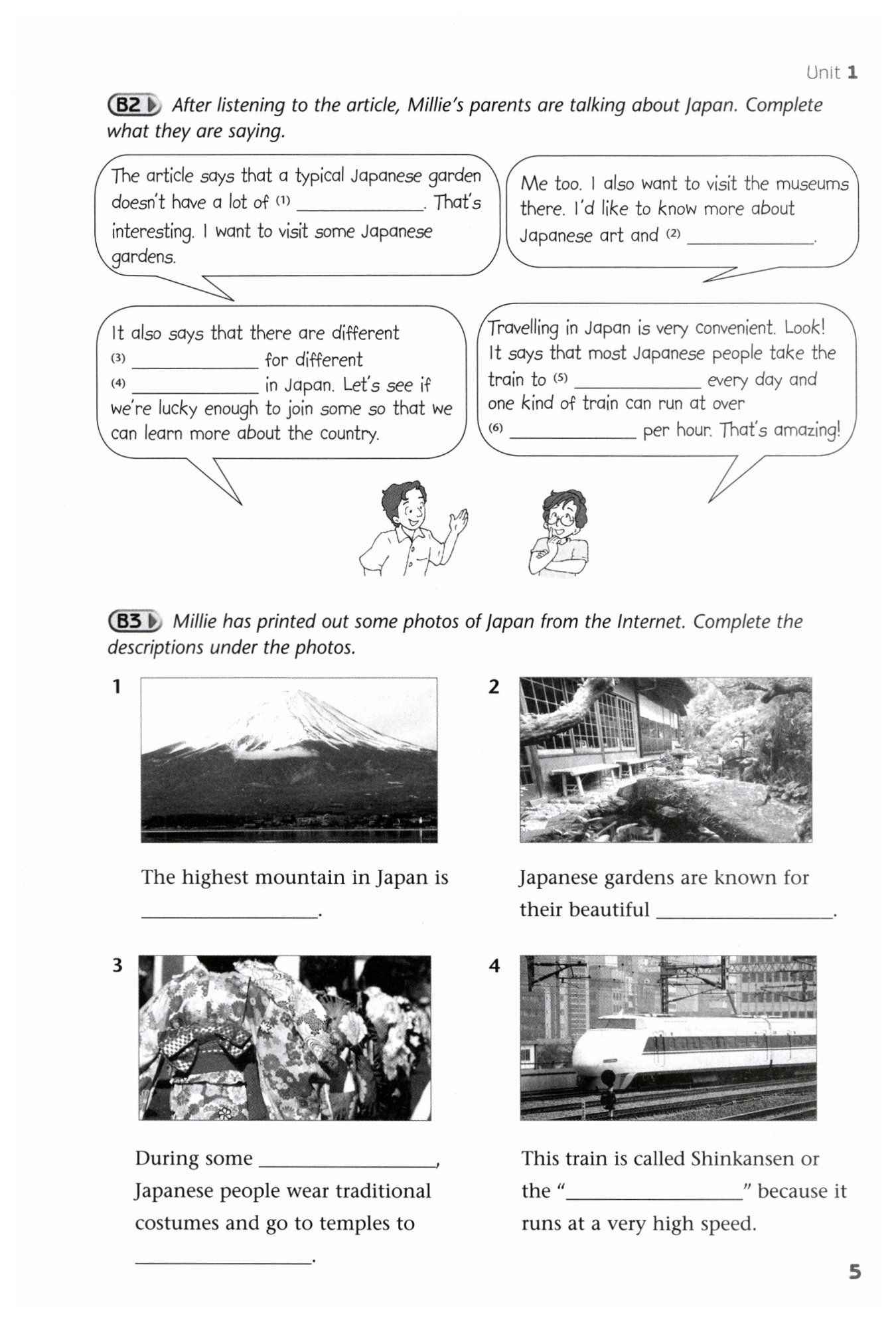
1.flowers
句意:这篇文章说一个典型的日本花园没有很多花。
根据文章第二段第二句A typical Japanese garden does not have a lot of flowers.典型的日本花园没有很多花。可知此处填flowers。

2.culture
句意:我想了解更多关于日本的艺术和文化。
根据文章第二段最后一句话There are many different exhibitions introducing Japanese art and culture.有许多介绍日本艺术和文化的不同展览。可知,在日本博物馆可以了解日本艺术和文化。故填culture。

3.activities& 4.festivals
句意:据说,在日本不同的节日有不同的活动。
根据文章第三段倒数第1-2行There are also different activities for different festivals throughout the whole country. 在全国各地,不同的节日也有不同的活动。可知第3空填activities,第4空填festivals。

5.work
句意:据说大多数日本人每天坐火车上班。
根据文章第四段第二行Most Japanese people take the train to work every day.  大多数日本人每天坐火车上班。可知此处填work。

6.400 km
句意:有一种火车能以400多公里每小时的速度前进。
根据文章第四段第3-4行 Japan is famous for one kind of train.  It can run at over 400 km an hour at its fastest speed. 日本以一种火车而闻名。它的最快速度可以超过每小时400公里。可知此处填400km。
1.Mount Fuji
句意:日本最高的山是富士山。
根据文章第一段倒数第二句Mount Fuji is the highest mountain in Japan.富士山是日本最高的山。可知此处填Mount Fuji。

2.landscape
句意:日本园林以其美丽的景观而闻名。
根据文章第二段第一句Japanese gardens are known for their beautiful landscape.日本园林以其美丽的景观而闻名。可知此处填landscape。

3.Japanese holidays;make wishes
句意:在一些日本节日里,日本人会穿着传统服装去寺庙许愿。
根据文章第三段第一句On New Year's Day and during some other Japanese holidays, many Japanese people put on their traditional costumes and go to temples to make wishes.在新年和其他一些日本节日期间,许多日本人穿上他们的传统服装去寺庙许愿。New Year's Day(新年)和other Japanese holidays(其他一些日本节日)可以统称为Japanese holidays(日本节日),故答案为Japanese holidays;make wishes。

4.bullet train
句意:这种列车被称为新干线或“子弹头列车”,因为它的运行速度非常快。
根据文章第四段最后一句It is called Shinkansen or the“bullet train".它被称为新干线或“子弹头列车”。可知此处填bullet train。