第47页

信息发布者:
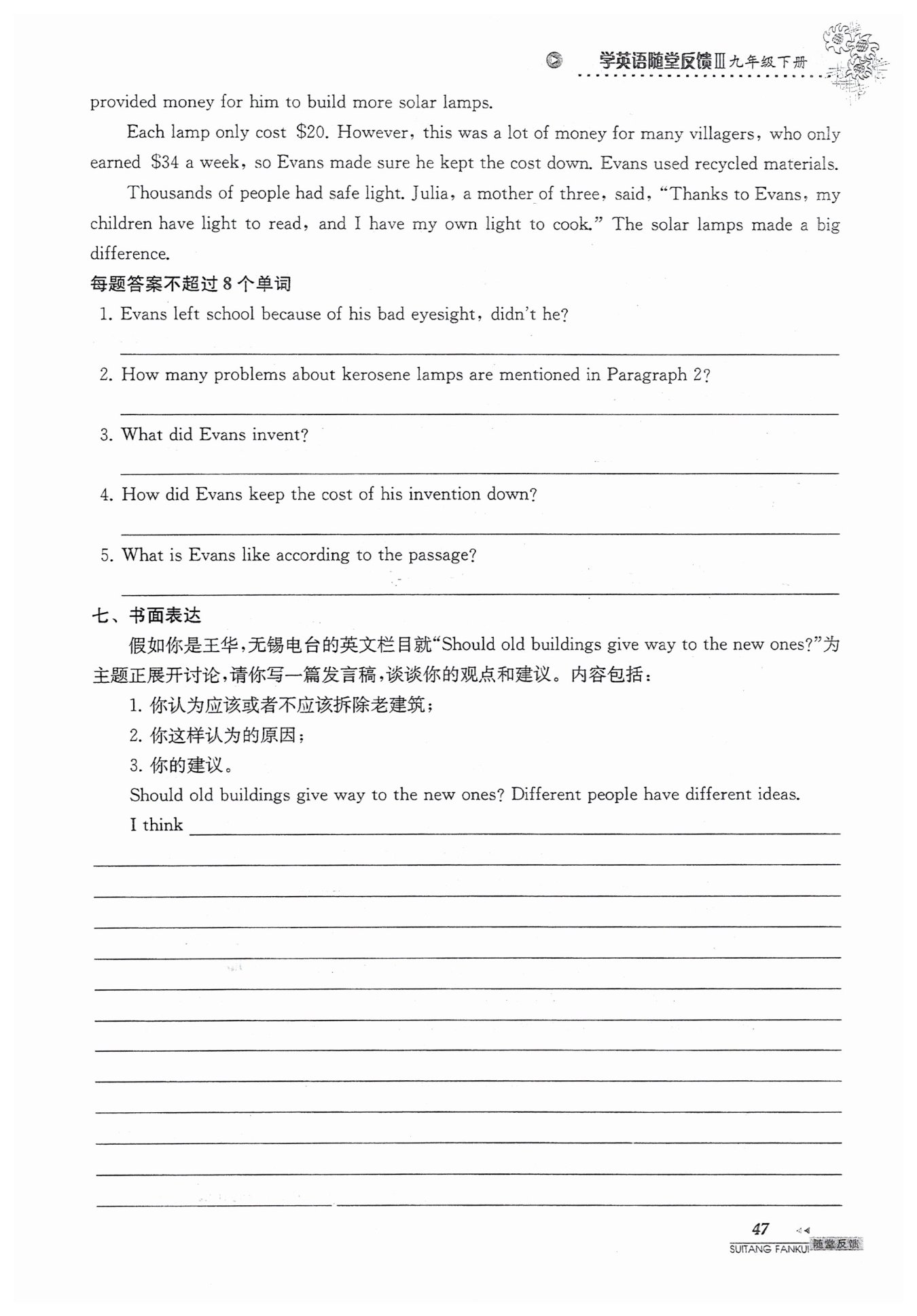
No, he didn't.
4.
A solar lamp.
By using recycled materials.
Hard-working and creative.
old buildings should be protected instead of being knocked down.
       The old buildings usually represent the local history and culture. They carry the memories of our 
elders, so they mean a lot to the local people. Enjoying the old buildings is like travelling to the past. 
It helps people explore history. Also, old buildings help attract tourists. They are not only home to the 
local people, but also works of art. Tourists can know a lot about the local culture and history. And 
local people can live a better life with more and more tourists.
       I think our government should protect old buildings because they are great treasure. Before 
knocking down an old building, we should think twice.
【分析】
1. 第1题是反义疑问句,需定位原文判断Evans是否辍学。文中第二段表明他考上了大学,并未辍学,因此给出否定回答。
2. 第2题要数第二段煤油灯的问题数量,留意段落里First、Also、Besides、Lastly这些列举标志,数出对应问题的个数即可。
3. 第3题找Evans的发明,定位到第三段他制作第一盏灯的句子,直接提取发明物品。
4. 第4题找降低成本的方法,在第四段末尾找到对应的措施描述,提取关键信息。
5. 第5题推断Evans的性格,从他克服困难上大学的行为看出勤奋,从发明太阳能灯解决问题看出有创造力,总结对应的性格特点。
【解析】
1. 根据第二段“Although studying was difficult, Evans was an excellent student and went to a university.”可知,Evans并未辍学,所以反义疑问句回答为No, he didn't.
2. 第二段通过First、Also、Besides、Lastly列举了煤油灯的4个问题,分别是引发疾病、伤害眼睛、导致火灾、煤油昂贵影响家庭食物开支,因此数量为4。
3. 由第三段“Evans built his first solar lamp”可知,Evans发明的是太阳能灯,答案为A solar lamp.
4. 根据第四段“so Evans made sure he kept the cost down. Evans used recycled materials.”可知,他通过使用回收材料降低成本,答案为By using recycled materials.
5. Evans克服学习困难考上大学体现他勤奋(Hard-working),发明太阳能灯解决村民照明难题体现他有创造力(creative),所以总结为Hard-working and creative.
【答案】
1. No, he didn't.
2. 4.
3. A solar lamp.
4. By using recycled materials.
5. Hard-working and creative.
【知识点】
反义疑问句回答,细节信息查找,人物性格推断
【点评】
本文围绕Evans发明太阳能灯帮助非洲村民的故事展开,题目以细节理解和推理判断为主,需要学生精准定位原文信息,理清文章逻辑,既考查信息提取能力,也锻炼归纳推断能力。
【难度系数】
0.7
【分析】
首先,拿到这道书面表达题,第一步要明确核心主题是讨论老建筑是否要为新建筑让路,需先确定清晰立场。参考范文选择保护老建筑的立场,这一方向容易找到充足且有说服力的支撑理由。接下来,思考支撑立场的角度:可从老建筑的历史文化价值(承载当地历史、长辈记忆,帮助人们探寻过往)、旅游经济价值(吸引游客,带动当地发展)展开,这些角度既贴合主题又符合实际。最后,要给出具体可行的建议,让内容更完整落地。写作时需注意用衔接词串联内容,保证逻辑清晰、表达流畅。
【解析】
1. 开篇明旨:承接题目给出的讨论背景,直接表明“old buildings should be protected instead of being knocked down”,清晰亮出核心立场。
2. 分层论证:
历史文化层面:指出老建筑是当地历史文化的载体,承载着长辈的记忆,用“like travelling to the past”的比喻,生动展现老建筑帮助人们回溯历史的作用。
旅游经济层面:说明老建筑兼具居住功能与艺术价值,能吸引游客了解当地文化,同时带动当地居民生活水平提升,拓展了老建筑的实用价值。
3. 提出建议:呼吁政府重视老建筑保护,强调拆除老建筑前要谨慎考量,让观点更具现实指导意义。
【答案】
Should old buildings give way to the new ones? Different people have different ideas.
I think old buildings should be protected instead of being knocked down.
The old buildings usually represent the local history and culture. They carry the
memories of our elders, so they mean a lot to the local people. Enjoying the old buildings is
like travelling to the past. It helps people explore history. Also, old buildings help attract
tourists. They are not only home to the local people, but also works of art. Tourists can
know a lot about the local culture and history. And local people can live a better life with
more and more tourists.
I think our government should protect old buildings because they are great treasure.
Before knocking down an old building, we should think twice.
【知识点】
议论文写作,观点类表达,文化话题写作
【点评】
这篇发言稿结构清晰,立场明确,从历史文化价值和旅游经济价值两个维度充分论证了保护老建筑的必要性,理由详实且有说服力。语言表达流畅自然,运用比喻修辞增强了感染力,建议部分贴合实际,符合书面表达的规范要求,是一篇优秀的范文。
【难度系数】
0.6