听第一篇短文,回答第13至15小题。请根据短文内容,选择正确答案,完成息记录表。答题完毕,请等待"嘀"的信号,进入下一篇短文。
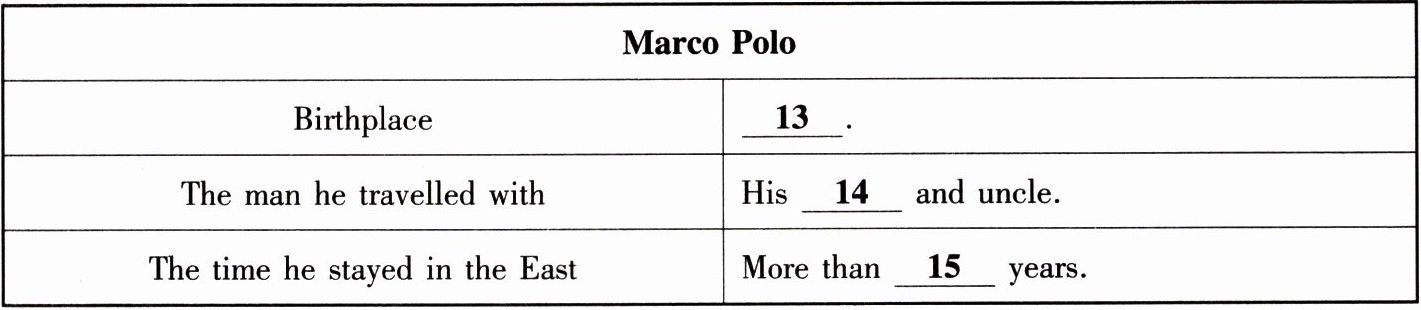
(
B. London
C. Venice
(
B. father
C. brother
(
B. ten
C. thirty
(
C
)13. A. BeijingB. London
C. Venice
(
B
)14. A. friendB. father
C. brother
(
B
)15. A. threeB. ten
C. thirty
答案:13. C;14. B;15. B
听力材料
Marco Polo was a famous traveller from Venice, Italy. He was born in 1254. When he was a kid, he was very curious and went on an exciting trip to the East with his father and uncle. They walked along the Silk Road and finally got to China. Marco Polo stayed in China for more than ten years. He saw and felt the rich culture, cool technologies and special traditions there. After he went back to Italy, he wrote a popular book, telling about his adventures and showing China to the Western world. It really helped Europeans know more about the East.
译文
马可・波罗是来自意大利威尼斯的著名旅行家,他出生于 1254 年。小时候,他非常好奇,和父亲、叔叔一起踏上了前往东方的激动人心的旅程。他们沿着丝绸之路行走,最终到达中国。马可・波罗在中国待了十多年,他看到并感受到了那里丰富的文化、酷炫的技术和特殊的传统。回到意大利后,他写了一本很受欢迎的书,讲述他的冒险经历,并向西方世界展示中国,这确实帮助欧洲人更多地了解了东方。
听力材料
Marco Polo was a famous traveller from Venice, Italy. He was born in 1254. When he was a kid, he was very curious and went on an exciting trip to the East with his father and uncle. They walked along the Silk Road and finally got to China. Marco Polo stayed in China for more than ten years. He saw and felt the rich culture, cool technologies and special traditions there. After he went back to Italy, he wrote a popular book, telling about his adventures and showing China to the Western world. It really helped Europeans know more about the East.
译文
马可・波罗是来自意大利威尼斯的著名旅行家,他出生于 1254 年。小时候,他非常好奇,和父亲、叔叔一起踏上了前往东方的激动人心的旅程。他们沿着丝绸之路行走,最终到达中国。马可・波罗在中国待了十多年,他看到并感受到了那里丰富的文化、酷炫的技术和特殊的传统。回到意大利后,他写了一本很受欢迎的书,讲述他的冒险经历,并向西方世界展示中国,这确实帮助欧洲人更多地了解了东方。
听第二篇短文,回答第16至20小题。
(
A. In 1789.
B. In 1781.
C. In 1791.
(
A. He learned English.
B. He worked with his father.
C. He studied engines.
(
A. He began to learn English.
B. He became his father's helper.
C. He wrote his own name for the first time.
(
A. For 8 hours.
B. For 12 hours.
C. For 13 hours.
(
A. The plane.
B. The car.
C. The train.
(
A
)16. When did George Stephenson start to work?A. In 1789.
B. In 1781.
C. In 1791.
(
C
)17. What did George Stephenson often do on holidays?A. He learned English.
B. He worked with his father.
C. He studied engines.
(
A
)18. What did George Stephenson do when he was seventeen?A. He began to learn English.
B. He became his father's helper.
C. He wrote his own name for the first time.
(
B
)19. How long did George Stephenson work every day?A. For 8 hours.
B. For 12 hours.
C. For 13 hours.
(
C
)20. What was the greatest invention that George Stephenson had invented?A. The plane.
B. The car.
C. The train.
答案:16.A 17.C 18.A 19.B 20.C
听力材料
听力材料
George Stephenson was born in 1781 in a poor family. He had to start work when he was only eight. When George was fourteen, he became his father's helper. On holidays, he often studied engines carefully. Soon he became a very good worker, though he could not read or write.
He began to learn English when he was seventeen years old. Every day after twelve hours of hard work, he took lessons from a young teacher.
On his eighteenth birthday, he wrote his own name for the first time. George invented many things in his life. The train was the greatest one among them.
译文
乔治・斯蒂芬森 1781 年出生于一个贫困家庭,他年仅八岁就开始工作。乔治十四岁时,成为父亲的助手,在假期里,他经常仔细研究发动机,很快他就成了一名很好的工人,尽管他不会读也不会写。他十七岁时开始学习英语,每天在辛苦工作十二小时后,他向一位年轻老师上课。在他十八岁生日时,他第一次写下了自己的名字。乔治一生中有很多发明,火车是其中最伟大的一项。
解析:
翻译:
听第二篇短文,回答第16至20小题。
( )16. 乔治·斯蒂芬森什么时候开始工作的?
A. 1789年。
B. 1781年。
C. 1791年。
( )17. 乔治·斯蒂芬森在假期经常做什么?
A. 他学习英语。
B. 他和父亲一起工作。
C. 他研究发动机。
( )18. 乔治·斯蒂芬森17岁时做了什么?
A. 他开始学习英语。
B. 他成为父亲的助手。
C. 他第一次写下自己的名字。
( )19. 乔治·斯蒂芬森每天工作多长时间?
A. 8小时。
B. 12小时。
C. 13小时。
( )20. 乔治·斯蒂芬森最伟大的发明是什么?
A. 飞机。
B. 汽车。
C. 火车。
听第二篇短文,回答第16至20小题。
( )16. 乔治·斯蒂芬森什么时候开始工作的?
A. 1789年。
B. 1781年。
C. 1791年。
( )17. 乔治·斯蒂芬森在假期经常做什么?
A. 他学习英语。
B. 他和父亲一起工作。
C. 他研究发动机。
( )18. 乔治·斯蒂芬森17岁时做了什么?
A. 他开始学习英语。
B. 他成为父亲的助手。
C. 他第一次写下自己的名字。
( )19. 乔治·斯蒂芬森每天工作多长时间?
A. 8小时。
B. 12小时。
C. 13小时。
( )20. 乔治·斯蒂芬森最伟大的发明是什么?
A. 飞机。
B. 汽车。
C. 火车。
请看下面的情景提示:
你认为居里夫人是历史上最伟大的人,因为她两次获得诺贝尔奖,还推动了X射线在医院的应用。
(1)
(2)
你认为居里夫人是历史上最伟大的人,因为她两次获得诺贝尔奖,还推动了X射线在医院的应用。
(1)
Marie Curie.
(2)
Twice.
答案:(1)Marie Curie.
(2)Twice.
听力材料
(1)Who do you think is the greatest person in history?
(2)How many times did she win the Nobel Prize?
译文
(1)你认为历史上最伟大的人是谁?
(2)她获得过多少次诺贝尔奖?