听一段对话,回答第 11 — 12 小题。答题完毕,请等待“嘀”的信号,进入第一篇短文。
(
A. By car.
B. By underground.
C. By bus.
(
A. Because it is faster than driving.
B. To protect the environment.
C. Because she wants to go there alone.
(
A
)11. How does the boy decide to go to the wetland park at first?A. By car.
B. By underground.
C. By bus.
(
B
)12. Why does Susan take the underground?A. Because it is faster than driving.
B. To protect the environment.
C. Because she wants to go there alone.
答案:11—12 AB
解析:
翻译:
听一段对话,回答第11—12小题。答题完毕,请等待“嘀”的信号,进入第一篇短文。
(A)11. 这个男孩一开始决定怎么去湿地公园?
A. 开车。
B. 坐地铁。
C. 坐公交车。
(B)12. 苏珊为什么坐地铁?
A. 因为它比开车快。
B. 为了保护环境。
C. 因为她想独自去那里。
听一段对话,回答第11—12小题。答题完毕,请等待“嘀”的信号,进入第一篇短文。
(A)11. 这个男孩一开始决定怎么去湿地公园?
A. 开车。
B. 坐地铁。
C. 坐公交车。
(B)12. 苏珊为什么坐地铁?
A. 因为它比开车快。
B. 为了保护环境。
C. 因为她想独自去那里。
听第一篇短文,回答第 13 — 15 小题。请根据短文内容,选择正确答案,完成信息记录表。答题完毕,请等待“嘀”的信号,进入下一篇短文。
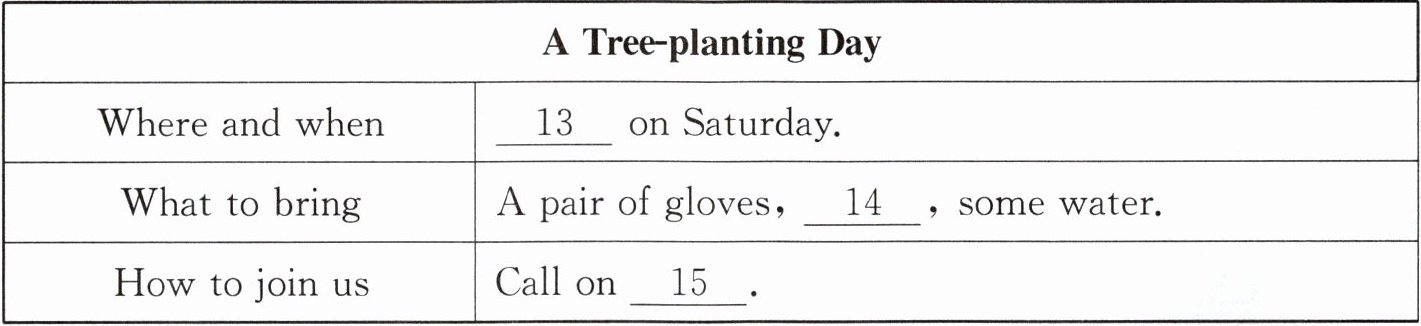
(
B. In the north-east of the city
C. In the north-east of a park
(
B. ropes
C. some bottles
(
B. 1537 1689
C. 1537 1869
(
B
)13. A. In front of the schoolB. In the north-east of the city
C. In the north-east of a park
(
A
)14. A. a hatB. ropes
C. some bottles
(
B
)15. A. 1573 1689B. 1537 1689
C. 1537 1869
答案:13—15 BAB
解析:
翻译:
听第一篇短文,回答第13至15小题。请根据短文内容,选择正确答案,完成信息记录表。答题完毕,请等待“嘀”的信号,进入下一篇短文。
(B)13. A. 在学校前面
B. 在城市的东北部
C. 在一个公园的东北部
(A)14. A. 一顶帽子
B. 绳索
C. 一些瓶子
(B)15. A. 1573 1689
B. 1537 1689
C. 1537 1869
听第一篇短文,回答第13至15小题。请根据短文内容,选择正确答案,完成信息记录表。答题完毕,请等待“嘀”的信号,进入下一篇短文。
(B)13. A. 在学校前面
B. 在城市的东北部
C. 在一个公园的东北部
(A)14. A. 一顶帽子
B. 绳索
C. 一些瓶子
(B)15. A. 1573 1689
B. 1537 1689
C. 1537 1869
听第二篇短文,回答第 16 — 20 小题。
(
A. Behind the library.
B. Between the school buildings.
C. Near the playground.
(
A. Because the water was polluted.
B. Because the water was too cold.
C. Because there wasn't enough food.
(
A. A 13-year-old boy.
B. A scientist.
C. The headmaster.
(
A. By planting flowers.
B. By using a “glass box wetland system”.
C. By changing all the water.
(
A. To save more fish.
B. To make the school better.
C. To help the students learn more.
(
B
)16. Where is the lake?A. Behind the library.
B. Between the school buildings.
C. Near the playground.
(
A
)17. Why did the fish die five years ago?A. Because the water was polluted.
B. Because the water was too cold.
C. Because there wasn't enough food.
(
B
)18. Who helped the students find out the methods?A. A 13-year-old boy.
B. A scientist.
C. The headmaster.
(
B
)19. How did the scientist clean the water?A. By planting flowers.
B. By using a “glass box wetland system”.
C. By changing all the water.
(
C
)20. Why was the “Man-made(人造的) Wetlands” class started?A. To save more fish.
B. To make the school better.
C. To help the students learn more.
答案:16—20 BABBC
解析:
翻译:
听第二篇短文,回答第16至20小题。
(答案:B)16. 湖在哪里?
A. 在图书馆后面。
B. 在教学楼之间。
C. 在操场附近。
(答案:A)17. 五年前鱼为什么死了?
A. 因为水被污染了。
B. 因为水太冷了。
C. 因为没有足够的食物。
(答案:B)18. 谁帮助学生们找到了方法?
A. 一个13岁的男孩。
B. 一位科学家。
C. 校长。
(答案:B)19. 科学家是如何净化水的?
A. 通过种花。
B. 通过使用“玻璃箱湿地系统”。
C. 通过更换所有的水。
(答案:C)20. 为什么开设“人造湿地”课程?
A. 为了拯救更多的鱼。
B. 为了让学校变得更好。
C. 为了帮助学生们学到更多知识。
听第二篇短文,回答第16至20小题。
(答案:B)16. 湖在哪里?
A. 在图书馆后面。
B. 在教学楼之间。
C. 在操场附近。
(答案:A)17. 五年前鱼为什么死了?
A. 因为水被污染了。
B. 因为水太冷了。
C. 因为没有足够的食物。
(答案:B)18. 谁帮助学生们找到了方法?
A. 一个13岁的男孩。
B. 一位科学家。
C. 校长。
(答案:B)19. 科学家是如何净化水的?
A. 通过种花。
B. 通过使用“玻璃箱湿地系统”。
C. 通过更换所有的水。
(答案:C)20. 为什么开设“人造湿地”课程?
A. 为了拯救更多的鱼。
B. 为了让学校变得更好。
C. 为了帮助学生们学到更多知识。