听一段对话,回答第 11 — 12 小题。答题完毕,请等待“嘀”的信号,进入第一篇短文。
(
A. To sing songs.
B. To drive other animals away.
C. To communicate (交流) and find food.
(
A. They feel happy seeing humans.
B. It's just how their mouth looks.
C. They want more fish from trainers.
(
C
) 11. Why do dolphins make sounds?A. To sing songs.
B. To drive other animals away.
C. To communicate (交流) and find food.
(
B
) 12. What does dolphins' “smile” mean?A. They feel happy seeing humans.
B. It's just how their mouth looks.
C. They want more fish from trainers.
答案:11.C 12.B
解析:
翻译:
听一段对话,回答第11—12小题。答题完毕,请等待“嘀”的信号,进入第一篇短文。
(C)11. 海豚为什么发出声音?
A. 为了唱歌。
B. 为了赶走其他动物。
C. 为了交流和寻找食物。
(B)12. 海豚的“微笑”意味着什么?
A. 它们见到人类感到开心。
B. 那只是它们嘴巴的样子。
C. 它们想要训练员给更多的鱼。
听一段对话,回答第11—12小题。答题完毕,请等待“嘀”的信号,进入第一篇短文。
(C)11. 海豚为什么发出声音?
A. 为了唱歌。
B. 为了赶走其他动物。
C. 为了交流和寻找食物。
(B)12. 海豚的“微笑”意味着什么?
A. 它们见到人类感到开心。
B. 那只是它们嘴巴的样子。
C. 它们想要训练员给更多的鱼。
听第一篇短文,回答第 13 — 15 小题。请根据短文内容,选择正确答案,完成信息记录表。答题完毕,请等待“嘀”的信号,进入下一篇短文。
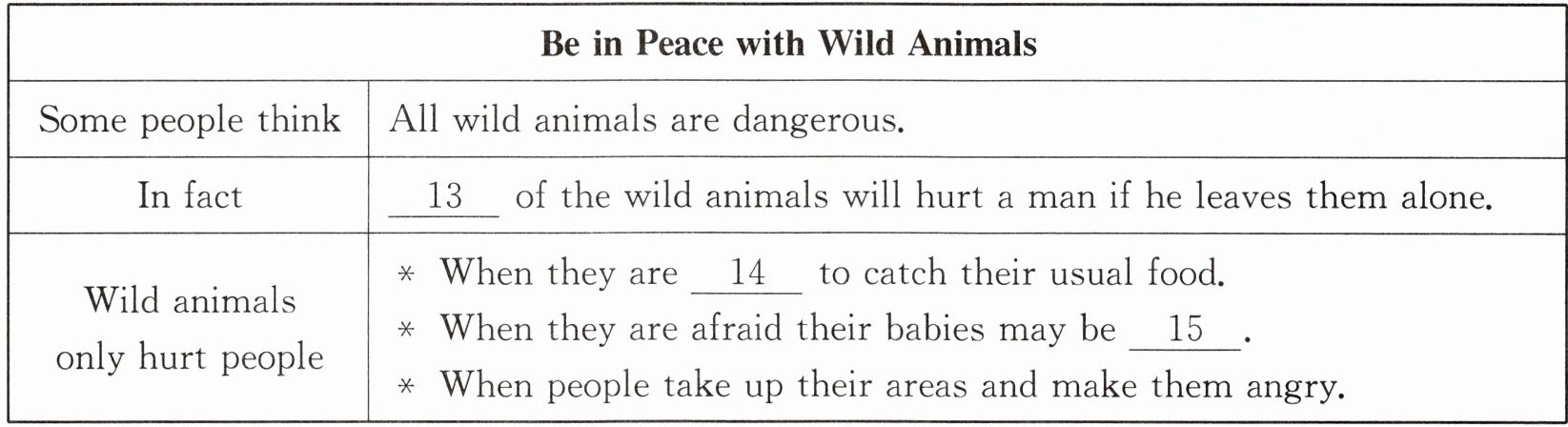
* When they are afraid their babies may be 15.
(
B. Quite a few
C. Very few
(
B. too lazy
C. too tired
(
B. hungry
C. in danger
* When they are afraid their babies may be 15.
(
C
) 13. A. MostB. Quite a few
C. Very few
(
A
) 14. A. too weakB. too lazy
C. too tired
(
C
) 15. A. angryB. hungry
C. in danger
答案:13.C 14.A 15.C
解析:
翻译:
听第一篇短文,回答第13至15小题。请根据短文内容,选择正确答案,完成信息记录表。答题完毕,请等待“嘀”的信号,进入下一篇短文。
* 当它们担心自己的幼崽可能____15____时。
(C)13. A. 大多数
B. 相当多
C. 极少数
(A)14. A. 太虚弱
B. 太懒惰
C. 太累
(C)15. A. 生气的
B. 饥饿的
C. 处于危险中
听第一篇短文,回答第13至15小题。请根据短文内容,选择正确答案,完成信息记录表。答题完毕,请等待“嘀”的信号,进入下一篇短文。
* 当它们担心自己的幼崽可能____15____时。
(C)13. A. 大多数
B. 相当多
C. 极少数
(A)14. A. 太虚弱
B. 太懒惰
C. 太累
(C)15. A. 生气的
B. 饥饿的
C. 处于危险中
听第二篇短文,回答第 16 — 20 小题。
(
A. More trees can grow.
B. Animals get more food.
C. Animals lose homes.
(
A. Too many fish.
B. Plastic pollution.
C. Dirty beaches.
(
A. Ice melting.
B. Hunting.
C. Less sea water.
(
A. Teach students how to hunt animals.
B. Organize activities like planting trees.
C. Build more reserves to keep wild animals safe.
(
A. Our children don't care about wild animals.
B. Only scientists need to worry about saving animals.
C. Everyone can help protect animals for the future.
(
C
) 16. What happens when forests are cut down?A. More trees can grow.
B. Animals get more food.
C. Animals lose homes.
(
B
) 17. What ocean problem is talked about?A. Too many fish.
B. Plastic pollution.
C. Dirty beaches.
(
A
) 18. What makes polar bears hard to find food?A. Ice melting.
B. Hunting.
C. Less sea water.
(
B
) 19. What can schools do to help protect animals?A. Teach students how to hunt animals.
B. Organize activities like planting trees.
C. Build more reserves to keep wild animals safe.
(
C
) 20. What is the speaker's main message about animal protection?A. Our children don't care about wild animals.
B. Only scientists need to worry about saving animals.
C. Everyone can help protect animals for the future.
答案:16.C 17.B 18.A 19.B 20.C
解析:
翻译:
听第二篇短文,回答第16至20小题。
(C)16. 当森林被砍伐时会发生什么?
A. 更多的树能生长。
B. 动物得到更多食物。
C. 动物失去家园。
(B)17. 谈到了什么海洋问题?
A. 鱼太多。
B. 塑料污染。
C. 肮脏的海滩。
(A)18. 什么让北极熊难以找到食物?
A. 冰融化。
B. 狩猎。
C. 海水变少。
(B)19. 学校能做什么来帮助保护动物?
A. 教学生如何狩猎动物。
B. 组织像植树这样的活动。
C. 建立更多的保护区来保证野生动物的安全。
(C)20. 说话者关于动物保护的主要信息是什么?
A. 我们的孩子不关心野生动物。
B. 只有科学家需要担心拯救动物。
C. 每个人都可以为未来帮助保护动物。
听第二篇短文,回答第16至20小题。
(C)16. 当森林被砍伐时会发生什么?
A. 更多的树能生长。
B. 动物得到更多食物。
C. 动物失去家园。
(B)17. 谈到了什么海洋问题?
A. 鱼太多。
B. 塑料污染。
C. 肮脏的海滩。
(A)18. 什么让北极熊难以找到食物?
A. 冰融化。
B. 狩猎。
C. 海水变少。
(B)19. 学校能做什么来帮助保护动物?
A. 教学生如何狩猎动物。
B. 组织像植树这样的活动。
C. 建立更多的保护区来保证野生动物的安全。
(C)20. 说话者关于动物保护的主要信息是什么?
A. 我们的孩子不关心野生动物。
B. 只有科学家需要担心拯救动物。
C. 每个人都可以为未来帮助保护动物。