一、完形填空(10 分)
When Regis and other villagers moved to a new place in south-eastern Zimbabwe, Africa, they were happy to find a 1 nearby. Now, they would no longer have to walk a long way looking for water. At last, they had a source of water that they call their own.
But several days later, two boys saw 2 they had never seen before—a big animal standing by the lake. When it saw the boys, it walked into the lake and left.
Regis 3 looked into the big animal. “It was a hippo (河马),” he said.
Twelve hippos were living in the lake. The villagers were 4 . Hippos attack people more often than lions do. This meant that the villagers could not go near the lake 5 the hippos left. It was too long a wait for the villagers, because they needed the water from the lake to 6 . So the women began moving in groups whenever they went to get water from the lake. Before 7 water, they made sure that no hippos were nearby. The men began fishing in pairs, 8 one man always looking out for hippos.
But these days, the hippos and humans live side by side. The villagers say that when the hippos see people 9 , they swim slowly to the other side of the lake. The villagers don’t go into the part of the lake where the hippos usually stay. They have learned to 10 the lake.
( ) 1. A. house B. country C. village D. lake
( ) 2. A. something B. anything C. somebody D. nothing
( ) 3. A. carefully B. quickly C. secretly D. finally
( ) 4. A. excited B. interested C. angry D. worried
( ) 5. A. after B. before C. since D. if
( ) 6. A. survive B. wash C. cook D. drink
( ) 7. A. drinking B. collecting C. leaving D. seeing
( ) 8. A. by B. as C. with D. at
( ) 9. A. dancing B. running C. talking D. coming
( )10. A. protect B. share C. divide D. offer
When Regis and other villagers moved to a new place in south-eastern Zimbabwe, Africa, they were happy to find a 1 nearby. Now, they would no longer have to walk a long way looking for water. At last, they had a source of water that they call their own.
But several days later, two boys saw 2 they had never seen before—a big animal standing by the lake. When it saw the boys, it walked into the lake and left.
Regis 3 looked into the big animal. “It was a hippo (河马),” he said.
Twelve hippos were living in the lake. The villagers were 4 . Hippos attack people more often than lions do. This meant that the villagers could not go near the lake 5 the hippos left. It was too long a wait for the villagers, because they needed the water from the lake to 6 . So the women began moving in groups whenever they went to get water from the lake. Before 7 water, they made sure that no hippos were nearby. The men began fishing in pairs, 8 one man always looking out for hippos.
But these days, the hippos and humans live side by side. The villagers say that when the hippos see people 9 , they swim slowly to the other side of the lake. The villagers don’t go into the part of the lake where the hippos usually stay. They have learned to 10 the lake.
( ) 1. A. house B. country C. village D. lake
( ) 2. A. something B. anything C. somebody D. nothing
( ) 3. A. carefully B. quickly C. secretly D. finally
( ) 4. A. excited B. interested C. angry D. worried
( ) 5. A. after B. before C. since D. if
( ) 6. A. survive B. wash C. cook D. drink
( ) 7. A. drinking B. collecting C. leaving D. seeing
( ) 8. A. by B. as C. with D. at
( ) 9. A. dancing B. running C. talking D. coming
( )10. A. protect B. share C. divide D. offer
答案:1-5 DAADB 6-10 ABCDB
解析:
翻译:
### 一、完形填空(10分)
当雷吉斯和其他村民搬到非洲津巴布韦东南部的一个新地方时,他们很高兴地发现附近有一个____1____。现在,他们再也不用走很远的路去寻找水了。终于,他们有了一个属于自己的水源。
但几天后,两个男孩看到了____2____他们以前从未见过的东西——一只大型动物站在湖边。当它看到男孩们时,它走进湖里然后离开了。
雷吉斯____3____查看了这只大型动物。“那是一只河马,”他说。
有十二只河马生活在这个湖里。村民们感到____4____。河马攻击人类的频率比狮子还高。这意味着在河马离开____5____,村民们不能靠近湖边。对村民来说,等待的时间太长了,因为他们需要湖里的水来____6____。所以女人们每次去湖边取水时都成群结队地行动。在____7____水之前,她们会确保附近没有河马。男人们开始两人一组钓鱼,____8____一个人总是留意着河马。
但如今,河马和人类和平共处。村民们说,当河马看到人们____9____时,它们会慢慢地游到湖的另一边。村民们不会进入河马通常停留的那部分湖域。他们已经学会了____10____这个湖。
( )1. A. 房子 B. 国家 C. 村庄 D. 湖
( )2. A. 某物 B. 任何事物 C. 某人 D. 没有什么
( )3. A. 仔细地 B. 快速地 C. 秘密地 D. 最终
( )4. A. 兴奋的 B. 感兴趣的 C. 生气的 D. 担心的
( )5. A. 在……之后 B. 在……之前 C. 自从 D. 如果
( )6. A. 生存 B. 洗涤 C. 烹饪 D. 饮用
( )7. A. 饮用 B. 收集 C. 离开 D. 看见
( )8. A. 通过 B. 作为 C. 带有 D. 在
( )9. A. 跳舞 B. 跑步 C. 交谈 D. 来
( )10. A. 保护 B. 分享 C. 划分 D. 提供
### 一、完形填空(10分)
当雷吉斯和其他村民搬到非洲津巴布韦东南部的一个新地方时,他们很高兴地发现附近有一个____1____。现在,他们再也不用走很远的路去寻找水了。终于,他们有了一个属于自己的水源。
但几天后,两个男孩看到了____2____他们以前从未见过的东西——一只大型动物站在湖边。当它看到男孩们时,它走进湖里然后离开了。
雷吉斯____3____查看了这只大型动物。“那是一只河马,”他说。
有十二只河马生活在这个湖里。村民们感到____4____。河马攻击人类的频率比狮子还高。这意味着在河马离开____5____,村民们不能靠近湖边。对村民来说,等待的时间太长了,因为他们需要湖里的水来____6____。所以女人们每次去湖边取水时都成群结队地行动。在____7____水之前,她们会确保附近没有河马。男人们开始两人一组钓鱼,____8____一个人总是留意着河马。
但如今,河马和人类和平共处。村民们说,当河马看到人们____9____时,它们会慢慢地游到湖的另一边。村民们不会进入河马通常停留的那部分湖域。他们已经学会了____10____这个湖。
( )1. A. 房子 B. 国家 C. 村庄 D. 湖
( )2. A. 某物 B. 任何事物 C. 某人 D. 没有什么
( )3. A. 仔细地 B. 快速地 C. 秘密地 D. 最终
( )4. A. 兴奋的 B. 感兴趣的 C. 生气的 D. 担心的
( )5. A. 在……之后 B. 在……之前 C. 自从 D. 如果
( )6. A. 生存 B. 洗涤 C. 烹饪 D. 饮用
( )7. A. 饮用 B. 收集 C. 离开 D. 看见
( )8. A. 通过 B. 作为 C. 带有 D. 在
( )9. A. 跳舞 B. 跑步 C. 交谈 D. 来
( )10. A. 保护 B. 分享 C. 划分 D. 提供
二、阅读理解(16 分)
A
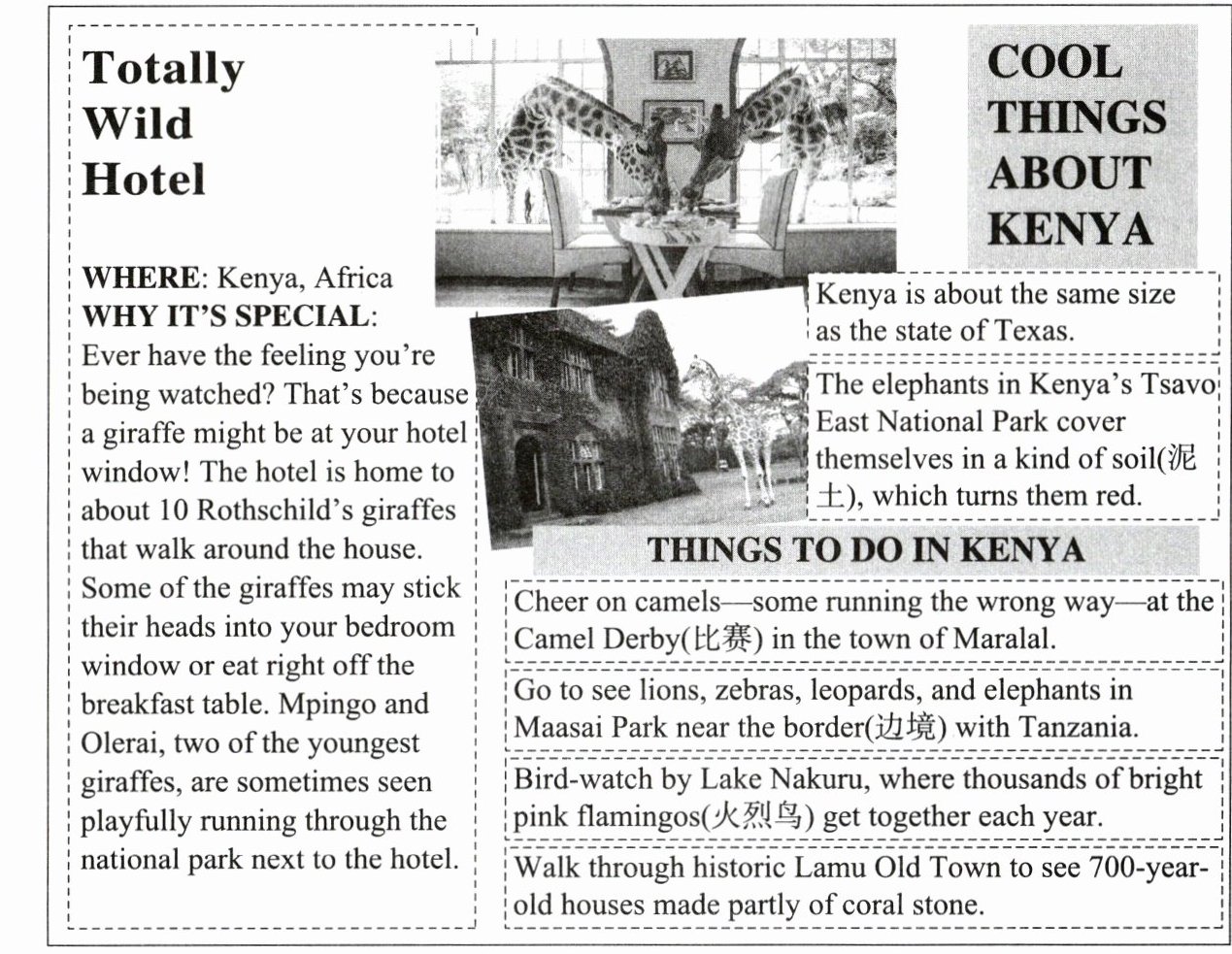
(
A. It’s in Africa. B. It’s in Texas.
C. It’s in Tanzania. D. It’s by Lake Nakuru.
(
A. its tall trees B. its good breakfast C. the lovely giraffes D. the old buildings
(
A. Swim with zebras in a lake. B. Watch the Camel Derby in Maralal.
C. Run with giraffes in the hotel. D. Take a boat to see the flamingos.
(
A. To introduce a special hotel. B. To talk about wildlife in Kenya.
C. To organize an animal show. D. To attract visitors to Kenya.
A
(
A
) 1. Where is Kenya?A. It’s in Africa. B. It’s in Texas.
C. It’s in Tanzania. D. It’s by Lake Nakuru.
(
C
) 2. Totally Wild Hotel is special because of ________.A. its tall trees B. its good breakfast C. the lovely giraffes D. the old buildings
(
B
) 3. What activity can guests do in Kenya according to the material?A. Swim with zebras in a lake. B. Watch the Camel Derby in Maralal.
C. Run with giraffes in the hotel. D. Take a boat to see the flamingos.
(
D
) 4. What is the purpose(目的) of the material?A. To introduce a special hotel. B. To talk about wildlife in Kenya.
C. To organize an animal show. D. To attract visitors to Kenya.
答案:1-4 ACBD
解析:
翻译:
二、阅读理解(16分)
A
1. 肯尼亚在哪里?
A. 它在非洲。 B. 它在得克萨斯州。
C. 它在坦桑尼亚。 D. 它在纳库鲁湖附近。
2. “完全野性酒店”很特别,是因为________。
A. 它的高大树木 B. 它的美味早餐
C. 可爱的长颈鹿 D. 古老的建筑
3. 根据材料,游客在肯尼亚可以进行什么活动?
A. 和斑马在湖里游泳。 B. 在马拉拉尔观看骆驼比赛。
C. 和长颈鹿在酒店里奔跑。 D. 乘船观赏火烈鸟。
4. 这份材料的目的是什么?
A. 介绍一家特别的酒店。 B. 谈论肯尼亚的野生动物。
C. 组织一场动物表演。 D. 吸引游客前往肯尼亚。
二、阅读理解(16分)
A
1. 肯尼亚在哪里?
A. 它在非洲。 B. 它在得克萨斯州。
C. 它在坦桑尼亚。 D. 它在纳库鲁湖附近。
2. “完全野性酒店”很特别,是因为________。
A. 它的高大树木 B. 它的美味早餐
C. 可爱的长颈鹿 D. 古老的建筑
3. 根据材料,游客在肯尼亚可以进行什么活动?
A. 和斑马在湖里游泳。 B. 在马拉拉尔观看骆驼比赛。
C. 和长颈鹿在酒店里奔跑。 D. 乘船观赏火烈鸟。
4. 这份材料的目的是什么?
A. 介绍一家特别的酒店。 B. 谈论肯尼亚的野生动物。
C. 组织一场动物表演。 D. 吸引游客前往肯尼亚。