四、句型转换
1. I often play with my classmate after class. (对画线部分提问)
2. We have a dining hall on the ground floor as well. (改为否定句)
We
3. My English teacher Mr Liu is very kind to all of us. (对画线部分提问)
4. Both Jim and I are in the school football team. (改为同义句)
Both Jim and I
1. I often play with my classmate after class. (对画线部分提问)
Who
do
you oftenplay
with
after class?2. We have a dining hall on the ground floor as well. (改为否定句)
We
don't
have
a dining hall on the ground floor either
.3. My English teacher Mr Liu is very kind to all of us. (对画线部分提问)
What
is
your English teacher Mr Liu like
?4. Both Jim and I are in the school football team. (改为同义句)
Both Jim and I
are
members of
________ the school football team.答案:1. Who do, play with 2. don’t have, either 3. What is, like 4. are members of
解析:
翻译:
### 四、句型转换
1. 我经常下课后和我的同学一起玩耍。(对画线部分提问)
你经常下课后和谁一起玩耍?
2. 我们在一楼也有一个餐厅。(改为否定句)
我们在一楼也没有餐厅。
3. 我的英语老师刘老师对我们所有人都非常和蔼。(对画线部分提问)
你的英语老师刘老师怎么样?
4. 吉姆和我都在学校足球队里。(改为同义句)
吉姆和我都是学校足球队的成员。
### 四、句型转换
1. 我经常下课后和我的同学一起玩耍。(对画线部分提问)
你经常下课后和谁一起玩耍?
2. 我们在一楼也有一个餐厅。(改为否定句)
我们在一楼也没有餐厅。
3. 我的英语老师刘老师对我们所有人都非常和蔼。(对画线部分提问)
你的英语老师刘老师怎么样?
4. 吉姆和我都在学校足球队里。(改为同义句)
吉姆和我都是学校足球队的成员。
五、阅读理解
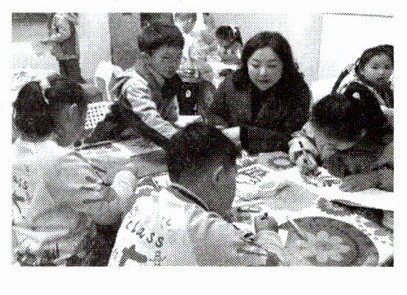
Morning is the most important part of the school day for Mi Ying, the headmaster (校长) of Huishi Primary School in Shanghai.
Ms Mi is always at the school gate when it opens at 7:40 a.m. “I can tell if (是否) the children are happy by saying hello to them and seeing their faces,” she said. “I want every student to enjoy their time at school.”
Huishi, founded (创建) in 1870, is one of the city’s oldest schools. It now has about 2 600 students in 58 classes.
Teachers here have their own ways of teaching. Ms Mi is one of them.
When Ms Mi was a Maths teacher 20 years ago, she took her students to the park or the underground station to have lessons. In 2001, a 100-year-old tree in the school became her teaching tool (工具). She asked her students to think of ways to measure (测量) how tall it was, and they gave more than 20 different answers. Ms Mi knew students could learn better through this way than just reading textbooks.
In the school, the relationship between teachers and students is also great.
For kids with problems, teachers always give them help. Ms Mi says that her office is always open so that students can talk to her when they want.
Besides great teachers, there are interesting after-school activities like Peking opera, paper-cutting, first aid (急救) and many others. “I want to give our children more chances (机会) to learn new things,” Ms Mi said.
(
A. To open the gate. B. To welcome the students.
C. To enjoy a happy time. D. To see if someone is late.
(
A. By teaching Maths to them. B. By giving them more answers.
C. By using a tree as the teaching tool. D. By playing games outside the classroom.
(
A. 时间 B. 梦想 C. 关系 D. 计划
Morning is the most important part of the school day for Mi Ying, the headmaster (校长) of Huishi Primary School in Shanghai.
Ms Mi is always at the school gate when it opens at 7:40 a.m. “I can tell if (是否) the children are happy by saying hello to them and seeing their faces,” she said. “I want every student to enjoy their time at school.”
Huishi, founded (创建) in 1870, is one of the city’s oldest schools. It now has about 2 600 students in 58 classes.
Teachers here have their own ways of teaching. Ms Mi is one of them.
When Ms Mi was a Maths teacher 20 years ago, she took her students to the park or the underground station to have lessons. In 2001, a 100-year-old tree in the school became her teaching tool (工具). She asked her students to think of ways to measure (测量) how tall it was, and they gave more than 20 different answers. Ms Mi knew students could learn better through this way than just reading textbooks.
In the school, the relationship between teachers and students is also great.
For kids with problems, teachers always give them help. Ms Mi says that her office is always open so that students can talk to her when they want.
Besides great teachers, there are interesting after-school activities like Peking opera, paper-cutting, first aid (急救) and many others. “I want to give our children more chances (机会) to learn new things,” Ms Mi said.
(
B
) 1. Why is Ms Mi always at the school gate in the morning?A. To open the gate. B. To welcome the students.
C. To enjoy a happy time. D. To see if someone is late.
(
C
) 2. How did Ms Mi teach students to measure?A. By teaching Maths to them. B. By giving them more answers.
C. By using a tree as the teaching tool. D. By playing games outside the classroom.
(
C
) 3. What does the underlined word “relationship” in Paragraph 6 mean in Chinese?A. 时间 B. 梦想 C. 关系 D. 计划
答案:1—3 BCC
解析:
翻译:
五、阅读理解
对于上海汇师小学的校长米莹来说,早晨是学校一天中最重要的时段。
每天早上7点40分学校开门时,米女士总是在学校门口。“通过和孩子们打招呼、看他们的表情,我就能知道他们是否开心,”她说,“我希望每个学生都能享受在学校的时光。”
汇师小学创建于1870年,是这座城市最古老的学校之一。现在它有58个班级,约2600名学生。
这里的教师都有自己的教学方法,米女士就是其中之一。
20年前,当米女士还是一名数学老师时,她会带学生去公园或地铁站上课。2001年,学校里一棵百年老树成了她的教学工具。她让学生们想办法测量这棵树的高度,学生们给出了20多种不同的答案。米女士知道,通过这种方式,学生们能比只看课本学得更好。
在学校里,师生之间的关系也很融洽。
对于有困难的孩子,老师们总会给予帮助。米女士说她的办公室总是敞开着的,这样学生们想找她谈话时就可以来找她。
除了优秀的教师,学校还有有趣的课外活动,比如京剧、剪纸、急救等。“我想给我们的孩子更多学习新事物的机会,”米女士说。
(B)1. 米女士早上为什么总是在学校门口?
A. 去开门。B. 迎接学生。
C. 享受快乐时光。D. 看看有没有人迟到。
(C)2. 米女士是如何教学生测量的?
A. 给他们教数学。B. 给他们更多答案。
C. 用一棵树作为教学工具。D. 在教室外做游戏。
(C)3. 第6段中划线单词“relationship”的中文意思是什么?
A. 时间B. 梦想C. 关系D. 计划
五、阅读理解
对于上海汇师小学的校长米莹来说,早晨是学校一天中最重要的时段。
每天早上7点40分学校开门时,米女士总是在学校门口。“通过和孩子们打招呼、看他们的表情,我就能知道他们是否开心,”她说,“我希望每个学生都能享受在学校的时光。”
汇师小学创建于1870年,是这座城市最古老的学校之一。现在它有58个班级,约2600名学生。
这里的教师都有自己的教学方法,米女士就是其中之一。
20年前,当米女士还是一名数学老师时,她会带学生去公园或地铁站上课。2001年,学校里一棵百年老树成了她的教学工具。她让学生们想办法测量这棵树的高度,学生们给出了20多种不同的答案。米女士知道,通过这种方式,学生们能比只看课本学得更好。
在学校里,师生之间的关系也很融洽。
对于有困难的孩子,老师们总会给予帮助。米女士说她的办公室总是敞开着的,这样学生们想找她谈话时就可以来找她。
除了优秀的教师,学校还有有趣的课外活动,比如京剧、剪纸、急救等。“我想给我们的孩子更多学习新事物的机会,”米女士说。
(B)1. 米女士早上为什么总是在学校门口?
A. 去开门。B. 迎接学生。
C. 享受快乐时光。D. 看看有没有人迟到。
(C)2. 米女士是如何教学生测量的?
A. 给他们教数学。B. 给他们更多答案。
C. 用一棵树作为教学工具。D. 在教室外做游戏。
(C)3. 第6段中划线单词“relationship”的中文意思是什么?
A. 时间B. 梦想C. 关系D. 计划