(
— Pretty good. The *yunjin* feels smooth and the *baiju* ______ beautiful.
A.sees
B.listens
C.hears
D.sounds
D
) 1. — How do you like your trip to Nanjing?— Pretty good. The *yunjin* feels smooth and the *baiju* ______ beautiful.
A.sees
B.listens
C.hears
D.sounds
答案:1. D
解析:
翻译:
(
——相当不错。云锦摸起来很光滑,白酒______很美妙。
A. 看
B. 听(强调动作)
C. 听见(强调结果)
D. 听起来
(
D
)1. ——你觉得你的南京之行怎么样?——相当不错。云锦摸起来很光滑,白酒______很美妙。
A. 看
B. 听(强调动作)
C. 听见(强调结果)
D. 听起来
(
A.careful
B.endless
C.useful
D.careless
B
) 2. Stop making sales (推销) calls all the time. Nobody wants to answer endless
phone calls.A.careful
B.endless
C.useful
D.careless
答案:2. B endless
解析:
翻译:
(
A. 仔细的;小心的
B. 没完没了的;无尽的
C. 有用的
D. 粗心的
(
B
)2. 别一直打推销电话了。没人愿意接听没完没了的电话。A. 仔细的;小心的
B. 没完没了的;无尽的
C. 有用的
D. 粗心的
( ) 3. There're four bedrooms in the house, ______ with a shower.
A.both
B.any
C.no
D.each
A.both
B.any
C.no
D.each
答案:3. D
解析:
翻译:
这所房子里有四个卧室,______都带有淋浴间。
A. 两者都
B. 任何一个
C. 没有
D. 每个
这所房子里有四个卧室,______都带有淋浴间。
A. 两者都
B. 任何一个
C. 没有
D. 每个
( ) 4. — Do you often listen to Beijing opera on the radio? — No, but my grandma
A.is
B.do
C.listen
D.does
does
.A.is
B.do
C.listen
D.does
答案:4. D does
解析:
翻译:
( )4. — 你经常通过收音机听京剧吗? — 不,但我的奶奶(听)。
A.是
B.做(此处可理解为“听(京剧)”的省略表达对应的助动词形式,不过从语法和语境准确理解的话,这里“do”的适当形式用于代替前面的“listen to Beijing opera on the radio”这个动作,不过选项里是原形“do”,结合题目是让选正确选项,翻译选项时按字面和语法功能来,不过这里先翻译句子和选项的话:
A.是(be动词的第三人称单数现在式)
B.做;干(实义动词或助动词原形)
C.听
D.做;干(助动词或实义动词的第三人称单数现在式,此处用于代替前面的动作“listen to Beijing opera on the radio”)
不过按照题目要求,先翻译句子和选项的话,句子部分:
— 你经常通过收音机听京剧吗? — 不,但我的奶奶(听)。
选项:
A.是
B.做
C.听
D.做(此处“does”是助动词,用来代替前面的“listen to Beijing opera on the radio”这个动作,翻译选项时按语法功能和常见翻译,不过更准确的话,“does”在这里是“(我的奶奶)听(京剧)”的省略表达里的助动词,所以选项D翻译为“(助动词,用于代替前面的动作,此处可理解为‘听’)”不过按题目要求简洁翻译的话:
( )4. — 你经常用收音机听京剧吗? — 不,但我奶奶(听)。
A.是
B.做
C.听
D.做(注:这里选项D的“does”是助动词,用来替代前面的“listen to Beijing opera on the radio”这个动作,翻译选项时按单词本身和语法功能,不过更贴合题目是选择题,翻译选项的话:
A.是
B.做
C.听
D.(助动词,用于代替前面的动作,此处意为“听”)
不过严格按要求,仅返回译文(句子和选项的译文):
( )4. — 你经常通过收音机听京剧吗? — 不,但我的奶奶(听)。
A.是
B.做
C.听
D.做
( )4. — 你经常通过收音机听京剧吗? — 不,但我的奶奶(听)。
A.是
B.做(此处可理解为“听(京剧)”的省略表达对应的助动词形式,不过从语法和语境准确理解的话,这里“do”的适当形式用于代替前面的“listen to Beijing opera on the radio”这个动作,不过选项里是原形“do”,结合题目是让选正确选项,翻译选项时按字面和语法功能来,不过这里先翻译句子和选项的话:
A.是(be动词的第三人称单数现在式)
B.做;干(实义动词或助动词原形)
C.听
D.做;干(助动词或实义动词的第三人称单数现在式,此处用于代替前面的动作“listen to Beijing opera on the radio”)
不过按照题目要求,先翻译句子和选项的话,句子部分:
— 你经常通过收音机听京剧吗? — 不,但我的奶奶(听)。
选项:
A.是
B.做
C.听
D.做(此处“does”是助动词,用来代替前面的“listen to Beijing opera on the radio”这个动作,翻译选项时按语法功能和常见翻译,不过更准确的话,“does”在这里是“(我的奶奶)听(京剧)”的省略表达里的助动词,所以选项D翻译为“(助动词,用于代替前面的动作,此处可理解为‘听’)”不过按题目要求简洁翻译的话:
( )4. — 你经常用收音机听京剧吗? — 不,但我奶奶(听)。
A.是
B.做
C.听
D.做(注:这里选项D的“does”是助动词,用来替代前面的“listen to Beijing opera on the radio”这个动作,翻译选项时按单词本身和语法功能,不过更贴合题目是选择题,翻译选项的话:
A.是
B.做
C.听
D.(助动词,用于代替前面的动作,此处意为“听”)
不过严格按要求,仅返回译文(句子和选项的译文):
( )4. — 你经常通过收音机听京剧吗? — 不,但我的奶奶(听)。
A.是
B.做
C.听
D.做
(
A.In the way
B.On the way
C.In this way
D.By the way
C
) 5. Mr Li drinks much coffee. ______, he won't feel tired in class.A.In the way
B.On the way
C.In this way
D.By the way
答案:5. C
解析:
翻译:
(
A. 挡道;妨碍
B. 在……路上
C. 用这种方法;这样
D. 顺便说一下
(
C
)5. 李先生喝很多咖啡。______,他在课堂上不会感到疲倦。A. 挡道;妨碍
B. 在……路上
C. 用这种方法;这样
D. 顺便说一下
(
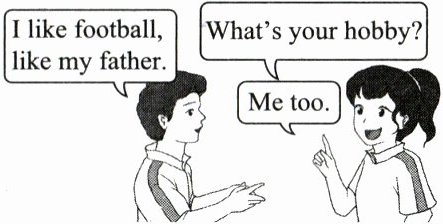
A.The boy likes his father.
B.The boy's father likes football.
C.The girl likes her father.
D.The girl looks like her father.
B
) 6. What can we know from the picture on the right?A.The boy likes his father.
B.The boy's father likes football.
C.The girl likes her father.
D.The girl looks like her father.
答案:6. B
解析:
翻译:
(
A. 这个男孩喜欢他的父亲。
B. 这个男孩的父亲喜欢足球。
C. 这个女孩喜欢她的父亲。
D. 这个女孩长得像她的父亲。
(
B
)6. 从右边的图片中我们能知道什么?A. 这个男孩喜欢他的父亲。
B. 这个男孩的父亲喜欢足球。
C. 这个女孩喜欢她的父亲。
D. 这个女孩长得像她的父亲。
(
A.her look
B.her to look
C.she look
D.she to look
A
) 7. The dress is great for Lily. It makes ______ pretty.A.her look
B.her to look
C.she look
D.she to look
答案:7. A
解析:
翻译:
(
A.她看起来
B.她去看起来
C.她(主格)看起来
D.她(主格)去看起来
(
A
)7. 这条连衣裙很适合莉莉。它让她看起来很漂亮。A.她看起来
B.她去看起来
C.她(主格)看起来
D.她(主格)去看起来
(
A.come out
B.come close
C.come up
D.come true
D
) 8. If we Chinese work hard together, our Chinese Dream will ______.A.come out
B.come close
C.come up
D.come true
答案:8. D
解析:
翻译:
(
A. 出版;出现
B. 靠近
C. 发生;被提出
D. 实现
(
D
)8. 如果我们中国人共同努力奋斗,我们的中国梦将会______。A. 出版;出现
B. 靠近
C. 发生;被提出
D. 实现
(
— Almost (几乎) every day. It takes her one hour to make one.
A.How long
B.How often
C.How much
D.How soon
B
) 9. — ______ does your mother make a Douyin video, John?— Almost (几乎) every day. It takes her one hour to make one.
A.How long
B.How often
C.How much
D.How soon
答案:9. B
解析:
翻译:
(
— 几乎每天。她制作一条视频要花一个小时。
A.多长时间
B.多久一次
C.多少(钱)
D.多久以后
(
B
)9. — 约翰,你妈妈______制作一条抖音视频?— 几乎每天。她制作一条视频要花一个小时。
A.多长时间
B.多久一次
C.多少(钱)
D.多久以后
(
A.Really? It's too far
B.I don't think it's cool
C.Great! Have fun
D.Yes. That's cool
C
)10. — My parents will take me to Beijing this weekend. — ______.A.Really? It's too far
B.I don't think it's cool
C.Great! Have fun
D.Yes. That's cool
答案:10. C
解析:
翻译:
(
A. 真的吗?那太远了
B. 我觉得那不酷
C. 太棒了!玩得开心
D. 是的。那很酷
(
C
)10. ——这个周末我的父母会带我去北京。——______。A. 真的吗?那太远了
B. 我觉得那不酷
C. 太棒了!玩得开心
D. 是的。那很酷
二、完形填空(10 分)
Eight years ago, I played ice hockey (冰球) for the first time.
When I stepped on the ice, I almost 1! The ice was just like a mirror (镜子)! 2 my coach (教练) didn't push me from behind, I could stay in one place for months. For the first 20 minutes, I walked around like an old man. I fell down three times and it 3 a lot.
Then, I got my first stick (球杆) and puck (冰球). Before 4 this class, I thought that it would be very 5 to control (控制) the puck with my stick. But I was wrong. The puck was going everywhere. I 6 about 30 minutes trying to control the puck. I was really bad at it. I was sad but kept 7 again and again. Then, just before the class was over, I learned 8 to control it.
It can be funny when you did something for the 9 time. But 10 will encourage (鼓励) you to do better in the future!
( ) 1. A. wrote down
B. fell down
C. slowed down
D. looked down
( ) 2. A. Because
B. So
C. If
D. And
( ) 3. A. hurt
B. learned
C. grew
D. kept
( ) 4. A. making
B. taking
C. finding
D. missing
( ) 5. A. quick
B. hard
C. quiet
D. easy
( ) 6. A. took
B. danced
C. spent
D. drove
( ) 7. A. watching
B. trying
C. talking
D. working
( ) 8. A. what
B. when
C. how
D. why
( ) 9. A. best
B. last
C. past
D. first
( )10. A. he
B. they
C. his
D. it
Eight years ago, I played ice hockey (冰球) for the first time.
When I stepped on the ice, I almost 1! The ice was just like a mirror (镜子)! 2 my coach (教练) didn't push me from behind, I could stay in one place for months. For the first 20 minutes, I walked around like an old man. I fell down three times and it 3 a lot.
Then, I got my first stick (球杆) and puck (冰球). Before 4 this class, I thought that it would be very 5 to control (控制) the puck with my stick. But I was wrong. The puck was going everywhere. I 6 about 30 minutes trying to control the puck. I was really bad at it. I was sad but kept 7 again and again. Then, just before the class was over, I learned 8 to control it.
It can be funny when you did something for the 9 time. But 10 will encourage (鼓励) you to do better in the future!
( ) 1. A. wrote down
B. fell down
C. slowed down
D. looked down
( ) 2. A. Because
B. So
C. If
D. And
( ) 3. A. hurt
B. learned
C. grew
D. kept
( ) 4. A. making
B. taking
C. finding
D. missing
( ) 5. A. quick
B. hard
C. quiet
D. easy
( ) 6. A. took
B. danced
C. spent
D. drove
( ) 7. A. watching
B. trying
C. talking
D. working
( ) 8. A. what
B. when
C. how
D. why
( ) 9. A. best
B. last
C. past
D. first
( )10. A. he
B. they
C. his
D. it
答案:1. B 2. C 3. A 4. B 5. D 6. C 7. B 8. C 9. D 10. D
解析:
翻译:
二、完形填空(10分)
八年前,我第一次打冰球。
当我踏上冰面时,我几乎摔倒了!冰面就像一面镜子!如果我的教练不从后面推我,我能在一个地方待上好几个月。在最初的20分钟里,我像个老人一样四处走动。我摔倒了三次,而且摔得很疼。
然后,我拿到了我的第一根球杆和冰球。在参加这门课之前,我原以为用球杆控制冰球会很容易。但我错了。冰球到处乱窜。我花了大约30分钟试图控制冰球。我真的很不擅长这个。我很伤心,但还是一次又一次地尝试。然后,就在课程结束前,我学会了如何控制它。
当你第一次做某件事的时候,可能会很有趣。但它会鼓励你在未来做得更好!
( )1. A. 写下 B. 摔倒 C. 减速 D. 向下看
( )2. A. 因为 B. 所以 C. 如果 D. 和
( )3. A. 使疼痛;受伤 B. 学习 C. 成长 D. 保持
( )4. A. 制作 B. 参加(课程等) C. 找到 D. 错过
( )5. A. 快的 B. 困难的 C. 安静的 D. 容易的
( )6. A. 花费(时间、金钱等),常用结构:It takes sb. some time to do sth. B. 跳舞 C. 花费(时间),常用结构:sb. spend some time (in) doing sth. D. 驾驶
( )7. A. 观看 B. 尝试 C. 谈论 D. 工作
( )8. A. 什么 B. 什么时候 C. 如何 D. 为什么
( )9. A. 最好的 B. 最后的 C. 过去的 D. 第一的
( )10. A. 他 B. 他们 C. 他的 D. 它
二、完形填空(10分)
八年前,我第一次打冰球。
当我踏上冰面时,我几乎摔倒了!冰面就像一面镜子!如果我的教练不从后面推我,我能在一个地方待上好几个月。在最初的20分钟里,我像个老人一样四处走动。我摔倒了三次,而且摔得很疼。
然后,我拿到了我的第一根球杆和冰球。在参加这门课之前,我原以为用球杆控制冰球会很容易。但我错了。冰球到处乱窜。我花了大约30分钟试图控制冰球。我真的很不擅长这个。我很伤心,但还是一次又一次地尝试。然后,就在课程结束前,我学会了如何控制它。
当你第一次做某件事的时候,可能会很有趣。但它会鼓励你在未来做得更好!
( )1. A. 写下 B. 摔倒 C. 减速 D. 向下看
( )2. A. 因为 B. 所以 C. 如果 D. 和
( )3. A. 使疼痛;受伤 B. 学习 C. 成长 D. 保持
( )4. A. 制作 B. 参加(课程等) C. 找到 D. 错过
( )5. A. 快的 B. 困难的 C. 安静的 D. 容易的
( )6. A. 花费(时间、金钱等),常用结构:It takes sb. some time to do sth. B. 跳舞 C. 花费(时间),常用结构:sb. spend some time (in) doing sth. D. 驾驶
( )7. A. 观看 B. 尝试 C. 谈论 D. 工作
( )8. A. 什么 B. 什么时候 C. 如何 D. 为什么
( )9. A. 最好的 B. 最后的 C. 过去的 D. 第一的
( )10. A. 他 B. 他们 C. 他的 D. 它