三、阅读理解(28 分)
A
TECH & LIFE
Memory Helper
East Daily May 21, 2025
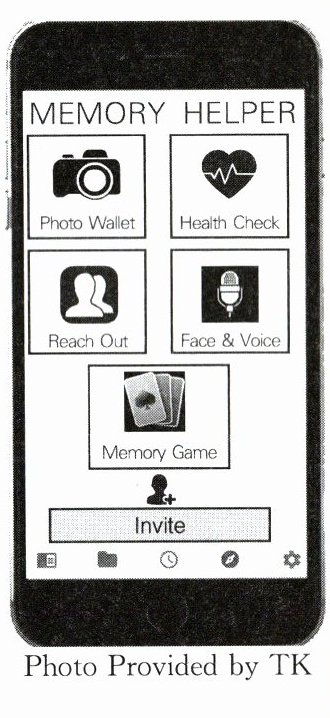
A talented young team from Ireland, the creators of Memory Helper, developed this support app for people with dementia(失智症). And they won the final at the 2024 competition, standing out among 5 400 students from 62 countries, Mars Times reported on December 15, 2024.
Last year, Laura, Aaron and Vicky put their heads together for Technovation Kids(TK), an international competition that encourages(鼓励)teenagers to create an app that solves a community problem.
The inspiration(灵感)for their project came from their teacher's mother, who had dementia.
To complete their project, the three designed an app to support both people with dementia and their family. The app solves some common problems connected with dementia like loss(失去)of memory.
“We hope that our app can reach millions of people who have dementia and just make their lives kind of easier,” Laura said.
(
A. is used all over the world B. is designed for the old
C. helps people with dementia D. connects people's brains(大脑)
(
A. kill time B. practise the brain
C. take notes D. find back lost things
(
A. the photo was provided by Laura
B. Technovation Kids took place in Ireland on May 21, 2025
C. East Daily reported the news before Mars Times
D. the news comes from TECH & LIFE section(部分)
A
TECH & LIFE
Memory Helper
East Daily May 21, 2025
A talented young team from Ireland, the creators of Memory Helper, developed this support app for people with dementia(失智症). And they won the final at the 2024 competition, standing out among 5 400 students from 62 countries, Mars Times reported on December 15, 2024.
Last year, Laura, Aaron and Vicky put their heads together for Technovation Kids(TK), an international competition that encourages(鼓励)teenagers to create an app that solves a community problem.
The inspiration(灵感)for their project came from their teacher's mother, who had dementia.
To complete their project, the three designed an app to support both people with dementia and their family. The app solves some common problems connected with dementia like loss(失去)of memory.
“We hope that our app can reach millions of people who have dementia and just make their lives kind of easier,” Laura said.
(
C
) 1. The app Memory Helper ______.A. is used all over the world B. is designed for the old
C. helps people with dementia D. connects people's brains(大脑)
(
B
) 2. The programme Memory Game in the photo is probably to ______.A. kill time B. practise the brain
C. take notes D. find back lost things
(
D
) 3. From the material above, we can know that ______.A. the photo was provided by Laura
B. Technovation Kids took place in Ireland on May 21, 2025
C. East Daily reported the news before Mars Times
D. the news comes from TECH & LIFE section(部分)
答案:1. C 2. B 3. D
解析:
翻译:
三、阅读理解(28分)
A
科技与生活
记忆助手
《东方日报》2025年5月21日
来自爱尔兰的一个才华横溢的年轻团队——“记忆助手”的开发者,为失智症患者开发了这款辅助应用程序。据《火星时报》2024年12月15日报道,他们在2024年的比赛中获得了决赛资格,在来自62个国家的5400名学生中脱颖而出。
去年,劳拉、亚伦和维姬为“青少年科技创新大赛(TK)”齐心协力,这是一项鼓励青少年开发一款解决社区问题的应用程序的国际比赛。
他们项目的灵感来自他们老师的母亲,她患有失智症。
为了完成他们的项目,这三个人设计了一款既能帮助失智症患者又能帮助其家人的应用程序。这款应用程序解决了一些与失智症相关的常见问题,比如记忆力减退。
“我们希望我们的应用程序能够惠及数百万失智症患者,让他们的生活变得更轻松一点,”劳拉说。
( )1. “记忆助手”这款应用程序______。
A. 在全世界被使用
B. 是为老年人设计的
C. 帮助失智症患者
D. 连接人们的大脑
( )2. 照片中的“记忆游戏”程序可能是为了______。
A. 消磨时间
B. 锻炼大脑
C. 做笔记
D. 找回丢失的东西
( )3. 从上面的材料中,我们可以知道______。
A. 这张照片是劳拉提供的
B. “青少年科技创新大赛”于2025年5月21日在爱尔兰举行
C. 《东方日报》比《火星时报》更早报道了这条新闻
D. 这条新闻来自“科技与生活”版块
三、阅读理解(28分)
A
科技与生活
记忆助手
《东方日报》2025年5月21日
来自爱尔兰的一个才华横溢的年轻团队——“记忆助手”的开发者,为失智症患者开发了这款辅助应用程序。据《火星时报》2024年12月15日报道,他们在2024年的比赛中获得了决赛资格,在来自62个国家的5400名学生中脱颖而出。
去年,劳拉、亚伦和维姬为“青少年科技创新大赛(TK)”齐心协力,这是一项鼓励青少年开发一款解决社区问题的应用程序的国际比赛。
他们项目的灵感来自他们老师的母亲,她患有失智症。
为了完成他们的项目,这三个人设计了一款既能帮助失智症患者又能帮助其家人的应用程序。这款应用程序解决了一些与失智症相关的常见问题,比如记忆力减退。
“我们希望我们的应用程序能够惠及数百万失智症患者,让他们的生活变得更轻松一点,”劳拉说。
( )1. “记忆助手”这款应用程序______。
A. 在全世界被使用
B. 是为老年人设计的
C. 帮助失智症患者
D. 连接人们的大脑
( )2. 照片中的“记忆游戏”程序可能是为了______。
A. 消磨时间
B. 锻炼大脑
C. 做笔记
D. 找回丢失的东西
( )3. 从上面的材料中,我们可以知道______。
A. 这张照片是劳拉提供的
B. “青少年科技创新大赛”于2025年5月21日在爱尔兰举行
C. 《东方日报》比《火星时报》更早报道了这条新闻
D. 这条新闻来自“科技与生活”版块
B
Recently, the topic of “school subject colours” has become a popular topic. Everyone seems to have strong opinions about which colours are connected with which school subjects, even if they graduated from school a long time ago. People connect school subjects with colours subconsciously(下意识地). There could be lots of reasons for these colour connections, but the most usual explanation is that they're based on(基于)something people learned as kids. At many schools, kids are asked to use colourful folders(文件夹)to keep their notes and homework in. Many people get so used to using the same colours over and over again that they connect those colours with subjects.
Of course, the colour of each subject is different depending on the school kids go to and the teachers they have as well as their own taste. For that reason, not everyone agrees on colours.
However, a few connections are more widely accepted. For example, Science, which nearly everyone thinks is green, does not spark much debate(争论). It includes classes like Chemistry, Biology and Physics and they are closely connected with nature. When people think of nature and the environment, green is a key colour because so many things in nature are green.
People could also choose colours based on(基于) ▲. For example, if a subject makes them happy and excited, they might call it yellow. However, if a subject makes them angry, they could connect it with red. As for blue, if a subject is fun and relaxing, then it's likely that blue comes to mind first.
There are no right or wrong answers for the school subject debate. While the exact reason is different from person to person, it's an interesting topic to talk about. It shows that just because we see something one way and someone else sees it another way doesn't mean it's wrong. It's just two different viewpoints.
(
A. Their own taste. B. Their grades of each subject.
C. Their school experience as kids. D. Their teachers' teaching methods.
(
A. how the subjects make them feel B. which subject they like best
C. whether the teachers teach well D. where they attend school
(
A. Who Likes Connecting Colours with School Subjects.
B. How People Connect Colours with School Subjects.
C. Why People Debate over Connections Between Colours and Subjects.
D. If People Should Connect Colours with Subjects.
Recently, the topic of “school subject colours” has become a popular topic. Everyone seems to have strong opinions about which colours are connected with which school subjects, even if they graduated from school a long time ago. People connect school subjects with colours subconsciously(下意识地). There could be lots of reasons for these colour connections, but the most usual explanation is that they're based on(基于)something people learned as kids. At many schools, kids are asked to use colourful folders(文件夹)to keep their notes and homework in. Many people get so used to using the same colours over and over again that they connect those colours with subjects.
Of course, the colour of each subject is different depending on the school kids go to and the teachers they have as well as their own taste. For that reason, not everyone agrees on colours.
However, a few connections are more widely accepted. For example, Science, which nearly everyone thinks is green, does not spark much debate(争论). It includes classes like Chemistry, Biology and Physics and they are closely connected with nature. When people think of nature and the environment, green is a key colour because so many things in nature are green.
People could also choose colours based on(基于) ▲. For example, if a subject makes them happy and excited, they might call it yellow. However, if a subject makes them angry, they could connect it with red. As for blue, if a subject is fun and relaxing, then it's likely that blue comes to mind first.
There are no right or wrong answers for the school subject debate. While the exact reason is different from person to person, it's an interesting topic to talk about. It shows that just because we see something one way and someone else sees it another way doesn't mean it's wrong. It's just two different viewpoints.
(
C
) 4. Where do most people think their colour connections come from?A. Their own taste. B. Their grades of each subject.
C. Their school experience as kids. D. Their teachers' teaching methods.
(
A
) 5. Which of the following can be put in “ ▲ ” in the passage?A. how the subjects make them feel B. which subject they like best
C. whether the teachers teach well D. where they attend school
(
B
) 6. What is the best title for the passage?A. Who Likes Connecting Colours with School Subjects.
B. How People Connect Colours with School Subjects.
C. Why People Debate over Connections Between Colours and Subjects.
D. If People Should Connect Colours with Subjects.
答案:4. C 5. A 6. B
解析:
翻译:
B
最近,“学科颜色”这一话题成为了热门话题。似乎每个人都对哪些颜色与哪些学科相关有着强烈的看法,即使他们已经毕业很久了。人们会下意识地将学科与颜色联系起来。这种颜色关联可能有很多原因,但最常见的解释是,它们基于人们小时候学到的东西。在很多学校,孩子们被要求使用彩色文件夹来存放笔记和作业。很多人因为反复使用相同的颜色而习惯了,以至于他们将这些颜色与学科联系起来。
当然,每个学科的颜色会因孩子们就读的学校、他们的老师以及他们自己的喜好而有所不同。因此,并不是每个人都对颜色的选择达成一致。
然而,有一些关联被更广泛地接受。例如,几乎每个人都认为科学是绿色的,这并没有引发太多争论。科学包括化学、生物和物理等课程,它们与自然密切相关。当人们想到自然和环境时,绿色是一个关键颜色,因为自然界中有很多东西都是绿色的。
人们也可以根据 ▲ 来选择颜色。例如,如果一个学科让他们感到快乐和兴奋,他们可能会称它为黄色。然而,如果一个学科让他们生气,他们可能会将它与红色联系起来。至于蓝色,如果一个学科有趣且令人放松,那么蓝色可能会首先出现在脑海中。
关于学科颜色的争论没有对错之分。虽然确切的原因因人而异,但这是一个有趣的话题。它表明,仅仅因为我们以一种方式看待事物,而其他人以另一种方式看待它,并不意味着它是错误的。这只是两种不同的观点。
( ) 4. 大多数人认为他们的颜色关联来自哪里?
A. 他们自己的喜好。
B. 他们每个学科的成绩。
C. 他们小时候的学校经历。
D. 他们老师的教学方法。
( ) 5. 下列哪一项可以填入文中的“ ▲ ”?
A. 学科给他们的感受
B. 他们最喜欢的学科
C. 老师教得好不好
D. 他们就读的学校
( ) 6. 这篇文章的最佳标题是什么?
A. 谁喜欢将颜色与学科联系起来。
B. 人们如何将颜色与学科联系起来。
C. 为什么人们会争论颜色与学科之间的联系。
D. 人们是否应该将颜色与学科联系起来。
B
最近,“学科颜色”这一话题成为了热门话题。似乎每个人都对哪些颜色与哪些学科相关有着强烈的看法,即使他们已经毕业很久了。人们会下意识地将学科与颜色联系起来。这种颜色关联可能有很多原因,但最常见的解释是,它们基于人们小时候学到的东西。在很多学校,孩子们被要求使用彩色文件夹来存放笔记和作业。很多人因为反复使用相同的颜色而习惯了,以至于他们将这些颜色与学科联系起来。
当然,每个学科的颜色会因孩子们就读的学校、他们的老师以及他们自己的喜好而有所不同。因此,并不是每个人都对颜色的选择达成一致。
然而,有一些关联被更广泛地接受。例如,几乎每个人都认为科学是绿色的,这并没有引发太多争论。科学包括化学、生物和物理等课程,它们与自然密切相关。当人们想到自然和环境时,绿色是一个关键颜色,因为自然界中有很多东西都是绿色的。
人们也可以根据 ▲ 来选择颜色。例如,如果一个学科让他们感到快乐和兴奋,他们可能会称它为黄色。然而,如果一个学科让他们生气,他们可能会将它与红色联系起来。至于蓝色,如果一个学科有趣且令人放松,那么蓝色可能会首先出现在脑海中。
关于学科颜色的争论没有对错之分。虽然确切的原因因人而异,但这是一个有趣的话题。它表明,仅仅因为我们以一种方式看待事物,而其他人以另一种方式看待它,并不意味着它是错误的。这只是两种不同的观点。
( ) 4. 大多数人认为他们的颜色关联来自哪里?
A. 他们自己的喜好。
B. 他们每个学科的成绩。
C. 他们小时候的学校经历。
D. 他们老师的教学方法。
( ) 5. 下列哪一项可以填入文中的“ ▲ ”?
A. 学科给他们的感受
B. 他们最喜欢的学科
C. 老师教得好不好
D. 他们就读的学校
( ) 6. 这篇文章的最佳标题是什么?
A. 谁喜欢将颜色与学科联系起来。
B. 人们如何将颜色与学科联系起来。
C. 为什么人们会争论颜色与学科之间的联系。
D. 人们是否应该将颜色与学科联系起来。