四、阅读短文,回答问题
How do you celebrate the New Year?There are many ways to celebrate the coming of the
New Year.With so many countries around the world,it's no surprise that there are different
New Year's traditions.Celebrating the New Year can be a great way to hope for a good future.
Celebrate with food for good luck
In fact,eating New Year's good luck food is something people do all over the world.In
Spain,people eat 12 good luck grapes at midnight on New Year's Eve.These 12 grapes stand
for(代表)the 12 months of the year.If you eat these grapes,Spanish tradition says you'll
surely have good luck in the coming year.
Exchange a New Year's gift
In Germany,people give a small gift to a loved one on New Year's Eve for good luck.
Japan also has the tradition,which is called “ New Year's gift ".People place money in an
envelope(信封)and give it as a gift to a child in the family,but it can also be given to adults
(成年人)to bring good luck and welcome the New Year.
Interesting traditions
Some traditions may be strange(奇怪的).In Canada,some people celebrate the New Year
by jumping into the sea.But people all have great fun.
每题答案不超过6个单词
1.Why do people celebrate the New Year?
2.What do the 12 grapes stand for in Spain?
3.Where do Japanese people put the money?
4.How do some people in Canada celebrate the New Year?
5.What is your favourite Chinese New Year tradition?
How do you celebrate the New Year?There are many ways to celebrate the coming of the
New Year.With so many countries around the world,it's no surprise that there are different
New Year's traditions.Celebrating the New Year can be a great way to hope for a good future.
Celebrate with food for good luck
In fact,eating New Year's good luck food is something people do all over the world.In
Spain,people eat 12 good luck grapes at midnight on New Year's Eve.These 12 grapes stand
for(代表)the 12 months of the year.If you eat these grapes,Spanish tradition says you'll
surely have good luck in the coming year.
Exchange a New Year's gift
In Germany,people give a small gift to a loved one on New Year's Eve for good luck.
Japan also has the tradition,which is called “ New Year's gift ".People place money in an
envelope(信封)and give it as a gift to a child in the family,but it can also be given to adults
(成年人)to bring good luck and welcome the New Year.
Interesting traditions
Some traditions may be strange(奇怪的).In Canada,some people celebrate the New Year
by jumping into the sea.But people all have great fun.
每题答案不超过6个单词
1.Why do people celebrate the New Year?
To hope for a good future.
2.What do the 12 grapes stand for in Spain?
The 12 months of the year.
3.Where do Japanese people put the money?
In an envelope.
4.How do some people in Canada celebrate the New Year?
By jumping into the sea.
5.What is your favourite Chinese New Year tradition?
Getting red packets.
答案:1. To hope for a good future.
2. The 12 months of the year.
3. In an envelope. 4. By jumping into the sea.
5. Getting red packets.
2. The 12 months of the year.
3. In an envelope. 4. By jumping into the sea.
5. Getting red packets.
解析:
翻译:
### 四、阅读短文,回答问题
你如何庆祝新年?庆祝新年的到来有很多种方式。世界上有这么多国家,有不同的新年传统也就不足为奇了。庆祝新年是对美好未来的一种美好期许。
#### 用食物庆祝以求好运
事实上,吃新年幸运食物是世界各地人们都会做的事。在西班牙,人们在新年前夜的午夜吃12颗幸运葡萄。这12颗葡萄代表一年的12个月。按照西班牙的传统,如果你吃了这些葡萄,来年你一定会有好运。
#### 交换新年礼物
在德国,人们会在新年前夜给心爱的人送一份小礼物以求好运。日本也有这个传统,叫做“新年礼物”。人们把钱放在信封里,作为礼物送给家里的孩子,但也可以送给成年人,以带来好运并迎接新年。
#### 有趣的传统
有些传统可能很奇怪。在加拿大,有些人通过跳进海里来庆祝新年。但人们都玩得很开心。
1. 人们为什么庆祝新年?
为了期许美好未来。
2. 在西班牙,12颗葡萄代表什么?
一年的12个月。
3. 日本人把钱放在哪里?
在信封里。
4. 加拿大的一些人如何庆祝新年?
通过跳进海里。
5. 你最喜欢的中国新年传统是什么?
收红包。
### 四、阅读短文,回答问题
你如何庆祝新年?庆祝新年的到来有很多种方式。世界上有这么多国家,有不同的新年传统也就不足为奇了。庆祝新年是对美好未来的一种美好期许。
#### 用食物庆祝以求好运
事实上,吃新年幸运食物是世界各地人们都会做的事。在西班牙,人们在新年前夜的午夜吃12颗幸运葡萄。这12颗葡萄代表一年的12个月。按照西班牙的传统,如果你吃了这些葡萄,来年你一定会有好运。
#### 交换新年礼物
在德国,人们会在新年前夜给心爱的人送一份小礼物以求好运。日本也有这个传统,叫做“新年礼物”。人们把钱放在信封里,作为礼物送给家里的孩子,但也可以送给成年人,以带来好运并迎接新年。
#### 有趣的传统
有些传统可能很奇怪。在加拿大,有些人通过跳进海里来庆祝新年。但人们都玩得很开心。
1. 人们为什么庆祝新年?
为了期许美好未来。
2. 在西班牙,12颗葡萄代表什么?
一年的12个月。
3. 日本人把钱放在哪里?
在信封里。
4. 加拿大的一些人如何庆祝新年?
通过跳进海里。
5. 你最喜欢的中国新年传统是什么?
收红包。
五、书面表达
假如英国兄弟学校的学生即将来你校进行文化交流,他们对中国的节日很感兴趣。以下是
中国元宵节的一些情况,请你根据下列信息,写一篇演讲稿,向他们介绍这个节日。
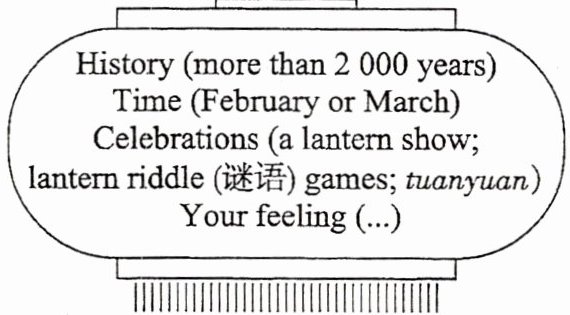
I'm glad that you are interested in Chinese festivals.I'd like to introduce the Lantern
Festival.
______________________________
______________________________
______________________________
______________________________
______________________________
______________________________
______________________________
______________________________
______________________________
假如英国兄弟学校的学生即将来你校进行文化交流,他们对中国的节日很感兴趣。以下是
中国元宵节的一些情况,请你根据下列信息,写一篇演讲稿,向他们介绍这个节日。
I'm glad that you are interested in Chinese festivals.I'd like to introduce the Lantern
Festival.
______________________________
______________________________
______________________________
______________________________
______________________________
______________________________
______________________________
______________________________
______________________________
答案:I'm glad that you are interested in Chinese festivals. I’d like to introduce the Lantern Festival.
The Lantern Festival is an important festival in China. It has a history of more than 2 000 years. It usually comes in February or March.
To celebrate this festival, we have many interesting activities. Many cities have lantern shows. People carry beautiful lanterns around the blocks. We can also take part in the lantern riddle games. The best part of the festival is eating tuanyuan with family members. Tuanyuan means getting together in Chinese.
The Lantern Festival is full of fun. I hope you can join us next year.
The Lantern Festival is an important festival in China. It has a history of more than 2 000 years. It usually comes in February or March.
To celebrate this festival, we have many interesting activities. Many cities have lantern shows. People carry beautiful lanterns around the blocks. We can also take part in the lantern riddle games. The best part of the festival is eating tuanyuan with family members. Tuanyuan means getting together in Chinese.
The Lantern Festival is full of fun. I hope you can join us next year.
解析:
翻译:
我很高兴你们对中国的节日感兴趣。我想要介绍一下元宵节。
我很高兴你们对中国的节日感兴趣。我想要介绍一下元宵节。