一、从方框中选择与图片意思相符的表达
A. Well done!
B. No problem!
C. What a boring film!
D. Nice to meet you!
E. Wow! What an amazing view!
F. It's none of my business.
G. Good morning! Can I help you?
H. You always make the same mistake!
A. Well done!
B. No problem!
C. What a boring film!
D. Nice to meet you!
E. Wow! What an amazing view!
F. It's none of my business.
G. Good morning! Can I help you?
H. You always make the same mistake!
答案:(1) D
(2) A
(3) B
(4) F
(5) H
(6) E
(7) G
(8) C
(2) A
(3) B
(4) F
(5) H
(6) E
(7) G
(8) C
解析:
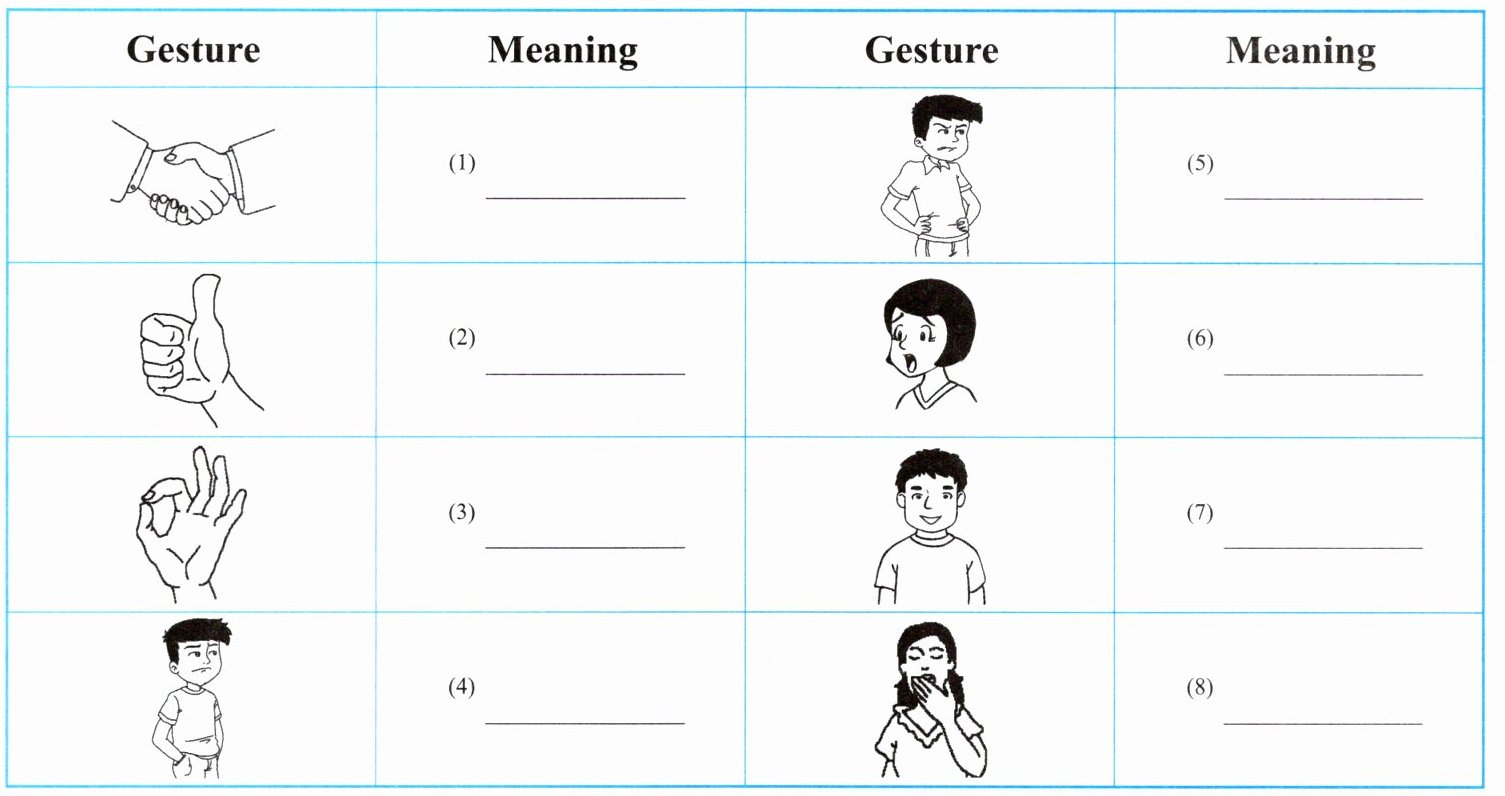
根据图片里的手势、表情对应的含义,匹配方框中的表达:
1. 握手是见面问候的礼仪,对应“Nice to meet you!”;
2. 竖大拇指表示夸赞、认可,对应“Well done!”;
3. OK手势表示没问题、同意,对应“No problem!”;
4. 双手插兜、不在意的表情对应“It's none of my business.”;
5. 叉腰生气的表情对应指责类表达“You always make the same mistake!”;
6. 惊讶的表情对应赞叹类表达“Wow! What an amazing view!”;
7. 微笑友好的表情对应服务类问候“Good morning! Can I help you?”;
8. 打哈欠的表情对应表达无聊“What a boring film!”。
1. 握手是见面问候的礼仪,对应“Nice to meet you!”;
2. 竖大拇指表示夸赞、认可,对应“Well done!”;
3. OK手势表示没问题、同意,对应“No problem!”;
4. 双手插兜、不在意的表情对应“It's none of my business.”;
5. 叉腰生气的表情对应指责类表达“You always make the same mistake!”;
6. 惊讶的表情对应赞叹类表达“Wow! What an amazing view!”;
7. 微笑友好的表情对应服务类问候“Good morning! Can I help you?”;
8. 打哈欠的表情对应表达无聊“What a boring film!”。
二、根据句意,用括号中所给单词的适当形式填空
1. You could see (happy) on his face because he lost his favourite toy plane just now.
2. After a further discussion, the two businessmen reached a(n) (agree) at last.
3. My cousin waited (patient) for the school bus. He looked at his watch for many times.
4. Nobody wants to make friends with (honest) people, right?
5. The Maths teacher got even (angry) when he knew some of his students didn't finish homework.
1. You could see (happy) on his face because he lost his favourite toy plane just now.
2. After a further discussion, the two businessmen reached a(n) (agree) at last.
3. My cousin waited (patient) for the school bus. He looked at his watch for many times.
4. Nobody wants to make friends with (honest) people, right?
5. The Maths teacher got even (angry) when he knew some of his students didn't finish homework.
答案:1. unhappiness
2. agreement
3. impatiently
4. dishonest
5. angrier
2. agreement
3. impatiently
4. dishonest
5. angrier
解析:
1. 根据“lost his favourite toy plane”可知他脸上是不开心的情绪,see后接名词作宾语,happy的名词形式的否定形式为unhappiness,故填unhappiness。
2. “reach an agreement”是固定短语,意为“达成协议”,此处需要agree的名词形式,故填agreement。
3. 由“He looked at his watch for many times”可知他等车时不耐烦,waited是动词,需用副词修饰,patient的副词形式的否定形式为impatiently,故填impatiently。
4. 根据“Nobody wants to make friends with”可知是不想和不诚实的人交友,honest的否定形式为dishonest,故填dishonest。
5. even用于修饰形容词比较级,angry的比较级为angrier,故填angrier。
2. “reach an agreement”是固定短语,意为“达成协议”,此处需要agree的名词形式,故填agreement。
3. 由“He looked at his watch for many times”可知他等车时不耐烦,waited是动词,需用副词修饰,patient的副词形式的否定形式为impatiently,故填impatiently。
4. 根据“Nobody wants to make friends with”可知是不想和不诚实的人交友,honest的否定形式为dishonest,故填dishonest。
5. even用于修饰形容词比较级,angry的比较级为angrier,故填angrier。
一、短文缺词填空
Body language is very helpful when people are talking with others. It can help you make
(1)y easily understood.
Most people know that (2)w the hand means goodbye, shaking hands means
(3)w, and clapping (拍) hands means congratulations. But different countries may
have different body languages. For example, in France, people (4)k each other
on the cheeks when they meet, but in China, people shake hands (5)i of kissing.
People in Arab countries like standing (6)c to each other when they are talking, but
English people usually keep a distance away when they are talking. In most countries, nodding
the head means "I (7)a with you" or "I am listening", while people in India may
(8)s their heads as a sign of agreement and active listening. The American-style
"OK" sign is a rude gesture in some (9)c, such as Mexico, Germany and Egypt.
When visiting another country, see how the (10)l people communicate and learn
by example.
Body language is very helpful when people are talking with others. It can help you make
(1)y easily understood.
Most people know that (2)w the hand means goodbye, shaking hands means
(3)w, and clapping (拍) hands means congratulations. But different countries may
have different body languages. For example, in France, people (4)k each other
on the cheeks when they meet, but in China, people shake hands (5)i of kissing.
People in Arab countries like standing (6)c to each other when they are talking, but
English people usually keep a distance away when they are talking. In most countries, nodding
the head means "I (7)a with you" or "I am listening", while people in India may
(8)s their heads as a sign of agreement and active listening. The American-style
"OK" sign is a rude gesture in some (9)c, such as Mexico, Germany and Egypt.
When visiting another country, see how the (10)l people communicate and learn
by example.
答案:(1) yourself (2) waving (3) welcome (4) kiss (5) instead (6) close (7) agree (8) shake (9) countries (10) local
解析:
这篇短文围绕肢体语言展开,需结合上下文语境、固定搭配及语法知识填写单词:
1. 根据语境“让你自己被轻易理解”,结合首字母y,填yourself,make oneself done是固定结构;
2. 挥手表示告别,结合首字母w,填waving,此处作主语用动名词形式;
3. 握手通常表示欢迎,结合首字母w,填welcome;
4. 法国人们见面时亲吻脸颊,主语people是复数,一般现在时,结合首字母k,填kiss;
5. instead of是固定搭配,意为“代替”,符合“中国人握手代替亲吻”的语境,结合首字母i,填instead;
6. 阿拉伯人交谈时喜欢站得近,close to意为“靠近”,结合首字母c,填close;
7. agree with sb.是固定搭配,意为“同意某人”,点头表示同意,结合首字母a,填agree;
8. 印度人摇头表示同意,shake one's head是固定短语,主语people是复数,一般现在时,结合首字母s,填shake;
9. 美式“OK”手势在一些国家是粗鲁的,结合首字母c,填countries;
10. local people意为“当地人”,符合“看当地人如何交流”的语境,结合首字母l,填local。
1. 根据语境“让你自己被轻易理解”,结合首字母y,填yourself,make oneself done是固定结构;
2. 挥手表示告别,结合首字母w,填waving,此处作主语用动名词形式;
3. 握手通常表示欢迎,结合首字母w,填welcome;
4. 法国人们见面时亲吻脸颊,主语people是复数,一般现在时,结合首字母k,填kiss;
5. instead of是固定搭配,意为“代替”,符合“中国人握手代替亲吻”的语境,结合首字母i,填instead;
6. 阿拉伯人交谈时喜欢站得近,close to意为“靠近”,结合首字母c,填close;
7. agree with sb.是固定搭配,意为“同意某人”,点头表示同意,结合首字母a,填agree;
8. 印度人摇头表示同意,shake one's head是固定短语,主语people是复数,一般现在时,结合首字母s,填shake;
9. 美式“OK”手势在一些国家是粗鲁的,结合首字母c,填countries;
10. local people意为“当地人”,符合“看当地人如何交流”的语境,结合首字母l,填local。