五、根据中文提示完成句子。(每小题3分,共15分)
1. 博物馆的展览展示了历史上不同时期的交通工具,从马车到高速列车。
The museum's exhibit shows the
2. 五十年前的徐州是什么样子的?
3. 深圳积极致力于支持初创企业,培育一个世界级的创新与创业生态系统。
Shenzhen is
4. 在过去的几年里我的生活发生了很大的变化。
My life
5. 我们每个人都很了不起。例如,我的表妹可以通过写作谋生。
Each of us is amazing. For example, my cousin can
1. 博物馆的展览展示了历史上不同时期的交通工具,从马车到高速列车。
The museum's exhibit shows the
transport at different times
in history, from horse-drawn carriages to high-speed trains
.2. 五十年前的徐州是什么样子的?
What was Xuzhou like
fifty years ago?3. 深圳积极致力于支持初创企业,培育一个世界级的创新与创业生态系统。
Shenzhen is
active in its drive to support
startups and foster a world-class ecosystem for innovation and entrepreneurship.4. 在过去的几年里我的生活发生了很大的变化。
My life
has changed greatly
in the past few years.5. 我们每个人都很了不起。例如,我的表妹可以通过写作谋生。
Each of us is amazing. For example, my cousin can
make a living by
writing.答案:1. transport at different times, to high-speed trains
2. What was Xuzhou like
3. active in its drive to support
4. has changed greatly
5. make a living by
2. What was Xuzhou like
3. active in its drive to support
4. has changed greatly
5. make a living by
解析:
翻译:
五、根据中文提示完成句子。(每小题3分,共15分)
1. 博物馆的展览展示了历史上不同时期的交通工具,从马车到高速列车。
2. 五十年前的徐州是什么样子的?
3. 深圳积极致力于支持初创企业,培育一个世界级的创新与创业生态系统。
4. 在过去的几年里我的生活发生了很大的变化。
5. 我们每个人都很了不起。例如,我的表妹可以通过写作谋生。
五、根据中文提示完成句子。(每小题3分,共15分)
1. 博物馆的展览展示了历史上不同时期的交通工具,从马车到高速列车。
2. 五十年前的徐州是什么样子的?
3. 深圳积极致力于支持初创企业,培育一个世界级的创新与创业生态系统。
4. 在过去的几年里我的生活发生了很大的变化。
5. 我们每个人都很了不起。例如,我的表妹可以通过写作谋生。
六、任务型阅读。(每小题1分,共10分)
(新素材 社会百科)We dislike too hot days. Luckily, we have air conditioners and fridges. How did Chinese people stay cool in the hot season before they have air conditioners and fridges?
The most common way Chinese people in the past kept cool was to use fans. Many fans had poems or drawings on them.
Beginning in the Sui dynasty, Chinese people started to use porcelain pillows(瓷枕). These pillows felt cool, so people could sleep well on them.
People in old times didn't have fridges to make ice. Instead, they collected ice in winter and kept it underground, sometimes in wells. When summer came, they got the ice out and put it in their living rooms to cool them down.
Rich people and members of the king family had more expensive ways to keep cool. As early as the Han dynasty, some people used a tool like modern electric fans. It was made of a wheel and some fan blades(叶片). A person would pull a rope to make the wheel spin(转) and then the blades would spin around fast.
In the Tang dynasty, people found a way to make their whole house cool. They built their houses next to the water, used some machines to carry water to the top of the house, and made it flow down from the eaves(屋檐). This man-made waterfall brought cool air into the house.
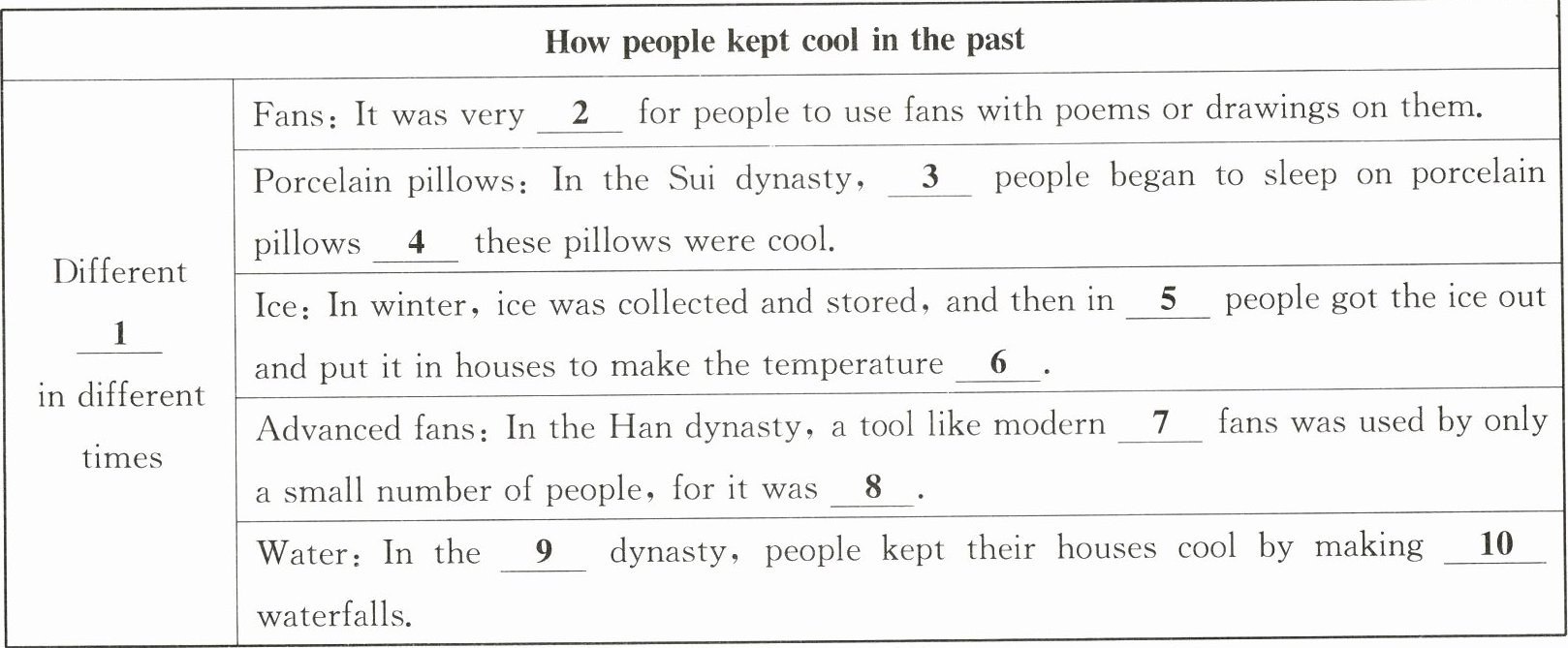
1.
2.
3.
4.
5.
6.
7.
8.
9.
10.
(新素材 社会百科)We dislike too hot days. Luckily, we have air conditioners and fridges. How did Chinese people stay cool in the hot season before they have air conditioners and fridges?
The most common way Chinese people in the past kept cool was to use fans. Many fans had poems or drawings on them.
Beginning in the Sui dynasty, Chinese people started to use porcelain pillows(瓷枕). These pillows felt cool, so people could sleep well on them.
People in old times didn't have fridges to make ice. Instead, they collected ice in winter and kept it underground, sometimes in wells. When summer came, they got the ice out and put it in their living rooms to cool them down.
Rich people and members of the king family had more expensive ways to keep cool. As early as the Han dynasty, some people used a tool like modern electric fans. It was made of a wheel and some fan blades(叶片). A person would pull a rope to make the wheel spin(转) and then the blades would spin around fast.
In the Tang dynasty, people found a way to make their whole house cool. They built their houses next to the water, used some machines to carry water to the top of the house, and made it flow down from the eaves(屋檐). This man-made waterfall brought cool air into the house.
1.
ways
2.
common
3.
Chinese
4.
because
5.
summer
6.
drop
7.
electric
8.
expensive
9.
Tang
10.
man - made
答案:1. ways
2. common
3. Chinese
4. because
5. summer
6. drop
7. electric
8. expensive
9. Tang
10. man-made
2. common
3. Chinese
4. because
5. summer
6. drop
7. electric
8. expensive
9. Tang
10. man-made
解析:
翻译:
六、任务型阅读。(每小题1分,共10分)
(新素材 社会百科)我们不喜欢太热的日子。幸运的是,我们有空调和冰箱。在有空调和冰箱之前,中国人在炎热的季节是如何保持凉爽的呢?
过去中国人最常用的纳凉方式是使用扇子。很多扇子上有诗或画。
从隋朝开始,中国人开始使用瓷枕。这些枕头摸起来很凉,所以人们可以在上面睡得很好。
古代人没有冰箱来制冰。相反,他们在冬天收集冰并把它保存在地下,有时是在井里。当夏天来临时,他们把冰取出来放在客厅里来降温。
富人和王室成员有更昂贵的纳凉方式。早在汉朝,一些人就使用一种类似现代电风扇的工具。它由一个轮子和一些扇叶组成。一个人会拉一根绳子使轮子转动,然后扇叶就会快速转动。
在唐朝,人们找到了一种使整个房子凉爽的方法。他们把房子建在水边,用一些机器把水抽到房子的顶部,然后让水从屋檐流下来。这个人造瀑布把凉爽的空气带进了房子里。
六、任务型阅读。(每小题1分,共10分)
(新素材 社会百科)我们不喜欢太热的日子。幸运的是,我们有空调和冰箱。在有空调和冰箱之前,中国人在炎热的季节是如何保持凉爽的呢?
过去中国人最常用的纳凉方式是使用扇子。很多扇子上有诗或画。
从隋朝开始,中国人开始使用瓷枕。这些枕头摸起来很凉,所以人们可以在上面睡得很好。
古代人没有冰箱来制冰。相反,他们在冬天收集冰并把它保存在地下,有时是在井里。当夏天来临时,他们把冰取出来放在客厅里来降温。
富人和王室成员有更昂贵的纳凉方式。早在汉朝,一些人就使用一种类似现代电风扇的工具。它由一个轮子和一些扇叶组成。一个人会拉一根绳子使轮子转动,然后扇叶就会快速转动。
在唐朝,人们找到了一种使整个房子凉爽的方法。他们把房子建在水边,用一些机器把水抽到房子的顶部,然后让水从屋檐流下来。这个人造瀑布把凉爽的空气带进了房子里。