(C)
Xie Wanying,also known by her pen name Bing Xin,was a famous Chinese poet born in Fuzhou,Fujian Province in 1900. Though she travelled widely, she often wrote about her hometown and its beautiful women. In her essay The Charms of My Hometown,Bing Xin described the strong and pretty women of Fuzhou,who wore their black hair with three shining silver hairpins, like sharp blades(刃).
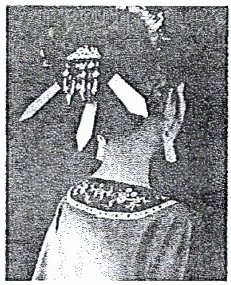
These hairpins,called "tri-hairpins", are made of one vertical(垂直的)pin and two near-horizontal pins, each about 20 centimetres long and weighing 35 to 50 grams. While some were made of gold,most were silver or white bronze, and poorer families used bamboo.
The history of tri-hairpins dates back to the Western Jin dynasty, as mentioned in the Book of Jin. Women wore headdresses shaped like "three weapons", believed to ward off bad luck. Another story says that during the Ming and Qing Dynasties,Fuzhou women used their hair as knives to guard against pirates(海盗).
In 1917,Zhang Zunxu wrote about Fuzhou women wearing knife-like hairpins,comparing them to ancient Roman armies. However,in 1930,Fang Shengtao,the acting governor of Fujian,banned(禁止)tri-hairpins. Police would take them away from women who wore them in public. Because of this rule,fewer and fewer women wore the traditional hairpins until they were hardly seen.
Recently,tri-hairpins are making a comeback in Fuzhou. Photography studios offer ancient headpieces,and young women wear tri-hairpins for photos in historic settings. The comeback is thanks to hanfu designer Huang Qiuhui and her team,who recreated the hairpins from old photographs. Huang believes the tri-hairpin's spirit of courage and balance is admirable and should be passed down.
The modern tri-hairpin has a brush-like tip and colourful decorations. It shows good luck and meets young people's preferences,which gives the tri-hairpin a new life in the 21st century.
(
A. By asking Bing Xin some questions.
B. By telling a history story about hairpins.
C. By describing a scene with women of Fuzhou.
D. By introducing a famous person and her work.
(
A. Welcome.
B. Celebrate.
C. Avoid.
D. Bring.
(
A. To ask people to protect tri-hairpins.
B. To explain the meaning of tri-hairpins.
C. To tell the purpose of wearing tri-hairpins.
D. To tell us some information about tri-hairpins.
Xie Wanying,also known by her pen name Bing Xin,was a famous Chinese poet born in Fuzhou,Fujian Province in 1900. Though she travelled widely, she often wrote about her hometown and its beautiful women. In her essay The Charms of My Hometown,Bing Xin described the strong and pretty women of Fuzhou,who wore their black hair with three shining silver hairpins, like sharp blades(刃).
These hairpins,called "tri-hairpins", are made of one vertical(垂直的)pin and two near-horizontal pins, each about 20 centimetres long and weighing 35 to 50 grams. While some were made of gold,most were silver or white bronze, and poorer families used bamboo.
The history of tri-hairpins dates back to the Western Jin dynasty, as mentioned in the Book of Jin. Women wore headdresses shaped like "three weapons", believed to ward off bad luck. Another story says that during the Ming and Qing Dynasties,Fuzhou women used their hair as knives to guard against pirates(海盗).
In 1917,Zhang Zunxu wrote about Fuzhou women wearing knife-like hairpins,comparing them to ancient Roman armies. However,in 1930,Fang Shengtao,the acting governor of Fujian,banned(禁止)tri-hairpins. Police would take them away from women who wore them in public. Because of this rule,fewer and fewer women wore the traditional hairpins until they were hardly seen.
Recently,tri-hairpins are making a comeback in Fuzhou. Photography studios offer ancient headpieces,and young women wear tri-hairpins for photos in historic settings. The comeback is thanks to hanfu designer Huang Qiuhui and her team,who recreated the hairpins from old photographs. Huang believes the tri-hairpin's spirit of courage and balance is admirable and should be passed down.
The modern tri-hairpin has a brush-like tip and colourful decorations. It shows good luck and meets young people's preferences,which gives the tri-hairpin a new life in the 21st century.
(
D
)7. How does the writer lead into the topic?A. By asking Bing Xin some questions.
B. By telling a history story about hairpins.
C. By describing a scene with women of Fuzhou.
D. By introducing a famous person and her work.
(
C
)8. What do the underlined words "ward off" probably mean?A. Welcome.
B. Celebrate.
C. Avoid.
D. Bring.
(
D
)9. What is the purpose of the passage?A. To ask people to protect tri-hairpins.
B. To explain the meaning of tri-hairpins.
C. To tell the purpose of wearing tri-hairpins.
D. To tell us some information about tri-hairpins.
答案:7. D 8. C 9. D
解析:
翻译:
(C)
谢婉莹,笔名冰心,1900年出生于福建福州,是中国著名诗人。尽管她游历甚广,但她经常描写自己的家乡以及家乡美丽的女子。在她的散文《我的故乡》中,冰心描绘了福州女子的健壮与美丽,她们乌黑的头发上插着三根闪亮的银簪,宛如锋利的刀刃。
这些簪子被称为“三钗”,由一根垂直的簪子和两根近乎水平的簪子组成,每根长约20厘米,重35至50克。虽然有些是金制的,但大多数是银制或白铜制的,贫困家庭则用竹子制作。
三钗的历史可以追溯到西晋时期,《晋书》中有所记载。女子们佩戴形状像“三件兵器”的头饰,据信可以辟邪。另一种说法是,在明清时期,福州女子用头发当作刀来防范海盗。
1917年,张遵旭曾描写福州女子佩戴刀状发簪,将她们比作古罗马军队。然而,1930年,福建省代省长方声涛禁止了三钗。警察会从在公共场合佩戴三钗的女子那里没收它们。由于这项规定,佩戴传统发簪的女子越来越少,直到几乎看不到了。
最近,三钗在福州又重新流行起来。摄影工作室提供古代头饰,年轻女子会在历史场景中佩戴三钗拍照。这次回归要归功于汉服设计师黄秋惠和她的团队,他们根据老照片重新制作了这些发簪。黄秋惠认为三钗所蕴含的勇敢和平衡的精神令人钦佩,应该传承下去。
现代的三钗有一个类似刷子的尖端和彩色的装饰。它象征着好运,也符合年轻人的喜好,这让三钗在21世纪有了新的生命力。
(D)7. 作者是如何引入话题的?
A. 通过向冰心提问。
B. 通过讲述一个关于发簪的历史故事。
C. 通过描述一个有福州女子的场景。
D. 通过介绍一位名人及其作品。
(C)8. 划线单词“ward off”可能是什么意思?
A. 欢迎。
B. 庆祝。
C. 避免。
D. 带来。
(D)9. 这篇文章的目的是什么?
A. 呼吁人们保护三钗。
B. 解释三钗的意义。
C. 讲述佩戴三钗的目的。
D. 告诉我们一些关于三钗的信息。
(C)
谢婉莹,笔名冰心,1900年出生于福建福州,是中国著名诗人。尽管她游历甚广,但她经常描写自己的家乡以及家乡美丽的女子。在她的散文《我的故乡》中,冰心描绘了福州女子的健壮与美丽,她们乌黑的头发上插着三根闪亮的银簪,宛如锋利的刀刃。
这些簪子被称为“三钗”,由一根垂直的簪子和两根近乎水平的簪子组成,每根长约20厘米,重35至50克。虽然有些是金制的,但大多数是银制或白铜制的,贫困家庭则用竹子制作。
三钗的历史可以追溯到西晋时期,《晋书》中有所记载。女子们佩戴形状像“三件兵器”的头饰,据信可以辟邪。另一种说法是,在明清时期,福州女子用头发当作刀来防范海盗。
1917年,张遵旭曾描写福州女子佩戴刀状发簪,将她们比作古罗马军队。然而,1930年,福建省代省长方声涛禁止了三钗。警察会从在公共场合佩戴三钗的女子那里没收它们。由于这项规定,佩戴传统发簪的女子越来越少,直到几乎看不到了。
最近,三钗在福州又重新流行起来。摄影工作室提供古代头饰,年轻女子会在历史场景中佩戴三钗拍照。这次回归要归功于汉服设计师黄秋惠和她的团队,他们根据老照片重新制作了这些发簪。黄秋惠认为三钗所蕴含的勇敢和平衡的精神令人钦佩,应该传承下去。
现代的三钗有一个类似刷子的尖端和彩色的装饰。它象征着好运,也符合年轻人的喜好,这让三钗在21世纪有了新的生命力。
(D)7. 作者是如何引入话题的?
A. 通过向冰心提问。
B. 通过讲述一个关于发簪的历史故事。
C. 通过描述一个有福州女子的场景。
D. 通过介绍一位名人及其作品。
(C)8. 划线单词“ward off”可能是什么意思?
A. 欢迎。
B. 庆祝。
C. 避免。
D. 带来。
(D)9. 这篇文章的目的是什么?
A. 呼吁人们保护三钗。
B. 解释三钗的意义。
C. 讲述佩戴三钗的目的。
D. 告诉我们一些关于三钗的信息。