一、阅读短文和图表,选择最佳答案。
新语篇·统计图表
建议用时:10 分钟
难度:★★★★☆
What kind of transportation do you usually take in your city? How do you travel around? Do you have a car in your family? There is a survey about their ways of transportation when 100 people in Edmonton are travelling, and what they use cars for every day. Here are the results.
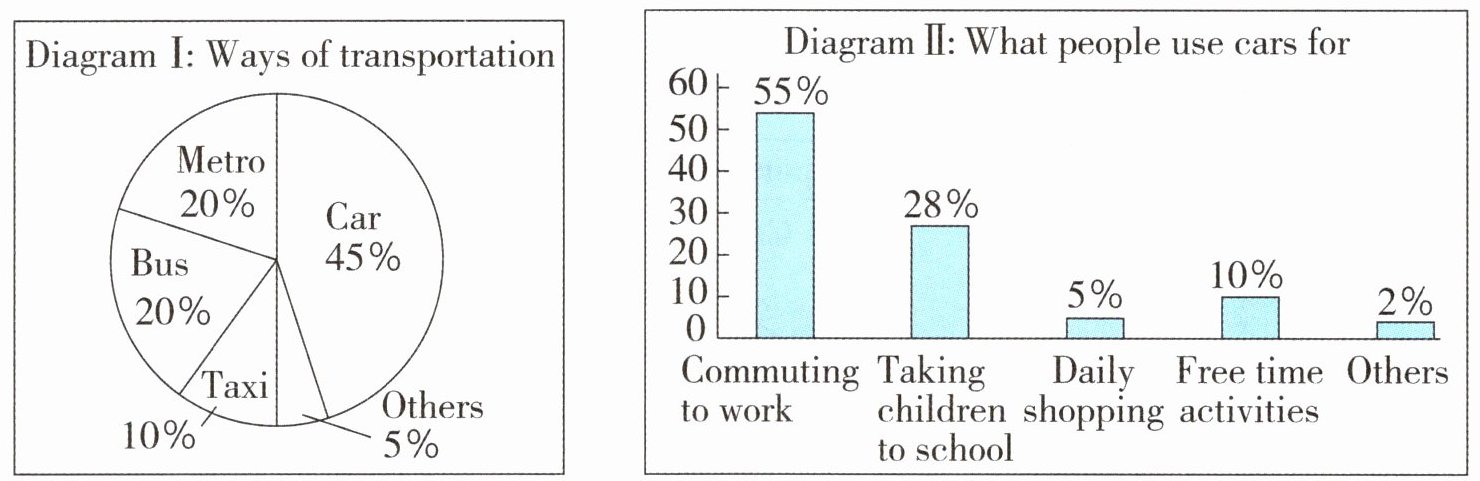
All in all, people in Edmonton make good use of different ways of transportation but they depend heavily on cars. No matter how people travel, do remember the more people choose public transportation, the better the environment will be.
(
A. how people go to work
B. why people like travelling by bus
C. how people spend their free time
D. how people travel and what they use cars to do
(
A. bike
B. metro
C. car
D. taxi
(
A. 55%
B. 15%
C. 5%
D. 3%
(
A. do other things
B. take children to school
C. do daily shopping
D. do free time activities
(
A. going out by bus is good for your work
B. most people use cars to do free time activities
C. most people in Edmonton travel by car
D. there are only four ways of transportation in Edmonton
新语篇·统计图表
建议用时:10 分钟
难度:★★★★☆
What kind of transportation do you usually take in your city? How do you travel around? Do you have a car in your family? There is a survey about their ways of transportation when 100 people in Edmonton are travelling, and what they use cars for every day. Here are the results.
All in all, people in Edmonton make good use of different ways of transportation but they depend heavily on cars. No matter how people travel, do remember the more people choose public transportation, the better the environment will be.
(
D
)1. The survey is mainly about D
in Edmonton.A. how people go to work
B. why people like travelling by bus
C. how people spend their free time
D. how people travel and what they use cars to do
(
B
)2. According to Diagram I, 20 people travel by B
.A. bike
B. metro
C. car
D. taxi
(
C
)3. C
of people in Edmonton may use cars for shopping according to Diagram II.A. 55%
B. 15%
C. 5%
D. 3%
(
B
)4. 28 people in the survey B
by car from Diagram II.A. do other things
B. take children to school
C. do daily shopping
D. do free time activities
(
C
)5. We can know that C
from the passage.A. going out by bus is good for your work
B. most people use cars to do free time activities
C. most people in Edmonton travel by car
D. there are only four ways of transportation in Edmonton
答案:1. D 2. B 3. C 4. B 5. C
解析:
【分析】
这是一篇结合统计图表的阅读理解题,解题时首先通读文章开篇说明,明确本次调查的核心主题,再分别理清两个图表的统计内容:饼图统计出行方式占比,柱状图统计汽车的不同使用用途。之后逐题对应信息:第一题直接定位原文对调查内容的描述即可选出答案;第二题结合总受访人数100人,算出20人对应20%的占比,再去饼图匹配对应交通方式;第三、第四题直接对照柱状图的标签和百分比,匹配题干给出的占比/人数对应的用途;最后第五题用排除法逐一验证选项,排除和图文信息不符的错误选项,即可得到正确结果。
【解析】
1. 细节理解题。根据原文第一段说明“There is a survey about their ways of transportation when 100 people in Edmonton are travelling, and what they use cars for every day”,可知本次调查的核心是埃德蒙顿民众的出行方式,以及他们日常使用汽车的用途,A、B、C选项都只涉及调查的某一个小部分,表述片面,只有D选项完全覆盖调查内容,故选D。
2. 细节计算题。文章说明受访总人数为100人,20人占总人数的20%,对应Diagram I的饼图数据,地铁(Metro)的占比恰好为20%,对应20名受访者;其余选项中,A自行车未在图表中提及,C汽车占比45%对应45人,D出租车占比10%对应10人,均不符合要求,故选B。
3. 图表信息提取题。查看Diagram II的柱状图,标注为Daily shopping(日常购物)的类别对应的占比为5%,可知埃德蒙顿有5%的人会开车购物,故选C。
4. 图表信息提取题。受访总人数为100人,28人占总人数的28%,对应Diagram II的柱状图数据,占比28%的用途是Taking children to school(开车送孩子上学),故选B。
5. 细节判断题。逐一验证选项:A选项文中从未提及乘坐公交对工作有好处,属于无中生有;B选项空闲活动用车的占比仅为10%,远非大多数,表述错误;C选项Diagram I中汽车的出行占比达到45%,是所有交通方式中占比最高的,结合文末“they depend heavily on cars”的描述,可知埃德蒙顿大多数人出行选择开车,表述正确;D选项饼图中存在“Others”类别,说明当地交通方式不止4种,表述错误。综上选C。
【答案】
1. D 2. B 3. C 4. B 5. C
【知识点】
阅读理解细节定位,图表数据提取,百分比简单计算
【点评】
本题属于图文结合类的阅读理解题型,既考察学生从文本中快速定位关键信息的能力,也要求学生能读懂饼图、柱状图的统计逻辑,准确匹配数据和对应类别,做题时要注意先明确两个图表各自的统计主题,不要混淆两个图表的统计维度,最后通过排除法验证剩余选项就能有效避免出错。
【难度系数】
0.7
这是一篇结合统计图表的阅读理解题,解题时首先通读文章开篇说明,明确本次调查的核心主题,再分别理清两个图表的统计内容:饼图统计出行方式占比,柱状图统计汽车的不同使用用途。之后逐题对应信息:第一题直接定位原文对调查内容的描述即可选出答案;第二题结合总受访人数100人,算出20人对应20%的占比,再去饼图匹配对应交通方式;第三、第四题直接对照柱状图的标签和百分比,匹配题干给出的占比/人数对应的用途;最后第五题用排除法逐一验证选项,排除和图文信息不符的错误选项,即可得到正确结果。
【解析】
1. 细节理解题。根据原文第一段说明“There is a survey about their ways of transportation when 100 people in Edmonton are travelling, and what they use cars for every day”,可知本次调查的核心是埃德蒙顿民众的出行方式,以及他们日常使用汽车的用途,A、B、C选项都只涉及调查的某一个小部分,表述片面,只有D选项完全覆盖调查内容,故选D。
2. 细节计算题。文章说明受访总人数为100人,20人占总人数的20%,对应Diagram I的饼图数据,地铁(Metro)的占比恰好为20%,对应20名受访者;其余选项中,A自行车未在图表中提及,C汽车占比45%对应45人,D出租车占比10%对应10人,均不符合要求,故选B。
3. 图表信息提取题。查看Diagram II的柱状图,标注为Daily shopping(日常购物)的类别对应的占比为5%,可知埃德蒙顿有5%的人会开车购物,故选C。
4. 图表信息提取题。受访总人数为100人,28人占总人数的28%,对应Diagram II的柱状图数据,占比28%的用途是Taking children to school(开车送孩子上学),故选B。
5. 细节判断题。逐一验证选项:A选项文中从未提及乘坐公交对工作有好处,属于无中生有;B选项空闲活动用车的占比仅为10%,远非大多数,表述错误;C选项Diagram I中汽车的出行占比达到45%,是所有交通方式中占比最高的,结合文末“they depend heavily on cars”的描述,可知埃德蒙顿大多数人出行选择开车,表述正确;D选项饼图中存在“Others”类别,说明当地交通方式不止4种,表述错误。综上选C。
【答案】
1. D 2. B 3. C 4. B 5. C
【知识点】
阅读理解细节定位,图表数据提取,百分比简单计算
【点评】
本题属于图文结合类的阅读理解题型,既考察学生从文本中快速定位关键信息的能力,也要求学生能读懂饼图、柱状图的统计逻辑,准确匹配数据和对应类别,做题时要注意先明确两个图表各自的统计主题,不要混淆两个图表的统计维度,最后通过排除法验证剩余选项就能有效避免出错。
【难度系数】
0.7