Ⅲ. 阅读理解(每小题 2.5 分,满分 20 分)
A
Water is one of the most important substances (物质) on earth. Without water, humans, animals and even plants would die. About 70 per cent of our body weight is water. People could live for a month or more without food, but we could live for only three or four days without water.
How much water do animals and plants need? A human may need 2 litres (升) per day, a cow needs 135 litres per day and a large tree requires 20,000 litres a day.
How do we people use water? We drink water. We wash our bodies, our clothes and many other things with water. The foods we eat have water in them, and all our drinks are largely water. We use water to cook much of our food, and we use water for different activities, such as boating, swimming and fishing.
Plants need water to live just like we do. Plants use their roots to take up water from the soil. The crops that farmers grow as food need water to grow. In some places where there is little rain and the land is dry, farmers bring water from rivers, lakes and wells to their fields. It's called irrigation (灌溉). Some crops need more water to grow than others. Rice and cotton, for example, need lots of water, while olives and oranges need only a little.
Animals also need water to live. The animals that provide us with meat, milk and eggs need large amounts of clean water to drink. Water is also home to millions of plants and animals, including the fish we eat.
Some industries use water to cool hot substances or the moving parts of machines. Water also helps to produce most of our electricity (电). In hydro-electric power stations (水电站), the water of fast-flowing rivers is used to turn the machines that produce electricity.
Water is used to make many kinds of foods and many of the things we see or use every day.
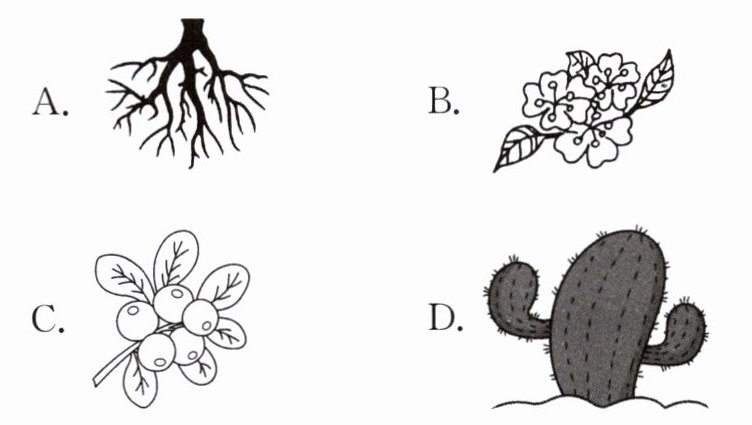
1. Which of the following can be called “roots”?
A.
B.
C.
D.
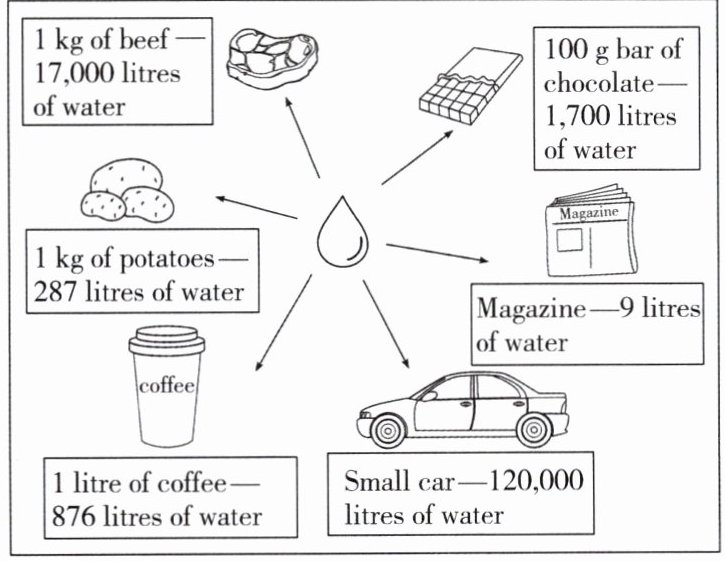
2. What does the picture in the passage want to tell us?
A. Water is seriously polluted.
B. Water is needed everywhere.
C. Water is limited on our earth.
D. Water is used in the industry.
3. What can we know about water according to the passage?
A. Animals can live longer than humans without water.
B. Different kinds of plants need the same amount of water.
C. Irrigation gives farmers chances to grow crops in dry places.
D. Hydro-electric power stations can be seen in many countries.
4. What's the main idea of the passage?
A. The qualities of water.
B. The background of water.
C. The usages of water.
D. The production of water.
A
Water is one of the most important substances (物质) on earth. Without water, humans, animals and even plants would die. About 70 per cent of our body weight is water. People could live for a month or more without food, but we could live for only three or four days without water.
How much water do animals and plants need? A human may need 2 litres (升) per day, a cow needs 135 litres per day and a large tree requires 20,000 litres a day.
How do we people use water? We drink water. We wash our bodies, our clothes and many other things with water. The foods we eat have water in them, and all our drinks are largely water. We use water to cook much of our food, and we use water for different activities, such as boating, swimming and fishing.
Plants need water to live just like we do. Plants use their roots to take up water from the soil. The crops that farmers grow as food need water to grow. In some places where there is little rain and the land is dry, farmers bring water from rivers, lakes and wells to their fields. It's called irrigation (灌溉). Some crops need more water to grow than others. Rice and cotton, for example, need lots of water, while olives and oranges need only a little.
Animals also need water to live. The animals that provide us with meat, milk and eggs need large amounts of clean water to drink. Water is also home to millions of plants and animals, including the fish we eat.
Some industries use water to cool hot substances or the moving parts of machines. Water also helps to produce most of our electricity (电). In hydro-electric power stations (水电站), the water of fast-flowing rivers is used to turn the machines that produce electricity.
Water is used to make many kinds of foods and many of the things we see or use every day.
1. Which of the following can be called “roots”?
A.
B.
C.
D.
2. What does the picture in the passage want to tell us?
A. Water is seriously polluted.
B. Water is needed everywhere.
C. Water is limited on our earth.
D. Water is used in the industry.
3. What can we know about water according to the passage?
A. Animals can live longer than humans without water.
B. Different kinds of plants need the same amount of water.
C. Irrigation gives farmers chances to grow crops in dry places.
D. Hydro-electric power stations can be seen in many countries.
4. What's the main idea of the passage?
A. The qualities of water.
B. The background of water.
C. The usages of water.
D. The production of water.
答案:Ⅲ.1.A 2.B 3.C 4.C
A
【语篇解读】本文是一篇说明文,介绍了水在日常生活、农业、工业等方面的多种用途,并强调了水资源的广泛需求和重要性。
1. A 解析:图示理解题。根据“Plants use... from the soil.”并结合常识可知,植物吸收水分的部位是根,图 A 所示的分叉状地下部分是“根”。故选 A。
2. B 解析:推理判断题。根据文中插图列举了制造不同产品所需的水量可知,人类日常所用、所食的几乎所有东西都需要用到水。故选 B。
3. C 解析:细节理解题。根据“In some places... irrigation.”可知,在干旱地区,农民通过从河流、湖泊、井等处引水进行灌溉,从而能在缺水地区种庄稼,所以灌溉给了农民在干旱地区种植作物的机会。故选 C。
4. C 解析:主旨大意题。通读全文可知,文章主要讨论了水在人类、动物、植物、农业、工业等多个领域的用途,主旨应是“水的用途”。故选 C。
A
【语篇解读】本文是一篇说明文,介绍了水在日常生活、农业、工业等方面的多种用途,并强调了水资源的广泛需求和重要性。
1. A 解析:图示理解题。根据“Plants use... from the soil.”并结合常识可知,植物吸收水分的部位是根,图 A 所示的分叉状地下部分是“根”。故选 A。
2. B 解析:推理判断题。根据文中插图列举了制造不同产品所需的水量可知,人类日常所用、所食的几乎所有东西都需要用到水。故选 B。
3. C 解析:细节理解题。根据“In some places... irrigation.”可知,在干旱地区,农民通过从河流、湖泊、井等处引水进行灌溉,从而能在缺水地区种庄稼,所以灌溉给了农民在干旱地区种植作物的机会。故选 C。
4. C 解析:主旨大意题。通读全文可知,文章主要讨论了水在人类、动物、植物、农业、工业等多个领域的用途,主旨应是“水的用途”。故选 C。