Ⅰ. 根据汉语或首字母提示写出单词
1. The king asked his people to build a beautiful
2. There were a lot of great
3. The N
4. Each coin has two s
5. —What's your most pleasant experience?
—I remember o
6. Beijing, the c
1. The king asked his people to build a beautiful
palace
(宫殿) for his daughter.2. There were a lot of great
emperors
(皇帝) in China's long history, making China strong and rich.3. The N
National
Day of our country is in October and it's a holiday for Chinese.4. Each coin has two s
sides
. Beautiful songs, sometimes, may be noise to others.5. —What's your most pleasant experience?
—I remember o
once
it snowed on my birthday, and I was so excited.6. Beijing, the c
capital
of China, made history as the first city to host both the Summer and Winter Olympic Games.答案:1. palace 2. emperors 3. National 4. sides 5. once 6. capital
解析:
【解析】
1. 根据汉语提示“宫殿”,且前面有不定冠词a,填入可数名词单数palace。
2. 根据汉语提示“皇帝”,前面有a lot of修饰,需填入可数名词复数emperors。
3. 根据首字母N提示以及后文的Day、十月的节日,可知是国庆节,填入National,National Day为固定搭配“国庆节”。
4. 根据首字母s提示和常识“硬币有两面”,前面有数词two,填入可数名词复数sides。
5. 根据首字母o提示和语境“我记得有一次我生日当天下雪了”,填入once表示“曾经,有一次”。
6. 根据首字母c提示和常识“北京是中国的首都”,填入capital,the capital of...为固定表达“……的首都”。
【答案】
1. palace
2. emperors
3. National
4. sides
5. once
6. capital
【知识点】
单词拼写;名词复数;固定搭配
【点评】
本题结合汉语提示和首字母提示考查基础词汇的拼写,同时兼顾名词单复数、常见固定短语和文化常识的运用,难度较低,主要检验学生对课内核心单词的掌握熟练度。
【难度系数】
0.9
1. 根据汉语提示“宫殿”,且前面有不定冠词a,填入可数名词单数palace。
2. 根据汉语提示“皇帝”,前面有a lot of修饰,需填入可数名词复数emperors。
3. 根据首字母N提示以及后文的Day、十月的节日,可知是国庆节,填入National,National Day为固定搭配“国庆节”。
4. 根据首字母s提示和常识“硬币有两面”,前面有数词two,填入可数名词复数sides。
5. 根据首字母o提示和语境“我记得有一次我生日当天下雪了”,填入once表示“曾经,有一次”。
6. 根据首字母c提示和常识“北京是中国的首都”,填入capital,the capital of...为固定表达“……的首都”。
【答案】
1. palace
2. emperors
3. National
4. sides
5. once
6. capital
【知识点】
单词拼写;名词复数;固定搭配
【点评】
本题结合汉语提示和首字母提示考查基础词汇的拼写,同时兼顾名词单复数、常见固定短语和文化常识的运用,难度较低,主要检验学生对课内核心单词的掌握熟练度。
【难度系数】
0.9
Ⅱ. 用括号中所给单词的正确形式填空
1. A miss is as good as a mile. Your plan is well worth
2. Millions of
3. Why not
4. Mr Black went to Hainan on vacation
5. We gathered at the square early in the morning to watch the
6. You can see flowers and
1. A miss is as good as a mile. Your plan is well worth
thinking
(think) twice about.2. Millions of
visitors
(visit) are very interested in traditional Chinese culture.3. Why not
check
(check) it before you hand in your homework?4. Mr Black went to Hainan on vacation
to relax
(relax) himself.5. We gathered at the square early in the morning to watch the
raising
(raise) of the national flag.6. You can see flowers and
flags
(flag) everywhere at the festival in this little town.答案:1. thinking 解析:“be worth doing sth”为固定短语,意为“值得做某事”,“think”的动名词形式为“thinking”。
知识拓展 1. “be worth doing”结构中“doing”虽为主动形式,但表达被动含义。2. “worth”不可作定语,而“worthy”可作定语,如“a worthy cause”(崇高的事业)。
2. visitors 解析:“visit”(参观,动词)的名词形式为“visitor”(游客),由“Millions of”(数百万)修饰,用复数“visitors”。
3. check 解析:“Why not do sth?”为固定句型,意为“为什么不做某事?”,故用动词原形“check”。
4. to relax 解析:此处用动词不定式表目的,“去海南度假”的目的是“放松自己”,故填“to relax”。
5. raising 解析:“the raising of the national flag”为名词所有格结构,意为“国旗的升起”,“raise”的动名词形式为“raising”。
6. flags 解析:“flag”(旗帜)为可数名词,由“flowers”(复数)及“everywhere”可知,用复数“flags”。
知识拓展 1. “be worth doing”结构中“doing”虽为主动形式,但表达被动含义。2. “worth”不可作定语,而“worthy”可作定语,如“a worthy cause”(崇高的事业)。
2. visitors 解析:“visit”(参观,动词)的名词形式为“visitor”(游客),由“Millions of”(数百万)修饰,用复数“visitors”。
3. check 解析:“Why not do sth?”为固定句型,意为“为什么不做某事?”,故用动词原形“check”。
4. to relax 解析:此处用动词不定式表目的,“去海南度假”的目的是“放松自己”,故填“to relax”。
5. raising 解析:“the raising of the national flag”为名词所有格结构,意为“国旗的升起”,“raise”的动名词形式为“raising”。
6. flags 解析:“flag”(旗帜)为可数名词,由“flowers”(复数)及“everywhere”可知,用复数“flags”。
Ⅲ. 单项选择
1. People will have
A.a; the
B.a; an
C.an; the
D.an; an
1. People will have
an
amazing feeling with artificial intelligence (人工智能). They may not use hands to play the
violin some day.A.a; the
B.a; an
C.an; the
D.an; an
答案:1. C 解析:“amazing”的发音以元音音素开头,前面用不定冠词“an”;“play the violin”为固定搭配,乐器前需加定冠词“the”,故选 C。
2. Look at the picture. The girl drew two
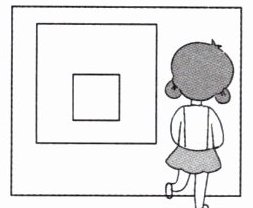
A.circles
B.lines
C.points
D.squares
D
on the wall.A.circles
B.lines
C.points
D.squares
答案:2. D 解析:A 项“circles”(圆形)、B 项“lines”(直线)、C 项“points”(点)、D 项“squares”(正方形)。根据图片提示(女孩在墙上画了两个正方形),故选 D。
3. —Printing was first invented by the Chinese in the 7th century. —Wow! It's been over 1,300 years! It's really a(n)
A.ancient
B.interesting
C.new
D.traditional
A
invention!A.ancient
B.interesting
C.new
D.traditional
答案:3. A 解析:A 项“ancient”(古老的)、B 项“interesting”(有趣的)、C 项“new”(新的)、D 项“traditional”(传统的)。句意:——印刷术由中国人在 7 世纪首次发明。——哇,已经 1300 多年了!真是一项古老的发明!结合语境,故选 A。
4. My dad's
A.test
B.meaning
C.taste
D.hope
C
in music is from the Stone Age (石器时代). The songs he listens to almost make me sleepy.A.test
B.meaning
C.taste
D.hope
答案:4. C 解析:A 项“test”(测试)、B 项“meaning”(意义)、C 项“taste”(品味)、D 项“hope”(希望)。句意:我爸爸的音乐品味停留在石器时代,他听的歌几乎让我睡着。结合语境,故选 C。
易错提醒 “taste”易误理解为“味道”,此处指“品味”。
易错提醒 “taste”易误理解为“味道”,此处指“品味”。
5. —Local communities are planning to plant more trees and flowers. —No wonder people are showing great
A.instruction
B.example
C.interest
D.taste
C
in this plan.A.instruction
B.example
C.interest
D.taste
答案:5. C 解析:“show great interest in”为固定短语,意为“对……表现出极大兴趣”,结合语境,故选 C。
6. I really believe there is so much
A.trouble
B.treasure
C.pressure
D.pollution
B
in the books we read. These books can make our minds rich and colourful.A.trouble
B.treasure
C.pressure
D.pollution
答案:6. B 解析:A 项“trouble”(麻烦)、B 项“treasure”(财富)、C 项“pressure”(压力)、D 项“pollution”(污染)。句意:我相信我们读的书里有很多财富,这些书能让我们的思想丰富多彩。结合语境,故选 B。
7. Body language is a
A.list
B.secret
C.reason
D.form
D
of communication. Shaking one's head means disagreement in China.A.list
B.secret
C.reason
D.form
答案:7. D 解析:A 项“list”(清单)、B 项“secret”(秘密)、C 项“reason”(原因)、D 项“form”(形式)。句意:肢体语言是一种交流形式。在中国摇头表示不同意。结合语境,故选 D。
8. —Please remember
—I remember
A.giving; to give
B.giving; giving
C.to give; to give
D.to give; giving
to give
the book to Mike.—I remember
giving
it back to him the day before yesterday.A.giving; to give
B.giving; giving
C.to give; to give
D.to give; giving
答案:8. D 解析:“remember to do sth”(记得要做某事,未做)、“remember doing sth”(记得做过某事,已做)。句意:——请记得把书给迈克。——我记得前天已经还给他了。第一空未做,用“to give”;第二空已做,用“giving”,故选 D。