Ⅰ. 根据汉语、首字母提示或音标写出单词
1. The poor lady accepted(接受) that
2. Look! A cuckoo(布谷鸟) is busy laying her eggs in another bird's n
3. Don't keep your bird in such a small c
4. We can't go there by ship today because the w
5. Our teacher always s
6. —The
1. The poor lady accepted(接受) that
shopkeeper's
(店主)food and thanked him.2. Look! A cuckoo(布谷鸟) is busy laying her eggs in another bird's n
nest
.3. Don't keep your bird in such a small c
cage
. Or it will die.4. We can't go there by ship today because the w
waves
on the sea are too huge.5. Our teacher always s
smiles
at us, but today he looks sad.6. —The
sandwiches
(/'sænwɪtʃɪz/) you made are so delicious. —I'm glad you like them.答案:1. shopkeeper's 2. nest 3. cage 4. waves 5. smiles 6. sandwiches
解析:
【解析】
1. 此处修饰名词food,结合汉语提示“店主”,需要用名词所有格形式表示所属关系,填shopkeeper's,意为“店主的食物”。
2. 根据常识布谷鸟会把蛋产在其他鸟类的巢穴里,结合首字母n,填nest,意为“鸟巢、巢穴”。
3. 句意为“不要把你的鸟关在这么小的______里,否则它会死”,结合首字母c,填cage,意为“笼子”。
4. 句意为“我们今天不能乘船去那里,因为海上的______太大了”,结合首字母w和语境,后面be动词为are,填waves,意为“波浪”。
5. 句意为“我们的老师总是对我们______,但今天他看起来很难过”,结合首字母s,主语our teacher是第三人称单数,时态为一般现在时,填smiles,构成短语smile at,意为“对……微笑”。
6. 根据给出的音标/ˈsænwɪtʃɪz/,以及后面的be动词are,填sandwiches,是sandwich的复数形式。
【答案】
1. shopkeeper's
2. nest
3. cage
4. waves
5. smiles
6. sandwiches
【知识点】
名词所有格;词汇拼写;音标辨读
【点评】
本题结合汉语提示、首字母提示和音标考查基础英语词汇的运用,需要结合句子语境、语法变形(如名词复数、动词第三人称单数)填写正确形式,侧重检验学生对课内核心词汇的掌握程度。
【难度系数】
0.8
1. 此处修饰名词food,结合汉语提示“店主”,需要用名词所有格形式表示所属关系,填shopkeeper's,意为“店主的食物”。
2. 根据常识布谷鸟会把蛋产在其他鸟类的巢穴里,结合首字母n,填nest,意为“鸟巢、巢穴”。
3. 句意为“不要把你的鸟关在这么小的______里,否则它会死”,结合首字母c,填cage,意为“笼子”。
4. 句意为“我们今天不能乘船去那里,因为海上的______太大了”,结合首字母w和语境,后面be动词为are,填waves,意为“波浪”。
5. 句意为“我们的老师总是对我们______,但今天他看起来很难过”,结合首字母s,主语our teacher是第三人称单数,时态为一般现在时,填smiles,构成短语smile at,意为“对……微笑”。
6. 根据给出的音标/ˈsænwɪtʃɪz/,以及后面的be动词are,填sandwiches,是sandwich的复数形式。
【答案】
1. shopkeeper's
2. nest
3. cage
4. waves
5. smiles
6. sandwiches
【知识点】
名词所有格;词汇拼写;音标辨读
【点评】
本题结合汉语提示、首字母提示和音标考查基础英语词汇的运用,需要结合句子语境、语法变形(如名词复数、动词第三人称单数)填写正确形式,侧重检验学生对课内核心词汇的掌握程度。
【难度系数】
0.8
Ⅱ. 用括号中所给单词的正确形式填空
1. After the strong wind last night, there were
2. Lily saw an old man
3. We can enjoy the
4. Tom
1. After the strong wind last night, there were
leaves
(leaf) everywhere on the ground.2. Lily saw an old man
lying
(lie) in the middle of the road and called an ambulance at once.3. We can enjoy the
sights
(sight) of Beijing from the top of the hill.4. Tom
is coming
(come). We need to wait for him for another five minutes.答案:1. leaves 解析:“leaf”(树叶)为可数名词,由“everywhere”(到处)可知,用复数“leaves”。
2. lying 解析:“see sb doing sth”为固定短语,意为“看见某人正在做某事”,“lie”(躺)的现在分词形式为“lying”。
3. sights 解析:“sight”(风景)为可数名词,“the sights of Beijing”(北京的风景)用复数表示泛指,故填“sights”。
4. is coming 解析:此处用现在进行时表将来,“Tom is coming”(汤姆快来了),符合“再等五分钟”的语境,故填“is coming”。
知识拓展 现在进行时表将来,此类动词多为“趋向性动词”,除“come”“go”外,还有“leave”“arrive”“start”“return”等,如“My plane is taking off in an hour.”(我的飞机一小时后起飞)。
2. lying 解析:“see sb doing sth”为固定短语,意为“看见某人正在做某事”,“lie”(躺)的现在分词形式为“lying”。
3. sights 解析:“sight”(风景)为可数名词,“the sights of Beijing”(北京的风景)用复数表示泛指,故填“sights”。
4. is coming 解析:此处用现在进行时表将来,“Tom is coming”(汤姆快来了),符合“再等五分钟”的语境,故填“is coming”。
知识拓展 现在进行时表将来,此类动词多为“趋向性动词”,除“come”“go”外,还有“leave”“arrive”“start”“return”等,如“My plane is taking off in an hour.”(我的飞机一小时后起飞)。
Ⅲ. 在横线上填入正确的冠词
Last Sunday was fun. In 1.
I had 5.
Before dinner, 9.
Last Sunday was fun. In 1.
the
morning, I went to 2. the
zoo with Dad. We saw 3. an
elephant playing in water. Its trainer said it arrived here at 4. the
age of 2.I had 5.
a
guitar lesson at 2 o'clock. My teacher said I played 6. the
guitar well. After the lesson, we bought 7. a
small cake on our way home. It's 8. the
cake I talked about the last day. It was so delicious.Before dinner, 9.
the
Browns came. They brought some orange juice. We had dinner and watched 10. the
third cartoon show together. Mum said 11. the
old in the nursing home needed more help, so we planned to visit them next week. What 12. a
nice day!答案:1. the 2. the 3. an 4. the 5. a 6. the 7. a 8. the 9. the 10. the 11. the 12. a
解析:
【解析】
我们逐个结合冠词的使用规则分析每个空:
1. 固定搭配in the morning表示“在早上”,填the;
2. 世界上独一无二的公共设施zoo前常用定冠词the,表特指,填the;
3. 此处表示“一头大象”,elephant以元音音素开头,用不定冠词an;
4. 固定搭配at the age of表示“在……岁时”,填the;
5. 此处表示“一节吉他课”,guitar以辅音音素开头,用不定冠词a;
6. 演奏西洋乐器时,乐器名词前要加定冠词the,填the;
7. 此处表示“一个小蛋糕”,small以辅音音素开头,用不定冠词a;
8. 特指前一天提到的那个蛋糕,表特指用定冠词the;
9. “the+姓氏复数”表示一家人/夫妇,the Browns即布朗一家,填the;
10. 序数词third前要加定冠词the,表顺序,填the;
11. “the+形容词”表示一类人,the old即老年人,填the;
12. 感叹句结构What a/an + 形容词+可数名词单数,nice以辅音音素开头,填a。
【答案】
1. the 2. the 3. an 4. the 5. a 6. the 7. a 8. the 9. the 10. the 11. the 12. a
【知识点】
定冠词用法,不定冠词用法,固定冠词搭配
【点评】
本题全面考查了初中阶段冠词的核心常见用法,涵盖固定搭配、特指泛指、乐器/姓氏/序数词/形容词表一类人的冠词规则,考点基础且典型,能有效检验学生对冠词基础规则的掌握熟练度。
【难度系数】
0.7
我们逐个结合冠词的使用规则分析每个空:
1. 固定搭配in the morning表示“在早上”,填the;
2. 世界上独一无二的公共设施zoo前常用定冠词the,表特指,填the;
3. 此处表示“一头大象”,elephant以元音音素开头,用不定冠词an;
4. 固定搭配at the age of表示“在……岁时”,填the;
5. 此处表示“一节吉他课”,guitar以辅音音素开头,用不定冠词a;
6. 演奏西洋乐器时,乐器名词前要加定冠词the,填the;
7. 此处表示“一个小蛋糕”,small以辅音音素开头,用不定冠词a;
8. 特指前一天提到的那个蛋糕,表特指用定冠词the;
9. “the+姓氏复数”表示一家人/夫妇,the Browns即布朗一家,填the;
10. 序数词third前要加定冠词the,表顺序,填the;
11. “the+形容词”表示一类人,the old即老年人,填the;
12. 感叹句结构What a/an + 形容词+可数名词单数,nice以辅音音素开头,填a。
【答案】
1. the 2. the 3. an 4. the 5. a 6. the 7. a 8. the 9. the 10. the 11. the 12. a
【知识点】
定冠词用法,不定冠词用法,固定冠词搭配
【点评】
本题全面考查了初中阶段冠词的核心常见用法,涵盖固定搭配、特指泛指、乐器/姓氏/序数词/形容词表一类人的冠词规则,考点基础且典型,能有效检验学生对冠词基础规则的掌握熟练度。
【难度系数】
0.7
Ⅳ. 单项选择
1. Which of the following words doesn't have the same stress as the others?
A. shimmer
B. stadium
C. sunset
D. delicious
1. Which of the following words doesn't have the same stress as the others?
A. shimmer
B. stadium
C. sunset
D. delicious
答案:1. D 解析:A项“shimmer”(/'ʃɪmə/,重音在第一音节)、B项“stadium”(/'steɪdiəm/,重音在第一音节)、C项“sunset”(/'sʌnset/,重音在第一音节)、D项“delicious”(/dɪ'lɪʃəs/,重音在第二音节)。故选D。
2. The Beijing-Hangzhou Grand Canal, a beautiful river, runs
A.across; through
B.across; over
C.through; over
D.through; through
through
Siyang and there are many beautiful bridges over
the river.A.across; through
B.across; over
C.through; over
D.through; through
答案:2. C 解析:“run through”(穿过,从内部穿过)、“bridges over the river”(河上的桥,over表示“在……上方,不接触”)。句意:京杭大运河这条美丽的河流穿过泗阳,河上有许多漂亮的桥。结合语境,故选C。
3. —Why can't Mary see the blackboard?
—Because a boy sits
A.behind
B.next to
C.across from
D.in front of
—Because a boy sits
in front of
her, and he is very tall.A.behind
B.next to
C.across from
D.in front of
答案:3. D 解析:A项“behind”(在……后面)、B项“next to”(在……旁边)、C项“across from”(在……对面)、D项“in front of”(在……前面)。句意:——玛丽为什么看不见黑板?——因为一个男孩坐在她前面,而且他很高。结合语境,故选D。
4. The old man likes sitting
A.between
B.among
C.through
D.across
among
some children to tell interesting stories when he is free.A.between
B.among
C.through
D.across
答案:4. B 解析:A项“between”(在两者之间)、B项“among”(在三者及以上之间)、C项“through”(穿过)、D项“across”(穿过)。句意:老人有空时喜欢坐在孩子们中间讲有趣的故事。“some children”(一些孩子,三者及以上),故选B。
5. In the picture, the toy box is 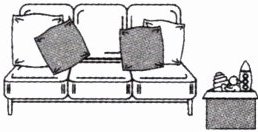
A.above
B.under
C.next to
D.behind
next to
the sofa.A.above
B.under
C.next to
D.behind
答案:5. C 解析:A项“above”(在……上方)、B项“under”(在……下方)、C项“next to”(在……旁边)、D项“behind”(在……后面)。根据图片提示(玩具盒在沙发旁边),故选C。
6. I've seen the film twice and I'd like to see it
A.third
B.three
C.a third
D.the third
a third
time.A.third
B.three
C.a third
D.the third
答案:6. C 解析:“a third time”表示“又一次、再一次”(不强调顺序),“the third time”表示“第三次”(强调顺序)。句意:这部电影我已经看了两次,想再看一次。结合语境,故选C。