Ⅰ. 选择目的地
Daniel 第一件要决定的事情是旅游的目的地。让我们来学习一下他是如何选择目的地的吧!(选项中有一项多余)
I have a long list of the places I would love to visit. With so many travel destinations(目的地) to choose from, picking the ideal one can be a difficult task. 1.
If you only have a short time to go on vacation, you should think about visiting one or at most two destinations. 2.
3.
I always think about the money when choosing a travel destination. 4.
I often choose a travel destination according to the activities I'm interested in. I always ask myself, "Why do I plan the trip?" 5.
|A. Weather conditions are also what I care a lot about.|
|B. So remember to think about your reasons for travelling.|
|C. You might feel tired if you visit too many places in a short trip.|
|D. I have prepared several tips for you to choose the right destination.|
|E. Choosing where to spend your vacation doesn't have to be so hard.|
|F. Searching online when planning will help you save on flight and living costs.|
Question: Where would you like to visit for the Labour Day holiday? And why?
Daniel 第一件要决定的事情是旅游的目的地。让我们来学习一下他是如何选择目的地的吧!(选项中有一项多余)
I have a long list of the places I would love to visit. With so many travel destinations(目的地) to choose from, picking the ideal one can be a difficult task. 1.
D
If you only have a short time to go on vacation, you should think about visiting one or at most two destinations. 2.
C
You will spend too much time travelling and little time relaxing and enjoying yourself.3.
A
I try not to visit destinations with uncomfortable snowstorms or heavy rain that might make my travel experience terrible. You can't control the weather. However, you can plan the trip by choosing destinations with ideal weather conditions. Find a destination which is neither too hot nor too cold for you.I always think about the money when choosing a travel destination. 4.
F
If planned well, the trip will still be perfect with less money.I often choose a travel destination according to the activities I'm interested in. I always ask myself, "Why do I plan the trip?" 5.
B
If you aren't sure about your purpose, it may take you a lot of time to look up popular tourist activities in different cities across the world. That's why you should never go on vacation without planning.|A. Weather conditions are also what I care a lot about.|
|B. So remember to think about your reasons for travelling.|
|C. You might feel tired if you visit too many places in a short trip.|
|D. I have prepared several tips for you to choose the right destination.|
|E. Choosing where to spend your vacation doesn't have to be so hard.|
|F. Searching online when planning will help you save on flight and living costs.|
Question: Where would you like to visit for the Labour Day holiday? And why?
答案:1 - 5 DCAFB
【语篇解读】本文是一篇说明文,主要介绍了选择旅行目的地的几个技巧。
Question: I'd like to visit the classical gardens in Suzhou because they're cultural treasures of China.(答案不唯一,言之有理即可)
【语篇解读】本文是一篇说明文,主要介绍了选择旅行目的地的几个技巧。
Question: I'd like to visit the classical gardens in Suzhou because they're cultural treasures of China.(答案不唯一,言之有理即可)
解析:
【分析】
要解决这道选词填空题,需结合上下文逻辑关系逐一匹配选项:
1. 第一空前文提到选择理想旅行目的地难度大,后文是具体选点建议,需一个引出下文建议的过渡句;
2. 第二空前文指出短假期最多选1-2个目的地,后文说明去太多地方的弊端,需衔接前后、解释原因的句子;
3. 第三空后文整段围绕天气对旅行的影响展开,需点明“关注天气”的主题句;
4. 第四空前文提及选目的地要考虑费用,后文说合理规划可低成本旅行,需给出省钱具体方法的句子;
5. 第五空前文提出“旅行原因”的疑问,后文强调明确旅行目的的重要性,需呼应“旅行原因”的句子。
最后的问答只需结合自身喜好,给出合理的旅行目的地及原因即可。
【解析】
1. 第1空:前文点明选理想目的地难度大,后文是具体选点建议,D选项“I have prepared several tips for you to choose the right destination.”起到承上启下的作用,引出下文,故选D。
2. 第2空:前文说明短假期最多选1-2个目的地,后文阐述去太多地方的弊端,C选项“You might feel tired if you visit too many places in a short trip.”衔接前后,解释原因,故选C。
3. 第3空:后文整段围绕天气对旅行体验的影响展开,A选项“Weather conditions are also what I care a lot about.”作为段落主题句,引出下文内容,故选A。
4. 第4空:前文提及选目的地要考虑费用,后文说合理规划可低成本旅行,F选项“Searching online when planning will help you save on flight and living costs.”给出省钱的具体方式,衔接上下文,故选F。
5. 第5空:前文提出“旅行的原因是什么”的疑问,后文强调明确旅行目的的重要性,B选项“So remember to think about your reasons for travelling.”呼应前文问题,衔接后文内容,故选B。
对于Question:结合自身喜好作答即可,示例答案贴合文化主题,合理通顺。
【答案】
1 - 5 DCAFB
Question: I'd like to visit the classical gardens in Suzhou because they're cultural treasures of China.(答案不唯一,言之有理即可)
【知识点】
语篇逻辑衔接、段落主题句选择、旅行类英语表达
【点评】
本文是一篇实用说明文,围绕“选择旅行目的地”展开,通过小贴士的形式考查学生对语篇逻辑的理解能力,最后的问答环节考查学生运用英语表达个人旅行意愿的能力,既贴合生活实际,又能提升学生的阅读理解和书面表达能力。
【难度系数】
0.6
要解决这道选词填空题,需结合上下文逻辑关系逐一匹配选项:
1. 第一空前文提到选择理想旅行目的地难度大,后文是具体选点建议,需一个引出下文建议的过渡句;
2. 第二空前文指出短假期最多选1-2个目的地,后文说明去太多地方的弊端,需衔接前后、解释原因的句子;
3. 第三空后文整段围绕天气对旅行的影响展开,需点明“关注天气”的主题句;
4. 第四空前文提及选目的地要考虑费用,后文说合理规划可低成本旅行,需给出省钱具体方法的句子;
5. 第五空前文提出“旅行原因”的疑问,后文强调明确旅行目的的重要性,需呼应“旅行原因”的句子。
最后的问答只需结合自身喜好,给出合理的旅行目的地及原因即可。
【解析】
1. 第1空:前文点明选理想目的地难度大,后文是具体选点建议,D选项“I have prepared several tips for you to choose the right destination.”起到承上启下的作用,引出下文,故选D。
2. 第2空:前文说明短假期最多选1-2个目的地,后文阐述去太多地方的弊端,C选项“You might feel tired if you visit too many places in a short trip.”衔接前后,解释原因,故选C。
3. 第3空:后文整段围绕天气对旅行体验的影响展开,A选项“Weather conditions are also what I care a lot about.”作为段落主题句,引出下文内容,故选A。
4. 第4空:前文提及选目的地要考虑费用,后文说合理规划可低成本旅行,F选项“Searching online when planning will help you save on flight and living costs.”给出省钱的具体方式,衔接上下文,故选F。
5. 第5空:前文提出“旅行的原因是什么”的疑问,后文强调明确旅行目的的重要性,B选项“So remember to think about your reasons for travelling.”呼应前文问题,衔接后文内容,故选B。
对于Question:结合自身喜好作答即可,示例答案贴合文化主题,合理通顺。
【答案】
1 - 5 DCAFB
Question: I'd like to visit the classical gardens in Suzhou because they're cultural treasures of China.(答案不唯一,言之有理即可)
【知识点】
语篇逻辑衔接、段落主题句选择、旅行类英语表达
【点评】
本文是一篇实用说明文,围绕“选择旅行目的地”展开,通过小贴士的形式考查学生对语篇逻辑的理解能力,最后的问答环节考查学生运用英语表达个人旅行意愿的能力,既贴合生活实际,又能提升学生的阅读理解和书面表达能力。
【难度系数】
0.6
Ⅱ. 拍照技巧
在完成一切准备工作后,Daniel 想要学习一下如何拍照,为家人留下美好的照片作为纪念。我们也一起来学习一下吧!
If you have planned a trip, certainly, you will want to share some photos with others. But what if the photos are not as pretty as you expected? Don't worry! Here are some tips you can follow to take wonderful photos.
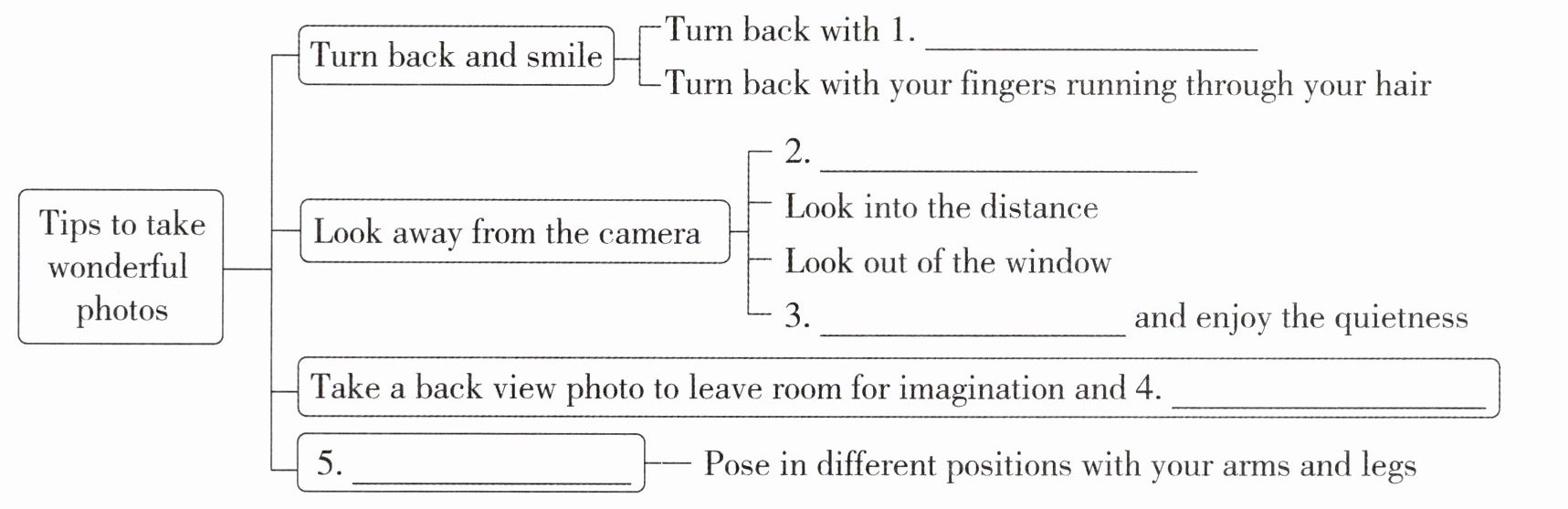
Turn back and smile. While on the road, the moment you turn back with a smile is the most impressive. Just walk away from the camera and do a turn - back for the most natural effect. You can also pretend to hear your name called, turn back, and run your fingers through your hair. This is a fantastic way to increase your beauty.
Look away from the camera. There are many ways for you not to look at the camera. For example, you can look into the sky and let the camera catch your side face. Looking down into the distance or looking out of the window is a good choice. If there is nothing to see, you can also choose to close your eyes and enjoy this moment of quietness.
Take a back view photo. Are you a little shy when facing the camera? Taking a back view photo is a good choice, which can leave room for imagination and bring a different feeling as well.
Take a seat. Remember that not every photo needs to have you stand. If there are good places to sit down, please do it! You can pose in different kinds of positions with your arms and legs.
新考法 思维导图
Daniel 将拍照技巧制成了思维导图方便记忆,我们帮他补充完整吧!(每空不限一词)
Question: What else do you need to do if you want to take good photos for people?
在完成一切准备工作后,Daniel 想要学习一下如何拍照,为家人留下美好的照片作为纪念。我们也一起来学习一下吧!
If you have planned a trip, certainly, you will want to share some photos with others. But what if the photos are not as pretty as you expected? Don't worry! Here are some tips you can follow to take wonderful photos.
Turn back and smile. While on the road, the moment you turn back with a smile is the most impressive. Just walk away from the camera and do a turn - back for the most natural effect. You can also pretend to hear your name called, turn back, and run your fingers through your hair. This is a fantastic way to increase your beauty.
Look away from the camera. There are many ways for you not to look at the camera. For example, you can look into the sky and let the camera catch your side face. Looking down into the distance or looking out of the window is a good choice. If there is nothing to see, you can also choose to close your eyes and enjoy this moment of quietness.
Take a back view photo. Are you a little shy when facing the camera? Taking a back view photo is a good choice, which can leave room for imagination and bring a different feeling as well.
Take a seat. Remember that not every photo needs to have you stand. If there are good places to sit down, please do it! You can pose in different kinds of positions with your arms and legs.
新考法 思维导图
Daniel 将拍照技巧制成了思维导图方便记忆,我们帮他补充完整吧!(每空不限一词)
Question: What else do you need to do if you want to take good photos for people?
答案:【语篇解读】本文是一篇说明文,主要介绍了可以用来拍摄精彩照片的技巧。
1. a smile 解析:根据“Turn back and smile.”及“the moment you turn back with a smile is the most impressive”,可知“转身微笑”的技巧中,核心动作是“带着微笑转身”,故填 a smile。
2. Look into the sky 解析:根据“Look away from the camera.”及“you can look into the sky and let the camera catch your side face”,可知“不看镜头”的技巧包括“望向天空”,故填 Look into the sky。
3. Close your eyes 解析:根据“If there is nothing to see, you can also choose to close your eyes and enjoy this moment of quietness.”,可知“不看镜头”的另一种方式是“闭上眼睛”,故填 Close your eyes。
4. bring a different feeling 解析:根据“Taking a back view photo... which can leave room for imagination and bring a different feeling as well.”,可知“拍背影照”能“留下想象空间并带来不同的感觉”,故填 bring a different feeling。
5. Take a seat 解析:根据“Take a seat.”及“Remember that not every photo needs to have you stand... You can pose in different kinds of positions with your arms and legs.”,可知此技巧为“坐下拍照”,故填 Take a seat。
Question: I need to spend time practising these skills.(答案不唯一,言之有理即可)
1. a smile 解析:根据“Turn back and smile.”及“the moment you turn back with a smile is the most impressive”,可知“转身微笑”的技巧中,核心动作是“带着微笑转身”,故填 a smile。
2. Look into the sky 解析:根据“Look away from the camera.”及“you can look into the sky and let the camera catch your side face”,可知“不看镜头”的技巧包括“望向天空”,故填 Look into the sky。
3. Close your eyes 解析:根据“If there is nothing to see, you can also choose to close your eyes and enjoy this moment of quietness.”,可知“不看镜头”的另一种方式是“闭上眼睛”,故填 Close your eyes。
4. bring a different feeling 解析:根据“Taking a back view photo... which can leave room for imagination and bring a different feeling as well.”,可知“拍背影照”能“留下想象空间并带来不同的感觉”,故填 bring a different feeling。
5. Take a seat 解析:根据“Take a seat.”及“Remember that not every photo needs to have you stand... You can pose in different kinds of positions with your arms and legs.”,可知此技巧为“坐下拍照”,故填 Take a seat。
Question: I need to spend time practising these skills.(答案不唯一,言之有理即可)
解析:
【分析】
这是一道任务型阅读题,需结合文章内容补充思维导图空缺,解题思路如下:
1. 先通读全文,明确文章介绍的4个核心拍照技巧模块,对应思维导图的分支结构。
2. 逐个定位思维导图空缺对应的文章段落,提取关键信息:
第1空对应“Turn back and smile”段落,找与“手指撩头发”并列的转身动作,从原文提取对应内容;
第2、3空对应“Look away from the camera”段落,从原文列举的不看镜头的方式里匹配思维导图的空缺;
第4空对应“Take a back view photo”段落,提取背影照的作用相关内容;
第5空对应最后一个拍照技巧段落,提取该技巧的核心主题。
3. 开放性问题结合拍照的实际需求,合理作答即可。
【解析】
1. 定位到“Turn back and smile”段落,根据“the moment you turn back with a smile is the most impressive”可知,转身微笑的技巧中,其中一种方式是带着微笑转身,与“Turn back with your fingers running through your hair”并列,故填a smile。
2. 定位到“Look away from the camera”段落,根据“you can look into the sky and let the camera catch your side face”可知,不看镜头的技巧包含望向天空,这是其中一种方式,故填Look into the sky。
3. 定位到“Look away from the camera”段落,根据“If there is nothing to see, you can also choose to close your eyes and enjoy this moment of quietness”可知,不看镜头的另一种方式是闭上眼睛享受静谧,故填Close your eyes。
4. 定位到“Take a back view photo”段落,根据“Taking a back view photo... which can leave room for imagination and bring a different feeling as well”可知,拍背影照除了留下想象空间,还能带来不一样的感觉,故填bring a different feeling。
5. 定位到最后一段,根据“Take a seat.”及“You can pose in different kinds of positions with your arms and legs”可知,这个技巧是坐下拍照,故填Take a seat。
开放性问题:结合拍照的实际需求,要拍出好照片还需要练习相关技巧、寻找合适的拍摄场景等,示例答案合理即可。
【答案】
1. a smile
2. Look into the sky
3. Close your eyes
4. bring a different feeling
5. Take a seat
开放性问题示例:I need to spend time practising these skills.(答案不唯一,言之有理即可)
【知识点】
细节信息提取、说明文阅读、任务型阅读
【点评】
本题以思维导图形式考查说明文细节信息提取能力,结合生活中拍照的实用场景,既考查阅读理解能力,又兼具生活实用性;开放性问题引导学生结合实际思考,提升知识应用能力。
【难度系数】
0.6
这是一道任务型阅读题,需结合文章内容补充思维导图空缺,解题思路如下:
1. 先通读全文,明确文章介绍的4个核心拍照技巧模块,对应思维导图的分支结构。
2. 逐个定位思维导图空缺对应的文章段落,提取关键信息:
第1空对应“Turn back and smile”段落,找与“手指撩头发”并列的转身动作,从原文提取对应内容;
第2、3空对应“Look away from the camera”段落,从原文列举的不看镜头的方式里匹配思维导图的空缺;
第4空对应“Take a back view photo”段落,提取背影照的作用相关内容;
第5空对应最后一个拍照技巧段落,提取该技巧的核心主题。
3. 开放性问题结合拍照的实际需求,合理作答即可。
【解析】
1. 定位到“Turn back and smile”段落,根据“the moment you turn back with a smile is the most impressive”可知,转身微笑的技巧中,其中一种方式是带着微笑转身,与“Turn back with your fingers running through your hair”并列,故填a smile。
2. 定位到“Look away from the camera”段落,根据“you can look into the sky and let the camera catch your side face”可知,不看镜头的技巧包含望向天空,这是其中一种方式,故填Look into the sky。
3. 定位到“Look away from the camera”段落,根据“If there is nothing to see, you can also choose to close your eyes and enjoy this moment of quietness”可知,不看镜头的另一种方式是闭上眼睛享受静谧,故填Close your eyes。
4. 定位到“Take a back view photo”段落,根据“Taking a back view photo... which can leave room for imagination and bring a different feeling as well”可知,拍背影照除了留下想象空间,还能带来不一样的感觉,故填bring a different feeling。
5. 定位到最后一段,根据“Take a seat.”及“You can pose in different kinds of positions with your arms and legs”可知,这个技巧是坐下拍照,故填Take a seat。
开放性问题:结合拍照的实际需求,要拍出好照片还需要练习相关技巧、寻找合适的拍摄场景等,示例答案合理即可。
【答案】
1. a smile
2. Look into the sky
3. Close your eyes
4. bring a different feeling
5. Take a seat
开放性问题示例:I need to spend time practising these skills.(答案不唯一,言之有理即可)
【知识点】
细节信息提取、说明文阅读、任务型阅读
【点评】
本题以思维导图形式考查说明文细节信息提取能力,结合生活中拍照的实用场景,既考查阅读理解能力,又兼具生活实用性;开放性问题引导学生结合实际思考,提升知识应用能力。
【难度系数】
0.6