听第二段对话,回答第 7 至 9 小题。
() 7. How did Lin Ping feel in her hometown?
A. Relaxed.
B. Bored.
C. Excited.
() 8. What did Lin Ping learn there?
A. Fishing.
B. Feeding chickens.
C. Yangge.
() 9. What will Zhao Xin do later?
A. Visit Lin Ping’s hometown.
B. Learn yangge from Lin Ping.
C. Help Lin Ping with homework.
() 7. How did Lin Ping feel in her hometown?
A. Relaxed.
B. Bored.
C. Excited.
() 8. What did Lin Ping learn there?
A. Fishing.
B. Feeding chickens.
C. Yangge.
() 9. What will Zhao Xin do later?
A. Visit Lin Ping’s hometown.
B. Learn yangge from Lin Ping.
C. Help Lin Ping with homework.
答案:ACB
听第三段对话,回答第 10 至 12 小题。
() 10. How large is Yangshuo?
A. About 65km².
B. About 1,426km².
C. About 1,436km².
() 11. How many kinds of things is Yangshuo famous for?
A. Two.
B. Three.
C. Four.
() 12. What will Amy show to Henry?
A. Some rocks.
B. Some photos.
C. Some gifts.
() 10. How large is Yangshuo?
A. About 65km².
B. About 1,426km².
C. About 1,436km².
() 11. How many kinds of things is Yangshuo famous for?
A. Two.
B. Three.
C. Four.
() 12. What will Amy show to Henry?
A. Some rocks.
B. Some photos.
C. Some gifts.
答案:CAB
解析:
第三部分 听短文,将句子与图片配对(其中有一项多余)

() 13. Where did the famous folk tale—Legend of the White Snake probably happen?
() 14. Where can we watch the sunrise?
() 15. Where would you like to go if you want to learn about China’s history and culture?
() 16. Where did the famous poet Li Bai write “The monkeys chitter on the banks; my little boat passes by ten thousand peaks”?
() 13. Where did the famous folk tale—Legend of the White Snake probably happen?
() 14. Where can we watch the sunrise?
() 15. Where would you like to go if you want to learn about China’s history and culture?
() 16. Where did the famous poet Li Bai write “The monkeys chitter on the banks; my little boat passes by ten thousand peaks”?
答案:BADC
解析:
13.《白蛇传》故事发生地与断桥(西湖)相关,对应图片B;14.看日出的著名地点如泰山,对应图片A;15.了解中国历史文化的标志性建筑是长城,对应图片E;16.李白诗句“两岸猿声啼不住”描写三峡景色,对应图片C。
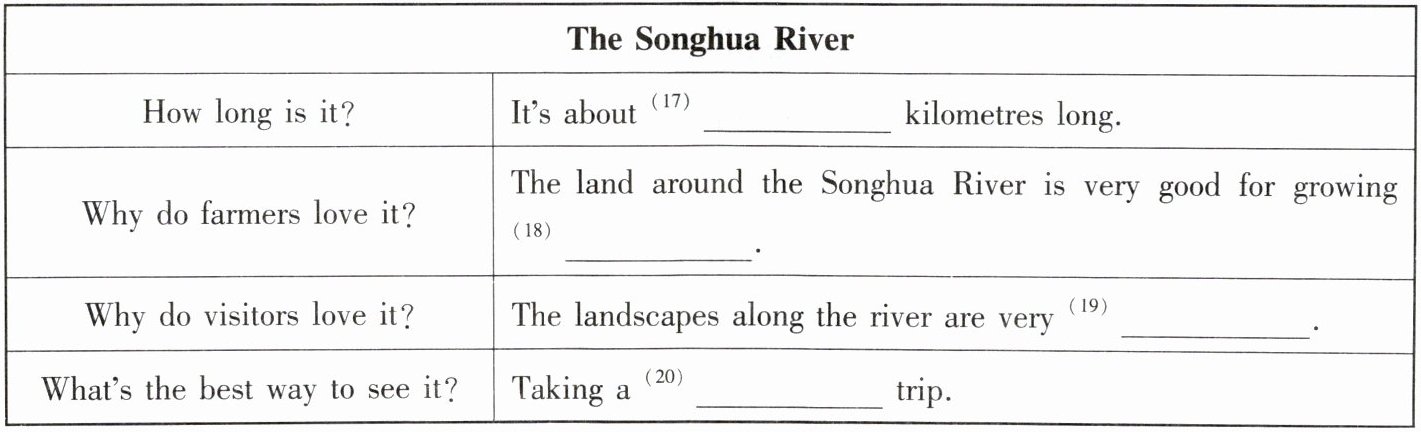
答案:17. 2,300
18. corn
19. beautiful
20. boat
18. corn
19. beautiful
20. boat