听一段对话,回答第 11、12 小题。
() 11. What is special about the Karst landform?
A. We can only see it under the ground.
B. It is one of the world’s top five landforms.
C. It is formed by surface water and underground water.
() 12. Where can we find the landform according to the dialogue?
A. In Africa.
B. In the USA.
C. In Japan.
() 11. What is special about the Karst landform?
A. We can only see it under the ground.
B. It is one of the world’s top five landforms.
C. It is formed by surface water and underground water.
() 12. Where can we find the landform according to the dialogue?
A. In Africa.
B. In the USA.
C. In Japan.
答案:CB
解析:
由于没有提供具体的听力对话内容,无法根据对话信息准确解答这两个问题。通常这类题目需要依据听力材料中提到的关于喀斯特地貌的特征(如形成原因、独特之处)以及分布地点来选择答案。喀斯特地貌的典型特征是由地表水和地下水对可溶性岩石(如石灰岩)进行溶蚀等作用形成,在我国西南地区(如广西桂林)分布广泛,但选项中未涉及中国,可能对话中提到了其他地区。建议根据实际听到的对话内容进行选择。
无听力材料,无法确定答案
无听力材料,无法确定答案
听第一篇短文,回答第 13 至 15 小题。请根据短文内容,选择正确答案,完成信息记录表。
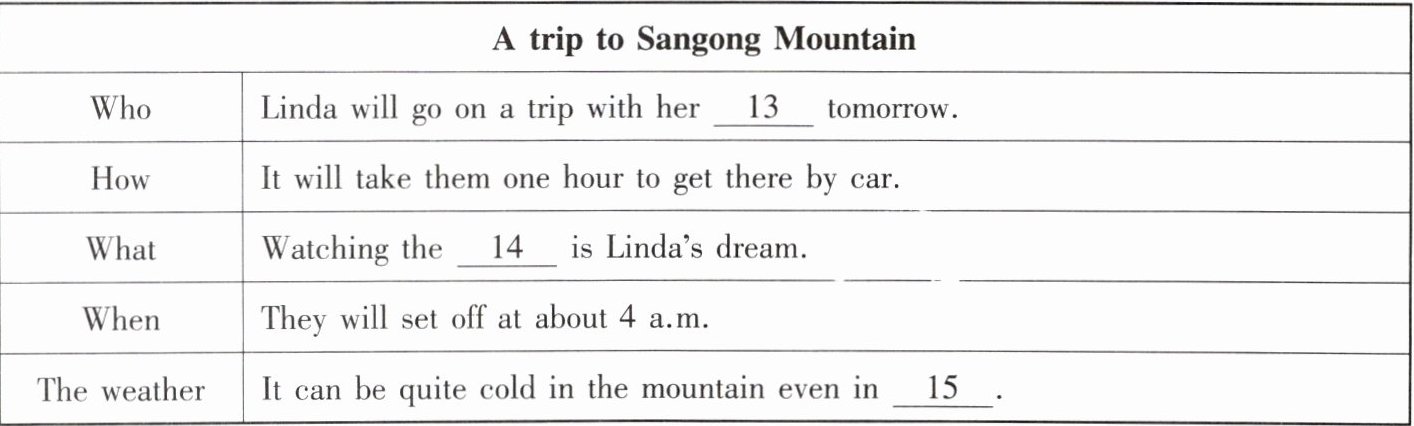
() 13. A. parents
B. classmates
C. friends
() 14. A. flowers
B. sunrise
C. waterfall
() 15. A. March
B. April
C. May
() 13. A. parents
B. classmates
C. friends
() 14. A. flowers
B. sunrise
C. waterfall
() 15. A. March
B. April
C. May
答案:13. A
14. B
15. C
14. B
15. C
解析: