二、阅读理解
A
Some American students will come to Li Fang's school next Sunday. She is going to introduce Chinese culture to them. She wants to talk about the following things.
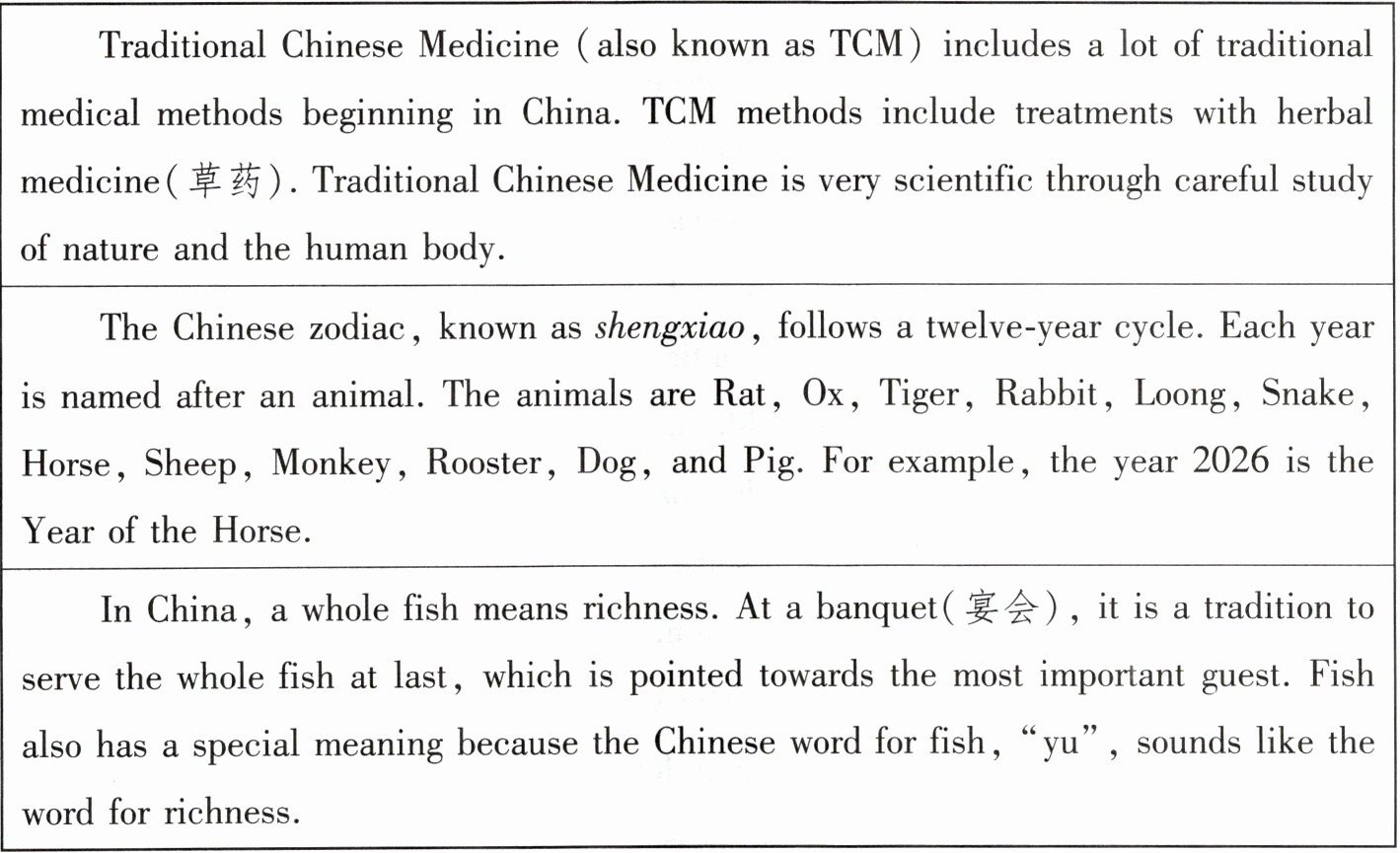
(
A. 2033.
B. 2031.
C. 2029.
D. 2027.
(
A. At the beginning of the dinner.
B. In the middle of the dinner.
C. At the end of the dinner.
D. Any time through the dinner.
(
A. Fish served at a banquet means health in China.
B. Traditional Chinese Medicine is a careful study of nature and animals.
C. Traditional Chinese Medicine is called TCM for short.
D. The Chinese zodiac is popular with people all over the world.
A
Some American students will come to Li Fang's school next Sunday. She is going to introduce Chinese culture to them. She wants to talk about the following things.
(
B
) 1. Which of the following is the Year of the Pig according to the Chinese zodiac?A. 2033.
B. 2031.
C. 2029.
D. 2027.
(
C
) 2. When is the whole fish served according to the passage?A. At the beginning of the dinner.
B. In the middle of the dinner.
C. At the end of the dinner.
D. Any time through the dinner.
(
C
) 3. What can we learn from the passage?A. Fish served at a banquet means health in China.
B. Traditional Chinese Medicine is a careful study of nature and animals.
C. Traditional Chinese Medicine is called TCM for short.
D. The Chinese zodiac is popular with people all over the world.
答案:1.B 2.C 3.C
解析:
1. 文中提到2026年是马年,生肖顺序为鼠、牛、虎、兔、龙、蛇、马、羊、猴、鸡、狗、猪,12年一轮。2026年马年,2027羊年,2028猴年,2029鸡年,2030狗年,2031猪年,故选B。
2. 文中明确提到“At a banquet, it is a tradition to serve the whole fish at last”,即宴会最后上整条鱼,选C。
3. A项鱼象征富裕而非健康;B项中医是对自然和人体的研究,非动物;C项文中首句指出“Traditional Chinese Medicine (also known as TCM)”,正确;D项文中未提及生肖在全球的流行度。选C。
翻译:
二、阅读理解
A
一些美国学生下周日会来到李芳的学校。她打算向他们介绍中国文化。她想要谈论以下这些内容。
( )1. 根据中国生肖,以下哪一年是猪年?
A. 2033年。
B. 2031年。
C. 2029年。
D. 2027年。
( )2. 根据文章,整条鱼什么时候上桌?
A. 晚餐开始时。
B. 晚餐进行到一半时。
C. 晚餐结束时。
D. 晚餐过程中的任何时候。
( )3. 我们能从文章中学到什么?
A. 在中国,宴会上的鱼意味着健康。
B. 中医是对自然和动物的细致研究。
C. 中医简称TCM。
D. 中国生肖受到全世界人们的喜爱。
2. 文中明确提到“At a banquet, it is a tradition to serve the whole fish at last”,即宴会最后上整条鱼,选C。
3. A项鱼象征富裕而非健康;B项中医是对自然和人体的研究,非动物;C项文中首句指出“Traditional Chinese Medicine (also known as TCM)”,正确;D项文中未提及生肖在全球的流行度。选C。
翻译:
二、阅读理解
A
一些美国学生下周日会来到李芳的学校。她打算向他们介绍中国文化。她想要谈论以下这些内容。
( )1. 根据中国生肖,以下哪一年是猪年?
A. 2033年。
B. 2031年。
C. 2029年。
D. 2027年。
( )2. 根据文章,整条鱼什么时候上桌?
A. 晚餐开始时。
B. 晚餐进行到一半时。
C. 晚餐结束时。
D. 晚餐过程中的任何时候。
( )3. 我们能从文章中学到什么?
A. 在中国,宴会上的鱼意味着健康。
B. 中医是对自然和动物的细致研究。
C. 中医简称TCM。
D. 中国生肖受到全世界人们的喜爱。
B
On a Monday morning in Amsterdam, the work day began as usual for Jim. When finishing his coffee, Jim checked text messages on his phone. Then, he got his bag and went to the nearest railway station. He wasn't there to take the train, though. Instead, Jim chose one of the public bicycles lined up outside the station. After unlocking a bike with a smart card, he set out for his job on the other side of the city. He joined other cyclists in the bike lanes (车道), safely separated from car traffic.
Amsterdam wasn't always bicycle friendly. In fact, cycling used to be dangerous, especially during the second half of the twentieth century. This was a time of rapid growth in Amsterdam. As people got richer, they were able to afford expensive things such as cars. For the first time, driving became popular. Highways were built for cars. This meant there was less space for cyclists. Having had a long tradition of cycling, this was a big change for the city. As car traffic increased, so did the number of biking accidents. Many of the cyclists were children.
People in Amsterdam were angry. They organized protests (抗议) in the city streets. Government officers listened. Hoping to solve the problem quickly, they started to think of ways to make the city safe for cyclists again. Soon there were separate bike lanes, and some areas were closed to cars forever. The changes were so effective (有效的) that today Amsterdam is a model of biking safety for other cities around the world.
(
A. By comparing two places.
B. By describing a scene.
C. By answering a question.
D. By listing a number.
(
A. To work there.
B. To take the train.
C. To see a friend.
D. To ride a bike.
(
A. It has no highways for cars.
B. It is always bicycle friendly.
C. It seldom sees changes.
D. It is famous for biking safety.
On a Monday morning in Amsterdam, the work day began as usual for Jim. When finishing his coffee, Jim checked text messages on his phone. Then, he got his bag and went to the nearest railway station. He wasn't there to take the train, though. Instead, Jim chose one of the public bicycles lined up outside the station. After unlocking a bike with a smart card, he set out for his job on the other side of the city. He joined other cyclists in the bike lanes (车道), safely separated from car traffic.
Amsterdam wasn't always bicycle friendly. In fact, cycling used to be dangerous, especially during the second half of the twentieth century. This was a time of rapid growth in Amsterdam. As people got richer, they were able to afford expensive things such as cars. For the first time, driving became popular. Highways were built for cars. This meant there was less space for cyclists. Having had a long tradition of cycling, this was a big change for the city. As car traffic increased, so did the number of biking accidents. Many of the cyclists were children.
People in Amsterdam were angry. They organized protests (抗议) in the city streets. Government officers listened. Hoping to solve the problem quickly, they started to think of ways to make the city safe for cyclists again. Soon there were separate bike lanes, and some areas were closed to cars forever. The changes were so effective (有效的) that today Amsterdam is a model of biking safety for other cities around the world.
(
B
) 4. How does the writer start the passage?A. By comparing two places.
B. By describing a scene.
C. By answering a question.
D. By listing a number.
(
D
) 5. Why did Jim go to the nearest railway station on work day morning?A. To work there.
B. To take the train.
C. To see a friend.
D. To ride a bike.
(
D
) 6. What does the passage tell about Amsterdam?A. It has no highways for cars.
B. It is always bicycle friendly.
C. It seldom sees changes.
D. It is famous for biking safety.
答案:4.B;5.D;6.D
解析:
4. 题目的意思是“作者是如何开始这篇文章的?”在文章的第一段中,作者描述了吉姆在星期一早晨在阿姆斯特丹的工作日开始时的场景,包括喝咖啡、查看手机短信、去火车站、选择公共自行车等细节。这些细节描绘了一个具体的场景,使得读者能够直观地感受到文章所描述的环境和情境。选项A、C、D并没有在文章第一段体现,可排除。
因此,本题选B. By describing a scene。
5.题目的意思是“为什么吉姆在工作日早晨去最近的火车站?”文章第一段明确提到了“He wasn't there to take the train, though. Instead, Jim chose one of the public bicycles lined up outside the station.”(不过,他不是去那里坐火车的。相反,吉姆选择了车站外排队的一辆公共自行车。)这说明吉姆去火车站是为了骑公共自行车去上班,而不是为了其他目的。A、B、C选项并未在文章体现,可排除。
因此,本题选D. To ride a bike。
6.题目的意思是“这篇文章告诉我们关于阿姆斯特丹的什么信息?”文章最后一句提到“The changes were so effective that today Amsterdam is a model of biking safety for other cities around the world.(这些变化非常有效,如今阿姆斯特丹已成为世界其他城市自行车安全的典范。)”这说明阿姆斯特丹在自行车安全方面非常出名。A、B、C选项并未在文章体现,属于无中生有。
因此,本题选D. It is famous for biking safety。
翻译:
B
在阿姆斯特丹的一个周一早晨,吉姆的工作日像往常一样开始了。喝完咖啡后,吉姆查看了手机上的短信。然后,他拿起包,前往最近的火车站。不过,他去那里不是为了坐火车。相反,吉姆从车站外停放的公共自行车中选了一辆。用智能卡解锁一辆自行车后,他就出发去位于城市另一端的工作地点了。他和其他骑自行车的人一起在自行车道上骑行,与汽车交通安全地隔离开来。
阿姆斯特丹并不总是对自行车友好的。事实上,骑自行车过去是很危险的,尤其是在20世纪下半叶。那是阿姆斯特丹快速发展的时期。随着人们变得更富有,他们能够买得起汽车之类的昂贵物品。开车第一次变得流行起来。为汽车修建了高速公路。这意味着留给骑自行车的人的空间更少了。阿姆斯特丹有着悠久的自行车骑行传统,这对这座城市来说是一个巨大的变化。随着汽车交通量的增加,自行车事故的数量也增加了。很多骑自行车的人是孩子。
阿姆斯特丹的人们很愤怒。他们在城市的街道上组织了抗议活动。政府官员听取了他们的意见。为了尽快解决这个问题,他们开始想办法让这座城市对骑自行车的人再次变得安全。很快,就有了单独的自行车道,而且一些区域永远禁止汽车进入。这些改变非常有效,以至于如今阿姆斯特丹成为了世界上其他城市的自行车安全典范。
4. 作者是如何开始这篇文章的?
A. 通过比较两个地方。
B. 通过描述一个场景。
C. 通过回答一个问题。
D. 通过列出一个数字。
5. 为什么吉姆在工作日的早上要去最近的火车站?
A. 去那里工作。
B. 去坐火车。
C. 去见一个朋友。
D. 去骑自行车。
6. 这篇文章讲述了关于阿姆斯特丹的什么内容?
A. 它没有汽车高速公路。
B. 它一直对自行车友好。
C. 它很少发生变化。
D. 它以自行车安全而闻名。
因此,本题选B. By describing a scene。
5.题目的意思是“为什么吉姆在工作日早晨去最近的火车站?”文章第一段明确提到了“He wasn't there to take the train, though. Instead, Jim chose one of the public bicycles lined up outside the station.”(不过,他不是去那里坐火车的。相反,吉姆选择了车站外排队的一辆公共自行车。)这说明吉姆去火车站是为了骑公共自行车去上班,而不是为了其他目的。A、B、C选项并未在文章体现,可排除。
因此,本题选D. To ride a bike。
6.题目的意思是“这篇文章告诉我们关于阿姆斯特丹的什么信息?”文章最后一句提到“The changes were so effective that today Amsterdam is a model of biking safety for other cities around the world.(这些变化非常有效,如今阿姆斯特丹已成为世界其他城市自行车安全的典范。)”这说明阿姆斯特丹在自行车安全方面非常出名。A、B、C选项并未在文章体现,属于无中生有。
因此,本题选D. It is famous for biking safety。
翻译:
B
在阿姆斯特丹的一个周一早晨,吉姆的工作日像往常一样开始了。喝完咖啡后,吉姆查看了手机上的短信。然后,他拿起包,前往最近的火车站。不过,他去那里不是为了坐火车。相反,吉姆从车站外停放的公共自行车中选了一辆。用智能卡解锁一辆自行车后,他就出发去位于城市另一端的工作地点了。他和其他骑自行车的人一起在自行车道上骑行,与汽车交通安全地隔离开来。
阿姆斯特丹并不总是对自行车友好的。事实上,骑自行车过去是很危险的,尤其是在20世纪下半叶。那是阿姆斯特丹快速发展的时期。随着人们变得更富有,他们能够买得起汽车之类的昂贵物品。开车第一次变得流行起来。为汽车修建了高速公路。这意味着留给骑自行车的人的空间更少了。阿姆斯特丹有着悠久的自行车骑行传统,这对这座城市来说是一个巨大的变化。随着汽车交通量的增加,自行车事故的数量也增加了。很多骑自行车的人是孩子。
阿姆斯特丹的人们很愤怒。他们在城市的街道上组织了抗议活动。政府官员听取了他们的意见。为了尽快解决这个问题,他们开始想办法让这座城市对骑自行车的人再次变得安全。很快,就有了单独的自行车道,而且一些区域永远禁止汽车进入。这些改变非常有效,以至于如今阿姆斯特丹成为了世界上其他城市的自行车安全典范。
4. 作者是如何开始这篇文章的?
A. 通过比较两个地方。
B. 通过描述一个场景。
C. 通过回答一个问题。
D. 通过列出一个数字。
5. 为什么吉姆在工作日的早上要去最近的火车站?
A. 去那里工作。
B. 去坐火车。
C. 去见一个朋友。
D. 去骑自行车。
6. 这篇文章讲述了关于阿姆斯特丹的什么内容?
A. 它没有汽车高速公路。
B. 它一直对自行车友好。
C. 它很少发生变化。
D. 它以自行车安全而闻名。