听第一篇短文,回答第 13 至 15 小题。请根据短文内容,选择正确答案,完成信息记录表。
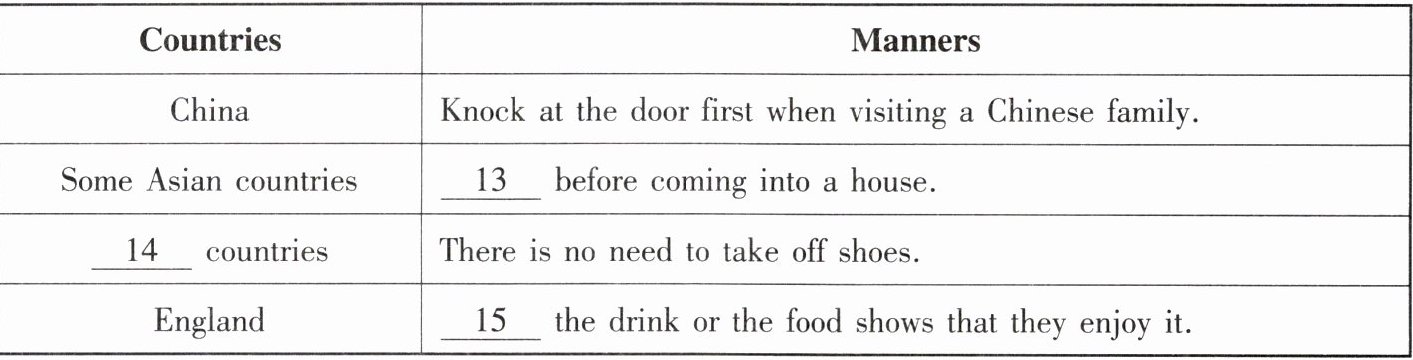
(
B. Take off shoes
C. Knock at the door first
(
B. European
C. African
(
B. Leaving
C. Smelling
(
B
)13. A. Greet each otherB. Take off shoes
C. Knock at the door first
(
B
)14. A. AsianB. European
C. African
(
A
)15. A. FinishingB. Leaving
C. Smelling
答案:13. B
14. B
15. A
14. B
15. A
解析:
翻译:
听第一篇短文,回答第13至15小题。请根据短文内容,选择正确答案,完成信息记录表。
( )13. A. 互相问候
B. 脱鞋
C. 先敲门
( )14. A. 亚洲的
B. 欧洲的
C. 非洲的
( )15. A. 完成
B. 离开
C. 闻
听第一篇短文,回答第13至15小题。请根据短文内容,选择正确答案,完成信息记录表。
( )13. A. 互相问候
B. 脱鞋
C. 先敲门
( )14. A. 亚洲的
B. 欧洲的
C. 非洲的
( )15. A. 完成
B. 离开
C. 闻
听第二篇短文,回答第 16 至 20 小题。
()16. How will Americans feel if you ask them “Where are you going?”
A. Happy.
B. Surprised.
C. Annoyed.
()17. Who will probably ask “Where are you going?” in America?
A. Visitors.
B. Friends.
C. Policemen.
()18. What does the question “Have you had your meal?” mean to Americans?
A. An invitation.
B. A greeting.
C. An introduction.
()19. Which of the following WON'T be used as a greeting in America?
A. How are you?
B. Hello!
C. How old are you?
()20. What does the speaker mainly want to tell?
A. Different countries have different customs.
B. We should learn more about foreign languages.
C. We can't ask “Have you had your meal?” any more.
()16. How will Americans feel if you ask them “Where are you going?”
A. Happy.
B. Surprised.
C. Annoyed.
()17. Who will probably ask “Where are you going?” in America?
A. Visitors.
B. Friends.
C. Policemen.
()18. What does the question “Have you had your meal?” mean to Americans?
A. An invitation.
B. A greeting.
C. An introduction.
()19. Which of the following WON'T be used as a greeting in America?
A. How are you?
B. Hello!
C. How old are you?
()20. What does the speaker mainly want to tell?
A. Different countries have different customs.
B. We should learn more about foreign languages.
C. We can't ask “Have you had your meal?” any more.
答案:BCACA
解析:
翻译:
听第二篇短文,回答第16至20小题。
16. 如果你问美国人“你要去哪里?”,他们会有什么感觉?
A. 开心的。
B. 惊讶的。
C. 恼怒的。
17. 在美国,谁可能会问“你要去哪里?”?
A. 游客。
B. 朋友。
C. 警察。
18. 对美国人来说,“你吃饭了吗?”这个问题是什么意思?
A. 一份邀请。
B. 一种问候。
C. 一次介绍。
19. 以下哪一项在美国不会被用作问候语?
A. 你好吗?
B. 你好!
C. 你多大了?
20. 说话者主要想告诉我们什么?
A. 不同的国家有不同的习俗。
B. 我们应该更多地学习外语。
C. 我们不能再问“你吃饭了吗?”了。
听第二篇短文,回答第16至20小题。
16. 如果你问美国人“你要去哪里?”,他们会有什么感觉?
A. 开心的。
B. 惊讶的。
C. 恼怒的。
17. 在美国,谁可能会问“你要去哪里?”?
A. 游客。
B. 朋友。
C. 警察。
18. 对美国人来说,“你吃饭了吗?”这个问题是什么意思?
A. 一份邀请。
B. 一种问候。
C. 一次介绍。
19. 以下哪一项在美国不会被用作问候语?
A. 你好吗?
B. 你好!
C. 你多大了?
20. 说话者主要想告诉我们什么?
A. 不同的国家有不同的习俗。
B. 我们应该更多地学习外语。
C. 我们不能再问“你吃饭了吗?”了。
第三部分 情景问答
你有 10 秒钟的时间阅读下面的情景提示。之后你将听到两个问题,请根据情景提示的内容,用英语进行回答。注意:每个问题问两遍,每题的答题时间为 15 秒钟。
请看下面的情景提示:
图书馆是阅读的好地方,我们不应该在里面大声喧哗。
(1)
(2)
你有 10 秒钟的时间阅读下面的情景提示。之后你将听到两个问题,请根据情景提示的内容,用英语进行回答。注意:每个问题问两遍,每题的答题时间为 15 秒钟。
请看下面的情景提示:
图书馆是阅读的好地方,我们不应该在里面大声喧哗。
(1)
(2)
答案:⑴ Reading books.
⑵ We shouldn't shout loudly.
⑵ We shouldn't shout loudly.