五、阅读理解
Hongcun Village, with a history of about 900 years, is a very beautiful village in Anhui Province. It sits at the foot of Mount Huangshan and has kept the main Chinese styles from ancient times. It's also one of UNESCO World Heritage Sites.
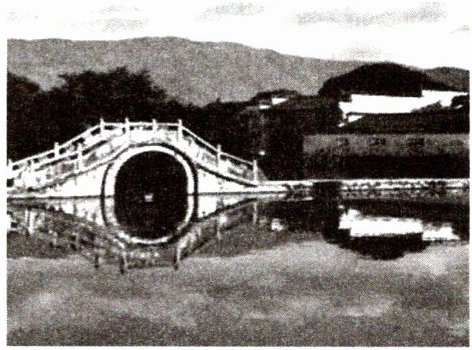
Walk along the old stone streets and paths, and you will feel like travelling back in time. Most houses with grey roofs and white walls were built during the Ming and Qing Dynasties. The front gates of many houses are decorated with red Chinese knots and lanterns. All of them are shaped against the blue sky and seen in the clear rivers, lakes and ponds, surrounded by dark green mountains. It's a living water-ink picture.
Step into a tea house to take a rest. A piece of classical music, played by the guqin, fills up the house and reaches your hearts, as if you hear birds singing, pines whistling and rivers flowing. You will be lost in a world, full of peace and joy. Holding the tea cup, some lines of poems on its surface will come into your sight:
No dust is rising on the road wet with morning rain,
The willows by the hotel look so fresh and green.
Walk out of the tea house, and go to the open-air theatre. The actors with coloured make-ups are putting on a show in special clothes. It's a local opera called Huangmei Opera and different from others, such as Kun Opera, Beijing Opera and Yue Opera. Also, you can enjoy a feast of different kinds of quyi: crosstalk, kouji and pingshu.
If you want to feel more about the special beauty of Hongcun Village, plan a visit to it right now.
(
A. lies under Mount Huashan in Shaanxi Province
B. is the only UNESCO World Heritage Site in China
C. is a beautiful old village with a history of about 600 years
D. has kept the Chinese styles from the Ming and Qing Dynasties
(
A. Party. B. Reform. C. Course. D. Difference.
(
① Chinese knots ② pingshu ③ classical music
④ poems ⑤ Huangmei Opera ⑥ tea
A. ①③⑤ B. ②④⑥ C. ①③⑥ D. ③④⑥
(
A. the history of Chinese art B. the importance of Chinese traditions
C. the beauty of Chinese culture D. the popularity of Chinese poems
Hongcun Village, with a history of about 900 years, is a very beautiful village in Anhui Province. It sits at the foot of Mount Huangshan and has kept the main Chinese styles from ancient times. It's also one of UNESCO World Heritage Sites.
Walk along the old stone streets and paths, and you will feel like travelling back in time. Most houses with grey roofs and white walls were built during the Ming and Qing Dynasties. The front gates of many houses are decorated with red Chinese knots and lanterns. All of them are shaped against the blue sky and seen in the clear rivers, lakes and ponds, surrounded by dark green mountains. It's a living water-ink picture.
Step into a tea house to take a rest. A piece of classical music, played by the guqin, fills up the house and reaches your hearts, as if you hear birds singing, pines whistling and rivers flowing. You will be lost in a world, full of peace and joy. Holding the tea cup, some lines of poems on its surface will come into your sight:
No dust is rising on the road wet with morning rain,
The willows by the hotel look so fresh and green.
Walk out of the tea house, and go to the open-air theatre. The actors with coloured make-ups are putting on a show in special clothes. It's a local opera called Huangmei Opera and different from others, such as Kun Opera, Beijing Opera and Yue Opera. Also, you can enjoy a feast of different kinds of quyi: crosstalk, kouji and pingshu.
If you want to feel more about the special beauty of Hongcun Village, plan a visit to it right now.
(
D
) 1. From the passage, we know that Hongcun Village D
.A. lies under Mount Huashan in Shaanxi Province
B. is the only UNESCO World Heritage Site in China
C. is a beautiful old village with a history of about 600 years
D. has kept the Chinese styles from the Ming and Qing Dynasties
(
A
) 2. What does the underlined word "feast" mean in the passage?A. Party. B. Reform. C. Course. D. Difference.
(
D
) 3. In the village tea house, what elements of China are talked about?① Chinese knots ② pingshu ③ classical music
④ poems ⑤ Huangmei Opera ⑥ tea
A. ①③⑤ B. ②④⑥ C. ①③⑥ D. ③④⑥
(
C
) 4. Through the description of Hongcun Village, the passage shows us C
.A. the history of Chinese art B. the importance of Chinese traditions
C. the beauty of Chinese culture D. the popularity of Chinese poems
答案:1.D 2.A 3.D 4.C
解析:
【分析】
做这篇阅读理解的思路是:第一步先快速通读全文,明确文章是介绍安徽宏村的特色风貌与传统文化,整体把握行文结构:开篇介绍宏村基本概况,随后依次介绍古村落建筑风貌、茶馆体验、露天剧场的特色演出,最后发出游览邀请。第二步逐题对应题干要求,回到原文精准定位信息,逐一比对选项排除错误干扰项:
1. 第一题是细节理解题,逐个选项回到原文找对应描述,排除和原文不符的错误选项即可得到正确答案。
2. 第二题是词义猜测题,结合划线词所在的上下文语境,后文列举了多种曲艺形式,可推断这里是指一场汇集各类曲艺的文娱盛会,匹配选项含义选出答案。
3. 第三题是细节筛选题,限定场景是茶馆,只需要定位到茶馆对应的段落,把段落里提到的元素和选项里的内容逐一比对,排除属于其他场景的元素,就能选出正确组合。
4. 第四题是主旨理解题,通读全文可知文章全程在展现宏村承载的各类中国传统特色之美,匹配主旨选项即可。
【解析】
1. 细节定位:
选项A:原文第一段说明宏村在安徽省黄山脚下,并非陕西华山脚下,表述错误;
选项B:原文第一段说明宏村是联合国教科文组织世界遗产地之一,并非中国唯一的世界遗产,表述错误;
选项C:原文第一句说明宏村有约900年历史,不是600年,表述错误;
选项D:原文第一段提到宏村保留了古代中国的主流风格,第二段说明多数房屋是明清时期修建的,可知宏村保留了明清时期的中式风格,表述正确。
2. 词义猜测:划线词feast后面列举了相声、口技、评书等多种曲艺形式,说明这里指的是汇集各类曲艺的文娱盛会,选项中Party可引申表示文娱集会/盛会,Reform(改革)、Course(课程)、Difference(差异)均不符合语境,因此选A。
3. 细节筛选:定位到第三段茶馆相关内容,提到了古琴演奏的古典音乐、茶杯表面的诗句、品茶体验,对应③④⑥;中国结是民居大门的装饰,评书、黄梅戏是露天剧场的内容,都不属于茶馆场景,因此选D。
4. 主旨理解:文章通过描写宏村的古水墨风貌、传统民乐、茶文化、特色戏曲曲艺,全方位展现了中国传统文化的独特美感,并没有侧重介绍中国艺术史脉络、传统文化的重要性,也不是围绕诗歌的流行展开,因此选C。
【答案】
1.D 2.A 3.D 4.C
【知识点】
细节信息查找,生词词义猜测,主旨大意归纳
【点评】
这是一篇中国传统文化主题的阅读理解,贴合文化意识的考察要求,难度适中,既考察学生快速定位原文信息、排除干扰项的阅读基础能力,也通过词义猜测和主旨题考察学生的语境理解和整体文本把握能力,解题时要注意区分不同场景对应的内容,避免出现张冠李戴的错误。
【难度系数】
0.7
做这篇阅读理解的思路是:第一步先快速通读全文,明确文章是介绍安徽宏村的特色风貌与传统文化,整体把握行文结构:开篇介绍宏村基本概况,随后依次介绍古村落建筑风貌、茶馆体验、露天剧场的特色演出,最后发出游览邀请。第二步逐题对应题干要求,回到原文精准定位信息,逐一比对选项排除错误干扰项:
1. 第一题是细节理解题,逐个选项回到原文找对应描述,排除和原文不符的错误选项即可得到正确答案。
2. 第二题是词义猜测题,结合划线词所在的上下文语境,后文列举了多种曲艺形式,可推断这里是指一场汇集各类曲艺的文娱盛会,匹配选项含义选出答案。
3. 第三题是细节筛选题,限定场景是茶馆,只需要定位到茶馆对应的段落,把段落里提到的元素和选项里的内容逐一比对,排除属于其他场景的元素,就能选出正确组合。
4. 第四题是主旨理解题,通读全文可知文章全程在展现宏村承载的各类中国传统特色之美,匹配主旨选项即可。
【解析】
1. 细节定位:
选项A:原文第一段说明宏村在安徽省黄山脚下,并非陕西华山脚下,表述错误;
选项B:原文第一段说明宏村是联合国教科文组织世界遗产地之一,并非中国唯一的世界遗产,表述错误;
选项C:原文第一句说明宏村有约900年历史,不是600年,表述错误;
选项D:原文第一段提到宏村保留了古代中国的主流风格,第二段说明多数房屋是明清时期修建的,可知宏村保留了明清时期的中式风格,表述正确。
2. 词义猜测:划线词feast后面列举了相声、口技、评书等多种曲艺形式,说明这里指的是汇集各类曲艺的文娱盛会,选项中Party可引申表示文娱集会/盛会,Reform(改革)、Course(课程)、Difference(差异)均不符合语境,因此选A。
3. 细节筛选:定位到第三段茶馆相关内容,提到了古琴演奏的古典音乐、茶杯表面的诗句、品茶体验,对应③④⑥;中国结是民居大门的装饰,评书、黄梅戏是露天剧场的内容,都不属于茶馆场景,因此选D。
4. 主旨理解:文章通过描写宏村的古水墨风貌、传统民乐、茶文化、特色戏曲曲艺,全方位展现了中国传统文化的独特美感,并没有侧重介绍中国艺术史脉络、传统文化的重要性,也不是围绕诗歌的流行展开,因此选C。
【答案】
1.D 2.A 3.D 4.C
【知识点】
细节信息查找,生词词义猜测,主旨大意归纳
【点评】
这是一篇中国传统文化主题的阅读理解,贴合文化意识的考察要求,难度适中,既考察学生快速定位原文信息、排除干扰项的阅读基础能力,也通过词义猜测和主旨题考察学生的语境理解和整体文本把握能力,解题时要注意区分不同场景对应的内容,避免出现张冠李戴的错误。
【难度系数】
0.7