一、词汇运用
1. We should never forget those
2. The golden
3. Many people enjoy listening to
4. The teacher asks us to keep a
5. We found an old treehouse and made it our secret
6. I have already carefully checked my homework t
7. No m
8. The t
1. We should never forget those
heroes
(英雄) who fought for our country.2. The golden
period
(时期) of the Tang Dynasty saw important development in culture.3. Many people enjoy listening to
classical
(古典的) music because it helps them relax.4. The teacher asks us to keep a
record
(记录) of what we read during the holiday.5. We found an old treehouse and made it our secret
base
(据点).6. I have already carefully checked my homework t
twice
to make sure there aren't any mistakes.7. No m
matter
what happens, Jack always tries to look on the bright side.8. The t
theme
of our meeting is how to protect the old buildings in our city centre.答案:1. heroes 2. period 3. classical 4. record 5. base
6. twice 7. matter 8. theme
6. twice 7. matter 8. theme
解析:
【分析】
这是初中英语核心词汇运用题型,分为中文提示拼写和首字母提示拼写两类,解题思路可以按四步走:1. 先通读完整句子,准确理解整句的含义;2. 分析空格前后的修饰成分,判断空格处所需的词性;3. 结合给出的中文释义/首字母提示,匹配对应的课内核心词汇;4. 结合语法规则(比如指示代词后名词的单复数、固定搭配的固定形式等)调整词汇形式,验证填入后句子逻辑、语法都通顺即可。
【解析】
1. 句意:我们永远不能忘记那些为祖国奋战的英雄。空格前的those(那些)后需接可数名词复数,“英雄”的英文单数为hero,其复数变化为heroes,故填heroes。
2. 句意:唐朝的黄金时期见证了文化领域的重大发展。空格前golden是形容词,修饰名词,“时期”对应的英文名词为period,此处特指唐朝的黄金阶段,用单数即可,故填period。
3. 句意:很多人喜欢听古典音乐,因为它能帮助他们放松。空格后是名词music,需要用形容词作定语修饰,“古典的”对应的英文形容词为classical,故填classical。
4. 句意:老师要求我们记录假期里阅读的内容。此处考察固定搭配keep a record of,意为“记录……”,“记录”对应的英文名词为record,故填record。
5. 句意:我们找到了一个旧树屋,把它改造成了我们的秘密据点。空格前secret是形容词,修饰名词,“据点”对应的英文名词为base,此处指一个据点,用单数即可,故填base。
6. 句意:我已经仔细把我的作业检查了两遍,确保没有任何错误。结合首字母t和句意,此处表次数“两次”,对应单词twice,故填twice。
7. 句意:无论发生什么,杰克总是试着看到事情积极的一面。此处考察固定搭配no matter what,意为“无论什么”,结合首字母m,故填matter。
8. 句意:我们本次会议的主题是如何保护市中心的老建筑。结合首字母t和会议讨论的核心内容的语境,此处表示“主题”,对应单词theme,故填theme。
【答案】
1. heroes 2. period 3. classical 4. record 5. base 6. twice 7. matter 8. theme
【知识点】
名词单复数变化
固定短语搭配
形容词作定语
【点评】
本题属于基础级词汇考察题,覆盖了初中中低年级的核心课标单词,同时兼顾了常见固定搭配的考察,难度梯度平缓,学生只要熟记课内单词、掌握基础词性用法就能顺利完成,需要注意避免hero这类有特殊复数变化的名词拼写错误。
【难度系数】
0.8
这是初中英语核心词汇运用题型,分为中文提示拼写和首字母提示拼写两类,解题思路可以按四步走:1. 先通读完整句子,准确理解整句的含义;2. 分析空格前后的修饰成分,判断空格处所需的词性;3. 结合给出的中文释义/首字母提示,匹配对应的课内核心词汇;4. 结合语法规则(比如指示代词后名词的单复数、固定搭配的固定形式等)调整词汇形式,验证填入后句子逻辑、语法都通顺即可。
【解析】
1. 句意:我们永远不能忘记那些为祖国奋战的英雄。空格前的those(那些)后需接可数名词复数,“英雄”的英文单数为hero,其复数变化为heroes,故填heroes。
2. 句意:唐朝的黄金时期见证了文化领域的重大发展。空格前golden是形容词,修饰名词,“时期”对应的英文名词为period,此处特指唐朝的黄金阶段,用单数即可,故填period。
3. 句意:很多人喜欢听古典音乐,因为它能帮助他们放松。空格后是名词music,需要用形容词作定语修饰,“古典的”对应的英文形容词为classical,故填classical。
4. 句意:老师要求我们记录假期里阅读的内容。此处考察固定搭配keep a record of,意为“记录……”,“记录”对应的英文名词为record,故填record。
5. 句意:我们找到了一个旧树屋,把它改造成了我们的秘密据点。空格前secret是形容词,修饰名词,“据点”对应的英文名词为base,此处指一个据点,用单数即可,故填base。
6. 句意:我已经仔细把我的作业检查了两遍,确保没有任何错误。结合首字母t和句意,此处表次数“两次”,对应单词twice,故填twice。
7. 句意:无论发生什么,杰克总是试着看到事情积极的一面。此处考察固定搭配no matter what,意为“无论什么”,结合首字母m,故填matter。
8. 句意:我们本次会议的主题是如何保护市中心的老建筑。结合首字母t和会议讨论的核心内容的语境,此处表示“主题”,对应单词theme,故填theme。
【答案】
1. heroes 2. period 3. classical 4. record 5. base 6. twice 7. matter 8. theme
【知识点】
名词单复数变化
固定短语搭配
形容词作定语
【点评】
本题属于基础级词汇考察题,覆盖了初中中低年级的核心课标单词,同时兼顾了常见固定搭配的考察,难度梯度平缓,学生只要熟记课内单词、掌握基础词性用法就能顺利完成,需要注意避免hero这类有特殊复数变化的名词拼写错误。
【难度系数】
0.8
(
A. rests in B. shows off C. stands out D. depends on
B
) 1.Suzhou Museum B
a mix of traditional and modern building styles.A. rests in B. shows off C. stands out D. depends on
答案:1.B
解析:
【分析】
首先通读题干,先明确句子想要表达的核心含义:苏州博物馆展现出了传统与现代建筑风格相融合的特色。接下来我们可以逐一辨析四个选项的动词短语的语义和用法,把语义逻辑不通、用法不符的选项逐一排除,最终匹配出最贴合语境的答案。
【解析】
先翻译题干:苏州博物馆________传统与现代建筑风格的融合特色。
对四个选项逐一分析:
1. 选项A:rests in 意为“在于、存在于”,代入句子后逻辑不通顺,不符合表达需求,排除;
2. 选项B:shows off 除了常见的“炫耀”的贬义含义外,还可以表示“彰显、充分展示出(出众的特点)”,代入句中表示苏州博物馆充分展现了传统与现代建筑风格融合的特色,语义通顺完全符合语境;
3. 选项C:stands out 意为“突出、脱颖而出”,属于不及物动词短语,后面不能直接接宾语,本题空格后直接接名词性短语a mix of...,用法不匹配,排除;
4. 选项D:depends on 意为“依赖、取决于”,代入句子后逻辑不符合事实,排除。
综上正确选项为B。
【答案】B
【知识点】动词短语辨析,语境词义匹配
【点评】本题是英语高频考点题型,考查常见易混动词短语的语义和用法区分,需要学生平时积累短语的多层含义、及物不及物的用法差异,结合句子语境就可以快速排除干扰项,选出正确答案。
【难度系数】0.6
首先通读题干,先明确句子想要表达的核心含义:苏州博物馆展现出了传统与现代建筑风格相融合的特色。接下来我们可以逐一辨析四个选项的动词短语的语义和用法,把语义逻辑不通、用法不符的选项逐一排除,最终匹配出最贴合语境的答案。
【解析】
先翻译题干:苏州博物馆________传统与现代建筑风格的融合特色。
对四个选项逐一分析:
1. 选项A:rests in 意为“在于、存在于”,代入句子后逻辑不通顺,不符合表达需求,排除;
2. 选项B:shows off 除了常见的“炫耀”的贬义含义外,还可以表示“彰显、充分展示出(出众的特点)”,代入句中表示苏州博物馆充分展现了传统与现代建筑风格融合的特色,语义通顺完全符合语境;
3. 选项C:stands out 意为“突出、脱颖而出”,属于不及物动词短语,后面不能直接接宾语,本题空格后直接接名词性短语a mix of...,用法不匹配,排除;
4. 选项D:depends on 意为“依赖、取决于”,代入句子后逻辑不符合事实,排除。
综上正确选项为B。
【答案】B
【知识点】动词短语辨析,语境词义匹配
【点评】本题是英语高频考点题型,考查常见易混动词短语的语义和用法区分,需要学生平时积累短语的多层含义、及物不及物的用法差异,结合句子语境就可以快速排除干扰项,选出正确答案。
【难度系数】0.6
(
— What a pity!
A. left B. has been away C. was leaving D. leaves
A
) 2.— I'm sorry you have missed the bus. It A
just two minutes ago.— What a pity!
A. left B. has been away C. was leaving D. leaves
答案:2.A
解析:
【分析】
解题时首先要定位句中的时间提示词,看到"just two minutes ago"这个表示明确过去时间的状语,首先回忆对应时态的使用规则:“时间段+ago”是一般过去时的典型标志,用来描述在过去某个时间点发生的一次性动作。接下来逐一比对四个选项的时态属性,排除不符合时态规则和语境的选项,就能得到正确答案。
【解析】
1. 先判断时态依据:句中时间状语"just two minutes ago"意为“就在两分钟前”,是明确指向过去的时间点,描述公交车离开这个过去发生的动作,需要使用一般过去时。
2. 逐一辨析选项:
选项A:left是实义动词leave的过去式,属于一般过去时结构,符合本题时态和语义要求。
选项B:has been away是现在完成时结构,现在完成时不能和"two minutes ago"这类明确的过去时间状语连用,不符合语法规则,排除。
选项C:was leaving是过去进行时,用于表示过去某一时刻正在进行的动作,本题不强调“离开”的动作正在进行,不符合语境,排除。
选项D:leaves是一般现在时的第三人称单数形式,多用于描述经常性、习惯性发生的动作,和本题描述过去单次动作的语境不符,排除。
综上,答案选A。
【答案】
A
【知识点】
一般过去时用法,动词时态辨析
【点评】
本题是动词时态考点的基础题型,核心考查学生对一般过去时标志性时间状语的掌握,只要牢记不同时态对应的典型时间标志,就能快速区分易混淆的时态用法,排除错误选项。
【难度系数】
0.8
解题时首先要定位句中的时间提示词,看到"just two minutes ago"这个表示明确过去时间的状语,首先回忆对应时态的使用规则:“时间段+ago”是一般过去时的典型标志,用来描述在过去某个时间点发生的一次性动作。接下来逐一比对四个选项的时态属性,排除不符合时态规则和语境的选项,就能得到正确答案。
【解析】
1. 先判断时态依据:句中时间状语"just two minutes ago"意为“就在两分钟前”,是明确指向过去的时间点,描述公交车离开这个过去发生的动作,需要使用一般过去时。
2. 逐一辨析选项:
选项A:left是实义动词leave的过去式,属于一般过去时结构,符合本题时态和语义要求。
选项B:has been away是现在完成时结构,现在完成时不能和"two minutes ago"这类明确的过去时间状语连用,不符合语法规则,排除。
选项C:was leaving是过去进行时,用于表示过去某一时刻正在进行的动作,本题不强调“离开”的动作正在进行,不符合语境,排除。
选项D:leaves是一般现在时的第三人称单数形式,多用于描述经常性、习惯性发生的动作,和本题描述过去单次动作的语境不符,排除。
综上,答案选A。
【答案】
A
【知识点】
一般过去时用法,动词时态辨析
【点评】
本题是动词时态考点的基础题型,核心考查学生对一般过去时标志性时间状语的掌握,只要牢记不同时态对应的典型时间标志,就能快速区分易混淆的时态用法,排除错误选项。
【难度系数】
0.8
(
— Yes. But in fact, I
A. bought B. have bought C. had D. have had
D
) 3.— Hi, Mr Zhang! Your e-car looks new.— Yes. But in fact, I
D
it for two years.A. bought B. have bought C. had D. have had
答案:3.D
解析:
【分析】
拿到这道题首先先定位题干关键提示:句中的时间状语"for two years"表示一段持续的时长,可初步判断需要使用能表示动作/状态从过去延续到现在的现在完成时。接下来要注意,瞬间完成的短暂性动词不能和持续时间段连用,题干里的buy就是典型的短暂性动词,不能直接和for two years搭配,替换成对应的延续性表达后再逐一排除错误选项,就能得到正确答案。
【解析】
1. 先判断时态:"for two years"是现在完成时的典型标志,强调状态从过去持续到现在,现在完成时结构为have/has+动词过去分词,因此首先排除属于一般过去时的A选项(bought是buy的过去式)和C选项(had是have的过去式)。
2. 再辨析动词属性:buy是短暂性动词,“购买”这个动作是瞬间完成的,不可能持续两年,不能和表示一段时间的状语连用,因此排除B选项have bought。
3. 要表达“拥有某物持续两年”的含义,需要使用延续性动词have,它的现在完成时形式have had可以和时间段连用,完全符合语境,因此选D。
【答案】
D
【知识点】
现在完成时,短暂性动词转延续性动词
【点评】
本题是现在完成时模块的高频易错题,很多同学只注意到for two years对应现在完成时的结构,容易误选B选项,忽略了短暂性动词不能和持续时间段连用的规则,平时可以多积累常见短暂性动词的延续性替换形式,比如borrow对应keep、leave对应be away等,就能避开这类出题陷阱。
【难度系数】
0.6
拿到这道题首先先定位题干关键提示:句中的时间状语"for two years"表示一段持续的时长,可初步判断需要使用能表示动作/状态从过去延续到现在的现在完成时。接下来要注意,瞬间完成的短暂性动词不能和持续时间段连用,题干里的buy就是典型的短暂性动词,不能直接和for two years搭配,替换成对应的延续性表达后再逐一排除错误选项,就能得到正确答案。
【解析】
1. 先判断时态:"for two years"是现在完成时的典型标志,强调状态从过去持续到现在,现在完成时结构为have/has+动词过去分词,因此首先排除属于一般过去时的A选项(bought是buy的过去式)和C选项(had是have的过去式)。
2. 再辨析动词属性:buy是短暂性动词,“购买”这个动作是瞬间完成的,不可能持续两年,不能和表示一段时间的状语连用,因此排除B选项have bought。
3. 要表达“拥有某物持续两年”的含义,需要使用延续性动词have,它的现在完成时形式have had可以和时间段连用,完全符合语境,因此选D。
【答案】
D
【知识点】
现在完成时,短暂性动词转延续性动词
【点评】
本题是现在完成时模块的高频易错题,很多同学只注意到for two years对应现在完成时的结构,容易误选B选项,忽略了短暂性动词不能和持续时间段连用的规则,平时可以多积累常见短暂性动词的延续性替换形式,比如borrow对应keep、leave对应be away等,就能避开这类出题陷阱。
【难度系数】
0.6
(
A. have come to B. have gone to C. have been to D. have been in
D
) 4.Tom and Jim can speak Chinese well for they D
China for eight years.A. have come to B. have gone to C. have been to D. have been in
答案:4.D
解析:
【分析】
首先拿到题先抓题干关键线索:句中出现了表示持续时长的时间标志"for eight years",同时结合语境判断动作的属性。解题思路分两步走:第一,明确和"for+时间段"连用时,谓语必须是可延续的状态/动词,瞬间短暂动词要先排除;第二,逐一辨析四个现在完成时结构的含义和适用场景,把不符合延续要求、语义不匹配的选项逐一排除,最终得到正确答案。
【解析】
题干句意为:汤姆和吉姆中文说得很好,因为他们在中国待了八年时间。
1. 首先根据时间状语"for eight years"(长达八年,表持续的时间段),要求句中谓语必须是延续性表达,不能接瞬间动作:
选项A:have come to中come是短暂性瞬间动词,“来到”是瞬时完成的动作,无法延续八年,直接排除;
选项B:have gone to含义是“去了某地,目前尚未返回”,本身是非延续性结构,也不能接持续时长状语,和语境也不匹配,排除;
选项C:have been to含义是“去过某地,现在已经从当地返回”,该结构仅能描述过往的到访经历,常和次数搭配,不能接表示持续停留时长的状语,排除;
选项D:have been in含义是“在某地停留/待了一段时间”,是表示状态延续的表达,完全可以和for eight years这类时间段状语搭配,语义和语法都符合要求。
【答案】
D
【知识点】
现在完成时延续用法;have been/gone结构辨析
【点评】
本题是现在完成时模块的高频易错题,核心考察学生对现在完成时中延续性动词用法、以及几组易混的have相关结构的区分能力,提醒大家遇到"for+时间段"的标志时,第一时间排查谓语是否为延续性表达,避免混淆短暂动作和延续状态的用法。
【难度系数】
0.6
首先拿到题先抓题干关键线索:句中出现了表示持续时长的时间标志"for eight years",同时结合语境判断动作的属性。解题思路分两步走:第一,明确和"for+时间段"连用时,谓语必须是可延续的状态/动词,瞬间短暂动词要先排除;第二,逐一辨析四个现在完成时结构的含义和适用场景,把不符合延续要求、语义不匹配的选项逐一排除,最终得到正确答案。
【解析】
题干句意为:汤姆和吉姆中文说得很好,因为他们在中国待了八年时间。
1. 首先根据时间状语"for eight years"(长达八年,表持续的时间段),要求句中谓语必须是延续性表达,不能接瞬间动作:
选项A:have come to中come是短暂性瞬间动词,“来到”是瞬时完成的动作,无法延续八年,直接排除;
选项B:have gone to含义是“去了某地,目前尚未返回”,本身是非延续性结构,也不能接持续时长状语,和语境也不匹配,排除;
选项C:have been to含义是“去过某地,现在已经从当地返回”,该结构仅能描述过往的到访经历,常和次数搭配,不能接表示持续停留时长的状语,排除;
选项D:have been in含义是“在某地停留/待了一段时间”,是表示状态延续的表达,完全可以和for eight years这类时间段状语搭配,语义和语法都符合要求。
【答案】
D
【知识点】
现在完成时延续用法;have been/gone结构辨析
【点评】
本题是现在完成时模块的高频易错题,核心考察学生对现在完成时中延续性动词用法、以及几组易混的have相关结构的区分能力,提醒大家遇到"for+时间段"的标志时,第一时间排查谓语是否为延续性表达,避免混淆短暂动作和延续状态的用法。
【难度系数】
0.6
(
A. when B. if C. until D. since
C
) 5.You won't understand the story well C
you read it carefully and think about the details.A. when B. if C. until D. since
答案:5.C
解析:
【分析】
首先第一步通读题干,理清前后两个分句的含义:前半句是“你没法很好地理解这个故事”,带有否定含义won't(will not),后半句是“你认真阅读故事、思考细节”。接下来逐一对应四个选项的连词含义,判断前后句的逻辑关系:前半句的“无法理解”的状态会一直持续到后半句的动作发生才结束,刚好对应“直到…才”的逻辑,再匹配not...until的固定搭配规则,就能快速锁定正确选项,同时把代入后逻辑不通的其他选项逐一排除即可。
【解析】
我们逐一分析四个选项的用法和代入后的语义:
1. 选项A when,意为“当……时候”,引导时间状语从句,代入句子后语义为“当你仔细读故事思考细节的时候,你没法很好理解故事”,逻辑完全矛盾,排除。
2. 选项B if,意为“如果”,引导条件状语从句,代入后语义为“如果你仔细读故事思考细节,你就没法很好理解故事”,逻辑不符合常理,排除。
3. 选项C until,意为“直到……”,构成固定结构not...until,含义是“直到……才……”,代入后语意为“直到你仔细阅读故事、思考细节,你才能很好地理解这个故事”,逻辑完全通顺,符合用法。
4. 选项D since,可意为“自从/因为”,引导时间/原因状语从句,代入后语义不通顺,排除。
综上正确答案是C。
【答案】
C
【知识点】
连词辨析;not...until固定搭配;时间状语从句
【点评】
本题是状语从句的基础考题,核心考察not...until的经典固定搭配,解题的突破口就是抓住题干前半句的否定标志won't,再结合前后分句的逻辑关系就能快速选出答案,属于非常常见的基础考点,只要学生掌握了基础连词的含义和常用搭配就不容易丢分。
【难度系数】
0.7
首先第一步通读题干,理清前后两个分句的含义:前半句是“你没法很好地理解这个故事”,带有否定含义won't(will not),后半句是“你认真阅读故事、思考细节”。接下来逐一对应四个选项的连词含义,判断前后句的逻辑关系:前半句的“无法理解”的状态会一直持续到后半句的动作发生才结束,刚好对应“直到…才”的逻辑,再匹配not...until的固定搭配规则,就能快速锁定正确选项,同时把代入后逻辑不通的其他选项逐一排除即可。
【解析】
我们逐一分析四个选项的用法和代入后的语义:
1. 选项A when,意为“当……时候”,引导时间状语从句,代入句子后语义为“当你仔细读故事思考细节的时候,你没法很好理解故事”,逻辑完全矛盾,排除。
2. 选项B if,意为“如果”,引导条件状语从句,代入后语义为“如果你仔细读故事思考细节,你就没法很好理解故事”,逻辑不符合常理,排除。
3. 选项C until,意为“直到……”,构成固定结构not...until,含义是“直到……才……”,代入后语意为“直到你仔细阅读故事、思考细节,你才能很好地理解这个故事”,逻辑完全通顺,符合用法。
4. 选项D since,可意为“自从/因为”,引导时间/原因状语从句,代入后语义不通顺,排除。
综上正确答案是C。
【答案】
C
【知识点】
连词辨析;not...until固定搭配;时间状语从句
【点评】
本题是状语从句的基础考题,核心考察not...until的经典固定搭配,解题的突破口就是抓住题干前半句的否定标志won't,再结合前后分句的逻辑关系就能快速选出答案,属于非常常见的基础考点,只要学生掌握了基础连词的含义和常用搭配就不容易丢分。
【难度系数】
0.7
(
—
A. Boring. B. Sounds great! C. Fantastic. D. Couldn't be worse!
C
) 6.— How was your May Day holiday in Guilin, Lisa?—
C
I want to go there a hundred times!A. Boring. B. Sounds great! C. Fantastic. D. Couldn't be worse!
答案:6.C
解析:
【分析】
首先拿到这道情景对话题,第一步先明确问句的核心诉求:对方是在询问Lisa已经结束的桂林五一假期的实际体验。第二步找到答句的关键线索“I want to go there a hundred times”,从这个表述可以直接判断出Lisa对这次假期的评价是高度正面的。第三步逐一辨析四个选项的含义和适用场景,先排除所有负面评价的选项,再排除不符合“已经亲身经历后分享感受”这个场景的选项,就能锁定正确答案。
【解析】
解:
1. 梳理语境:问句询问Lisa在桂林度过的五一假期的实际体验,答句后半句“我想要去那里一百次”,说明Lisa对这次假期非常满意,给出的是极高的正面评价。
2. 逐一辨析选项:
选项A. Boring. 意为“无聊的”,是负面评价,和后文想要反复去的表述矛盾,排除;
选项B. Sounds great! 意为“听起来很棒”,该表达用于自己尚未亲身经历、听到别人描述事物时给出的回应,不符合此处Lisa度假归来分享自身体验的场景,排除;
选项C. Fantastic. 意为“极好的,非常棒的”,是对体验的高度正面评价,完全契合语境;
选项D. Couldn't be worse! 意为“糟糕透顶”,是程度最高的负面评价,和后文语义完全矛盾,排除。
因此正确答案是C。
【答案】
C
【知识点】
情景交际,形容词词义辨析
【点评】
本题考查日常对话的情景应答,解题的关键是先通过后半句的提示判断出评价的褒贬属性,再区分不同正面表达的适用场景,避免误选不符合亲身经历语境的Sounds great这类干扰项,属于情景交际板块的常规基础题。
【难度系数】
0.8
首先拿到这道情景对话题,第一步先明确问句的核心诉求:对方是在询问Lisa已经结束的桂林五一假期的实际体验。第二步找到答句的关键线索“I want to go there a hundred times”,从这个表述可以直接判断出Lisa对这次假期的评价是高度正面的。第三步逐一辨析四个选项的含义和适用场景,先排除所有负面评价的选项,再排除不符合“已经亲身经历后分享感受”这个场景的选项,就能锁定正确答案。
【解析】
解:
1. 梳理语境:问句询问Lisa在桂林度过的五一假期的实际体验,答句后半句“我想要去那里一百次”,说明Lisa对这次假期非常满意,给出的是极高的正面评价。
2. 逐一辨析选项:
选项A. Boring. 意为“无聊的”,是负面评价,和后文想要反复去的表述矛盾,排除;
选项B. Sounds great! 意为“听起来很棒”,该表达用于自己尚未亲身经历、听到别人描述事物时给出的回应,不符合此处Lisa度假归来分享自身体验的场景,排除;
选项C. Fantastic. 意为“极好的,非常棒的”,是对体验的高度正面评价,完全契合语境;
选项D. Couldn't be worse! 意为“糟糕透顶”,是程度最高的负面评价,和后文语义完全矛盾,排除。
因此正确答案是C。
【答案】
C
【知识点】
情景交际,形容词词义辨析
【点评】
本题考查日常对话的情景应答,解题的关键是先通过后半句的提示判断出评价的褒贬属性,再区分不同正面表达的适用场景,避免误选不符合亲身经历语境的Sounds great这类干扰项,属于情景交际板块的常规基础题。
【难度系数】
0.8
三、完成句子
1. 不论我爸爸多忙,他总会为家人腾出时间。
2. 那座古寺静静地矗立在太湖之畔。
The ancient temple stood quietly
3. 这幅画用鲜艳的色彩显示出乡村之美。
The painting
4. 我们还未去过上海的那家主题乐园。
We
1. 不论我爸爸多忙,他总会为家人腾出时间。
No matter
how busy my father is, he always makes time for the family.2. 那座古寺静静地矗立在太湖之畔。
The ancient temple stood quietly
on the bank of
Taihu Lake.3. 这幅画用鲜艳的色彩显示出乡村之美。
The painting
shows off
the beauty of the village with bright colours.4. 我们还未去过上海的那家主题乐园。
We
haven't been to the theme park
in Shanghai.答案:1. No matter 2. on the bank of 3. shows off
4. haven't been to the theme park
4. haven't been to the theme park
解析:
【分析】
这是英语完成句子题型,解题时先对照题干给出的中文语义,定位挖空部分对应的含义,再结合语法规则匹配正确表达:
1. 第一题挖空对应“不论”,后面紧跟how引导的让步状语从句,直接回忆对应固定搭配即可;
2. 第二题挖空对应“在...之畔”,也就是在湖的岸边,匹配对应的地点介词短语;
3. 第三题挖空对应“显示出”,要注意主语是第三人称单数,谓语动词要符合主谓一致规则;
4. 第四题挖空对应“还未去过那家主题乐园”,看到“还未去过”的提示要优先选用现在完成时的否定结构,注意区分have been to的正确用法。
【解析】
1. 此处需要引导让步状语从句,表达“不论、无论”的含义,后接how+形容词的结构,固定搭配为No matter how,句首单词首字母需大写,因此填No matter。
2. 此处作地点状语,表达“在...的岸边、在...之畔”的含义,符合语义的固定介词短语为on the bank of。
3. 此处缺少句子的谓语,语义为“凸显、展示出”,短语show off符合要求;主语The painting是第三人称单数,句子描述客观事实用一般现在时,谓语动词要变为第三人称单数形式,因此填shows off。
4. 根据中文提示“还未去过”可知时态为现在完成时,have been to表示“去过某地(已返回)”,其否定形式为haven't been to,“那家主题乐园”译为the theme park,因此组合得到haven't been to the theme park。
【答案】
1. No matter 2. on the bank of 3. shows off 4. haven't been to the theme park
【知识点】
让步状语从句,固定短语搭配,现在完成时
【点评】
本题侧重考查初中阶段核心的基础短语与时态应用,整体难度较低,解题时除了匹配对应语义的表达,还要注意细节规则,比如句首大写、主谓一致、现在完成时中have been to和have gone to的用法区别,避免不必要的失分。
【难度系数】
0.8
这是英语完成句子题型,解题时先对照题干给出的中文语义,定位挖空部分对应的含义,再结合语法规则匹配正确表达:
1. 第一题挖空对应“不论”,后面紧跟how引导的让步状语从句,直接回忆对应固定搭配即可;
2. 第二题挖空对应“在...之畔”,也就是在湖的岸边,匹配对应的地点介词短语;
3. 第三题挖空对应“显示出”,要注意主语是第三人称单数,谓语动词要符合主谓一致规则;
4. 第四题挖空对应“还未去过那家主题乐园”,看到“还未去过”的提示要优先选用现在完成时的否定结构,注意区分have been to的正确用法。
【解析】
1. 此处需要引导让步状语从句,表达“不论、无论”的含义,后接how+形容词的结构,固定搭配为No matter how,句首单词首字母需大写,因此填No matter。
2. 此处作地点状语,表达“在...的岸边、在...之畔”的含义,符合语义的固定介词短语为on the bank of。
3. 此处缺少句子的谓语,语义为“凸显、展示出”,短语show off符合要求;主语The painting是第三人称单数,句子描述客观事实用一般现在时,谓语动词要变为第三人称单数形式,因此填shows off。
4. 根据中文提示“还未去过”可知时态为现在完成时,have been to表示“去过某地(已返回)”,其否定形式为haven't been to,“那家主题乐园”译为the theme park,因此组合得到haven't been to the theme park。
【答案】
1. No matter 2. on the bank of 3. shows off 4. haven't been to the theme park
【知识点】
让步状语从句,固定短语搭配,现在完成时
【点评】
本题侧重考查初中阶段核心的基础短语与时态应用,整体难度较低,解题时除了匹配对应语义的表达,还要注意细节规则,比如句首大写、主谓一致、现在完成时中have been to和have gone to的用法区别,避免不必要的失分。
【难度系数】
0.8
四、完形填空
Dear Jenny,
Today, I had an amazing surprise in Lanzhou! While walking along the old streets, I accidentally (意外地)
The museum was once a military base (军事要塞) from the Han Dynasty. Now it has over 40,000 bamboo and wood
My
Before leaving, I tried two fun things: making a fuchuan, a wooden pass for travellers, and shooting a virtual bow (弓) like ancient soldiers.
Getting lost led me to this museum where old writings told stories of soldiers, traders and farmers. Who knew history could feel so real? It was a
Yours,
Li Hua
Dear Jenny,
Today, I had an amazing surprise in Lanzhou! While walking along the old streets, I accidentally (意外地)
B
1 the Gansu Jiandu Museum—a special place that took me back in time.The museum was once a military base (军事要塞) from the Han Dynasty. Now it has over 40,000 bamboo and wood
A
2. These thin pieces of wood and bamboo are like ancient books. One had a 1,800-year-old C
3 from a soldier named Yuan to his friend. In the letter, Yuan B
4 shoes and pens—small things that showed what life was like far away from home. Another showed a Han Dynasty rule that D
5 cutting trees and hunting in certain seasons. It was cool to see how they protected nature long ago!My
D
6 part was the postal system area. Han messengers, called "Tong", carried letters across deserts and mountains. They used rope-tied wood pieces to B
7 delivery times (送达时间). For B
8 messages, they tied a red feather (羽毛) to show speed! One piece even listed how far apart the old cities were, and this helped keep the Silk Road trading (贸易) A
9.Before leaving, I tried two fun things: making a fuchuan, a wooden pass for travellers, and shooting a virtual bow (弓) like ancient soldiers.
Getting lost led me to this museum where old writings told stories of soldiers, traders and farmers. Who knew history could feel so real? It was a
C
10 day!Yours,
Li Hua
答案:1.B 2.A 3.C 4.B 5.D 6.D 7.B 8.B 9.A 10.C
解析:
【分析】
做完形填空首先要通读全文,把握文章整体大意:这是李华写给好友Jenny的信件,讲述自己在兰州老街闲逛时偶然发现甘肃简牍博物馆的奇妙游览经历。解题时每一个空都要结合上下文给出的线索,辨析选项词义,匹配语境逻辑:
1. 第一空前文提到沿着老街走、意外发生的动作,后文说这个博物馆带自己穿越回古代,对应“偶然发现博物馆”的逻辑,排除不符合语境的选项。
2. 第二空后文提示这些竹木片像古书,还有大量古代文书相关的描述,对应竹木文书的属性,选出正确名词。
3. 第三空后文直接出现“In the letter”的明确提示,直接对应空格处的物品。
4. 第四空语境是远在异乡的士兵在信里向朋友索要小物件,辨析四个动词短语的含义匹配语境。
5. 第五空后文提到古人很早就在保护自然,说明这条汉代规则是禁止特定季节砍树狩猎,匹配动词含义。
6. 第六空描述作者对展区的喜好感受,结合后文作者详细介绍展区内容,说明这是作者最喜欢的部分。
7. 第七空用带绳的木片和送达时间的关系,逻辑上是用来记录送达时间,匹配动词含义。
8. 第八空绑红羽毛加急处理的肯定是优先级高的信息,对应“重要的”这一属性。
9. 第九空搭配keep,指帮助丝绸之路贸易持续正常运转,匹配固定搭配含义。
10. 第十空收尾总结一天的体验,对应开头提到的amazing surprise,选出符合感受的形容词。
【解析】
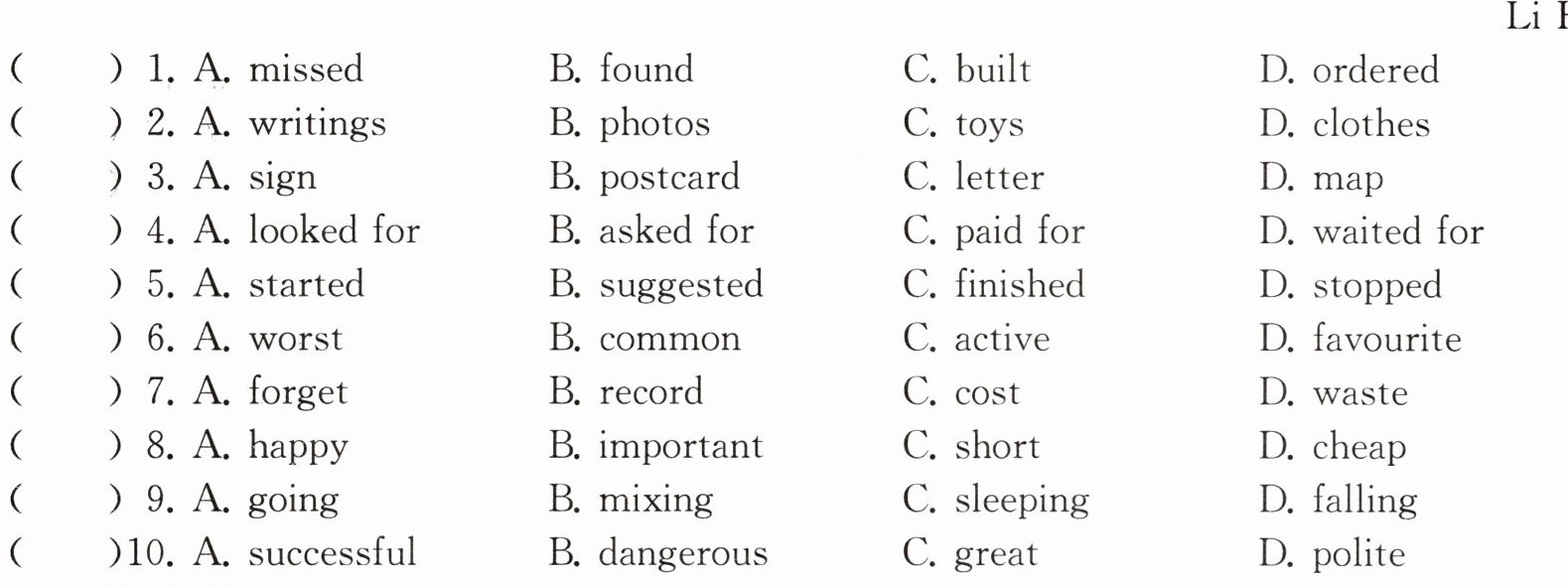
1. 句意:沿着老街散步的时候,我意外发现了甘肃简牍博物馆。A. missed错过;B. found发现;C. built建造;D. ordered订购。结合语境是偶然撞见发现博物馆,选B。
2. 句意:现在馆内有超过4万件竹木文书。A. writings文字/文书;B. photos照片;C. toys玩具;D. clothes衣服。简牍是古代书写文字的竹木片,符合语境,选A。
3. 句意:其中一片是一名叫元的士兵写给朋友的1800年前的信件。A. sign标识;B. postcard明信片;C. letter信件;D. map地图。后文直接出现"In the letter"的提示,选C。
4. 句意:在信里,元向朋友索要鞋子和笔——这些小物件展现了远离家乡的生活是什么样的。A. looked for寻找;B. asked for索要、请求给予;C. paid for支付;D. waited for等待。结合远在边疆的士兵的处境,是向朋友求这些物资,选B。
5. 句意:另一片展示了汉代的一条规定,禁止在特定季节砍树和狩猎。A. started开始;B. suggested建议;C. finished完成;D. stopped阻止、禁止。后文提到古人保护自然,说明规则叫停这类破坏行为,选D。
6. 句意:我最喜欢的部分是邮政系统展区。A. worst最差的;B. common普通的;C. active活跃的;D. favourite最喜欢的。后文作者详细介绍该展区的内容,说明这是他最喜爱的部分,选D。
7. 句意:他们用系着绳子的木片来记录送达时间。A. forget忘记;B. record记录;C. cost花费;D. waste浪费。古代邮差用木片登记送达时间,符合逻辑,选B。
8. 句意:对于重要的信息,他们会系上一根红羽毛表示要加急!A. happy开心的;B. important重要的;C. short短的;D. cheap便宜的。需要加急处理的是优先级高的重要信息,选B。
9. 句意:有一片甚至列出了古代城市之间的距离,这帮助丝绸之路的贸易持续正常运转。keep sth. going是固定搭配,表示“让…持续运行/开展”,A. going运行;B. mixing混合;C. sleeping睡觉;D. falling掉落,选A。
10. 句意:这真是超棒的一天!A. successful成功的;B. dangerous危险的;C. great极好的;D. polite礼貌的。对应开头作者说的amazing surprise,游览体验非常好,选C。
【答案】
1.B 2.A 3.C 4.B 5.D 6.D 7.B 8.B 9.A 10.C
【知识点】
完形语境辨析
动词短语辨析
固定搭配
【点评】
本题是记叙文类完形填空,以甘肃简牍博物馆为文化载体,贴合中国传统文化科普的背景,多数空都设置了明确的上下文提示线索,既考察学生对基础词汇短语的掌握程度,也锻炼学生抓取文本前后关联信息的解题能力,难度适中。
【难度系数】
0.7
做完形填空首先要通读全文,把握文章整体大意:这是李华写给好友Jenny的信件,讲述自己在兰州老街闲逛时偶然发现甘肃简牍博物馆的奇妙游览经历。解题时每一个空都要结合上下文给出的线索,辨析选项词义,匹配语境逻辑:
1. 第一空前文提到沿着老街走、意外发生的动作,后文说这个博物馆带自己穿越回古代,对应“偶然发现博物馆”的逻辑,排除不符合语境的选项。
2. 第二空后文提示这些竹木片像古书,还有大量古代文书相关的描述,对应竹木文书的属性,选出正确名词。
3. 第三空后文直接出现“In the letter”的明确提示,直接对应空格处的物品。
4. 第四空语境是远在异乡的士兵在信里向朋友索要小物件,辨析四个动词短语的含义匹配语境。
5. 第五空后文提到古人很早就在保护自然,说明这条汉代规则是禁止特定季节砍树狩猎,匹配动词含义。
6. 第六空描述作者对展区的喜好感受,结合后文作者详细介绍展区内容,说明这是作者最喜欢的部分。
7. 第七空用带绳的木片和送达时间的关系,逻辑上是用来记录送达时间,匹配动词含义。
8. 第八空绑红羽毛加急处理的肯定是优先级高的信息,对应“重要的”这一属性。
9. 第九空搭配keep,指帮助丝绸之路贸易持续正常运转,匹配固定搭配含义。
10. 第十空收尾总结一天的体验,对应开头提到的amazing surprise,选出符合感受的形容词。
【解析】
1. 句意:沿着老街散步的时候,我意外发现了甘肃简牍博物馆。A. missed错过;B. found发现;C. built建造;D. ordered订购。结合语境是偶然撞见发现博物馆,选B。
2. 句意:现在馆内有超过4万件竹木文书。A. writings文字/文书;B. photos照片;C. toys玩具;D. clothes衣服。简牍是古代书写文字的竹木片,符合语境,选A。
3. 句意:其中一片是一名叫元的士兵写给朋友的1800年前的信件。A. sign标识;B. postcard明信片;C. letter信件;D. map地图。后文直接出现"In the letter"的提示,选C。
4. 句意:在信里,元向朋友索要鞋子和笔——这些小物件展现了远离家乡的生活是什么样的。A. looked for寻找;B. asked for索要、请求给予;C. paid for支付;D. waited for等待。结合远在边疆的士兵的处境,是向朋友求这些物资,选B。
5. 句意:另一片展示了汉代的一条规定,禁止在特定季节砍树和狩猎。A. started开始;B. suggested建议;C. finished完成;D. stopped阻止、禁止。后文提到古人保护自然,说明规则叫停这类破坏行为,选D。
6. 句意:我最喜欢的部分是邮政系统展区。A. worst最差的;B. common普通的;C. active活跃的;D. favourite最喜欢的。后文作者详细介绍该展区的内容,说明这是他最喜爱的部分,选D。
7. 句意:他们用系着绳子的木片来记录送达时间。A. forget忘记;B. record记录;C. cost花费;D. waste浪费。古代邮差用木片登记送达时间,符合逻辑,选B。
8. 句意:对于重要的信息,他们会系上一根红羽毛表示要加急!A. happy开心的;B. important重要的;C. short短的;D. cheap便宜的。需要加急处理的是优先级高的重要信息,选B。
9. 句意:有一片甚至列出了古代城市之间的距离,这帮助丝绸之路的贸易持续正常运转。keep sth. going是固定搭配,表示“让…持续运行/开展”,A. going运行;B. mixing混合;C. sleeping睡觉;D. falling掉落,选A。
10. 句意:这真是超棒的一天!A. successful成功的;B. dangerous危险的;C. great极好的;D. polite礼貌的。对应开头作者说的amazing surprise,游览体验非常好,选C。
【答案】
1.B 2.A 3.C 4.B 5.D 6.D 7.B 8.B 9.A 10.C
【知识点】
完形语境辨析
动词短语辨析
固定搭配
【点评】
本题是记叙文类完形填空,以甘肃简牍博物馆为文化载体,贴合中国传统文化科普的背景,多数空都设置了明确的上下文提示线索,既考察学生对基础词汇短语的掌握程度,也锻炼学生抓取文本前后关联信息的解题能力,难度适中。
【难度系数】
0.7