B 核心素养 思维品质
① Sometimes a little self-criticism(自我批评) is not a bad thing. We all can learn much from our mistakes. However, too much of it may influence your brain and your life. Negative(消极的) self-talk is that little voice in your head. It says you are not good enough. It reminds you of all your faults and mistakes.
② Dr Steven, an educator and researcher on how the mind controls behaviour, said that some good students who study hard normally do not do well in a test because of "test anxiety(考试焦虑)".
③ Lindsay was one of Steven's best students at a community college. She came to class early, took part in discussions and did all of her homework. However, she did poorly in exams. When Steven asked her how she felt before a test, she told him she was very nervous. She wondered why she had trouble remembering what she had studied. She did not trust that she knew the right answers. This is an example of negative self-talk, which can influence a student's grades.
④ Dr Steven took Lindsay's negative self-talk and turned it into positive(积极的) questions. Before a test, he told Lindsay to say to herself: Why am I so relaxed when I take an exam? Why do I remember everything I study for an exam? Why do I trust my answers?
⑤ Lindsay took his advice. Two weeks later she took an exam in another class and scored 15 points higher than she had on an earlier exam. Four weeks later, she earned an A on the final exam in Steven's class. Lindsay left community college and went to a four-year university. She continued to use the method of positive self-talk. When Dr Steven visited her a year later, she had good news to share: she had got straight As on all of her exams.
⑥ Dr Steven saw student after student succeed with his method. More importantly, they got their self-confidence back. And he does not just help his students. He also encourages his friends and neighbours to get rid of negative self-talk gradually in their life. In a television interview, he said, "We can programme ourselves for success in class or in life, or we can programme ourselves for failure."
()29. What's the purpose of Paragraph 3?
A. To introduce Lindsay.
B. To catch readers' interest.
C. To support Dr Steven's idea.
D. To connect the next paragraph.
()30.(创新考法·代词指代)What does the underlined word "it" in Paragraph 4 refer to?
A. Lindsay's negative self-talk.
B. Lindsay's difficult test.
C. Lindsay's poor grade.
D. Lindsay's right answer.
()31. What's the structure of the passage?
A.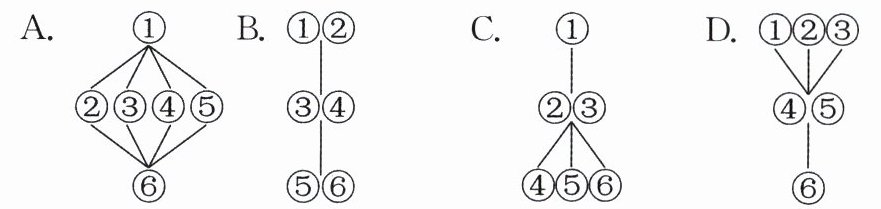
B. ①②
③④
⑤⑥
C. ①
②③
④⑤⑥
D. ①②③
④⑤
⑥
()32. What's the best title for the passage?
A. Negative Self-talk Makes You Succeed
B. Negative Self-talk Makes You Better
C. Positive Self-talk Makes a Great Difference
D. Positive Self-talk Can Change Your Goal
① Sometimes a little self-criticism(自我批评) is not a bad thing. We all can learn much from our mistakes. However, too much of it may influence your brain and your life. Negative(消极的) self-talk is that little voice in your head. It says you are not good enough. It reminds you of all your faults and mistakes.
② Dr Steven, an educator and researcher on how the mind controls behaviour, said that some good students who study hard normally do not do well in a test because of "test anxiety(考试焦虑)".
③ Lindsay was one of Steven's best students at a community college. She came to class early, took part in discussions and did all of her homework. However, she did poorly in exams. When Steven asked her how she felt before a test, she told him she was very nervous. She wondered why she had trouble remembering what she had studied. She did not trust that she knew the right answers. This is an example of negative self-talk, which can influence a student's grades.
④ Dr Steven took Lindsay's negative self-talk and turned it into positive(积极的) questions. Before a test, he told Lindsay to say to herself: Why am I so relaxed when I take an exam? Why do I remember everything I study for an exam? Why do I trust my answers?
⑤ Lindsay took his advice. Two weeks later she took an exam in another class and scored 15 points higher than she had on an earlier exam. Four weeks later, she earned an A on the final exam in Steven's class. Lindsay left community college and went to a four-year university. She continued to use the method of positive self-talk. When Dr Steven visited her a year later, she had good news to share: she had got straight As on all of her exams.
⑥ Dr Steven saw student after student succeed with his method. More importantly, they got their self-confidence back. And he does not just help his students. He also encourages his friends and neighbours to get rid of negative self-talk gradually in their life. In a television interview, he said, "We can programme ourselves for success in class or in life, or we can programme ourselves for failure."
()29. What's the purpose of Paragraph 3?
A. To introduce Lindsay.
B. To catch readers' interest.
C. To support Dr Steven's idea.
D. To connect the next paragraph.
()30.(创新考法·代词指代)What does the underlined word "it" in Paragraph 4 refer to?
A. Lindsay's negative self-talk.
B. Lindsay's difficult test.
C. Lindsay's poor grade.
D. Lindsay's right answer.
()31. What's the structure of the passage?
A.
B. ①②
③④
⑤⑥
C. ①
②③
④⑤⑥
D. ①②③
④⑤
⑥
()32. What's the best title for the passage?
A. Negative Self-talk Makes You Succeed
B. Negative Self-talk Makes You Better
C. Positive Self-talk Makes a Great Difference
D. Positive Self-talk Can Change Your Goal
答案:29.C 30.A 31.C 32.C
解析:
【分析】
本题为英语阅读理解题,需结合文章内容解答4道不同类型的题目:29题考查段落作用,30题考查代词指代,31题考查文章结构,32题考查主旨大意。解题时需逐段分析文章逻辑,定位关键信息,结合选项逐一排除错误答案,得出正确结论。
【解析】
29. 细节理解题:第三段通过Lindsay的实例,说明消极自我对话对成绩的负面影响,目的是支持第二段中Dr Steven关于“消极自我对话(考试焦虑)影响学生成绩”的观点,故选C。
30. 代词指代题:根据第四段“Dr Steven took Lindsay's negative self-talk and turned it into positive questions”,it指代前文提到的Lindsay's negative self-talk,故选A。
31. 文章结构题:文章分为三部分:①段引出消极自我对话的影响;②③段介绍Dr Steven的研究及Lindsay的实例;④⑤⑥段说明改善方法、效果及推广,对应结构为①;②③;④⑤⑥,故选C。
32. 主旨大意题:文章围绕“消极自我对话的影响,以及积极自我对话带来的改变”展开,核心是积极自我对话的作用,对应标题“Positive Self-talk Makes a Great Difference”,故选C。
【答案】
29.C 30.A 31.C 32.C
【知识点】
英语阅读理解、细节理解、主旨大意
【点评】
本题涵盖阅读理解的多种核心题型,需学生掌握段落作用分析、代词指代、文章结构梳理及主旨归纳的能力,整体难度适中,结合文章细节即可准确解题。
【难度系数】
0.5
本题为英语阅读理解题,需结合文章内容解答4道不同类型的题目:29题考查段落作用,30题考查代词指代,31题考查文章结构,32题考查主旨大意。解题时需逐段分析文章逻辑,定位关键信息,结合选项逐一排除错误答案,得出正确结论。
【解析】
29. 细节理解题:第三段通过Lindsay的实例,说明消极自我对话对成绩的负面影响,目的是支持第二段中Dr Steven关于“消极自我对话(考试焦虑)影响学生成绩”的观点,故选C。
30. 代词指代题:根据第四段“Dr Steven took Lindsay's negative self-talk and turned it into positive questions”,it指代前文提到的Lindsay's negative self-talk,故选A。
31. 文章结构题:文章分为三部分:①段引出消极自我对话的影响;②③段介绍Dr Steven的研究及Lindsay的实例;④⑤⑥段说明改善方法、效果及推广,对应结构为①;②③;④⑤⑥,故选C。
32. 主旨大意题:文章围绕“消极自我对话的影响,以及积极自我对话带来的改变”展开,核心是积极自我对话的作用,对应标题“Positive Self-talk Makes a Great Difference”,故选C。
【答案】
29.C 30.A 31.C 32.C
【知识点】
英语阅读理解、细节理解、主旨大意
【点评】
本题涵盖阅读理解的多种核心题型,需学生掌握段落作用分析、代词指代、文章结构梳理及主旨归纳的能力,整体难度适中,结合文章细节即可准确解题。
【难度系数】
0.5