四、阅读理解
Thomas Edison's story shows that true talent comes from endless curiosity. Born in Ohio, the USA, his formal education lasted only three months—his teacher couldn't stand his endless questioning. His mother Nancy became his teacher, offering lessons that included reading, writing, and hands-on experiments(实验)in their home laboratory. By age 10, he had read books like School of Natural Philosophy, and often did experiments as the texts taught.
At 12, Edison took a job selling newspapers on the train. During rides, he changed the baggage car(行李车厢)into a mobile laboratory, studying chemistry textbooks and doing experiments. When his experiments started a fire, the angry conductor(售票员)hit his ears and this caused(导致)his lifelong hearing problem. He didn't give up. Instead, he saw this as an advantage(优势)—learning Morse code(莫尔斯电码)quickly in a few weeks and getting a job as a night telegraph operator. Here, he made his first invention at 16: an automatic telegraph repeater(自动电报转发器).
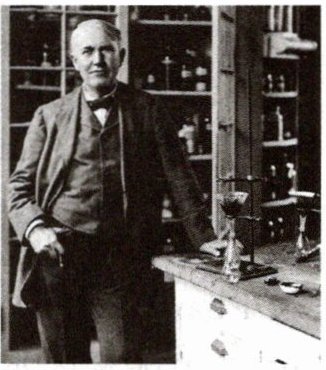
Edison's Menlo Park Laboratory became his real school. He filled shelves with over 10 000 scientific books, asking all workers to study each night. His famous “invention teams” held midnight discussions(讨论)and all the members talked about their ideas like students in a college. For the light bulb(灯泡)project(项目), he created a special learning way: They kept detailed records of each failed filament(灯丝), building a big materials database(数据库).
When developing the storage battery(蓄电池), Edison did more than 50 000 experiments over 10 years. His notebooks show countless records of each experiment. “Learning isn't remembering facts,” he told reporters. “It's training your mind to deal with problems.”
Edison's whole life is ▲. When asked about retirement(退休), he'd say, “I'll stop learning when they nail my coffin(棺材)shut.” Today, his 3 500 notebooks are the strongest sign of his lifelong learning—every page filled with questions, sketches, and the words “Try again tomorrow”.
(
A. He paid no attention to this problem. B. He felt very angry about it.
C. He tried many ways to improve his hearing.
D. He took it as a chance.
(
A. He trusted natural talent most. B. He saw failures as learning steps.
C. He depended on others' help. D. He only trusted textbooks.
(
A. To show he could remember well. B. To show he failed many times.
C. To show his way of dealing with problems. D. To tell his invention cost a lot.
(
A. a fight against life B. a search for his own value
C. a never-ending learning journey D. a series of lucky tasks
Thomas Edison's story shows that true talent comes from endless curiosity. Born in Ohio, the USA, his formal education lasted only three months—his teacher couldn't stand his endless questioning. His mother Nancy became his teacher, offering lessons that included reading, writing, and hands-on experiments(实验)in their home laboratory. By age 10, he had read books like School of Natural Philosophy, and often did experiments as the texts taught.
At 12, Edison took a job selling newspapers on the train. During rides, he changed the baggage car(行李车厢)into a mobile laboratory, studying chemistry textbooks and doing experiments. When his experiments started a fire, the angry conductor(售票员)hit his ears and this caused(导致)his lifelong hearing problem. He didn't give up. Instead, he saw this as an advantage(优势)—learning Morse code(莫尔斯电码)quickly in a few weeks and getting a job as a night telegraph operator. Here, he made his first invention at 16: an automatic telegraph repeater(自动电报转发器).
Edison's Menlo Park Laboratory became his real school. He filled shelves with over 10 000 scientific books, asking all workers to study each night. His famous “invention teams” held midnight discussions(讨论)and all the members talked about their ideas like students in a college. For the light bulb(灯泡)project(项目), he created a special learning way: They kept detailed records of each failed filament(灯丝), building a big materials database(数据库).
When developing the storage battery(蓄电池), Edison did more than 50 000 experiments over 10 years. His notebooks show countless records of each experiment. “Learning isn't remembering facts,” he told reporters. “It's training your mind to deal with problems.”
Edison's whole life is ▲. When asked about retirement(退休), he'd say, “I'll stop learning when they nail my coffin(棺材)shut.” Today, his 3 500 notebooks are the strongest sign of his lifelong learning—every page filled with questions, sketches, and the words “Try again tomorrow”.
(
D
)1. How did Edison deal with his hearing problem?A. He paid no attention to this problem. B. He felt very angry about it.
C. He tried many ways to improve his hearing.
D. He took it as a chance.
(
B
)2. What does Edison's light bulb project show about his learning attitude(态度)?A. He trusted natural talent most. B. He saw failures as learning steps.
C. He depended on others' help. D. He only trusted textbooks.
(
C
)3. Why does the writer talk about Edison's notebook records?A. To show he could remember well. B. To show he failed many times.
C. To show his way of dealing with problems. D. To tell his invention cost a lot.
(
C
)4. Which can be put in “ ▲ ”?A. a fight against life B. a search for his own value
C. a never-ending learning journey D. a series of lucky tasks
答案:1. D 2. B 3. C 4. C
解析:
【分析】
做这类阅读理解题,需先通读文章把握主旨,再针对每个小题的关键词定位原文对应段落,对比选项与原文内容,排除错误选项选出正确答案。第1题定位第二段听力问题相关内容;第2题定位第三段灯泡项目内容;第3题结合最后一段爱迪生的学习理念与笔记本作用;第4题结合全文主旨及最后一段表述。
【解析】
1. 第1题:根据文章第二段“...this caused his lifelong hearing problem. He didn't give up. Instead, he saw this as an advantage(优势)”可知,爱迪生将听力问题视为一种优势,对应选项D。
2. 第2题:根据文章第三段“For the light bulb(灯泡)project(项目)...They kept detailed records of each failed filament(灯丝)”可知,爱迪生在灯泡项目中详细记录每次失败的灯丝,体现他把失败当作学习的步骤,对应选项B。
3. 第3题:根据文章最后一段爱迪生的话“Learning isn't remembering facts...It's training your mind to deal with problems”,结合他的笔记本记录实验的内容,可知作者提到笔记本是为了展示他处理问题的方式,对应选项C。
4. 第4题:文章全程围绕爱迪生的终身学习展开,最后一段他说“我要到棺材钉上才停止学习”,所以此处应填“a never-ending learning journey”,对应选项C。
【答案】
1.D 2.B 3.C 4.C
【知识点】
阅读理解细节理解、阅读理解主旨大意、推理判断
【点评】
本文是关于爱迪生终身学习的记叙文,题目设置涵盖细节理解、主旨把握等,需要学生精准定位原文信息,整体难度适中,适合初中阶段学生练习。
【难度系数】
0.5
做这类阅读理解题,需先通读文章把握主旨,再针对每个小题的关键词定位原文对应段落,对比选项与原文内容,排除错误选项选出正确答案。第1题定位第二段听力问题相关内容;第2题定位第三段灯泡项目内容;第3题结合最后一段爱迪生的学习理念与笔记本作用;第4题结合全文主旨及最后一段表述。
【解析】
1. 第1题:根据文章第二段“...this caused his lifelong hearing problem. He didn't give up. Instead, he saw this as an advantage(优势)”可知,爱迪生将听力问题视为一种优势,对应选项D。
2. 第2题:根据文章第三段“For the light bulb(灯泡)project(项目)...They kept detailed records of each failed filament(灯丝)”可知,爱迪生在灯泡项目中详细记录每次失败的灯丝,体现他把失败当作学习的步骤,对应选项B。
3. 第3题:根据文章最后一段爱迪生的话“Learning isn't remembering facts...It's training your mind to deal with problems”,结合他的笔记本记录实验的内容,可知作者提到笔记本是为了展示他处理问题的方式,对应选项C。
4. 第4题:文章全程围绕爱迪生的终身学习展开,最后一段他说“我要到棺材钉上才停止学习”,所以此处应填“a never-ending learning journey”,对应选项C。
【答案】
1.D 2.B 3.C 4.C
【知识点】
阅读理解细节理解、阅读理解主旨大意、推理判断
【点评】
本文是关于爱迪生终身学习的记叙文,题目设置涵盖细节理解、主旨把握等,需要学生精准定位原文信息,整体难度适中,适合初中阶段学生练习。
【难度系数】
0.5
五、小练笔
What do you think is important to be a good learner? Who once set a good example for you in history and why? (At least five sentences)
What do you think is important to be a good learner? Who once set a good example for you in history and why? (At least five sentences)
To be a good learner, I think the most important is to have strong drive to learn.
We should also have good study skills and make study plans.
Franklin set a good example for me. He had a great love for science.
He was always hard-working and never gave up easily in the face of problems.
答案:To be a good learner, I think the most important is to have strong drive to learn. We should also have good study skills and make study plans. Franklin set a good example for me. He had a great love for science. He was always hard-working and never gave up easily in the face of problems.
解析:
【分析】本题为英语话题写作题,需完成两个核心任务:一是阐述成为优秀学习者的重要因素,二是列举一位历史上的榜样人物并说明原因,且要求至少五句话。解题思路:1. 确定成为好学习者的关键要素(如学习动力、学习方法);2. 选取合适的历史人物,结合其优秀品质说明作为榜样的理由;3. 组织语句,确保连贯通顺,满足句数要求。
【解析】根据题目要求,先点明成为好学习者的核心要点:拥有强烈的学习动力,同时具备良好的学习技巧并制定学习计划;再举例历史人物富兰克林,说明其热爱科学、勤奋且遇困难不放弃的品质使其成为榜样,具体内容如下:To be a good learner, I think the most important is to have strong drive to learn. We should also have good study skills and make study plans. Franklin set a good example for me. He had a great love for science. He was always hard-working and never gave up easily in the face of problems.
【答案】To be a good learner, I think the most important is to have strong drive to learn. We should also have good study skills and make study plans. Franklin set a good example for me. He had a great love for science. He was always hard-working and never gave up easily in the face of problems.
【知识点】英语话题写作、英语书面表达
【点评】该小练笔紧扣题目要求,清晰回应了两个核心问题,内容具体,语句通顺,符合至少五句话的要求,表达准确恰当。
【难度系数】0.6
【解析】根据题目要求,先点明成为好学习者的核心要点:拥有强烈的学习动力,同时具备良好的学习技巧并制定学习计划;再举例历史人物富兰克林,说明其热爱科学、勤奋且遇困难不放弃的品质使其成为榜样,具体内容如下:To be a good learner, I think the most important is to have strong drive to learn. We should also have good study skills and make study plans. Franklin set a good example for me. He had a great love for science. He was always hard-working and never gave up easily in the face of problems.
【答案】To be a good learner, I think the most important is to have strong drive to learn. We should also have good study skills and make study plans. Franklin set a good example for me. He had a great love for science. He was always hard-working and never gave up easily in the face of problems.
【知识点】英语话题写作、英语书面表达
【点评】该小练笔紧扣题目要求,清晰回应了两个核心问题,内容具体,语句通顺,符合至少五句话的要求,表达准确恰当。
【难度系数】0.6