四、本土文化阅读理解。
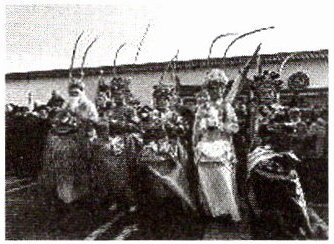
Pizhou Running Zhuma(Bamboo Horse Dance) is a famous traditional folk art in Xuzhou, Jiangsu Province. It is also a national intangible cultural heritage, with a history of more than 200 years. This lively dance has been loved by local people for generations, especially during happy festivals like the Spring Festival and the Lantern Festival.
The most special part of Pizhou Running Zhuma is its “running” spirit. Performers wear colourful traditional clothes and carry bamboo-and-paper horses around their waists. These horses are made by tying bamboo strips into a frame, pasting coloured paper on it, and adding small bells that ring when they move. Dancers pretend to ride horses, changing different steps and formations as they run. There are many interesting formation changes, such as “one-line long snake” and “two dragons getting water”, which make the performance exciting to watch. During the show, gongs, drums, and suona horns play lively music to make the atmosphere more joyful.
Pizhou Running Zhuma has an interesting origin. Some say it came from ancient stories of soldiers riding horses, while others believe it started as a way to celebrate good harvests and happy life. No matter where it came from, it has become a symbol of good luck for local people. When the performance team comes to a village, people often gather around to watch, hoping for peace and happiness in the new year.
Today, this traditional art is being well protected and passed down. Old artists teach young people how to dance and make the bamboo horse props. Some schools even open special classes to let students learn about this folk art. Thanks to these efforts, Pizhou Running Zhuma is not just a memory of the past—it is a living part of local culture that continues to bring joy to people.
(
A. A kind of traditional food in Xuzhou.
B. A famous folk dance in Xuzhou.
C. A special bamboo horse toy for children.
D. A modern music show with drums.
(
A. To pretend to ride horses during the dance.
B. To sell them as souvenirs after the show.
C. To use them as seats when they are tired.
D. To teach people how to make traditional crafts.
(
A. On rainy days in summer.
B. During happy festivals like the Spring Festival.
C. Every Monday morning at school.
D. When there is a sports meeting.
(
A. How to make beautiful bamboo-and-paper horses.
B. The history of the Spring Festival celebrations in Xuzhou.
C. The origin, features and inheritance of Pizhou Running Zhuma.
D. Different kinds of folk music instruments in Xuzhou.
Pizhou Running Zhuma(Bamboo Horse Dance) is a famous traditional folk art in Xuzhou, Jiangsu Province. It is also a national intangible cultural heritage, with a history of more than 200 years. This lively dance has been loved by local people for generations, especially during happy festivals like the Spring Festival and the Lantern Festival.
The most special part of Pizhou Running Zhuma is its “running” spirit. Performers wear colourful traditional clothes and carry bamboo-and-paper horses around their waists. These horses are made by tying bamboo strips into a frame, pasting coloured paper on it, and adding small bells that ring when they move. Dancers pretend to ride horses, changing different steps and formations as they run. There are many interesting formation changes, such as “one-line long snake” and “two dragons getting water”, which make the performance exciting to watch. During the show, gongs, drums, and suona horns play lively music to make the atmosphere more joyful.
Pizhou Running Zhuma has an interesting origin. Some say it came from ancient stories of soldiers riding horses, while others believe it started as a way to celebrate good harvests and happy life. No matter where it came from, it has become a symbol of good luck for local people. When the performance team comes to a village, people often gather around to watch, hoping for peace and happiness in the new year.
Today, this traditional art is being well protected and passed down. Old artists teach young people how to dance and make the bamboo horse props. Some schools even open special classes to let students learn about this folk art. Thanks to these efforts, Pizhou Running Zhuma is not just a memory of the past—it is a living part of local culture that continues to bring joy to people.
(
B
)1. What is Pizhou Running Zhuma?A. A kind of traditional food in Xuzhou.
B. A famous folk dance in Xuzhou.
C. A special bamboo horse toy for children.
D. A modern music show with drums.
(
A
)2. Why do performers carry bamboo-and-paper horses?A. To pretend to ride horses during the dance.
B. To sell them as souvenirs after the show.
C. To use them as seats when they are tired.
D. To teach people how to make traditional crafts.
(
B
)3. When is Pizhou Running Zhuma often performed?A. On rainy days in summer.
B. During happy festivals like the Spring Festival.
C. Every Monday morning at school.
D. When there is a sports meeting.
(
C
)4. What is the main idea of the passage?A. How to make beautiful bamboo-and-paper horses.
B. The history of the Spring Festival celebrations in Xuzhou.
C. The origin, features and inheritance of Pizhou Running Zhuma.
D. Different kinds of folk music instruments in Xuzhou.
答案:1. B 【点拨】根据“Pizhou Running Zhuma(Bamboo Horse Dance)is a famous traditional folk art in Xuzhou”可知,邳州跑竹马是徐州著名的传统民间艺术,即竹马舞。故选B。
2. A 【点拨】根据第二段中的“Performers wear colourful traditional clothes and carry bamboo-and-paper horses around their waists. These horses ... Dancers pretend to ride horses”可知,表演者腰间挎着竹纸制成的竹马,假装骑马跳舞。故选A。
3. B 【点拨】根据第一段中的“especially during happy festivals like the Spring Festival and the Lantern Festival”可知,邳州跑竹马表演尤其在春节、元宵节等喜庆节日期间。故选B。
4. C 【点拨】短文开篇介绍邳州跑竹马的身份和历史(起源),接着讲述其表演特色(竹马制作、舞蹈动作、配乐),最后说明其传承现状(老艺人教学、学校开设课程)。故选C。
2. A 【点拨】根据第二段中的“Performers wear colourful traditional clothes and carry bamboo-and-paper horses around their waists. These horses ... Dancers pretend to ride horses”可知,表演者腰间挎着竹纸制成的竹马,假装骑马跳舞。故选A。
3. B 【点拨】根据第一段中的“especially during happy festivals like the Spring Festival and the Lantern Festival”可知,邳州跑竹马表演尤其在春节、元宵节等喜庆节日期间。故选B。
4. C 【点拨】短文开篇介绍邳州跑竹马的身份和历史(起源),接着讲述其表演特色(竹马制作、舞蹈动作、配乐),最后说明其传承现状(老艺人教学、学校开设课程)。故选C。
解析:
【分析】
做此类英语阅读理解题,需先明确题干要求,再通过关键词定位原文对应内容:1题问邳州跑竹马的属性,定位第一段首句;2题问带竹马的原因,定位第二段相关描述;3题问表演时间,定位第一段节日相关内容;4题问主旨,需梳理各段核心内容(身份、特色、传承等),逐一匹配选项。
【解析】
1. 根据原文第一段“Pizhou Running Zhuma(Bamboo Horse Dance) is a famous traditional folk art in Xuzhou, Jiangsu Province.”可知,邳州跑竹马是徐州著名的民间舞蹈,对应选项B,故选B。
2. 根据第二段“Performers wear colourful traditional clothes and carry bamboo-and-paper horses around their waists... Dancers pretend to ride horses”可知,表演者带竹马是为了假装骑马跳舞,对应选项A,故选A。
3. 根据第一段“especially during happy festivals like the Spring Festival and the Lantern Festival”可知,邳州跑竹马常在春节、元宵节等喜庆节日表演,对应选项B,故选B。
4. 文章第一段介绍邳州跑竹马的身份与历史,第二段讲表演特色,第三段讲起源,第四段讲传承现状,核心围绕其起源、特色与传承展开,对应选项C,故选C。
【答案】
1.B 2.A 3.B 4.C
【知识点】
英语阅读理解、细节理解题、主旨大意题
【点评】
本题结合本土非遗文化(邳州跑竹马)设置英语阅读理解题,重点考查学生的细节定位能力与主旨概括能力,题目难度适中,既巩固阅读技巧,又传播了本土文化。
【难度系数】
0.7
做此类英语阅读理解题,需先明确题干要求,再通过关键词定位原文对应内容:1题问邳州跑竹马的属性,定位第一段首句;2题问带竹马的原因,定位第二段相关描述;3题问表演时间,定位第一段节日相关内容;4题问主旨,需梳理各段核心内容(身份、特色、传承等),逐一匹配选项。
【解析】
1. 根据原文第一段“Pizhou Running Zhuma(Bamboo Horse Dance) is a famous traditional folk art in Xuzhou, Jiangsu Province.”可知,邳州跑竹马是徐州著名的民间舞蹈,对应选项B,故选B。
2. 根据第二段“Performers wear colourful traditional clothes and carry bamboo-and-paper horses around their waists... Dancers pretend to ride horses”可知,表演者带竹马是为了假装骑马跳舞,对应选项A,故选A。
3. 根据第一段“especially during happy festivals like the Spring Festival and the Lantern Festival”可知,邳州跑竹马常在春节、元宵节等喜庆节日表演,对应选项B,故选B。
4. 文章第一段介绍邳州跑竹马的身份与历史,第二段讲表演特色,第三段讲起源,第四段讲传承现状,核心围绕其起源、特色与传承展开,对应选项C,故选C。
【答案】
1.B 2.A 3.B 4.C
【知识点】
英语阅读理解、细节理解题、主旨大意题
【点评】
本题结合本土非遗文化(邳州跑竹马)设置英语阅读理解题,重点考查学生的细节定位能力与主旨概括能力,题目难度适中,既巩固阅读技巧,又传播了本土文化。
【难度系数】
0.7