六、根据上下文,从方框中选择合适单词或短语填空。
shouldn’t should warm up wait
jump run red pull my clothes
A: Hurry up! It’s time for the swimming class.
B: Wait! Look at the 1. traffic light. We 2. cross the road now.
A: The light is green! Go!
B: You shouldn’t 3. on the road. It’s not safe!
A: OK! But you shouldn’t 4. . You may hurt me!
B: I’m sorry. Look! It’s our new swimming pool!
A: Wow! It’s big and nice. I can’t 5. !
B: Don’t 6. into the water right now! You should 7. first!
A: Ouch! My leg hurts. I 8. listen to you!
shouldn’t should warm up wait
jump run red pull my clothes
A: Hurry up! It’s time for the swimming class.
B: Wait! Look at the 1. traffic light. We 2. cross the road now.
A: The light is green! Go!
B: You shouldn’t 3. on the road. It’s not safe!
A: OK! But you shouldn’t 4. . You may hurt me!
B: I’m sorry. Look! It’s our new swimming pool!
A: Wow! It’s big and nice. I can’t 5. !
B: Don’t 6. into the water right now! You should 7. first!
A: Ouch! My leg hurts. I 8. listen to you!
答案:【解析】:我们结合交通规则、游泳相关常识以及上下文语境逐一确定答案:
1. 后文提到当下不能过马路,说明是红灯,选red,red traffic light意为红灯。
2. 红灯时按照交通规则不可以横穿马路,选shouldn't,意思是不应该。
3. 后文提示在路上这样做不安全,是提醒对方不要在路上奔跑,选run,意思是跑。
4. 后文提到这个动作可能会伤到我,对应动作是拉我的衣服,选pull my clothes。
5. 看到漂亮的新泳池十分兴奋,固定搭配can't wait意为“等不及了”,选wait。
6. 这里是提醒对方不要立刻跳进水里,jump into the water意为跳进水里,选jump。
7. 游泳前的必要准备活动是热身,warm up意为热身,选warm up。
8. 现在腿受伤了,表达“我本该听你的”的含义,选should,意思是应该。
【答案】:1. red
2. shouldn't
3. run
4. pull my clothes
5. wait
6. jump
7. warm up
8. should
1. 后文提到当下不能过马路,说明是红灯,选red,red traffic light意为红灯。
2. 红灯时按照交通规则不可以横穿马路,选shouldn't,意思是不应该。
3. 后文提示在路上这样做不安全,是提醒对方不要在路上奔跑,选run,意思是跑。
4. 后文提到这个动作可能会伤到我,对应动作是拉我的衣服,选pull my clothes。
5. 看到漂亮的新泳池十分兴奋,固定搭配can't wait意为“等不及了”,选wait。
6. 这里是提醒对方不要立刻跳进水里,jump into the water意为跳进水里,选jump。
7. 游泳前的必要准备活动是热身,warm up意为热身,选warm up。
8. 现在腿受伤了,表达“我本该听你的”的含义,选should,意思是应该。
【答案】:1. red
2. shouldn't
3. run
4. pull my clothes
5. wait
6. jump
7. warm up
8. should
七、阅读图表,判断句子正(T)误(F)。
Here is a chart about children’s unsafe (不安全的) actions in the playground.
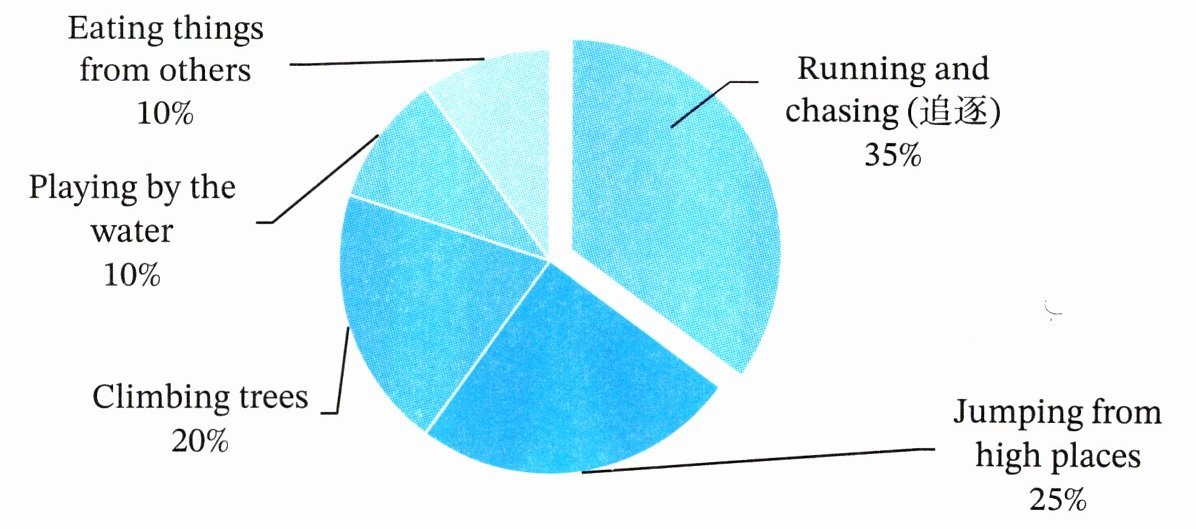
() 1. This chart is about unsafe actions in a school.
() 2. Running and chasing is the most common (常见的) dangerous action.
() 3. The second dangerous action is climbing trees.
() 4. Children should never eat things in the playground.
() 5. The chart gives five unsafe actions.
Here is a chart about children’s unsafe (不安全的) actions in the playground.
() 1. This chart is about unsafe actions in a school.
() 2. Running and chasing is the most common (常见的) dangerous action.
() 3. The second dangerous action is climbing trees.
() 4. Children should never eat things in the playground.
() 5. The chart gives five unsafe actions.
答案:1.F 2.T 3.F 4.F 5.T
解析:
1. 原文明确说明该图表是关于操场里的儿童不安全行为,并非整个学校的不安全行为,句子表述错误。
2. 观察饼图的占比数据,Running and chasing占比35%,是所有不安全行为里占比最高的,也就是最常见的危险行为,句子表述正确。
3. 按占比从高到低排序:35%(追逐奔跑)>25%(从高处跳下)>20%(爬树)>10%(在水边玩耍)=10%(吃他人给的食物),占比第二的危险行为是从高处跳下,不是爬树,句子表述错误。
4. 图表里的不安全行为是“吃别人给的东西”,并没有要求孩子绝对不能在操场吃东西,句子表述错误。
5. 统计图表列出的不安全行为:追逐奔跑、从高处跳下、爬树、在水边玩耍、吃他人给的食物,一共5项,句子表述正确。
2. 观察饼图的占比数据,Running and chasing占比35%,是所有不安全行为里占比最高的,也就是最常见的危险行为,句子表述正确。
3. 按占比从高到低排序:35%(追逐奔跑)>25%(从高处跳下)>20%(爬树)>10%(在水边玩耍)=10%(吃他人给的食物),占比第二的危险行为是从高处跳下,不是爬树,句子表述错误。
4. 图表里的不安全行为是“吃别人给的东西”,并没有要求孩子绝对不能在操场吃东西,句子表述错误。
5. 统计图表列出的不安全行为:追逐奔跑、从高处跳下、爬树、在水边玩耍、吃他人给的食物,一共5项,句子表述正确。