1. 根据图片、上下文或首字母提示填空。(每空一词)
(1) My brother is a good student. He a listens carefully in class.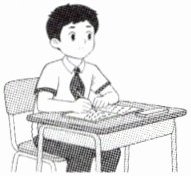
(2) —What the girl do at weekends?
—She u draws pictures at weekends.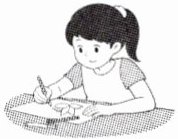
(3) —Do you often play football at weekends?
—No. I n play football. I always with my friends.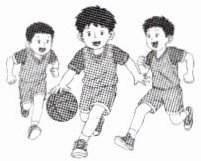
(4) A: What do you do at weekends?
B: I often with my parents.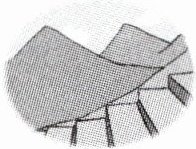
(5) My sister n plays sport with me.
She all the time.
It’s bad for her eyes.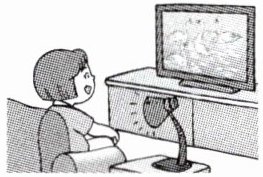
(1) My brother is a good student. He a listens carefully in class.
(2) —What the girl do at weekends?
—She u draws pictures at weekends.
(3) —Do you often play football at weekends?
—No. I n play football. I always with my friends.
(4) A: What do you do at weekends?
B: I often with my parents.
(5) My sister n plays sport with me.
She all the time.
It’s bad for her eyes.
答案:(1) always
(2) does; usually
(3) never; play basketball
(4) else; have picnics
(5) never; watches TV
(2) does; usually
(3) never; play basketball
(4) else; have picnics
(5) never; watches TV
解析:
本题考查译林版五年级上册的频度副词用法、一般现在时的疑问句结构以及周末活动相关的固定搭配:
1. 第(1)题:前文说明弟弟是好学生,结合首字母a,频度副词always(总是)符合语境,表达他上课总是认真听讲。
2. 第(2)题:第一空,主语the girl是第三人称单数,一般现在时的特殊疑问句需要借助助动词does;第二空结合首字母u,频度副词usually(通常)符合语义,表达她通常在周末画画。
3. 第(3)题:第一空,前文给出否定回答,说明从不踢足球,结合首字母n填频度副词never(从不);插图展示孩子们打篮球的场景,后两个空填对应活动词组play basketball。
4. 第(4)题:第一空填else,句子What else do you do at weekends? 意为“你周末还做什么?”符合日常对话逻辑;插图是野餐垫,对应周末活动have picnics(野餐),符合和父母一同出行的场景。
5. 第(5)题:第一空结合首字母n和后文“对眼睛不好”的提示,填频度副词never(从不),说明妹妹从不和我做运动;插图展示她一直看电视,主语she是第三人称单数,后两个空填watches TV。
1. 第(1)题:前文说明弟弟是好学生,结合首字母a,频度副词always(总是)符合语境,表达他上课总是认真听讲。
2. 第(2)题:第一空,主语the girl是第三人称单数,一般现在时的特殊疑问句需要借助助动词does;第二空结合首字母u,频度副词usually(通常)符合语义,表达她通常在周末画画。
3. 第(3)题:第一空,前文给出否定回答,说明从不踢足球,结合首字母n填频度副词never(从不);插图展示孩子们打篮球的场景,后两个空填对应活动词组play basketball。
4. 第(4)题:第一空填else,句子What else do you do at weekends? 意为“你周末还做什么?”符合日常对话逻辑;插图是野餐垫,对应周末活动have picnics(野餐),符合和父母一同出行的场景。
5. 第(5)题:第一空结合首字母n和后文“对眼睛不好”的提示,填频度副词never(从不),说明妹妹从不和我做运动;插图展示她一直看电视,主语she是第三人称单数,后两个空填watches TV。
2. 阅读时间表,判断句子正(T)误(F)。
Anna’s timetable
| | Monday to Friday | Saturday | Sunday |
| ---- | ---- | ---- | ---- |
| 8:30—16:00 | go to school | visit grandparents | go climbing or fly a kite in the park |
| 16:30—18:00 | go swimming | play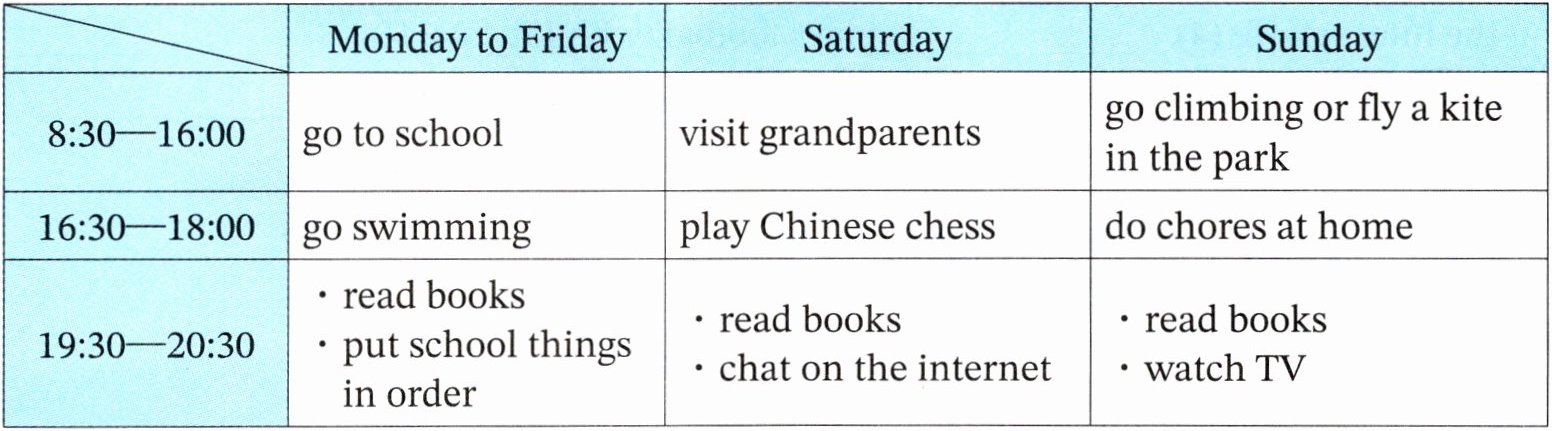 hinese chess | do chores at home |
| 19:30—20:30 | · read books
· put school things in order | · read books
· chat on the internet | · read books
· watch TV |
() (1) Anna doesn’t go swimming at weekends.
() (2) Anna never does chores at home.
() (3) Anna always visits her grandparents on Saturday.
() (4) Anna reads books every day.
() (5) Anna goes climbing every Sunday.
Anna’s timetable
| | Monday to Friday | Saturday | Sunday |
| ---- | ---- | ---- | ---- |
| 8:30—16:00 | go to school | visit grandparents | go climbing or fly a kite in the park |
| 16:30—18:00 | go swimming | play
hinese chess | do chores at home || 19:30—20:30 | · read books
· put school things in order | · read books
· chat on the internet | · read books
· watch TV |
() (1) Anna doesn’t go swimming at weekends.
() (2) Anna never does chores at home.
() (3) Anna always visits her grandparents on Saturday.
() (4) Anna reads books every day.
() (5) Anna goes climbing every Sunday.
答案:(1) T (2) F (3) T (4) T (5) F
解析:
我们对照Anna的时间表逐一判断:
1. 周末(周六、周日)Anna在16:30-18:00的安排分别是下中国象棋、在家做家务,没有游泳的计划,说明她周末不去游泳,句子表述正确。
2. 时间表显示周日16:30-18:00Anna的安排是在家做家务,她并不是从来不在家做家务,句子表述错误。
3. 时间表显示周六8:30-16:00Anna的固定安排是看望祖父母,说明她周六总是去看望祖父母,句子表述正确。
4. 周一到周五、周六、周日的19:30-20:30的安排里都包含读书,说明Anna每天都读书,句子表述正确。
5. 周日的安排是去爬山或者在公园放风筝,是二选一的活动,不是每个周日都去爬山,句子表述错误。
1. 周末(周六、周日)Anna在16:30-18:00的安排分别是下中国象棋、在家做家务,没有游泳的计划,说明她周末不去游泳,句子表述正确。
2. 时间表显示周日16:30-18:00Anna的安排是在家做家务,她并不是从来不在家做家务,句子表述错误。
3. 时间表显示周六8:30-16:00Anna的固定安排是看望祖父母,说明她周六总是去看望祖父母,句子表述正确。
4. 周一到周五、周六、周日的19:30-20:30的安排里都包含读书,说明Anna每天都读书,句子表述正确。
5. 周日的安排是去爬山或者在公园放风筝,是二选一的活动,不是每个周日都去爬山,句子表述错误。