Ⅴ.完形填空
The day of my big solo had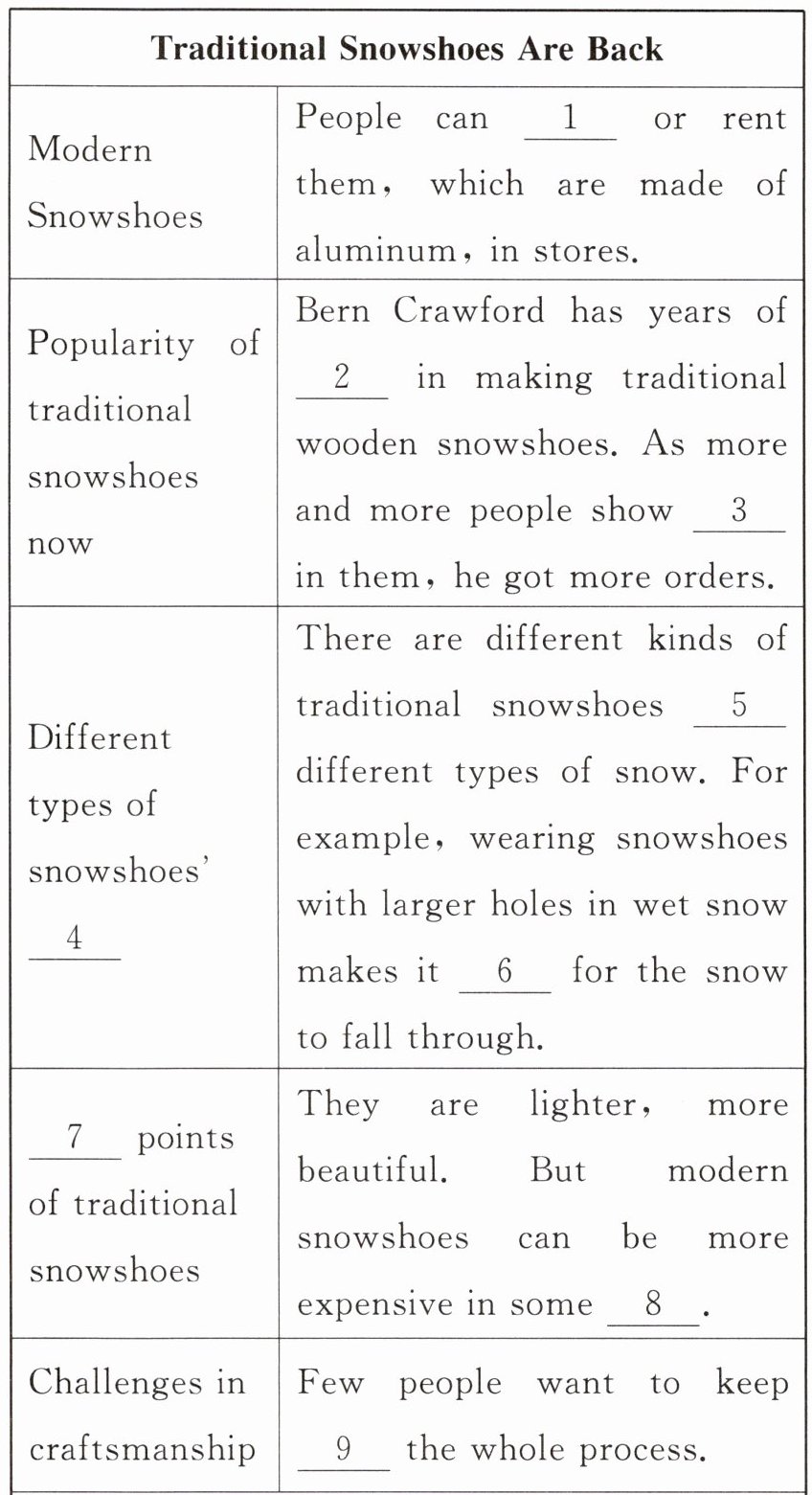
视频精讲
finally arrived. It was a big event:
the Spring Fling Choir Concert. My
1 was on the cover of the programme.
"Cindy ... Soloist." I couldn't believe it. It
wasn't Judy's name, but my name.
Judy and I had been classmates since
primary school. She was always better than me.
I was filled with a lot of 2 because of
the choir concert tryouts(选拔赛). We waited to
be called one at a time into the choir room.
When Ms Jenkins asked me to enter the room,
my heart beat fast and my whole body was
shaking. When I came back, Judy smiled at me.
Ms Jenkins called her name and Judy calmly
3 her. She was still calm and smiling when
she came out.
When Ms Jenkins told us who were chosen
to join the choir group, I wasn't 4 when
Judy's name was on the list and mine wasn't,
but I was disappointed(失望的).
5 the sound of clapping(拍手) came.
Ms Jenkins looked at me, "Cindy, you will have
to start practising with me. The solo needs more
6." Solo? I got the solo? I looked 7
Judy. She was smiling and giving me the
thumbs-up(竖起大拇指) sign.
Now the day had come. I was front and
centre. The spotlight circled me in its bright
light. I felt quite nervous right there. I couldn't
breathe. I couldn't think. I couldn't 8. "You
can do it, Cindy," Judy said in a low voice. "I
know you can."
I took a deep breath and sang out. All that
came out was a bad squeak(刺耳的声音). But at
that same moment, from behind me, came the
sweet voice of the right note(音符). Judy gave
me a soft touch. My voice lifted and 9 hers.
When the next note came, it was all me.
The rest of the solo went well. And when
the concert was over, a great cheer went up
from the crowd. Judy was the first to hug me.
"Thanks, Judy."
Judy smiled and gave me another hug.
"What are friends for?"
Friends? Did she say friends? "You're
right." This time I hugged her, beginning to
love the feeling of 10 her friend. We stuck
together like glue.
1. A. play B. photo C. note D. name
2. A. worry B. voice C. gift D. food
3. A. noticed B. checked
C. followed D. helped
4. A. excited B. surprised
C. moved D. pleased
5. A. Strangely B. Carefully
C. Suddenly D. Hopefully
6. A. preparation B. courses
C. questions D. recommendation
7. A. in B. out C. into D. at
8. A. sing B. fly C. walk D. wake
9. A. changed B. matched
C. showed D. awarded
10. A. being B. losing
C. missing D. leaving
Ⅵ.任务型阅读
阅读并根据下面的短文,在表格后的横线上填入
一个最恰当的单词。
Many people today use modern aluminum
(铝) snowshoes when they go out in the snow.
These are sold in most outdoor stores and rented
for short-term use. However, traditional
wooden snowshoes are becoming popular again.
Bern Crawford has been making traditional
wooden snowshoes for over 40 years. He first
learnt to fix his own snowshoes and later started
making them himself. At first, he made only a
few pairs each year as gifts. But as more people
became interested, he started receiving more
requests. Now, he makes about 80 pairs a year.
Recently, a school even ordered 215 pairs for its
outdoor programmes.
There are several styles of traditional
snowshoes, such as bear paw, beavertail, and
Ojibway. Each style is designed for different
types of snow. For example, snowshoes with
smaller holes are better for deep, soft snow,
while those with larger holes work well in wet
snow because they let the snow fall through
more easily.
Crawford says traditional snowshoes are
often lighter and look more beautiful. Many
people find them more attractive than modern
aluminum snowshoes, which have a plastic
centre. Also, modern snowshoes can be more
expensive than traditional ones, depending on
where you buy them.
Although more people are interested in
using traditional snowshoes, fewer people want
to learn how to make them. Crawford has taught
snowshoe-making classes in schools, but most
students only try it once and then stop. Making
snowshoes from scratch takes a lot of time and
effort. He says, "People enjoy learning part of
the process, but they don't want to cut and bend
the wood themselves."
Even though making traditional snowshoes
may be a disappearing skill, the growing interest
in using them shows that their beauty and
usefulness will not be forgotten.
People won't 10 the beauty and
usefulness of traditional snowshoes.
1. 2. 3.
4. 5. 6.
7. 8. 9.
10.
The day of my big solo had
视频精讲
finally arrived. It was a big event:
the Spring Fling Choir Concert. My
1 was on the cover of the programme.
"Cindy ... Soloist." I couldn't believe it. It
wasn't Judy's name, but my name.
Judy and I had been classmates since
primary school. She was always better than me.
I was filled with a lot of 2 because of
the choir concert tryouts(选拔赛). We waited to
be called one at a time into the choir room.
When Ms Jenkins asked me to enter the room,
my heart beat fast and my whole body was
shaking. When I came back, Judy smiled at me.
Ms Jenkins called her name and Judy calmly
3 her. She was still calm and smiling when
she came out.
When Ms Jenkins told us who were chosen
to join the choir group, I wasn't 4 when
Judy's name was on the list and mine wasn't,
but I was disappointed(失望的).
5 the sound of clapping(拍手) came.
Ms Jenkins looked at me, "Cindy, you will have
to start practising with me. The solo needs more
6." Solo? I got the solo? I looked 7
Judy. She was smiling and giving me the
thumbs-up(竖起大拇指) sign.
Now the day had come. I was front and
centre. The spotlight circled me in its bright
light. I felt quite nervous right there. I couldn't
breathe. I couldn't think. I couldn't 8. "You
can do it, Cindy," Judy said in a low voice. "I
know you can."
I took a deep breath and sang out. All that
came out was a bad squeak(刺耳的声音). But at
that same moment, from behind me, came the
sweet voice of the right note(音符). Judy gave
me a soft touch. My voice lifted and 9 hers.
When the next note came, it was all me.
The rest of the solo went well. And when
the concert was over, a great cheer went up
from the crowd. Judy was the first to hug me.
"Thanks, Judy."
Judy smiled and gave me another hug.
"What are friends for?"
Friends? Did she say friends? "You're
right." This time I hugged her, beginning to
love the feeling of 10 her friend. We stuck
together like glue.
1. A. play B. photo C. note D. name
2. A. worry B. voice C. gift D. food
3. A. noticed B. checked
C. followed D. helped
4. A. excited B. surprised
C. moved D. pleased
5. A. Strangely B. Carefully
C. Suddenly D. Hopefully
6. A. preparation B. courses
C. questions D. recommendation
7. A. in B. out C. into D. at
8. A. sing B. fly C. walk D. wake
9. A. changed B. matched
C. showed D. awarded
10. A. being B. losing
C. missing D. leaving
Ⅵ.任务型阅读
阅读并根据下面的短文,在表格后的横线上填入
一个最恰当的单词。
Many people today use modern aluminum
(铝) snowshoes when they go out in the snow.
These are sold in most outdoor stores and rented
for short-term use. However, traditional
wooden snowshoes are becoming popular again.
Bern Crawford has been making traditional
wooden snowshoes for over 40 years. He first
learnt to fix his own snowshoes and later started
making them himself. At first, he made only a
few pairs each year as gifts. But as more people
became interested, he started receiving more
requests. Now, he makes about 80 pairs a year.
Recently, a school even ordered 215 pairs for its
outdoor programmes.
There are several styles of traditional
snowshoes, such as bear paw, beavertail, and
Ojibway. Each style is designed for different
types of snow. For example, snowshoes with
smaller holes are better for deep, soft snow,
while those with larger holes work well in wet
snow because they let the snow fall through
more easily.
Crawford says traditional snowshoes are
often lighter and look more beautiful. Many
people find them more attractive than modern
aluminum snowshoes, which have a plastic
centre. Also, modern snowshoes can be more
expensive than traditional ones, depending on
where you buy them.
Although more people are interested in
using traditional snowshoes, fewer people want
to learn how to make them. Crawford has taught
snowshoe-making classes in schools, but most
students only try it once and then stop. Making
snowshoes from scratch takes a lot of time and
effort. He says, "People enjoy learning part of
the process, but they don't want to cut and bend
the wood themselves."
Even though making traditional snowshoes
may be a disappearing skill, the growing interest
in using them shows that their beauty and
usefulness will not be forgotten.
People won't 10 the beauty and
usefulness of traditional snowshoes.
1. 2. 3.
4. 5. 6.
7. 8. 9.
10.
答案:V. 1.D 2.A 3.C 4.B 5.C 6.A 7.D 8.A 9.B 10.A
【语篇解读】本文是一篇记叙文,讲述了作者在朋友 Judy 的帮助下完成了独唱表演的故事。
1. D 解析:根据"I couldn't believe it. It wasn't Judy's name, but my name."可知节目单上有作者的名字。故选 D。
2. A 解析:根据"my heart beat fast and my whole body was shaking"可知当作者参加选拔的时候,心跳加速,整个身体都在颤抖。因此作者内心应该充满了担忧。故选 A。
3. C 解析:根据"When Ms Jenkins asked me to enter the room"以及"She was still calm and smiling when she came out."可知 Judy 冷静地跟着老师进入房间参加选拔赛然后出来。故选 C。
4. B 解析:根据"when Judy's name was on the list and mine wasn't, but I was disappointed"以及上文"She was always better than me."可知作者认为 Judy 很优秀,她通过选拔赛完全是意料之中的事,作者对此不会感到惊讶。故选 B。
5. C 解析:根据"... the sound of clapping came"以及后文老师宣布独唱安排可知,事情发生得很突然,故选 C。
6. A 解析:根据"Cindy, you will have to start practising with me."可知独唱表演还需要一些准备。故选 A。
7. D 解析:句意:我看着 Judy。她微笑着向我竖起大拇指。根据"I looked ... Judy ... smiling"可知此处是固定短语 look at,表示"看着"。故选 D。
8. A 解析:根据"I couldn't breathe. I couldn't think."可知作者此刻非常紧张,无法呼吸,无法思考,也无法演唱。故选 A。
9. B 解析:句意:我的声音提高然后匹配上了她的声音。根据前后文可知在 Judy 的鼓励和帮助下,作者的声音终于可以和 Judy 的声音协调一致了,matched 符合语境。故选 B。
10. A 解析:根据"This time I hugged her, beginning to love the feeling of ... her friend."可知作者没有想过自己和 Judy 是朋友,现在喜欢上了成为 Judy 朋友的感觉,此处应用 being。故选 A。
Ⅵ.【语篇解读】本文是一篇说明文,主要介绍了现代铝制雪鞋和传统木制雪鞋的优缺点,以及传统木制雪鞋面临的挑战。
1. buy 解析:根据原文"These are sold in most outdoor stores and rented for short-term use."可知现代雪鞋可购买或租赁,"sold"对应"buy",情态动词"can"后接动词原形。
2. experience 解析:根据原文"Bern Crawford has been making traditional wooden snowshoes for over 40 years."可知他有多年制作传统木雪鞋的经验,"experience"意为"经验",符合语境。
3. interest 解析:根据原文"But as more people became interested, he started receiving more requests."可知越来越多的人对此感兴趣,"became interested"对应"show interest","interest"为名词,符合语境。
4. uses 解析:根据原文"Each style is designed for different types of snow."可知不同类型的雪鞋有不同用途,"uses"意为"用途",符合语境。
5. for 解析:根据原文"Each style is designed for different types of snow."可知此处表示"为不同类型的雪(设计)",应用介词"for"。
6. easier 解析:根据原文"while those with larger holes work well in wet snow because they let the snow fall through more easily"可知大洞雪鞋让雪更容易穿过,make it 后用形容词作宾语补足语,对应"more easily",故填 easier。
7. Good 解析:根据原文"Crawford says traditional snowshoes are often lighter and look more beautiful."可知此处讲传统雪鞋的优点,"Good points"意为"优点",符合语境。
8. places 解析:根据原文"Also, modern snowshoes can be more expensive than traditional ones, depending on where you buy them."可知现代雪鞋在某些地方更贵,"where you buy them"对应"places",符合语境。
9. learning 解析:根据原文"Although more people are interested in using traditional snowshoes, fewer people want to learn how to make them."及"keep doing sth"可知此处指"不断学习整个过程",应用"learning"。
10. forget 解析:根据原文"the growing interest in using them shows that their beauty and usefulness will not be forgotten"可知人们不会忘记传统雪鞋的美和用处,"will not be forgotten"对应"won't forget",符合语境。