A
(
A. She has no close friend and often feels lonely.
B. She hurt her friend Sandy and doesn't know what to do.
C. She fought with her friends Sandy and Lucy.
D. Her good friend Lucy told her secret to Sandy.
(
A. Angry.
B. Bored.
C. Sorry.
D. Happy.
(
A. When you apologize, you need to be sincere.
B. Amy has no courage to say sorry to Lucy face to face.
C. We should think it over again and again after we apologize.
D. Don't say sorry to someone if he or she doesn't accept your apology.
(
A. Say "that's OK" to someone.
B. Give money to someone.
C. Feel sorry for someone.
D. Ask for help from someone.
(
B
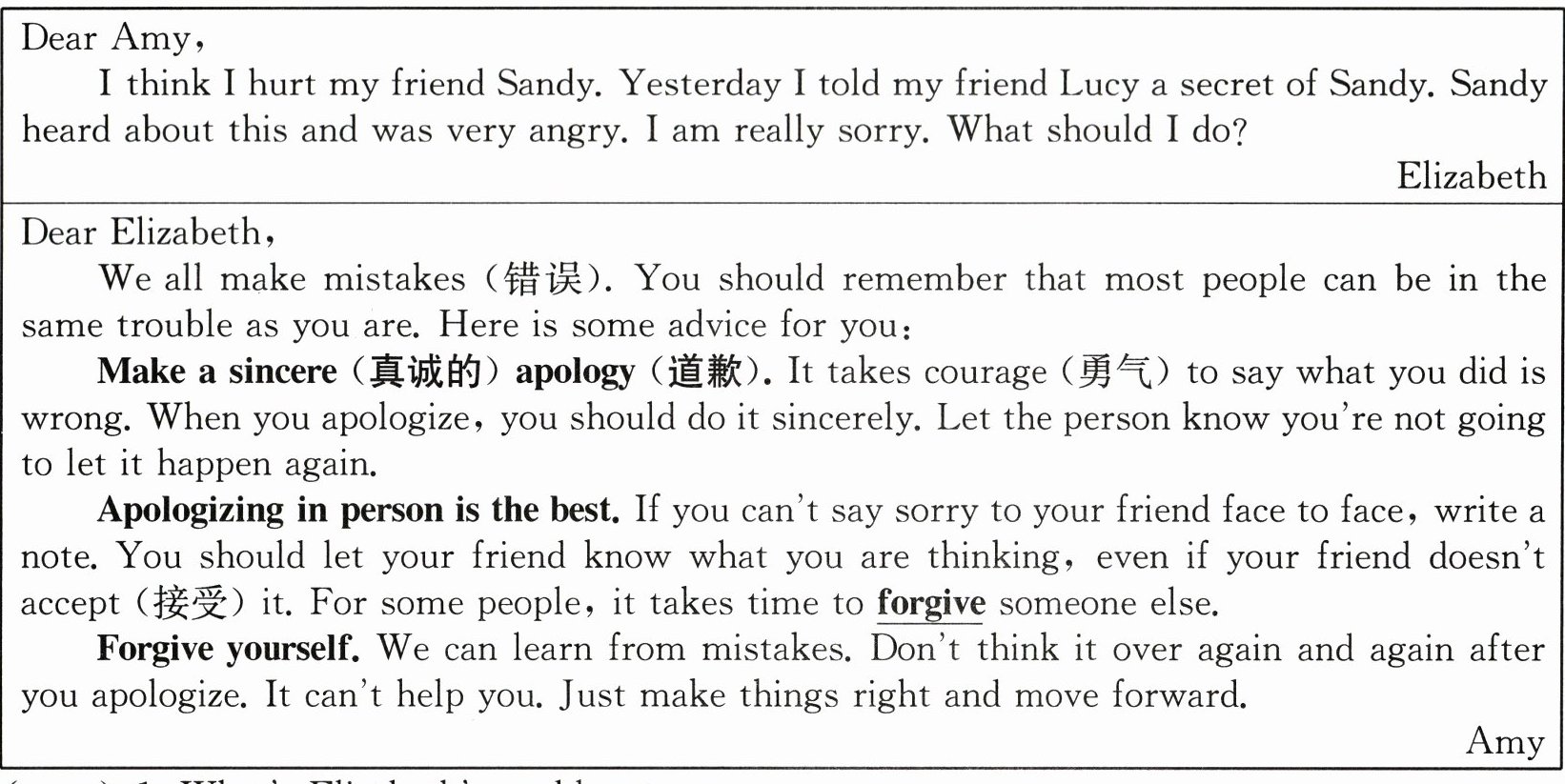
) 1. What's Elizabeth's problem?A. She has no close friend and often feels lonely.
B. She hurt her friend Sandy and doesn't know what to do.
C. She fought with her friends Sandy and Lucy.
D. Her good friend Lucy told her secret to Sandy.
(
C
) 2. How does Elizabeth feel now?A. Angry.
B. Bored.
C. Sorry.
D. Happy.
(
A
) 3. Which of the following is TRUE according to (根据) Amy's reply?A. When you apologize, you need to be sincere.
B. Amy has no courage to say sorry to Lucy face to face.
C. We should think it over again and again after we apologize.
D. Don't say sorry to someone if he or she doesn't accept your apology.
(
A
) 4. What does the underlined word "forgive" mean?A. Say "that's OK" to someone.
B. Give money to someone.
C. Feel sorry for someone.
D. Ask for help from someone.
答案:1. B 2. C 3. A 4. A
解析:
翻译:
(答案:B)1. 伊丽莎白的问题是什么?
A. 她没有亲密的朋友,经常感到孤独。
B. 她伤害了她的朋友桑迪,不知道该怎么办。
C. 她和她的朋友桑迪以及露西吵架了。
D. 她的好朋友露西把她的秘密告诉了桑迪。
(答案:C)2. 伊丽莎白现在感觉如何?
A. 生气的。
B. 厌烦的。
C. 愧疚的。
D. 开心的。
(答案:A)3. 根据艾米的回复,下列哪项是正确的?
A. 当你道歉时,你需要真诚。
B. 艾米没有勇气当面跟露西说对不起。
C. 我们道歉之后应该反复思考。
D. 如果某人不接受你的道歉,就不要向他/她道歉。
(答案:A)4. 划线单词“forgive”是什么意思?
A. 对某人说“没关系”。
B. 给某人钱。
C. 为某人感到难过。
D. 向某人求助。
(答案:B)1. 伊丽莎白的问题是什么?
A. 她没有亲密的朋友,经常感到孤独。
B. 她伤害了她的朋友桑迪,不知道该怎么办。
C. 她和她的朋友桑迪以及露西吵架了。
D. 她的好朋友露西把她的秘密告诉了桑迪。
(答案:C)2. 伊丽莎白现在感觉如何?
A. 生气的。
B. 厌烦的。
C. 愧疚的。
D. 开心的。
(答案:A)3. 根据艾米的回复,下列哪项是正确的?
A. 当你道歉时,你需要真诚。
B. 艾米没有勇气当面跟露西说对不起。
C. 我们道歉之后应该反复思考。
D. 如果某人不接受你的道歉,就不要向他/她道歉。
(答案:A)4. 划线单词“forgive”是什么意思?
A. 对某人说“没关系”。
B. 给某人钱。
C. 为某人感到难过。
D. 向某人求助。
B
In recent years, companies have begun to design robots as toys for children. These toys have become so popular that people are worried about the effects (影响) of friendships between robots and children.
In 1940, Isaac Asimov wrote a story called *Robbie*. In the story, a girl made friends with a robot and her mother was worried about their friendship. At the end of the story, the robot saved the girl's life and her mother changed her ideas on the robot. In real life, there are also different ideas about humans being friends with robots.
Some people are worried because children might believe that robots are humans, not machines. It may seem strange that we can make friends with a machine, but just think of the friendly robots in science fiction (科幻小说), from WALL - E to R2 - D2. Could close relationships with a robot confuse (迷惑) children?
Some people think it's possible. In the past, children would play with lifeless toys. But today's robots are designed to express feelings in a human way, and some are able to play with children. When children say they don't want to play, the robots will show their sadness. Also, they show ▲ when they do well in games.
In fact, there's a real danger that humans forget that robots are not humans. In an experiment (实验), researchers in Germany invited 89 people to interact (互动) with a robot and then turn it off. When they finished the interaction, the robot asked half of the people not to turn it off. These people hesitated (犹豫) before they did so and 13 of them agreed to keep it on!
Sometimes robots may make good friends for us. But let's not forget—they aren't living beings and they don't have feelings. At least, not yet.
(
A. Because Robbie wrote a story.
B. Because Robbie played with her.
C. Because Robbie expressed feelings.
D. Because Robbie saved her child.
(
A. Brave.
B. Honest.
C. Friendly.
D. Humorous.
(
A. sadness
B. happiness
C. calmness
D. kindness
(
A. To tell us not to treat robots as humans.
B. To advise us to make friends with robots.
C. To ask us to read science fiction about robots.
D. To ask us to let robots do dangerous work.
In recent years, companies have begun to design robots as toys for children. These toys have become so popular that people are worried about the effects (影响) of friendships between robots and children.
In 1940, Isaac Asimov wrote a story called *Robbie*. In the story, a girl made friends with a robot and her mother was worried about their friendship. At the end of the story, the robot saved the girl's life and her mother changed her ideas on the robot. In real life, there are also different ideas about humans being friends with robots.
Some people are worried because children might believe that robots are humans, not machines. It may seem strange that we can make friends with a machine, but just think of the friendly robots in science fiction (科幻小说), from WALL - E to R2 - D2. Could close relationships with a robot confuse (迷惑) children?
Some people think it's possible. In the past, children would play with lifeless toys. But today's robots are designed to express feelings in a human way, and some are able to play with children. When children say they don't want to play, the robots will show their sadness. Also, they show ▲ when they do well in games.
In fact, there's a real danger that humans forget that robots are not humans. In an experiment (实验), researchers in Germany invited 89 people to interact (互动) with a robot and then turn it off. When they finished the interaction, the robot asked half of the people not to turn it off. These people hesitated (犹豫) before they did so and 13 of them agreed to keep it on!
Sometimes robots may make good friends for us. But let's not forget—they aren't living beings and they don't have feelings. At least, not yet.
(
D
) 5. Why did the mother change her ideas about Robbie?A. Because Robbie wrote a story.
B. Because Robbie played with her.
C. Because Robbie expressed feelings.
D. Because Robbie saved her child.
(
C
) 6. What does the writer think of the robots like WALL - E and R2 - D2?A. Brave.
B. Honest.
C. Friendly.
D. Humorous.
(
B
) 7. Which of the following can be filled in the " ▲ " in Paragraph 4?A. sadness
B. happiness
C. calmness
D. kindness
(
A
) 8. Why does the writer write the passage?A. To tell us not to treat robots as humans.
B. To advise us to make friends with robots.
C. To ask us to read science fiction about robots.
D. To ask us to let robots do dangerous work.
答案:5. D 6. C 7. B 8. A
解析:
翻译:
### B
近年来,一些公司开始将机器人设计成儿童玩具。这些玩具变得如此受欢迎,以至于人们开始担心机器人和孩子之间的友谊会产生什么影响。
1940年,艾萨克·阿西莫夫写了一个名为《罗比》的故事。在这个故事中,一个女孩和一个机器人交了朋友,她的母亲对她们的友谊感到担忧。在故事的结尾,机器人救了女孩的命,她的母亲改变了对机器人的看法。在现实生活中,对于人类与机器人交朋友也有不同的看法。
一些人很担心,因为孩子们可能会认为机器人是人类,而不是机器。我们能和一台机器交朋友,这可能看起来很奇怪,但想想科幻小说中那些友好的机器人,从瓦力到R2 - D2。与机器人的亲密关系会迷惑孩子吗?
一些人认为这是有可能的。在过去,孩子们会玩没有生命的玩具。但如今的机器人被设计成以人类的方式表达情感,有些还能和孩子们一起玩耍。当孩子们说他们不想玩的时候,机器人会表现出悲伤。而且,当它们在游戏中表现出色时,它们会表现出▲。
事实上,人类确实有忘记机器人不是人类的危险。在一项实验中,德国的研究人员邀请了89个人与一个机器人互动,然后关掉它。当他们完成互动后,机器人请求一半的人不要关掉它。这些人在这么做之前犹豫了,其中13个人同意让它开着!
有时候机器人可能会成为我们的好朋友。但我们不要忘记——它们不是生物,也没有感情。至少现在还没有。
( )5. 为什么这位母亲改变了对罗比的看法?
A. 因为罗比写了一个故事。
B. 因为罗比和她一起玩。
C. 因为罗比表达了情感。
D. 因为罗比救了她的孩子。
( )6. 作者认为像瓦力和R2 - D2这样的机器人怎么样?
A. 勇敢的。
B. 诚实的。
C. 友好的。
D. 幽默的。
( )7. 下列哪一项可以填入第4段的“▲”中?
A. 悲伤
B. 快乐
C. 平静
D. 善良
( )8. 作者写这篇文章的目的是什么?
A. 告诉我们不要把机器人当作人类。
B. 建议我们和机器人交朋友。
C. 要求我们阅读关于机器人的科幻小说。
D. 要求我们让机器人做危险的工作。
### B
近年来,一些公司开始将机器人设计成儿童玩具。这些玩具变得如此受欢迎,以至于人们开始担心机器人和孩子之间的友谊会产生什么影响。
1940年,艾萨克·阿西莫夫写了一个名为《罗比》的故事。在这个故事中,一个女孩和一个机器人交了朋友,她的母亲对她们的友谊感到担忧。在故事的结尾,机器人救了女孩的命,她的母亲改变了对机器人的看法。在现实生活中,对于人类与机器人交朋友也有不同的看法。
一些人很担心,因为孩子们可能会认为机器人是人类,而不是机器。我们能和一台机器交朋友,这可能看起来很奇怪,但想想科幻小说中那些友好的机器人,从瓦力到R2 - D2。与机器人的亲密关系会迷惑孩子吗?
一些人认为这是有可能的。在过去,孩子们会玩没有生命的玩具。但如今的机器人被设计成以人类的方式表达情感,有些还能和孩子们一起玩耍。当孩子们说他们不想玩的时候,机器人会表现出悲伤。而且,当它们在游戏中表现出色时,它们会表现出▲。
事实上,人类确实有忘记机器人不是人类的危险。在一项实验中,德国的研究人员邀请了89个人与一个机器人互动,然后关掉它。当他们完成互动后,机器人请求一半的人不要关掉它。这些人在这么做之前犹豫了,其中13个人同意让它开着!
有时候机器人可能会成为我们的好朋友。但我们不要忘记——它们不是生物,也没有感情。至少现在还没有。
( )5. 为什么这位母亲改变了对罗比的看法?
A. 因为罗比写了一个故事。
B. 因为罗比和她一起玩。
C. 因为罗比表达了情感。
D. 因为罗比救了她的孩子。
( )6. 作者认为像瓦力和R2 - D2这样的机器人怎么样?
A. 勇敢的。
B. 诚实的。
C. 友好的。
D. 幽默的。
( )7. 下列哪一项可以填入第4段的“▲”中?
A. 悲伤
B. 快乐
C. 平静
D. 善良
( )8. 作者写这篇文章的目的是什么?
A. 告诉我们不要把机器人当作人类。
B. 建议我们和机器人交朋友。
C. 要求我们阅读关于机器人的科幻小说。
D. 要求我们让机器人做危险的工作。