听一段对话,回答第 11—12 小题。
(
A. For three years.
B. For four years.
C. For five years.
(
A. Because he wants to buy a new one.
B. Because he doesn't like it.
C. Because he wants to walk.
(
C
)11. How long has the boy had the bike?A. For three years.
B. For four years.
C. For five years.
(
A
)12. Why does the boy want to sell the bike?A. Because he wants to buy a new one.
B. Because he doesn't like it.
C. Because he wants to walk.
答案:11 - 12 CA
解析:
【分析】
这是两道英语听力细节题,解题时首先要提前预览题干和所有选项,明确两道题的考查方向:第11题要重点关注对话中和“拥有自行车时长”相关的时间表述,提前标记三个选项的不同时长,听音频时精准定位对应信息;第12题重点关注男孩解释卖自行车原因的语句,提前区分三个选项的不同动机,听音频时逐一比对排除干扰选项,就能得到正确答案。
【解析】
11. 听力对话中男孩明确表述自己五年前收到这辆自行车作为礼物,至今已经拥有它五年时间,对应选项C,排除A选项的三年、B选项的四年两个干扰项,因此选C。
12. 对话中男孩说明这辆自行车已经老旧,自己想要购置一辆新的自行车,因此决定卖掉旧车,对应选项A;对话中没有提到男孩不喜欢这辆旧车,也没有提到他想要靠步行出行,因此B、C选项均不符合对话内容,排除后选A。
【答案】11. C 12. A
【知识点】听力细节抓取;日常情景对话理解
【点评】本题属于英语听力基础题型,选取的是二手物品处置的生活化场景,考点均为对话内明确给出的细节信息,没有设置复杂的推理障碍,学生只要提前做好题干预判,听音频时针对性定位关键信息,就可以顺利选出正确答案,适合训练听力信息定位的基础能力。
【难度系数】
0.8
这是两道英语听力细节题,解题时首先要提前预览题干和所有选项,明确两道题的考查方向:第11题要重点关注对话中和“拥有自行车时长”相关的时间表述,提前标记三个选项的不同时长,听音频时精准定位对应信息;第12题重点关注男孩解释卖自行车原因的语句,提前区分三个选项的不同动机,听音频时逐一比对排除干扰选项,就能得到正确答案。
【解析】
11. 听力对话中男孩明确表述自己五年前收到这辆自行车作为礼物,至今已经拥有它五年时间,对应选项C,排除A选项的三年、B选项的四年两个干扰项,因此选C。
12. 对话中男孩说明这辆自行车已经老旧,自己想要购置一辆新的自行车,因此决定卖掉旧车,对应选项A;对话中没有提到男孩不喜欢这辆旧车,也没有提到他想要靠步行出行,因此B、C选项均不符合对话内容,排除后选A。
【答案】11. C 12. A
【知识点】听力细节抓取;日常情景对话理解
【点评】本题属于英语听力基础题型,选取的是二手物品处置的生活化场景,考点均为对话内明确给出的细节信息,没有设置复杂的推理障碍,学生只要提前做好题干预判,听音频时针对性定位关键信息,就可以顺利选出正确答案,适合训练听力信息定位的基础能力。
【难度系数】
0.8
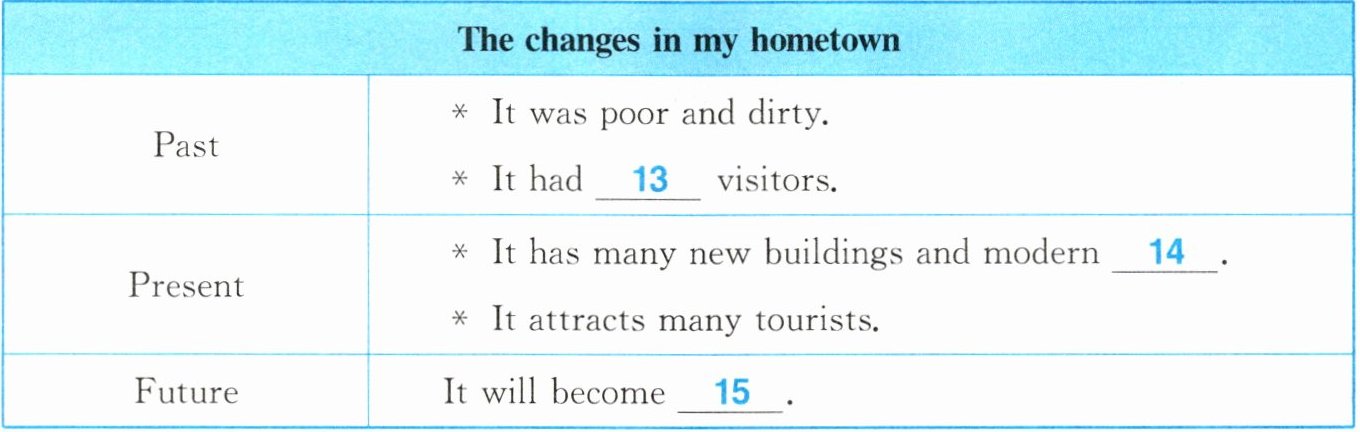
听第一篇短文,回答第 13—15 小题。请根据短文内容,选择正确答案,完成信息记录表。
(
B. some
C. lots of
(
B. cinemas
C. machines
(
B. cleaner and cleaner
C. better and better
(
A
)13. A. fewB. some
C. lots of
(
A
)14. A. shopping marketsB. cinemas
C. machines
(
C
)15. A. bigger and biggerB. cleaner and cleaner
C. better and better
答案:13 - 15 AAC
解析:
【分析】
这是一道听力类信息记录表匹配题,解题时首先要提前预读题干和所有选项,预判三个空对应的考点:第13题考察过去家乡的游客数量,结合前面给出的“过去贫穷脏乱”的提示,可以先预判游客数量很少;第14题考察现在家乡新增的现代化配套设施,结合“现在吸引很多游客”的属性可以先区分三个选项的差异;第15题考察家乡未来的发展走向。听录音时按照Past、Present、Future的模块顺序逐一抓取对应关键信息,听完后还可以结合家乡发展的常规逻辑验证答案是否合理,避免误选。
【解析】
我们逐题对应分析:
13. 原文描述过去的家乡贫穷又脏乱,几乎没有外来访客,A选项few表示“几乎没有”,完全符合过去的特征;B选项some(一些)、C选项lots of(很多)都和过去穷脏的设定矛盾,因此选A。
14. 原文描述现在的家乡建起了大量新建筑,还有很多现代化的购物市场,配套完善后吸引了大量游客,A选项shopping markets符合原文表述;B选项cinemas(影院)、C选项machines(机器)都不是听力原文提到的内容,因此选A。
15. 原文描述未来家乡会在现有发展基础上持续进步,整体变得越来越好,C选项better and better符合原文对未来的整体描述;A选项bigger and bigger(越来越大)、B选项cleaner and cleaner(越来越干净)都不是原文给出的未来发展方向,因此选C。
【答案】
13-15 AAC
【知识点】
听力信息提取,语境逻辑推断
【点评】
本题属于基础听力信息匹配题型,既考察学生抓取听力关键信息的能力,也可以通过前后文给出的提示信息提前预判、事后验证答案,能有效锻炼学生听力预读、结合常识辅助解题的应试技巧,整体难度不高。
【难度系数】
0.7
这是一道听力类信息记录表匹配题,解题时首先要提前预读题干和所有选项,预判三个空对应的考点:第13题考察过去家乡的游客数量,结合前面给出的“过去贫穷脏乱”的提示,可以先预判游客数量很少;第14题考察现在家乡新增的现代化配套设施,结合“现在吸引很多游客”的属性可以先区分三个选项的差异;第15题考察家乡未来的发展走向。听录音时按照Past、Present、Future的模块顺序逐一抓取对应关键信息,听完后还可以结合家乡发展的常规逻辑验证答案是否合理,避免误选。
【解析】
我们逐题对应分析:
13. 原文描述过去的家乡贫穷又脏乱,几乎没有外来访客,A选项few表示“几乎没有”,完全符合过去的特征;B选项some(一些)、C选项lots of(很多)都和过去穷脏的设定矛盾,因此选A。
14. 原文描述现在的家乡建起了大量新建筑,还有很多现代化的购物市场,配套完善后吸引了大量游客,A选项shopping markets符合原文表述;B选项cinemas(影院)、C选项machines(机器)都不是听力原文提到的内容,因此选A。
15. 原文描述未来家乡会在现有发展基础上持续进步,整体变得越来越好,C选项better and better符合原文对未来的整体描述;A选项bigger and bigger(越来越大)、B选项cleaner and cleaner(越来越干净)都不是原文给出的未来发展方向,因此选C。
【答案】
13-15 AAC
【知识点】
听力信息提取,语境逻辑推断
【点评】
本题属于基础听力信息匹配题型,既考察学生抓取听力关键信息的能力,也可以通过前后文给出的提示信息提前预判、事后验证答案,能有效锻炼学生听力预读、结合常识辅助解题的应试技巧,整体难度不高。
【难度系数】
0.7
听第二篇短文,回答第 16—20 小题。
(
A. At 5:45.
B. At 6:00.
C. At 6:15.
(
A. His father's cows.
B. His lovely dog.
C. His father's chickens.
(
A. One kilometre.
B. Two kilometres.
C. Three kilometres.
(
A. Because he didn't have one.
B. Because it was boring.
C. Because the TV was broken.
(
A. He thinks they were boring.
B. He worries about the old days.
C. He thinks he had some good times.
(
B
)16. What time did the speaker use to get up in the morning?A. At 5:45.
B. At 6:00.
C. At 6:15.
(
C
)17. What animal did the speaker have to feed every morning?A. His father's cows.
B. His lovely dog.
C. His father's chickens.
(
B
)18. How far did the speaker use to walk from home to school every day?A. One kilometre.
B. Two kilometres.
C. Three kilometres.
(
A
)19. Why didn't the speaker watch TV?A. Because he didn't have one.
B. Because it was boring.
C. Because the TV was broken.
(
C
)20. What does the speaker think of the old days?A. He thinks they were boring.
B. He worries about the old days.
C. He thinks he had some good times.
答案:16 - 20 BCBAC
解析:
【分析】
这是典型的短文听力理解题,解题时首先要提前预读所有题干和选项,标记每道题的核心定位信息:16题定位过去起床的时间、17题定位需要投喂的动物、18题定位家到学校的步行距离、19题定位不看电视的原因、20题定位说话人对旧日生活的评价。听录音时带着提前预判的定位点针对性捕捉对应关键信息,听到相关内容时立刻匹配选项,全部听完后再结合短文整体叙事逻辑核对答案,排除干扰项即可。
【解析】
16. 听力原文明确提及说话人过去早上通常6点起床,对应选项B,排除A、C的干扰时间选项。
17. 原文提到说话人每天早上需要帮父亲喂鸡,对应选项C,排除A、B的错误动物选项。
18. 原文说明说话人过去每天从家步行两公里到学校,对应选项B。
19. 原文提到当时家里根本没有电视机,所以没法看电视,对应选项A。
20. 说话人最后表示虽然过去的生活比较辛苦,但自己拥有很多美好的时光,对应选项C。
【答案】
16-20 BCBAC
【知识点】
听力细节抓取,听力态度推断,听力预读技巧
【点评】
本题属于生活化叙事类基础听力题,考点全部围绕短文中的关键细节和最终态度设置,没有设置过于复杂的混淆陷阱,只要学生掌握提前预读选项标记定位词的技巧,听录音时针对性抓取数字、名词、因果逻辑和态度表述,就可以顺利选出正确答案,能够有效锻炼学生的基础听力信息捕捉能力。
【难度系数】
0.7
这是典型的短文听力理解题,解题时首先要提前预读所有题干和选项,标记每道题的核心定位信息:16题定位过去起床的时间、17题定位需要投喂的动物、18题定位家到学校的步行距离、19题定位不看电视的原因、20题定位说话人对旧日生活的评价。听录音时带着提前预判的定位点针对性捕捉对应关键信息,听到相关内容时立刻匹配选项,全部听完后再结合短文整体叙事逻辑核对答案,排除干扰项即可。
【解析】
16. 听力原文明确提及说话人过去早上通常6点起床,对应选项B,排除A、C的干扰时间选项。
17. 原文提到说话人每天早上需要帮父亲喂鸡,对应选项C,排除A、B的错误动物选项。
18. 原文说明说话人过去每天从家步行两公里到学校,对应选项B。
19. 原文提到当时家里根本没有电视机,所以没法看电视,对应选项A。
20. 说话人最后表示虽然过去的生活比较辛苦,但自己拥有很多美好的时光,对应选项C。
【答案】
16-20 BCBAC
【知识点】
听力细节抓取,听力态度推断,听力预读技巧
【点评】
本题属于生活化叙事类基础听力题,考点全部围绕短文中的关键细节和最终态度设置,没有设置过于复杂的混淆陷阱,只要学生掌握提前预读选项标记定位词的技巧,听录音时针对性抓取数字、名词、因果逻辑和态度表述,就可以顺利选出正确答案,能够有效锻炼学生的基础听力信息捕捉能力。
【难度系数】
0.7