三、阅读理解 阅读下面的短文,然后根据短文内容,在每小题所给的四个选项中选出最佳选项。(本大题共13小题,每小题2分,共26分)
(A)
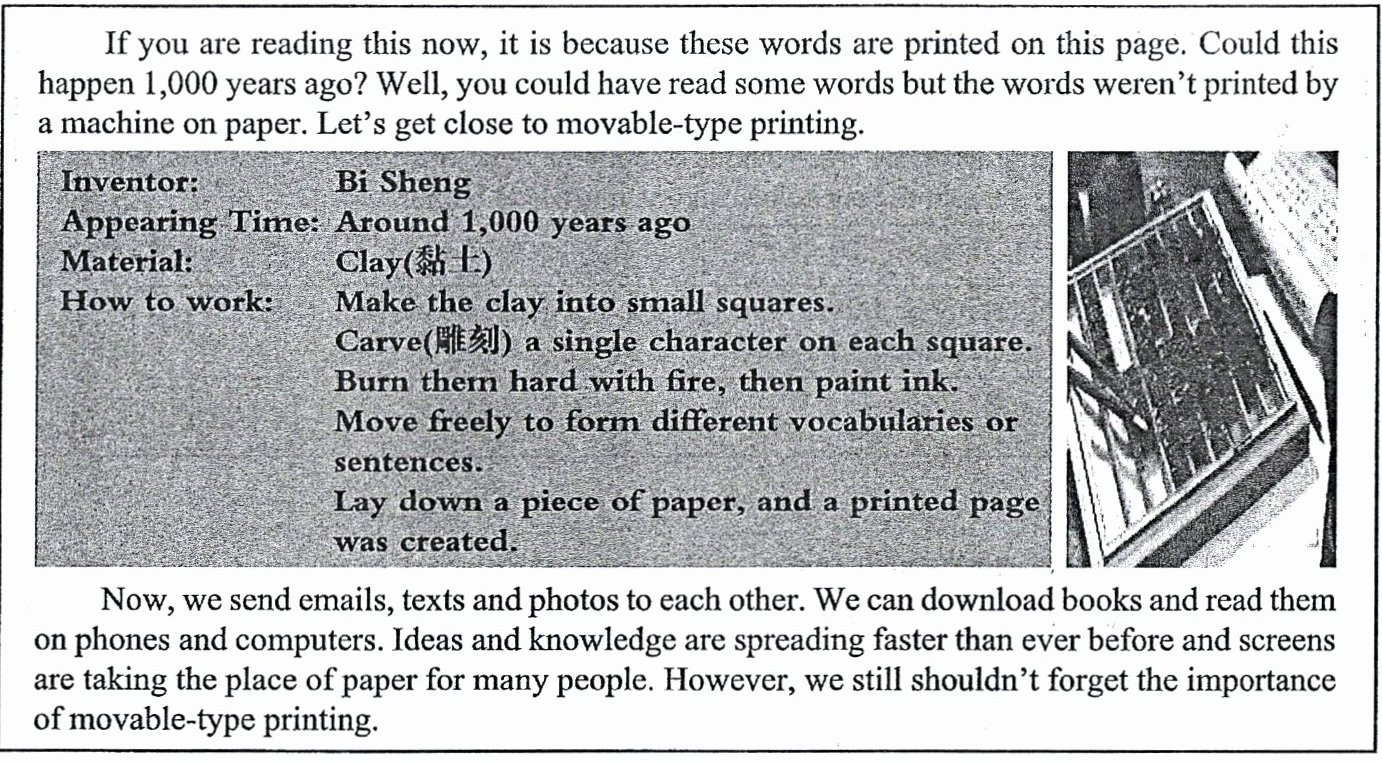
If you are reading this now, it is because these words are printed on this page. Could this happen 1,000 years ago? Well, you could have read some words but the words weren’t printed by a machine on paper. Let’s get close to movable - type printing.
Carve (雕刻) a single character on each square.
Burn them hard with fire, then paint ink.
Move freely to form different vocabularies or sentences.
() 1. To know more about movable - type printing, what type of books should we turn to?
A. Food.
B. DIY.
C. Education.
D. Invention.
() 2. What do we need if we want to make small squares?
A. Clay.
B. Paper.
C. Words.
D. Ink.
() 3. What can we learn from the passage?
A. People only read on screens today.
B. Movable - type printing has no value any longer.
C. We can get knowledge in many ways not just on paper.
D. Words were printed by a machine on paper 1,000 years ago.
(A)
If you are reading this now, it is because these words are printed on this page. Could this happen 1,000 years ago? Well, you could have read some words but the words weren’t printed by a machine on paper. Let’s get close to movable - type printing.
Carve (雕刻) a single character on each square.
Burn them hard with fire, then paint ink.
Move freely to form different vocabularies or sentences.
() 1. To know more about movable - type printing, what type of books should we turn to?
A. Food.
B. DIY.
C. Education.
D. Invention.
() 2. What do we need if we want to make small squares?
A. Clay.
B. Paper.
C. Words.
D. Ink.
() 3. What can we learn from the passage?
A. People only read on screens today.
B. Movable - type printing has no value any longer.
C. We can get knowledge in many ways not just on paper.
D. Words were printed by a machine on paper 1,000 years ago.
答案:1. D
2. A
3. C
2. A
3. C
解析:
1.题目的意思是“为了更多地了解活字印刷,我们应该翻阅哪种类型的书籍”,结合文中提到的活字印刷是毕昇发明的以及相关步骤,可知活字印刷属于发明,应查阅关于发明的书籍。
A选项“Food”意为食物,与活字印刷无关;
B选项“DIY”意为自助,通常涉及手工制作等方面,并非关于活字印刷的合适书籍类型;
C选项“Education”意为教育,与活字印刷的发明主题不相关;
D选项“Invention”意为发明,符合查阅活字印刷相关信息的书籍类型。
因此本题选D。
2.题目的意思是“如果我们想制作小方块,我们需要什么”,根据文中“Make the clay into small squares”可知,需要黏土来制作小方块。
A选项“Clay”即黏土,符合题意;
B选项“Paper”是纸张,不是制作小方块的材料;
C选项“Words”是文字,并非制作小方块的所需物品;
D选项“Ink”是墨水,也不是制作小方块的材料。
所以本题选A。
3.题目的意思是“我们能从这篇文章中学到什么”,结合文章最后一段提到“Now, we send emails, texts and photos to each other. We can download books and read them on phones and computers. Ideas and knowledge are spreading faster than ever before and screens are taking the place of paper for many people”可知,我们现在可以通过多种方式获取知识,不仅仅是在纸上。
A选项“People only read on screens today”意为现在人们只在屏幕上阅读,过于绝对,与原文不符;
B选项“Movable - type printing has no value any longer”表示活字印刷不再有价值,与原文强调不应忘记其重要性相悖;
D选项“Words were printed by a machine on paper 1,000 years ago”说一千年前字是由机器印在纸上的,与原文“1000年前字不是由机器印在纸上的”不符;
C选项“We can get knowledge in many ways not just on paper”符合原文表达的意思。
故本题选C。
翻译:
三、阅读理解 阅读下面的短文,然后根据短文内容,在每小题所给的四个选项中选出最佳选项。(本大题共13小题,每小题2分,共26分)
(A)
如果你现在正在读这些内容,那是因为这些文字被印刷在这张纸上。1000年前会有这样的情况吗?嗯,你可能也读过一些文字,但那些文字不是由机器印刷在纸上的。让我们来了解活字印刷术。
在每个方块上雕刻一个单独的字。
用火将它们 hard(这里可能是“高温”之类的意思,结合活字印刷,应该是“高温烧制”)烧制,然后涂上墨水。
自由移动(这些字块)来组成不同的词汇或句子。
1. 要更多地了解活字印刷术,我们应该查阅哪种类型的书籍?
A. 美食类。
B. 手工制作类。
C. 教育类。
D. 发明类。
2. 如果我们想要制作小方块,我们需要什么?
A. 黏土。
B. 纸。
C. 文字。
D. 墨水。
3. 我们能从这篇文章中学到什么?
A. 如今人们只在屏幕上阅读。
B. 活字印刷术不再有价值。
C. 我们可以通过很多方式获取知识,而不仅仅是通过纸张。
D. 1000年前文字就被机器印刷在纸上了。
A选项“Food”意为食物,与活字印刷无关;
B选项“DIY”意为自助,通常涉及手工制作等方面,并非关于活字印刷的合适书籍类型;
C选项“Education”意为教育,与活字印刷的发明主题不相关;
D选项“Invention”意为发明,符合查阅活字印刷相关信息的书籍类型。
因此本题选D。
2.题目的意思是“如果我们想制作小方块,我们需要什么”,根据文中“Make the clay into small squares”可知,需要黏土来制作小方块。
A选项“Clay”即黏土,符合题意;
B选项“Paper”是纸张,不是制作小方块的材料;
C选项“Words”是文字,并非制作小方块的所需物品;
D选项“Ink”是墨水,也不是制作小方块的材料。
所以本题选A。
3.题目的意思是“我们能从这篇文章中学到什么”,结合文章最后一段提到“Now, we send emails, texts and photos to each other. We can download books and read them on phones and computers. Ideas and knowledge are spreading faster than ever before and screens are taking the place of paper for many people”可知,我们现在可以通过多种方式获取知识,不仅仅是在纸上。
A选项“People only read on screens today”意为现在人们只在屏幕上阅读,过于绝对,与原文不符;
B选项“Movable - type printing has no value any longer”表示活字印刷不再有价值,与原文强调不应忘记其重要性相悖;
D选项“Words were printed by a machine on paper 1,000 years ago”说一千年前字是由机器印在纸上的,与原文“1000年前字不是由机器印在纸上的”不符;
C选项“We can get knowledge in many ways not just on paper”符合原文表达的意思。
故本题选C。
翻译:
三、阅读理解 阅读下面的短文,然后根据短文内容,在每小题所给的四个选项中选出最佳选项。(本大题共13小题,每小题2分,共26分)
(A)
如果你现在正在读这些内容,那是因为这些文字被印刷在这张纸上。1000年前会有这样的情况吗?嗯,你可能也读过一些文字,但那些文字不是由机器印刷在纸上的。让我们来了解活字印刷术。
在每个方块上雕刻一个单独的字。
用火将它们 hard(这里可能是“高温”之类的意思,结合活字印刷,应该是“高温烧制”)烧制,然后涂上墨水。
自由移动(这些字块)来组成不同的词汇或句子。
1. 要更多地了解活字印刷术,我们应该查阅哪种类型的书籍?
A. 美食类。
B. 手工制作类。
C. 教育类。
D. 发明类。
2. 如果我们想要制作小方块,我们需要什么?
A. 黏土。
B. 纸。
C. 文字。
D. 墨水。
3. 我们能从这篇文章中学到什么?
A. 如今人们只在屏幕上阅读。
B. 活字印刷术不再有价值。
C. 我们可以通过很多方式获取知识,而不仅仅是通过纸张。
D. 1000年前文字就被机器印刷在纸上了。