一、圈出下列句子中画线部分发音不同的单词。
1. I like eating noodles in the evening.
2. Helen is watching her mother growing flowers near the window.
3. Mother is washing some peaches from the shop.
4. The panda with an apple goes to school by taxi.
5. The cook with a book is watching the moon.
1. I like eating noodles in the evening.
2. Helen is watching her mother growing flowers near the window.
3. Mother is washing some peaches from the shop.
4. The panda with an apple goes to school by taxi.
5. The cook with a book is watching the moon.
答案:1. 圈出 in 解析: eating 和 evening 中 ing 都发/ɪŋ/,in 发/ɪn/。
2. 圈出 flowers 解析: growing 和 window 中 ow 都发/əʊ/,flowers 中 ow 发/aʊ/。
3. 圈出 peaches 解析: washing 和 shop 中 sh 都发/ʃ/,peaches 中 ch 发/tʃ/。
4. 圈出 panda 解析: apple 和 taxi 中 a 都发/æ/,panda 中画线 a 发/ə/。
5. 圈出 moon 解析: cook 和 book 中 oo 都发/ʊ/,moon 中 oo 发/u:/。
2. 圈出 flowers 解析: growing 和 window 中 ow 都发/əʊ/,flowers 中 ow 发/aʊ/。
3. 圈出 peaches 解析: washing 和 shop 中 sh 都发/ʃ/,peaches 中 ch 发/tʃ/。
4. 圈出 panda 解析: apple 和 taxi 中 a 都发/æ/,panda 中画线 a 发/ə/。
5. 圈出 moon 解析: cook 和 book 中 oo 都发/ʊ/,moon 中 oo 发/u:/。
解析:
【分析】
这是一道英语字母及字母组合辨音题,解题思路非常清晰:首先逐个回忆每道题里所有画线部分对应的音标,将同一道题内的所有发音放在一起比对,找出和其余两个发音都不相同的那个单词即可。具体操作时,先逐个确认每个画线组合的常规发音,遇到特殊发音的词汇单独标注,最后对比筛选出差异项,就能得到正确结果。
【解析】
我们逐题对比画线部分发音:
1. 第一题:eating中画线ing发音为/ɪŋ/,in中画线部分发音为/ɪn/,evening中画线ing发音为/ɪŋ/,in的发音和另外两个不同。
2. 第二题:growing中画线ow发音为/əʊ/,flowers中画线ow发音为/aʊ/,window中画线ow发音为/əʊ/,flowers的发音和另外两个不同。
3. 第三题:washing中画线sh发音为/ʃ/,peaches中画线ch发音为/tʃ/,shop中画线sh发音为/ʃ/,peaches的发音和另外两个不同。
4. 第四题:panda中画线a发音为/ə/,apple中画线a发音为/æ/,taxi中画线a发音为/æ/,panda的发音和另外两个不同。
5. 第五题:cook中画线oo发音为/ʊ/,book中画线oo发音为/ʊ/,moon中画线oo发音为/uː/,moon的发音和另外两个不同。
【答案】
1. in
2. flowers
3. peaches
4. panda
5. moon
【知识点】
字母组合辨音,元音发音辨析,辅音发音辨析
【点评】
本题都是小学英语阶段高频考察的辨音考点,覆盖了ing、ow、sh/ch、短元音a、oo长短音等常见易混发音组合,既考察学生对基础发音规则的记忆,也提醒学生注意部分非重读音节里元音的弱读现象,区分相似发音的细微差异。
【难度系数】
0.6
这是一道英语字母及字母组合辨音题,解题思路非常清晰:首先逐个回忆每道题里所有画线部分对应的音标,将同一道题内的所有发音放在一起比对,找出和其余两个发音都不相同的那个单词即可。具体操作时,先逐个确认每个画线组合的常规发音,遇到特殊发音的词汇单独标注,最后对比筛选出差异项,就能得到正确结果。
【解析】
我们逐题对比画线部分发音:
1. 第一题:eating中画线ing发音为/ɪŋ/,in中画线部分发音为/ɪn/,evening中画线ing发音为/ɪŋ/,in的发音和另外两个不同。
2. 第二题:growing中画线ow发音为/əʊ/,flowers中画线ow发音为/aʊ/,window中画线ow发音为/əʊ/,flowers的发音和另外两个不同。
3. 第三题:washing中画线sh发音为/ʃ/,peaches中画线ch发音为/tʃ/,shop中画线sh发音为/ʃ/,peaches的发音和另外两个不同。
4. 第四题:panda中画线a发音为/ə/,apple中画线a发音为/æ/,taxi中画线a发音为/æ/,panda的发音和另外两个不同。
5. 第五题:cook中画线oo发音为/ʊ/,book中画线oo发音为/ʊ/,moon中画线oo发音为/uː/,moon的发音和另外两个不同。
【答案】
1. in
2. flowers
3. peaches
4. panda
5. moon
【知识点】
字母组合辨音,元音发音辨析,辅音发音辨析
【点评】
本题都是小学英语阶段高频考察的辨音考点,覆盖了ing、ow、sh/ch、短元音a、oo长短音等常见易混发音组合,既考察学生对基础发音规则的记忆,也提醒学生注意部分非重读音节里元音的弱读现象,区分相似发音的细微差异。
【难度系数】
0.6
二、选择合适的短语,并用其适当形式填空。
|go away|big and sweet|do housework|in the living room|grow some flowers|
|----|----|----|----|----|
1. There are many big tomatoes on the plants. They are
2. My grandma loves plants. She
3. Tina is a helpful girl. She usually
4. Rain, rain,
5. The children are watching TV
|go away|big and sweet|do housework|in the living room|grow some flowers|
|----|----|----|----|----|
1. There are many big tomatoes on the plants. They are
big and sweet
.2. My grandma loves plants. She
is growing some flowers
in the garden now.3. Tina is a helpful girl. She usually
does housework
at home.4. Rain, rain,
go away
. Little John wants to play.5. The children are watching TV
in the living room
.答案:1. big and sweet 2. is growing some flowers 3. does housework 4. go away 5. in the living room
解析:
【分析】
拿到这道题首先先通读所有备选短语,明确每个短语的含义和词性属性,再逐句分析句子的语境、缺失的句子成分、时态提示词,匹配对应的短语后再根据语法规则调整形式:
1. 第一句描述番茄的特征,缺表语形容词短语,直接匹配描述属性的big and sweet即可;
2. 第二句出现时间提示词now,要用现在进行时,结合奶奶喜欢植物的语境,选grow some flowers并调整为现在进行时结构;
3. 第三句出现频度副词usually,是一般现在时,主语是第三人称单数,结合乐于助人的语境选do housework并变形;
4. 第四句是常见祈使句童谣,结合“约翰想出去玩”的语境,选表示雨走开的go away,用动词原形即可;
5. 第五句主谓宾完整,缺地点状语,匹配看电视的对应地点in the living room即可。
【解析】
1. 句意为“植株上长了很多大番茄,它们又大又甜”,空处需要形容词短语作表语描述番茄的特点,直接填入短语big and sweet即可。
2. 句意为“我的奶奶很喜欢植物,她现在正在花园里种花”,now是现在进行时的标志,结构为"be+动词现在分词",主语she是第三人称单数,be动词用is,grow变为现在分词growing,因此填入is growing some flowers。
3. 句意为“Tina是个乐于助人的女孩,她通常在家做家务”,频度副词usually表示经常性动作,用一般现在时,主语she是第三人称单数,谓语动词do要变为第三人称单数形式does,因此填入does housework。
4. 句意为“雨啊雨啊快走开,小约翰想要出去玩”,这是祈使句,需要用动词原形开头,符合童谣的常用表达,因此填入go away。
5. 句意为“孩子们正在客厅里看电视”,句子主谓宾结构完整,缺少地点状语,填入表示地点的短语in the living room符合语境。
【答案】
1. big and sweet 2. is growing some flowers 3. does housework 4. go away 5. in the living room
【知识点】
短语辨析,时态应用,祈使句
【点评】
本题是基础的短语运用题型,既考察学生对常用固定短语含义的识记能力,也顺带考察了现在进行时、一般现在时第三人称单数变形的基础语法点,只要结合语境和时态提示词逐一匹配,很容易得出正确答案,适合巩固小学阶段的常用短语和基础时态规则。
【难度系数】
0.8
拿到这道题首先先通读所有备选短语,明确每个短语的含义和词性属性,再逐句分析句子的语境、缺失的句子成分、时态提示词,匹配对应的短语后再根据语法规则调整形式:
1. 第一句描述番茄的特征,缺表语形容词短语,直接匹配描述属性的big and sweet即可;
2. 第二句出现时间提示词now,要用现在进行时,结合奶奶喜欢植物的语境,选grow some flowers并调整为现在进行时结构;
3. 第三句出现频度副词usually,是一般现在时,主语是第三人称单数,结合乐于助人的语境选do housework并变形;
4. 第四句是常见祈使句童谣,结合“约翰想出去玩”的语境,选表示雨走开的go away,用动词原形即可;
5. 第五句主谓宾完整,缺地点状语,匹配看电视的对应地点in the living room即可。
【解析】
1. 句意为“植株上长了很多大番茄,它们又大又甜”,空处需要形容词短语作表语描述番茄的特点,直接填入短语big and sweet即可。
2. 句意为“我的奶奶很喜欢植物,她现在正在花园里种花”,now是现在进行时的标志,结构为"be+动词现在分词",主语she是第三人称单数,be动词用is,grow变为现在分词growing,因此填入is growing some flowers。
3. 句意为“Tina是个乐于助人的女孩,她通常在家做家务”,频度副词usually表示经常性动作,用一般现在时,主语she是第三人称单数,谓语动词do要变为第三人称单数形式does,因此填入does housework。
4. 句意为“雨啊雨啊快走开,小约翰想要出去玩”,这是祈使句,需要用动词原形开头,符合童谣的常用表达,因此填入go away。
5. 句意为“孩子们正在客厅里看电视”,句子主谓宾结构完整,缺少地点状语,填入表示地点的短语in the living room符合语境。
【答案】
1. big and sweet 2. is growing some flowers 3. does housework 4. go away 5. in the living room
【知识点】
短语辨析,时态应用,祈使句
【点评】
本题是基础的短语运用题型,既考察学生对常用固定短语含义的识记能力,也顺带考察了现在进行时、一般现在时第三人称单数变形的基础语法点,只要结合语境和时态提示词逐一匹配,很容易得出正确答案,适合巩固小学阶段的常用短语和基础时态规则。
【难度系数】
0.8
三、选择合适的句子补全对话。(有一项多余)
Mike:This is Mike speaking. 1.
Leo:Hello, Mike. This is Leo.
Mike:2.
Leo:I'm in the park with my little brother.
Mike:Really? 3.
Leo:It's beautiful. There are some trees and flowers. There are some children too.
Mike:4.
Leo:They are drawing pictures.
Mike:Great!
Leo:5.
Mike:I'm watching TV, because there's no homework today.
Leo:Would you like to come to the park?
Mike:Why not? 6.
Leo:See you.
A. How's the park?
B. What are you doing?
C. May I speak to Leo?
D. Are you Leo?
E. Where are you now?
F. Please wait for me.
G. What are they doing?
Mike:This is Mike speaking. 1.
C
Leo:Hello, Mike. This is Leo.
Mike:2.
E
Leo:I'm in the park with my little brother.
Mike:Really? 3.
A
Leo:It's beautiful. There are some trees and flowers. There are some children too.
Mike:4.
G
Leo:They are drawing pictures.
Mike:Great!
Leo:5.
B
Mike:I'm watching TV, because there's no homework today.
Leo:Would you like to come to the park?
Mike:Why not? 6.
F
See you.Leo:See you.
A. How's the park?
B. What are you doing?
C. May I speak to Leo?
D. Are you Leo?
E. Where are you now?
F. Please wait for me.
G. What are they doing?
答案:1. C 2. E 3. A 4. G 5. B 6. F
解析:
【分析】
这是电话场景下的补全对话题,解题思路是先通读整个对话了解主题场景,再结合每一处空的前后句的提示信息反向推导匹配选项,同时排除多余干扰项:
1. 第一空前是Mike打电话自我介绍,后一句Leo回应自己的身份,符合打电话找特定人的语境,匹配对应选项;
2. 第二空的答句是回答自己所在的地点,说明空处是对地点提问的句子;
3. 第三空的答句是描述公园的环境很漂亮,说明空处是询问公园的整体情况;
4. 第四空的答句主语是They,回答的是正在做的动作,对应前文提到的公园里的孩子,是对这群人的行为提问;
5. 第五空的答句是Mike说自己正在看电视,说明空处是向Mike提问正在做什么;
6. 第六空前Mike同意了Leo来公园的邀请,后接道别,对应表达让对方等候的句子即可,最后验证剩余的多余选项不符合任意空的语境,确认答案正确。
【解析】
1. 第一空:根据前文电话自我介绍"This is Mike speaking.",后文Leo回应自己的身份,可知此处是Mike想要找Leo通话,电话常用表达"May I speak to Leo?"符合语境,选C。
2. 第二空:根据答句"I'm in the park with my little brother."回答的是所处地点,可知此处是询问对方现在在哪里,"Where are you now?"符合,选E。
3. 第三空:根据答句"It's beautiful. There are some trees and flowers."是对公园的评价和环境描述,可知此处是询问公园怎么样,"How's the park?"符合,选A。
4. 第四空:根据答句"They are drawing pictures.",主语they指代前文提到的children,回答的是正在做的事,可知此处是询问他们正在做什么,"What are they doing?"符合,选G。
5. 第五空:根据答句"I'm watching TV"是Mike回答自己正在做的事,可知此处是询问对方正在做什么,"What are you doing?"符合,选B。
6. 第六空:前文Leo邀请Mike来公园,Mike同意后道别,可知此处是告知对方等自己,"Please wait for me."符合,选F。
多余选项D"Are you Leo?"不符合电话用语的表达习惯,也和上下文语境不匹配。
【答案】
1. C 2. E 3. A 4. G 5. B 6. F
【知识点】
情景交际,电话用语,特殊疑问句问答
【点评】
本题围绕日常打电话邀约去公园的生活化场景展开,重点考察学生对上下文对话逻辑的梳理能力,通过答句的核心信息反向匹配对应问句,同时区分电话场景的常用表达和普通表达的差异,整体难度适中,适合巩固小学阶段现在进行时的问答和情景交际知识点。
【难度系数】
0.8
这是电话场景下的补全对话题,解题思路是先通读整个对话了解主题场景,再结合每一处空的前后句的提示信息反向推导匹配选项,同时排除多余干扰项:
1. 第一空前是Mike打电话自我介绍,后一句Leo回应自己的身份,符合打电话找特定人的语境,匹配对应选项;
2. 第二空的答句是回答自己所在的地点,说明空处是对地点提问的句子;
3. 第三空的答句是描述公园的环境很漂亮,说明空处是询问公园的整体情况;
4. 第四空的答句主语是They,回答的是正在做的动作,对应前文提到的公园里的孩子,是对这群人的行为提问;
5. 第五空的答句是Mike说自己正在看电视,说明空处是向Mike提问正在做什么;
6. 第六空前Mike同意了Leo来公园的邀请,后接道别,对应表达让对方等候的句子即可,最后验证剩余的多余选项不符合任意空的语境,确认答案正确。
【解析】
1. 第一空:根据前文电话自我介绍"This is Mike speaking.",后文Leo回应自己的身份,可知此处是Mike想要找Leo通话,电话常用表达"May I speak to Leo?"符合语境,选C。
2. 第二空:根据答句"I'm in the park with my little brother."回答的是所处地点,可知此处是询问对方现在在哪里,"Where are you now?"符合,选E。
3. 第三空:根据答句"It's beautiful. There are some trees and flowers."是对公园的评价和环境描述,可知此处是询问公园怎么样,"How's the park?"符合,选A。
4. 第四空:根据答句"They are drawing pictures.",主语they指代前文提到的children,回答的是正在做的事,可知此处是询问他们正在做什么,"What are they doing?"符合,选G。
5. 第五空:根据答句"I'm watching TV"是Mike回答自己正在做的事,可知此处是询问对方正在做什么,"What are you doing?"符合,选B。
6. 第六空:前文Leo邀请Mike来公园,Mike同意后道别,可知此处是告知对方等自己,"Please wait for me."符合,选F。
多余选项D"Are you Leo?"不符合电话用语的表达习惯,也和上下文语境不匹配。
【答案】
1. C 2. E 3. A 4. G 5. B 6. F
【知识点】
情景交际,电话用语,特殊疑问句问答
【点评】
本题围绕日常打电话邀约去公园的生活化场景展开,重点考察学生对上下文对话逻辑的梳理能力,通过答句的核心信息反向匹配对应问句,同时区分电话场景的常用表达和普通表达的差异,整体难度适中,适合巩固小学阶段现在进行时的问答和情景交际知识点。
【难度系数】
0.8
四、根据图片和上下文补全短文,每空一词。
There are
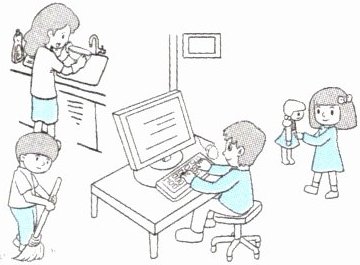
There are
four
people in my family. Look! My father is chatting
with his friends on
the Internet
. My mother is washing
the dishes
. I am sweeping
the floor
. How about
my sister? She is playing
with her doll.答案:four; is chatting; on; Internet; is washing; dishes; am sweeping; floor; about; is playing
解析:
【分析】
这道题是看图补全短文,解题思路如下:第一步先数图里的人物,能看到爸爸、妈妈、男孩“我”、妹妹一共4个人,确定第一空的基数词;第二步判断所有场景都是正在发生的动作,全部要用现在进行时“be+动词现在分词”的结构;第三步逐个对应每个家庭成员的动作:爸爸在电脑前对应网上和朋友聊天,妈妈在水槽边对应洗碗,我拿着扫帚对应扫地,用固定句型How about引出妹妹的情况,妹妹抱着玩偶对应玩娃娃,同时注意每空只能填1个词,匹配对应的固定短语,就能顺次填出所有空。
【解析】
1. 数图中人物总数,一共4位家庭成员,第一空填four。
2. 爸爸坐在电脑前打字,动作是正在和朋友网上聊天:主语my father是第三人称单数,现在进行时be动词用is,chat的现在分词为chatting,“在网上”是固定搭配on the Internet,依次填is chatting、on、Internet。
3. 妈妈在水槽边的动作是正在洗碗:主语my mother是第三人称单数,be动词用is,wash dishes是固定短语“洗碗”,现在分词为washing,依次填is washing、dishes。
4. 图里的男孩“我”拿着扫帚,动作是正在扫地:主语是I,be动词用am,sweep the floor是固定短语“扫地”,现在分词为sweeping,依次填am sweeping、floor。
5. 要引出妹妹的相关情况,用固定表达How about... 意为“……呢/……怎么样”,这里填about。
6. 妹妹抱着玩偶,动作是正在玩耍:主语she是第三人称单数,be动词用is,play的现在分词为playing,填is playing。
【答案】
four; is chatting; on; Internet; is washing; dishes; am sweeping; floor; about; is playing
【知识点】
现在进行时,固定短语搭配,图文匹配
【点评】
本题结合生活场景图片考察小学英语核心的现在进行时用法,需要学生先观察图片对应不同人物的动作,同时注意be动词和主语的人称保持一致,还要积累常用的生活类动词短语,整体考察基础的语言应用能力。
【难度系数】
0.7
这道题是看图补全短文,解题思路如下:第一步先数图里的人物,能看到爸爸、妈妈、男孩“我”、妹妹一共4个人,确定第一空的基数词;第二步判断所有场景都是正在发生的动作,全部要用现在进行时“be+动词现在分词”的结构;第三步逐个对应每个家庭成员的动作:爸爸在电脑前对应网上和朋友聊天,妈妈在水槽边对应洗碗,我拿着扫帚对应扫地,用固定句型How about引出妹妹的情况,妹妹抱着玩偶对应玩娃娃,同时注意每空只能填1个词,匹配对应的固定短语,就能顺次填出所有空。
【解析】
1. 数图中人物总数,一共4位家庭成员,第一空填four。
2. 爸爸坐在电脑前打字,动作是正在和朋友网上聊天:主语my father是第三人称单数,现在进行时be动词用is,chat的现在分词为chatting,“在网上”是固定搭配on the Internet,依次填is chatting、on、Internet。
3. 妈妈在水槽边的动作是正在洗碗:主语my mother是第三人称单数,be动词用is,wash dishes是固定短语“洗碗”,现在分词为washing,依次填is washing、dishes。
4. 图里的男孩“我”拿着扫帚,动作是正在扫地:主语是I,be动词用am,sweep the floor是固定短语“扫地”,现在分词为sweeping,依次填am sweeping、floor。
5. 要引出妹妹的相关情况,用固定表达How about... 意为“……呢/……怎么样”,这里填about。
6. 妹妹抱着玩偶,动作是正在玩耍:主语she是第三人称单数,be动词用is,play的现在分词为playing,填is playing。
【答案】
four; is chatting; on; Internet; is washing; dishes; am sweeping; floor; about; is playing
【知识点】
现在进行时,固定短语搭配,图文匹配
【点评】
本题结合生活场景图片考察小学英语核心的现在进行时用法,需要学生先观察图片对应不同人物的动作,同时注意be动词和主语的人称保持一致,还要积累常用的生活类动词短语,整体考察基础的语言应用能力。
【难度系数】
0.7
五、根据上下文和首字母提示补全短文。
Do your children have to do housework at home? Many parents say their children don't have to do housework. They think their children have too 1. m
We must know this: It may take 5. y
Do your children have to do housework at home? Many parents say their children don't have to do housework. They think their children have too 1. m
much
homework to do. It 2. ttakes
them much time to finish it. But it's important for 3. cchildren
to have real life lessons. They can know how to make food and how to 4. wwash
their dirty clothes and shoes. They can learn from doing housework.We must know this: It may take 5. y
years
—not days or weeks—for a child to learn to do housework.答案:1. much 2. takes 3. children 4. wash 5. years
解析:
【分析】
做这类首字母补全短文题,首先要先通读全文,把握文章核心主题是讨论孩子做家务的意义,理清整体逻辑:先抛出很多家长认为孩子作业多不用做家务的现象,再点明做家务对孩子的重要性,最后说明孩子学会做家务需要的时间周期。接下来逐个空格结合前后文线索、首字母提示、已学的固定搭配和语法知识推导答案:第1空后是不可数名词homework,结合首字母m推导修饰词;第2空结合“做某事花费某人时间”的常用句型和首字母t推导谓语;第3空结合全文围绕孩子展开的话题和首字母c推导指代对象;第4空结合“脏衣服鞋子”的搭配和首字母w推导对应动作;第5空结合后文“不是天、周”的提示和首字母y推导更长的时间单位。
【解析】
1. 空后homework是不可数名词,要表达“太多作业”的含义,固定搭配too much用于修饰不可数名词,首字母为m,因此填much。
2. 此处对应固定句型It takes sb. some time to do sth.,含义为“做某事花费某人多长时间”,主语It是第三人称单数,句子为一般现在时,谓语动词要使用第三人称单数形式,首字母为t,因此填takes。
3. 全文始终围绕孩子和家务的话题展开,本句表达“对孩子们来说上真实的生活课程是很重要的”,介词for后接指代孩子的复数名词,首字母为c,因此填children。
4. 空后搭配的是dirty clothes and shoes(脏衣服和鞋子),对应的合理动作是清洗,how to后面接动词原形,首字母为w,因此填wash。
5. 后文提示“不是几天或者几周”,说明需要的时间跨度更长,以y开头的时间名词years符合语境,含义为孩子学会做家务可能需要数年而非几天几周的时间,因此填years。
【答案】
1. much 2. takes 3. children 4. wash 5. years
【知识点】
首字母填空,固定句型搭配,词义辨析
【点评】
本题属于基础类首字母补全短文题,话题贴近学生日常生活,主要考察学生对核心固定搭配的掌握和上下文语境的理解能力,易错点在于区分too much和too many的用法、注意主谓一致的变形,整体没有偏难怪的考点。
【难度系数】
0.7
做这类首字母补全短文题,首先要先通读全文,把握文章核心主题是讨论孩子做家务的意义,理清整体逻辑:先抛出很多家长认为孩子作业多不用做家务的现象,再点明做家务对孩子的重要性,最后说明孩子学会做家务需要的时间周期。接下来逐个空格结合前后文线索、首字母提示、已学的固定搭配和语法知识推导答案:第1空后是不可数名词homework,结合首字母m推导修饰词;第2空结合“做某事花费某人时间”的常用句型和首字母t推导谓语;第3空结合全文围绕孩子展开的话题和首字母c推导指代对象;第4空结合“脏衣服鞋子”的搭配和首字母w推导对应动作;第5空结合后文“不是天、周”的提示和首字母y推导更长的时间单位。
【解析】
1. 空后homework是不可数名词,要表达“太多作业”的含义,固定搭配too much用于修饰不可数名词,首字母为m,因此填much。
2. 此处对应固定句型It takes sb. some time to do sth.,含义为“做某事花费某人多长时间”,主语It是第三人称单数,句子为一般现在时,谓语动词要使用第三人称单数形式,首字母为t,因此填takes。
3. 全文始终围绕孩子和家务的话题展开,本句表达“对孩子们来说上真实的生活课程是很重要的”,介词for后接指代孩子的复数名词,首字母为c,因此填children。
4. 空后搭配的是dirty clothes and shoes(脏衣服和鞋子),对应的合理动作是清洗,how to后面接动词原形,首字母为w,因此填wash。
5. 后文提示“不是几天或者几周”,说明需要的时间跨度更长,以y开头的时间名词years符合语境,含义为孩子学会做家务可能需要数年而非几天几周的时间,因此填years。
【答案】
1. much 2. takes 3. children 4. wash 5. years
【知识点】
首字母填空,固定句型搭配,词义辨析
【点评】
本题属于基础类首字母补全短文题,话题贴近学生日常生活,主要考察学生对核心固定搭配的掌握和上下文语境的理解能力,易错点在于区分too much和too many的用法、注意主谓一致的变形,整体没有偏难怪的考点。
【难度系数】
0.7