二、阅读短文,选择合适的选项。
新情境·传统文化
建议用时:12 分钟
难度:★★★★★
Song of the Parting Son (Translated by Xu Yuanchong)
From the threads a mother's hand weaves,
A gown for parting son is made.
Sewn stitch by stitch before he leaves,
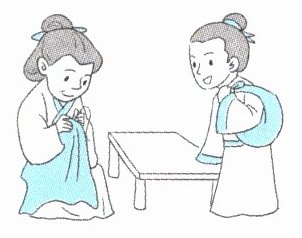
For fear his return be delayed.
Such kindness as young grass receives,
From the warm sun can't be repaid.
Song of the Parting Son is a simple and touching poem written by Meng Jiao (751—814). The poem paints a common picture in our mind—a mother is making clothes for her son who is leaving for a long time. Nearly every mother has done something like this for her children. For this reason, this short poem has touched many people's hearts. Meng spent a great deal of time thinking about every word. For example, the grass in the last sentence refers to a special traditional flower in China. Warm sun refers to the love a mother gives to her son. One is so small and the other is so great that the kindness can never be repaid.
(
A.《归信吟》
B.《游侠行》
C.《京山行》
D.《游子吟》
(
A. Put down.
B. Made up.
C. Put off.
D. Made of.
(
A. aa—bb—cc
B. ab—ab—ab
C. ab—ac—ab
D. ab—ab—bc
(
A. The sun and grass.
B. The threads and hands.
C. The fear and kindness.
D. The threads and the gown.
(
A. He was afraid his return would be delayed.
B. He was thankful for his mother's selfless love.
C. His mother was good at sewing stitch by stitch.
D. He loved and enjoyed travelling away from home.
新情境·传统文化
建议用时:12 分钟
难度:★★★★★
Song of the Parting Son (Translated by Xu Yuanchong)
From the threads a mother's hand weaves,
A gown for parting son is made.
Sewn stitch by stitch before he leaves,
For fear his return be delayed.
Such kindness as young grass receives,
From the warm sun can't be repaid.
Song of the Parting Son is a simple and touching poem written by Meng Jiao (751—814). The poem paints a common picture in our mind—a mother is making clothes for her son who is leaving for a long time. Nearly every mother has done something like this for her children. For this reason, this short poem has touched many people's hearts. Meng spent a great deal of time thinking about every word. For example, the grass in the last sentence refers to a special traditional flower in China. Warm sun refers to the love a mother gives to her son. One is so small and the other is so great that the kindness can never be repaid.
(
D
)1. What's the Chinese title of the poem Song of the Parting Son?A.《归信吟》
B.《游侠行》
C.《京山行》
D.《游子吟》
(
C
)2. 英英释义 Which phrase can replace the underlined word "delayed"?A. Put down.
B. Made up.
C. Put off.
D. Made of.
(
B
)3. 诗歌韵文 Which of the following rhymes (韵律) is RIGHT for this poem?A. aa—bb—cc
B. ab—ab—ab
C. ab—ac—ab
D. ab—ab—bc
(
A
)4. 创新话题 Which thing shows the close relationship between Mum and Son in this poem?A. The sun and grass.
B. The threads and hands.
C. The fear and kindness.
D. The threads and the gown.
(
B
)5. 主旨大意 What did Meng Jiao want to express in this poem?A. He was afraid his return would be delayed.
B. He was thankful for his mother's selfless love.
C. His mother was good at sewing stitch by stitch.
D. He loved and enjoyed travelling away from home.
答案:1. D 2. C 3. B 4. A 5. B
解析:
【分析】
这是结合中国传统古诗英译的英语阅读理解题,解题时可以按以下思路逐步推进:1. 先结合传统文化常识初步判断对应诗歌,再通读全文梳理文本细节;2. 第1题依托古诗文学常识直接匹配;3. 第2题结合上下文词义,辨析四个动词短语的含义找到同义替换;4. 第3题提取每行诗歌的尾词,对比尾音的押韵规律判断韵律格式;5. 第4题回到原文定位比喻义的相关描述,找到对应母子关系的意象;6. 第5题结合全诗内容和创作背景归纳核心主旨,排除片面的干扰选项。
【解析】
1. 文化常识题:《Song of the Parting Son》是翻译家许渊冲对孟郊经典诗作《游子吟》的英译名称,其余选项均不是该作品的标题,因此选D。
2. 词义替换题:划线单词delayed在句中意为“耽搁、延迟”。逐一辨析选项:A. Put down意为放下、记下;B. Made up意为编造、化妆;C. Put off意为推迟、延迟,和delayed含义一致;D. Made of意为由……制成,因此选C。
3. 韵律判断题:提取诗歌每行末尾单词的发音:weaves /wiːvz/、made /meɪd/、leaves /liːvz/、delayed /dɪˈleɪd/、receives /rɪˈsiːvz/、repaid /rɪˈpeɪd/,可以发现第1、3、5行尾音一致押韵,第2、4、6行尾音一致押韵,韵律规律为ab—ab—ab,因此选B。
4. 细节理解题:原文最后一段明确说明,诗中的“草”指代游子本人,“暖阳”指代母亲给予儿子的爱,用太阳和草的意象关系比喻母子间的紧密羁绊,其余选项的意象均不是用来体现母子关联的核心比喻,因此选A。
5. 主旨大意题:整首诗通过描写母亲为即将远行的儿子缝制衣物的场景,核心是抒发对母亲无私伟大的爱意的感激之情,其余选项都是片面的细节描述,并非诗歌想要表达的核心主旨,因此选B。
【答案】
1. D 2. C 3. B 4. A 5. B
【知识点】
英语短语辨析,诗歌韵律判断,传统文化常识
【点评】
本题采用古诗英译的创新情境,将英语语言能力考察和中国传统文化知识融合,既考察学生的阅读细节定位、词义辨析能力,也要求学生结合文化积累理解文本内涵,题目设置有区分度,能有效锻炼学生的跨文化综合理解能力。
【难度系数】
0.4
这是结合中国传统古诗英译的英语阅读理解题,解题时可以按以下思路逐步推进:1. 先结合传统文化常识初步判断对应诗歌,再通读全文梳理文本细节;2. 第1题依托古诗文学常识直接匹配;3. 第2题结合上下文词义,辨析四个动词短语的含义找到同义替换;4. 第3题提取每行诗歌的尾词,对比尾音的押韵规律判断韵律格式;5. 第4题回到原文定位比喻义的相关描述,找到对应母子关系的意象;6. 第5题结合全诗内容和创作背景归纳核心主旨,排除片面的干扰选项。
【解析】
1. 文化常识题:《Song of the Parting Son》是翻译家许渊冲对孟郊经典诗作《游子吟》的英译名称,其余选项均不是该作品的标题,因此选D。
2. 词义替换题:划线单词delayed在句中意为“耽搁、延迟”。逐一辨析选项:A. Put down意为放下、记下;B. Made up意为编造、化妆;C. Put off意为推迟、延迟,和delayed含义一致;D. Made of意为由……制成,因此选C。
3. 韵律判断题:提取诗歌每行末尾单词的发音:weaves /wiːvz/、made /meɪd/、leaves /liːvz/、delayed /dɪˈleɪd/、receives /rɪˈsiːvz/、repaid /rɪˈpeɪd/,可以发现第1、3、5行尾音一致押韵,第2、4、6行尾音一致押韵,韵律规律为ab—ab—ab,因此选B。
4. 细节理解题:原文最后一段明确说明,诗中的“草”指代游子本人,“暖阳”指代母亲给予儿子的爱,用太阳和草的意象关系比喻母子间的紧密羁绊,其余选项的意象均不是用来体现母子关联的核心比喻,因此选A。
5. 主旨大意题:整首诗通过描写母亲为即将远行的儿子缝制衣物的场景,核心是抒发对母亲无私伟大的爱意的感激之情,其余选项都是片面的细节描述,并非诗歌想要表达的核心主旨,因此选B。
【答案】
1. D 2. C 3. B 4. A 5. B
【知识点】
英语短语辨析,诗歌韵律判断,传统文化常识
【点评】
本题采用古诗英译的创新情境,将英语语言能力考察和中国传统文化知识融合,既考察学生的阅读细节定位、词义辨析能力,也要求学生结合文化积累理解文本内涵,题目设置有区分度,能有效锻炼学生的跨文化综合理解能力。
【难度系数】
0.4