Ⅰ. 根据汉语、首字母提示或音标写出单词
1. Yuzui Wetland Park is a wonderful place for us to go on a
2. After walking for three hours, the tired students finally arrived at the
3. The writer spent most of his c
4. The girl couldn’t keep her balance or stand on her s
5. Lions are able to run fast, but only for a short w
6. The coming holiday will help you get
1. Yuzui Wetland Park is a wonderful place for us to go on a
picnic
(野餐).2. After walking for three hours, the tired students finally arrived at the
campsite
(野营地).3. The writer spent most of his c
hildhood
in the countryside. And he missed the time of being a kid.4. The girl couldn’t keep her balance or stand on her s
kates
. But she kept practising.5. Lions are able to run fast, but only for a short w
hile
.6. The coming holiday will help you get
relaxed
(/rɪ'lækst/) after the exams.答案:Ⅰ. 1. picnic 2. campsite 3. childhood 4. skates 5. while 6. relaxed
解析:
【解析】
1. 根据汉语提示“野餐”,结合固定搭配go on a picnic,填入picnic。
2. 根据汉语提示“野营地”,填入对应的英文名词campsite。
3. 根据后句“他怀念孩童时期的时光”以及首字母c提示,可知此处表达“童年”,填入childhood。
4. 根据“女孩无法保持平衡”的语境以及首字母s提示,此处表示“溜冰鞋”,常用复数形式skates。
5. 根据固定搭配for a short while(一小会儿)以及首字母w提示,填入while。
6. 根据给出的音标/rɪ'lækst/,填入对应的形容词relaxed。
【答案】
1. picnic
2. campsite
3. childhood
4. skates
5. while
6. relaxed
【知识点】
单词拼写;固定短语;音标辨词
【点评】
本题结合汉语提示、首字母语境和音标考查基础词汇的掌握,侧重常用短语和生活类词汇的运用,难度较低,需要学生结合句子语境准确匹配对应单词,注意部分名词的形式变化。
【难度系数】
0.9
1. 根据汉语提示“野餐”,结合固定搭配go on a picnic,填入picnic。
2. 根据汉语提示“野营地”,填入对应的英文名词campsite。
3. 根据后句“他怀念孩童时期的时光”以及首字母c提示,可知此处表达“童年”,填入childhood。
4. 根据“女孩无法保持平衡”的语境以及首字母s提示,此处表示“溜冰鞋”,常用复数形式skates。
5. 根据固定搭配for a short while(一小会儿)以及首字母w提示,填入while。
6. 根据给出的音标/rɪ'lækst/,填入对应的形容词relaxed。
【答案】
1. picnic
2. campsite
3. childhood
4. skates
5. while
6. relaxed
【知识点】
单词拼写;固定短语;音标辨词
【点评】
本题结合汉语提示、首字母语境和音标考查基础词汇的掌握,侧重常用短语和生活类词汇的运用,难度较低,需要学生结合句子语境准确匹配对应单词,注意部分名词的形式变化。
【难度系数】
0.9
Ⅱ. 用方框中所给单词的正确形式填空,每个单词限用一次
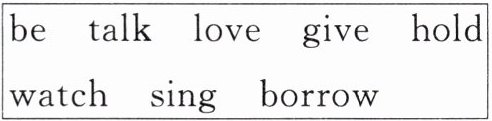
Last week, I 1.
Last week, I 1.
borrowed
some books from the school library. They 2. were
so interesting. Last Sunday, I went to a friend’s home and 3. talked
with him about our school life. This Monday, all the students 4. watched
the raising of the national flag and 5. sang
the national song together. Yesterday evening, we 6. held
a big party to celebrate my grandma’s seventieth birthday. I 7. gave
her a red sweater as a gift. She 8. loved
it very much and wore it immediately. I really had a good time these days.答案:Ⅱ. 1. borrowed 解析:根据“Last week”可知时态为一般过去时,“borrow from”意为“从……借”,“borrow”的过去式为“borrowed”。
2. were 解析:主语“They”指代“books”,时态为一般过去时,be 动词用“were”。
3. talked 解析:根据“Last Sunday”可知时态为一般过去时,“talk with”意为“和……聊天”,“talk”的过去式为“talked”。
4. watched 解析:根据“This Monday”可知时态为一般过去时,“watch the raising of the national flag”意为“观看升旗仪式”,“watch”的过去式为“watched”。
5. sang 解析:根据“This Monday”可知时态为一般过去时,“sing the national song”意为“唱国歌”,“sing”的过去式为“sang”。
6. held 解析:根据“Yesterday evening”可知时态为一般过去时,“hold a party”意为“举办派对”,“hold”的过去式为“held”。
7. gave 解析:根据“Yesterday evening”可知时态为一般过去时,“give sb sth”意为“给某人某物”,“give”的过去式为“gave”。
8. loved 解析:根据“Yesterday evening”可知时态为一般过去时,“love”的过去式为“loved”。
2. were 解析:主语“They”指代“books”,时态为一般过去时,be 动词用“were”。
3. talked 解析:根据“Last Sunday”可知时态为一般过去时,“talk with”意为“和……聊天”,“talk”的过去式为“talked”。
4. watched 解析:根据“This Monday”可知时态为一般过去时,“watch the raising of the national flag”意为“观看升旗仪式”,“watch”的过去式为“watched”。
5. sang 解析:根据“This Monday”可知时态为一般过去时,“sing the national song”意为“唱国歌”,“sing”的过去式为“sang”。
6. held 解析:根据“Yesterday evening”可知时态为一般过去时,“hold a party”意为“举办派对”,“hold”的过去式为“held”。
7. gave 解析:根据“Yesterday evening”可知时态为一般过去时,“give sb sth”意为“给某人某物”,“give”的过去式为“gave”。
8. loved 解析:根据“Yesterday evening”可知时态为一般过去时,“love”的过去式为“loved”。
Ⅲ. 单项选择
1. —How nice the cakes are!
—Are they? Do you know who
A. is making
B. will make
C. makes
D. made
1. —How nice the cakes are!
—Are they? Do you know who
D
them? It was me!A. is making
B. will make
C. makes
D. made
答案:1. D 解析:句意:——这些蛋糕真好吃!——是吗?你知道是谁做的吗?是我!根据语境可知蛋糕已做好,时态为一般过去时,应用“made”。结合语境,选 D。
2. — your father interested in football?
—No. But he really
A.Is; likes
B.Was; likes
C.Was; liked
D.Is; liked
—No. But he really
D
it many years ago.A.Is; likes
B.Was; likes
C.Was; liked
D.Is; liked
答案:2. D 解析:句意:——你爸爸对足球感兴趣吗?——不。但他很多年前真的很喜欢足球。第一空询问现在的情况,用一般现在时,“Is”;第二空根据“many years ago”可知用一般过去时,“liked”。结合语境,选 D。
3. —Your cousin sent you a gift on your birthday, right? —Yes,
A.she does
B.she gave
C.she was
D.she did
D
. I always get something nice from her.A.she does
B.she gave
C.she was
D.she did
答案:3. D 解析:句意:——你堂/表姐/妹在你生日时送了你一份礼物,对吗?——是的,她送了。我总能从她那里得到好东西。根据“sent”可知此处用助动词“did”指代“sent a gift”。结合语境,选 D。
4. —My father always
—Maybe because you have grown up.
A.reads; does
B.reads; did
C.read; does
D.read; did
C
amazing stories to me when I was little, but now he never that.—Maybe because you have grown up.
A.reads; does
B.reads; did
C.read; does
D.read; did
答案:4. C 解析:句意:——我小时候,爸爸总是给我读精彩的故事,但现在他不那样做了。——也许是因为你长大了。第一空根据“when I was little”可知用一般过去时,“read”;第二空根据“now”可知用一般现在时,“does”。结合语境,选 C。
5. Grandma Lin didn’t know how to use the mobile phone
A.at least
B.at most
C.at first
D.at last
C
. But now, she can use it to chat, watch videos and buy things easily.A.at least
B.at most
C.at first
D.at last
答案:5. C 解析:句意:林奶奶起初不知道如何使用手机。但现在,她可以轻松地用手机聊天、看视频和购物了。“at first”意为“起初”,符合语境;“at least”意为“至少”;“at most”意为“至多”;“at last”意为“最后”。结合语境,选 C。
6. —Dad, I find it hard to learn Chemistry well.
—Don’t lose heart. It’s a new subject for you after all.
A.Little by little
B.Little and little
C.One by one
D.Side by side
—Don’t lose heart. It’s a new subject for you after all.
A
, you will find a good way to learn it.A.Little by little
B.Little and little
C.One by one
D.Side by side
答案:6. A 解析:句意:——爸爸,我觉得学好化学很难。——别灰心。这对你来说毕竟是一门新学科。渐渐地,你会找到学好它的好方法。“Little by little”意为“渐渐地”,符合语境;“Little and little”表达错误;“One by one”意为“一个接一个”;“Side by side”意为“并肩”。结合语境,选 A。
7. —Wang Meng became famous winning a gold medal for China.
—Yes. She came first in the event
A.because; because
B.because; because of
C.because of; because
D.because of; because of
—Yes. She came first in the event
C
she kept calm (冷静的) during the match.A.because; because
B.because; because of
C.because of; because
D.because of; because of
答案:7. C 解析:句意:——王濛因为为中国赢得一枚金牌而出名。——是的。她在比赛中保持冷静,所以在项目中获得了第一名。“because of”后接名词或名词短语,“winning a gold medal”为动名词短语,用“because of”;“because”后接句子,“she kept calm during the match”为句子,用“because”。结合语境,选 C。