Ⅲ. 阅读理解(每小题2分,满分20分)
A
(2025·厦门二模) Most people use one hand more than the other, like being right-handed or left-handed. Surprisingly, elephants also have a preferred side for using their trunks! German scientists studied this by watching Asian and African elephants in zoos and wildlife parks. They spent months recording how elephants used their trunks to pick up food, drink water, and play with objects.
How did they discover an elephant's "favourite side"? The answer lies in the wrinkles(皱纹) on their trunks. The team discovered that the wrinkles on an elephant's trunk are not the same on both sides. For example, some elephants are left-trunkers. These elephants pick up objects towards the left side of their bodies. So, their trunks have more wrinkles on the left side.
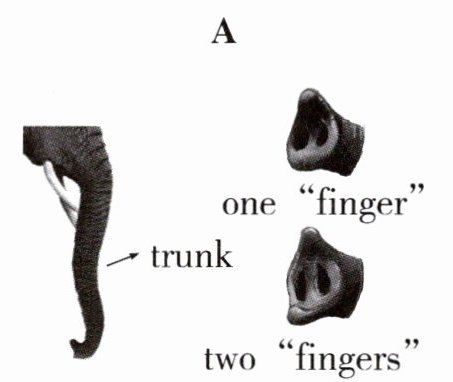
Interestingly, Asian and African elephants showed differences. Asian elephants' trunks have more wrinkles than African elephants'. More wrinkles make trunks more flexible, similar to how folds in an accordion(手风琴) work. This might explain why Asian elephants' trunks bend(弯曲) more easily. Another key difference is the end of the trunk. African elephants have two finger-like parts at the trunk's end, allowing them to scoop objects like humans using two fingers. Asian elephants, however, have only one "finger", so they depend on their highly wrinkled trunks to lift up things.
Why do these differences matter? Scientists believe Asian elephants need more wrinkles to help them collect food in the forests where they live, while African elephants' double "fingers" work better for getting objects on the open grasslands. This study shows how animals' bodies get used to their environments. Next time you see an elephant, look closely—its trunk wrinkles might tell you whether it's a "left-trunker" or a "right-trunker"!
1. 新考法 写作手法 How does the writer start the text?
A. By telling a fact.
B. By explaining words.
C. By listing numbers.
D. By describing a scene.
2. 语言能力 归纳能力 What is Paragraph 2 mainly about?
A. A discovery of elephant habits.
B. A problem in elephant's living.
C. An example of elephant protection.
D. A method for elephant watching.
3. What does the underlined word "flexible" mean in Paragraph 3?
A. Valuable.
B. Touchable.
C. Bendable.
D. Acceptable.
4. What can be found on the trunk of an African elephant?
①more wrinkles
②fewer wrinkles
③one finger-like part
④two finger-like parts
A. ①③
B. ①④
C. ②③
D. ②④
5. 语言能力 推断能力 What is the main purpose of this text?
A. To tell what elephant trunks can be used to do.
B. To discuss how people influence where elephants live.
C. To find out why elephants prefer a certain kind of food.
D. To show how elephants fit physically in their environments.
A
(2025·厦门二模) Most people use one hand more than the other, like being right-handed or left-handed. Surprisingly, elephants also have a preferred side for using their trunks! German scientists studied this by watching Asian and African elephants in zoos and wildlife parks. They spent months recording how elephants used their trunks to pick up food, drink water, and play with objects.
How did they discover an elephant's "favourite side"? The answer lies in the wrinkles(皱纹) on their trunks. The team discovered that the wrinkles on an elephant's trunk are not the same on both sides. For example, some elephants are left-trunkers. These elephants pick up objects towards the left side of their bodies. So, their trunks have more wrinkles on the left side.
Interestingly, Asian and African elephants showed differences. Asian elephants' trunks have more wrinkles than African elephants'. More wrinkles make trunks more flexible, similar to how folds in an accordion(手风琴) work. This might explain why Asian elephants' trunks bend(弯曲) more easily. Another key difference is the end of the trunk. African elephants have two finger-like parts at the trunk's end, allowing them to scoop objects like humans using two fingers. Asian elephants, however, have only one "finger", so they depend on their highly wrinkled trunks to lift up things.
Why do these differences matter? Scientists believe Asian elephants need more wrinkles to help them collect food in the forests where they live, while African elephants' double "fingers" work better for getting objects on the open grasslands. This study shows how animals' bodies get used to their environments. Next time you see an elephant, look closely—its trunk wrinkles might tell you whether it's a "left-trunker" or a "right-trunker"!
1. 新考法 写作手法 How does the writer start the text?
A. By telling a fact.
B. By explaining words.
C. By listing numbers.
D. By describing a scene.
2. 语言能力 归纳能力 What is Paragraph 2 mainly about?
A. A discovery of elephant habits.
B. A problem in elephant's living.
C. An example of elephant protection.
D. A method for elephant watching.
3. What does the underlined word "flexible" mean in Paragraph 3?
A. Valuable.
B. Touchable.
C. Bendable.
D. Acceptable.
4. What can be found on the trunk of an African elephant?
①more wrinkles
②fewer wrinkles
③one finger-like part
④two finger-like parts
A. ①③
B. ①④
C. ②③
D. ②④
5. 语言能力 推断能力 What is the main purpose of this text?
A. To tell what elephant trunks can be used to do.
B. To discuss how people influence where elephants live.
C. To find out why elephants prefer a certain kind of food.
D. To show how elephants fit physically in their environments.
答案:1.A 2.A 3.C 4.D 5.D
A
【语篇解读】本文是一篇说明文,主要介绍了专家研究发现大象使用象鼻有偏好,这种偏好与大象的种类及生存环境有关。
1. A 解析:写作手法题。根据第一段开头“Most people use one hand more than the other,like being right - handed or left - handed.”可知,第一段开头介绍了“大多数人用一只手比用另一只手多,比如右撇子或左撇子”的情况,即作者通过讲述事实的方式开启了本文。故选 A。
2. A 解析:段落大意题。通读第二段尤其是“How did they discover an elephant's ‘favourite side’?”可知,第二段主要在讲述专家是如何发现大象的偏好的,选项 A“大象习性的发现”符合。故选 A。
3. C 解析:词义猜测题。根据第三段“More wrinkles make trunks more flexible,similar to how folds in an accordion work. This might explain why Asian elephants' trunks bend more easily.”中的“bend more easily”可知,大象的褶皱类似于手风琴的褶皱,使得亚洲象的鼻子更容易弯曲,由此推测画线词应指“容易弯曲的”,与选项 C“可弯曲的”的意思相近。故选 C。
4. D 解析:细节理解题。根据第三段“Asian elephants' trunks have more wrinkles than African elephants'.”及“African elephants have two finger - like parts at the trunk's end”可知,在非洲象的鼻上,可以发现较少的皱纹,并且能看到两个类似手指的结构,因此②④表述正确。故选 D。
5. D 解析:主旨大意题。通读全文可知,本文主要介绍了专家研究发现大象使用象鼻有偏好,这种偏好与大象的种类及生存环境有关,因此选项 D“为了展示大象在自身所处环境中身体结构的适应性情况”符合。故选 D。
A
【语篇解读】本文是一篇说明文,主要介绍了专家研究发现大象使用象鼻有偏好,这种偏好与大象的种类及生存环境有关。
1. A 解析:写作手法题。根据第一段开头“Most people use one hand more than the other,like being right - handed or left - handed.”可知,第一段开头介绍了“大多数人用一只手比用另一只手多,比如右撇子或左撇子”的情况,即作者通过讲述事实的方式开启了本文。故选 A。
2. A 解析:段落大意题。通读第二段尤其是“How did they discover an elephant's ‘favourite side’?”可知,第二段主要在讲述专家是如何发现大象的偏好的,选项 A“大象习性的发现”符合。故选 A。
3. C 解析:词义猜测题。根据第三段“More wrinkles make trunks more flexible,similar to how folds in an accordion work. This might explain why Asian elephants' trunks bend more easily.”中的“bend more easily”可知,大象的褶皱类似于手风琴的褶皱,使得亚洲象的鼻子更容易弯曲,由此推测画线词应指“容易弯曲的”,与选项 C“可弯曲的”的意思相近。故选 C。
4. D 解析:细节理解题。根据第三段“Asian elephants' trunks have more wrinkles than African elephants'.”及“African elephants have two finger - like parts at the trunk's end”可知,在非洲象的鼻上,可以发现较少的皱纹,并且能看到两个类似手指的结构,因此②④表述正确。故选 D。
5. D 解析:主旨大意题。通读全文可知,本文主要介绍了专家研究发现大象使用象鼻有偏好,这种偏好与大象的种类及生存环境有关,因此选项 D“为了展示大象在自身所处环境中身体结构的适应性情况”符合。故选 D。