8. The trip to Shanghai
A.takes; costs
B.spends; costs
C.takes; spends
D.spends; takes
takes
only three days but costs
about 5,000 yuan.A.takes; costs
B.spends; costs
C.takes; spends
D.spends; takes
答案:8. A 解析:主语“the trip”(物),第一空指时间,用“takes”;第二空指金钱,用“costs”,故选A。
归纳总结“take”表示“花费时间”,主语为物;“cost”表示“花费金钱”,主语为物;“spend”主语为人。
归纳总结“take”表示“花费时间”,主语为物;“cost”表示“花费金钱”,主语为物;“spend”主语为人。
9. Which of the following sentences shows the topic of Chinese folk art?
A.Home is where the heart is.
B.What belongs to the nation is a gift to the world.
C.Close neighbours are better than distant relatives.
D.No matter how far you may fly, never forget where you come from.
A.Home is where the heart is.
B.What belongs to the nation is a gift to the world.
C.Close neighbours are better than distant relatives.
D.No matter how far you may fly, never forget where you come from.
答案:9. B 解析:A“心在哪,家就在哪”;B“民族的就是世界的”;C“远亲不如近邻”;D“无论飞多远,不忘来时路”。B选项与中国民间艺术(民族文化)相关,故选B。
Ⅳ. 句子翻译
1. 他所有的模具都是手工制作的。
All his
2. 首先,请仔细看看这些高大的松树。
First, please
3. 徽州墨深受人们的欢迎,以其设计而闻名。
The Huizhou inkstick is
4. 手工艺者制作手工艺品很困难。
It's difficult
5. 我去一个地方旅行时,会买一些具有浓厚地方特色的东西。
I will buy
1. 他所有的模具都是手工制作的。
All his
moulds are made by hand
.2. 首先,请仔细看看这些高大的松树。
First, please
have a close look at these tall pines
.3. 徽州墨深受人们的欢迎,以其设计而闻名。
The Huizhou inkstick is
popular with/among
people and is famous for its design
.4. 手工艺者制作手工艺品很困难。
It's difficult
for craftspeople to make the handicrafts
.5. 我去一个地方旅行时,会买一些具有浓厚地方特色的东西。
I will buy
things with strong local colour
when I travel to a place.答案:Ⅳ. 1. moulds are made by hand
2. have a close look at these tall pines
3. popular with/among; famous for its design
4. for craftspeople to make the handicrafts
5. things with strong local colour
2. have a close look at these tall pines
3. popular with/among; famous for its design
4. for craftspeople to make the handicrafts
5. things with strong local colour
解析:
【解析】
1. 对应中文“模具都是手工制作的”,“模具”用复数moulds表泛指,“被手工制作”用被动结构are made by hand,符合语境。
2. 对应中文“仔细看看这些高大的松树”,使用固定短语have a close look at表示“仔细查看”,后接宾语these tall pines,符合祈使句please后接动词原形的规则。
3. 第一空用固定搭配popular with/among表示“深受……欢迎”;第二空用固定搭配famous for its design表示“以其设计而闻名”,符合句子结构。
4. 套用固定句型It's difficult for sb. to do sth.,表示“对某人来说做某事很困难”,填入for craftspeople to make the handicrafts即可。
5. 对应中文“具有浓厚地方特色的东西”,用things with strong local colour表达,with短语作后置定语修饰things。
【答案】
1. moulds are made by hand
2. have a close look at these tall pines
3. popular with/among; famous for its design
4. for craftspeople to make the handicrafts
5. things with strong local colour
【知识点】
固定短语搭配;常用英语句型;汉译英应用
【点评】
本题考查基础的汉译英填空,侧重核心短语和常用固定句型的掌握,只要熟记课本相关短语和it作形式主语的基础句型即可顺利完成作答。
【难度系数】
0.8
1. 对应中文“模具都是手工制作的”,“模具”用复数moulds表泛指,“被手工制作”用被动结构are made by hand,符合语境。
2. 对应中文“仔细看看这些高大的松树”,使用固定短语have a close look at表示“仔细查看”,后接宾语these tall pines,符合祈使句please后接动词原形的规则。
3. 第一空用固定搭配popular with/among表示“深受……欢迎”;第二空用固定搭配famous for its design表示“以其设计而闻名”,符合句子结构。
4. 套用固定句型It's difficult for sb. to do sth.,表示“对某人来说做某事很困难”,填入for craftspeople to make the handicrafts即可。
5. 对应中文“具有浓厚地方特色的东西”,用things with strong local colour表达,with短语作后置定语修饰things。
【答案】
1. moulds are made by hand
2. have a close look at these tall pines
3. popular with/among; famous for its design
4. for craftspeople to make the handicrafts
5. things with strong local colour
【知识点】
固定短语搭配;常用英语句型;汉译英应用
【点评】
本题考查基础的汉译英填空,侧重核心短语和常用固定句型的掌握,只要熟记课本相关短语和it作形式主语的基础句型即可顺利完成作答。
【难度系数】
0.8
Ⅴ. 阅读理解
In Tongren City, Guizhou Province, there is a special embroidery called leaf-vein embroidery (叶脉绣). This beautiful art is one of the main types of embroidery in China.
Leaf-vein embroidery has a history from the Song Dynasty (960—1279). It was first used for communication among people in different areas.
Making leaf-vein embroidery is not easy. It takes a lot of steps. First, choosing the right leaves is important. The leaves from local trees with harder veins serve as the best materials. Second, put leaves in clean water for two days to make them soft. Third, brush the leaves gently. Then, it takes three to five days to make them fully dry. Finally, you can create the patterns on the leaves.
Yang Li, a master of leaf-vein embroidery, notes that only about 20 people in Tongren have been able to finish the whole steps by themselves in the last ten years, so it's challenging to keep this traditional skill alive.
"I have introduced this art in colleges, communities and villages, but very few people wanted to learn it because it was very difficult," Yang said.
In 2011, she started a leaf-vein embroidery workshop, creating jobs for more than 500 women, including women from villages with disabilities. "In my lifetime, it's my duty to improve and pass on leaf-vein embroidery," she said. After that, she also used social media to show these traditional skills and got many fans.
"Leaf-vein embroidery is a treasure. I decide to save and inherit this skill and hope more young people will return to their hometown to learn it," Yang said.
1. What was the purpose of leaf-vein embroidery at first in history?
A. To make clothes beautiful.
B. To communicate with people.
C. To trade with foreign countries.
D. To celebrate festivals.
2. Which is the RIGHT order of making leaf-vein embroidery?
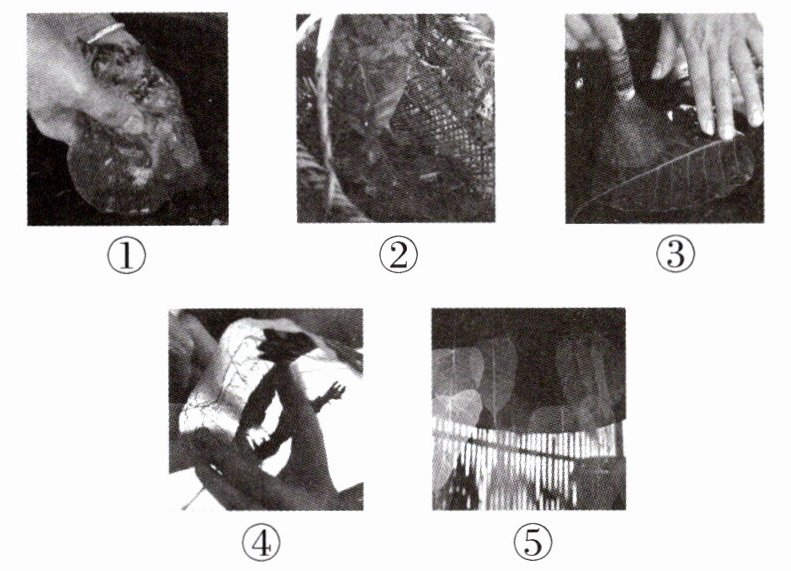
A. ②①③⑤④
B. ②①④③⑤
C. ①③②⑤④
D. ①③②④⑤
3. What does the underlined word "it" in Paragraph 5 refer to?
A. A workshop.
B. Leaf-vein embroidery.
C. A local tree.
D. A challenge.
4. What is the best title for this passage?
A. The History of Chinese Embroidery
B. How to Make Beautiful Leaf-Vein Embroidery
C. Saving the Art of Leaf-Vein Embroidery
D. Yang Li—A Famous Chinese Artist
In Tongren City, Guizhou Province, there is a special embroidery called leaf-vein embroidery (叶脉绣). This beautiful art is one of the main types of embroidery in China.
Leaf-vein embroidery has a history from the Song Dynasty (960—1279). It was first used for communication among people in different areas.
Making leaf-vein embroidery is not easy. It takes a lot of steps. First, choosing the right leaves is important. The leaves from local trees with harder veins serve as the best materials. Second, put leaves in clean water for two days to make them soft. Third, brush the leaves gently. Then, it takes three to five days to make them fully dry. Finally, you can create the patterns on the leaves.
Yang Li, a master of leaf-vein embroidery, notes that only about 20 people in Tongren have been able to finish the whole steps by themselves in the last ten years, so it's challenging to keep this traditional skill alive.
"I have introduced this art in colleges, communities and villages, but very few people wanted to learn it because it was very difficult," Yang said.
In 2011, she started a leaf-vein embroidery workshop, creating jobs for more than 500 women, including women from villages with disabilities. "In my lifetime, it's my duty to improve and pass on leaf-vein embroidery," she said. After that, she also used social media to show these traditional skills and got many fans.
"Leaf-vein embroidery is a treasure. I decide to save and inherit this skill and hope more young people will return to their hometown to learn it," Yang said.
1. What was the purpose of leaf-vein embroidery at first in history?
A. To make clothes beautiful.
B. To communicate with people.
C. To trade with foreign countries.
D. To celebrate festivals.
2. Which is the RIGHT order of making leaf-vein embroidery?
A. ②①③⑤④
B. ②①④③⑤
C. ①③②⑤④
D. ①③②④⑤
3. What does the underlined word "it" in Paragraph 5 refer to?
A. A workshop.
B. Leaf-vein embroidery.
C. A local tree.
D. A challenge.
4. What is the best title for this passage?
A. The History of Chinese Embroidery
B. How to Make Beautiful Leaf-Vein Embroidery
C. Saving the Art of Leaf-Vein Embroidery
D. Yang Li—A Famous Chinese Artist
答案:Ⅴ. 1.B 2.A 3.B 4.C
【语篇解读】本文是一篇说明文,主要介绍了贵州铜仁的特色刺绣——叶脉绣的历史、制作工艺以及传承人杨丽为保护和传承这门传统技艺所做的努力。
1. B 解析:细节理解题。根据文章第二段“It was first used for communication among people in different areas.”可知,叶脉绣最初用于不同地区人们之间的交流。故选B。
2. A 解析:事件排序题。根据文章第三段制作步骤:选择合适的叶子;浸泡叶子两天使其软化;轻柔地刷叶子;三至五天晾干叶子;在叶子上创作图案。正确顺序为②①③⑤④。故选A。
3. B 解析:代词指代题。根据文章第五段杨丽的话“very few people wanted to learn it because it was very difficult”并结合上下文可知,“it”指代前文提到的叶脉绣技艺。故选B。
4. C 解析:标题归纳题。全文围绕叶脉绣的工艺难点、传承困境及保护措施展开,重点体现对这一传统技艺的挽救。选项C“拯救叶脉绣艺术”最贴合主旨。故选C。
【语篇解读】本文是一篇说明文,主要介绍了贵州铜仁的特色刺绣——叶脉绣的历史、制作工艺以及传承人杨丽为保护和传承这门传统技艺所做的努力。
1. B 解析:细节理解题。根据文章第二段“It was first used for communication among people in different areas.”可知,叶脉绣最初用于不同地区人们之间的交流。故选B。
2. A 解析:事件排序题。根据文章第三段制作步骤:选择合适的叶子;浸泡叶子两天使其软化;轻柔地刷叶子;三至五天晾干叶子;在叶子上创作图案。正确顺序为②①③⑤④。故选A。
3. B 解析:代词指代题。根据文章第五段杨丽的话“very few people wanted to learn it because it was very difficult”并结合上下文可知,“it”指代前文提到的叶脉绣技艺。故选B。
4. C 解析:标题归纳题。全文围绕叶脉绣的工艺难点、传承困境及保护措施展开,重点体现对这一传统技艺的挽救。选项C“拯救叶脉绣艺术”最贴合主旨。故选C。