B
① In 1903,the Wright brothers' historic flight opened the door to human aviation(航空). Since then,over the past century,humans have been reaching new heights in researching the skies. Today,a new chapter is unfolding in the skies—one led by drones that are changing how we live,work,and connect.
②As part of the "low-altitude economy(低空经济)",these flying machines have become a sign of technological progress(进步),fitting smoothly into both city and country life.
③Take the Badaling Great Wall in Beijing as an example,where drones have turned a 50-minute hike for food and water into a three-minute convenience. Travellers now order on the phone,and electric drones deliver(递送) snacks and drinks,even collecting garbage on their return trips. Besides,in cities like Shenzhen,known as the "City of Drones",technology goes further. In 2024,electric "air cars" that can take off and land upright started flying there. They don't need long runways,showing how technology can become part of daily life.
④ Drones are also changing farming. In Guangxi,over 250,000 drones help protect plants. They watch over crops,spray pesticides(杀虫剂),and find pests,working quickly across large fields. This technology has cut labour costs by 40% compared to traditional methods,allowing farmers to manage more land with less effort. During harvest seasons,drones even help watch over fruit growth,guiding farmers to pick at the best time for better quality and higher yields(产量).
⑤With such new technology,there are things to think about. As more drones fly,questions about safety,airspace rules,and personal information might come up. How can we make sure these machines fly safely with other planes? How do we balance the use of space and the protection of people's space? Even if high-tech BDS helps drones fly in the right way,rules must be developed to help use them without risks.
⑥From delivering snacks on the Great Wall to helping farms and cities,Chinese drones have gone from a new thing to a need. They show how creation can shorten the gap between old and new,city and country. As we step into this low-altitude revolution(变革),one thing is clear:Tomorrow is not just about flying higher,but about flying smarter.
5. How does the writer start the passage?
A. By describing a future plan.
B. By talking about a historic event.
C. By raising a recent problem.
D. By showing the changes of technology.
6. What can we infer about the use of drones?
A. The "air cars" in Shenzhen will replace traditional cars in the future.
B. Farmers now need more workers to control drones in the fields.
C. Farmers can use drones to watch fruit growth and pick fruit directly.
D. Proper rules are the key to making drones more helpful.
7. Which "gap" below has the same meaning as the "gap" in the last paragraph?
A. The gap year before college helps students relax.
B. There's a gap in the wall—we can climb through it.
C. The culture gap often makes it hard to talk to foreigners.
D. The gap between the two buildings is used for a garden.
8. Which of the following shows the structure of this passage?
① In 1903,the Wright brothers' historic flight opened the door to human aviation(航空). Since then,over the past century,humans have been reaching new heights in researching the skies. Today,a new chapter is unfolding in the skies—one led by drones that are changing how we live,work,and connect.
②As part of the "low-altitude economy(低空经济)",these flying machines have become a sign of technological progress(进步),fitting smoothly into both city and country life.
③Take the Badaling Great Wall in Beijing as an example,where drones have turned a 50-minute hike for food and water into a three-minute convenience. Travellers now order on the phone,and electric drones deliver(递送) snacks and drinks,even collecting garbage on their return trips. Besides,in cities like Shenzhen,known as the "City of Drones",technology goes further. In 2024,electric "air cars" that can take off and land upright started flying there. They don't need long runways,showing how technology can become part of daily life.
④ Drones are also changing farming. In Guangxi,over 250,000 drones help protect plants. They watch over crops,spray pesticides(杀虫剂),and find pests,working quickly across large fields. This technology has cut labour costs by 40% compared to traditional methods,allowing farmers to manage more land with less effort. During harvest seasons,drones even help watch over fruit growth,guiding farmers to pick at the best time for better quality and higher yields(产量).
⑤With such new technology,there are things to think about. As more drones fly,questions about safety,airspace rules,and personal information might come up. How can we make sure these machines fly safely with other planes? How do we balance the use of space and the protection of people's space? Even if high-tech BDS helps drones fly in the right way,rules must be developed to help use them without risks.
⑥From delivering snacks on the Great Wall to helping farms and cities,Chinese drones have gone from a new thing to a need. They show how creation can shorten the gap between old and new,city and country. As we step into this low-altitude revolution(变革),one thing is clear:Tomorrow is not just about flying higher,but about flying smarter.
5. How does the writer start the passage?
A. By describing a future plan.
B. By talking about a historic event.
C. By raising a recent problem.
D. By showing the changes of technology.
6. What can we infer about the use of drones?
A. The "air cars" in Shenzhen will replace traditional cars in the future.
B. Farmers now need more workers to control drones in the fields.
C. Farmers can use drones to watch fruit growth and pick fruit directly.
D. Proper rules are the key to making drones more helpful.
7. Which "gap" below has the same meaning as the "gap" in the last paragraph?
A. The gap year before college helps students relax.
B. There's a gap in the wall—we can climb through it.
C. The culture gap often makes it hard to talk to foreigners.
D. The gap between the two buildings is used for a garden.
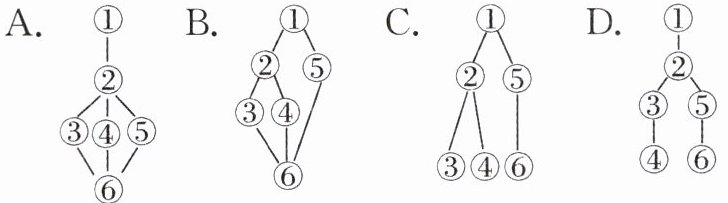
8. Which of the following shows the structure of this passage?
答案:5 - 8 BDCB
【语篇解读】本文是一篇说明文。文章主要讲述了无人机技术如何从莱特兄弟的航空开端发展至今,并广泛应用于低空经济、农业等领域,同时探讨了安全规则与技术创新的平衡问题。
5. B 解析:写作手法题。根据“In 1903, the Wright brothers' historic flight opened the door to human aviation...”可推知,作者通过描述莱特兄弟的历史性飞行事件引入主题。故选 B。
6. D 解析:推理判断题。根据“rules must be developed to help use them without risks”可推知,制订合理的规则是无人机发挥积极作用的关键。故选 D。
7. C 解析:词义猜测题。根据“They show how creation can shorten the gap between old and new, city and country.”可知,无人机技术缩小了新旧、城乡之间的差距,属于抽象差异,结合选项可知,选项 C“文化差异往往使与外国人交谈变得困难。”符合。故选 C。
8. B 解析:篇章结构题。通读全文可知,文章第一段引出主题;第二段介绍低空经济的概念,说明其顺利融入城市和乡村生活;第三段和第四段对第二段进行举例说明;第五段介绍分析安全与隐私等问题;最后总结并指出无人机技术的未来趋势。故选 B。
【语篇解读】本文是一篇说明文。文章主要讲述了无人机技术如何从莱特兄弟的航空开端发展至今,并广泛应用于低空经济、农业等领域,同时探讨了安全规则与技术创新的平衡问题。
5. B 解析:写作手法题。根据“In 1903, the Wright brothers' historic flight opened the door to human aviation...”可推知,作者通过描述莱特兄弟的历史性飞行事件引入主题。故选 B。
6. D 解析:推理判断题。根据“rules must be developed to help use them without risks”可推知,制订合理的规则是无人机发挥积极作用的关键。故选 D。
7. C 解析:词义猜测题。根据“They show how creation can shorten the gap between old and new, city and country.”可知,无人机技术缩小了新旧、城乡之间的差距,属于抽象差异,结合选项可知,选项 C“文化差异往往使与外国人交谈变得困难。”符合。故选 C。
8. B 解析:篇章结构题。通读全文可知,文章第一段引出主题;第二段介绍低空经济的概念,说明其顺利融入城市和乡村生活;第三段和第四段对第二段进行举例说明;第五段介绍分析安全与隐私等问题;最后总结并指出无人机技术的未来趋势。故选 B。
解析:
【分析】
1. 第5题:判断作者开篇方式,需聚焦文章首段内容,定位开篇关键语句,分析其引入主题的方式,明确写作手法类题目的核心解题思路是从开篇信息找引入逻辑。
2. 第6题:推理判断题需依托原文内容,不能主观臆断,要通过文中关于无人机使用规则的表述进行合理推导,找到符合文意的结论。
3. 第7题:词义猜测题要结合上下文语境理解目标词汇的含义,文中“gap”指抽象的差异,需对比选项中词汇的具体用法,筛选出含义匹配的选项。
4. 第8题:篇章结构题需梳理各段落逻辑关系,先概括每段核心内容,划分总起、分述、举例、总结的层次,再匹配选项中的结构图示。
【解析】
5. 写作手法题。根据文章首句“In 1903, the Wright brothers' historic flight opened the door to human aviation...”可知,作者通过讲述莱特兄弟的历史性飞行这一历史事件引入文章主题,故选B。
6. 推理判断题。根据文章第五段“rules must be developed to help use them without risks”可推知,制定合理的规则是让无人机安全、有效发挥作用的关键,故选D。
7. 词义猜测题。根据文中“They show how creation can shorten the gap between old and new, city and country.”可知,此处“gap”指新旧、城乡之间抽象的差异。选项C中“culture gap”(文化差异)属于抽象差异,与文中含义一致;A的“gap year”是间隔年,B、D的“gap”指具体的缝隙、空隙,均不符合,故选C。
8. 篇章结构题。梳理文章段落:①段引出无人机主题;②段介绍无人机属于低空经济,可融入城乡生活;③④段是②段的举例,分别介绍无人机在景区和农业的应用;⑤段阐述无人机带来的安全、规则等问题;⑥段总结全文,点明无人机技术的意义与未来趋势。对应选项B的结构:①为总起,②和⑤为两个分述方向,②下分③④两个例子,最后③④、⑤共同指向⑥总结,故选B。
【答案】
5-8 BDCB
【知识点】
阅读理解题型技巧、词义猜测、篇章结构分析
【点评】
本文是一篇说明文,围绕无人机技术展开,介绍了其在低空经济、农业等领域的应用价值,同时探讨了技术应用带来的相关问题。题目涵盖多种阅读理解常考题型,全面考查学生对文章细节、逻辑及词义的理解能力。
【难度系数】
0.6
1. 第5题:判断作者开篇方式,需聚焦文章首段内容,定位开篇关键语句,分析其引入主题的方式,明确写作手法类题目的核心解题思路是从开篇信息找引入逻辑。
2. 第6题:推理判断题需依托原文内容,不能主观臆断,要通过文中关于无人机使用规则的表述进行合理推导,找到符合文意的结论。
3. 第7题:词义猜测题要结合上下文语境理解目标词汇的含义,文中“gap”指抽象的差异,需对比选项中词汇的具体用法,筛选出含义匹配的选项。
4. 第8题:篇章结构题需梳理各段落逻辑关系,先概括每段核心内容,划分总起、分述、举例、总结的层次,再匹配选项中的结构图示。
【解析】
5. 写作手法题。根据文章首句“In 1903, the Wright brothers' historic flight opened the door to human aviation...”可知,作者通过讲述莱特兄弟的历史性飞行这一历史事件引入文章主题,故选B。
6. 推理判断题。根据文章第五段“rules must be developed to help use them without risks”可推知,制定合理的规则是让无人机安全、有效发挥作用的关键,故选D。
7. 词义猜测题。根据文中“They show how creation can shorten the gap between old and new, city and country.”可知,此处“gap”指新旧、城乡之间抽象的差异。选项C中“culture gap”(文化差异)属于抽象差异,与文中含义一致;A的“gap year”是间隔年,B、D的“gap”指具体的缝隙、空隙,均不符合,故选C。
8. 篇章结构题。梳理文章段落:①段引出无人机主题;②段介绍无人机属于低空经济,可融入城乡生活;③④段是②段的举例,分别介绍无人机在景区和农业的应用;⑤段阐述无人机带来的安全、规则等问题;⑥段总结全文,点明无人机技术的意义与未来趋势。对应选项B的结构:①为总起,②和⑤为两个分述方向,②下分③④两个例子,最后③④、⑤共同指向⑥总结,故选B。
【答案】
5-8 BDCB
【知识点】
阅读理解题型技巧、词义猜测、篇章结构分析
【点评】
本文是一篇说明文,围绕无人机技术展开,介绍了其在低空经济、农业等领域的应用价值,同时探讨了技术应用带来的相关问题。题目涵盖多种阅读理解常考题型,全面考查学生对文章细节、逻辑及词义的理解能力。
【难度系数】
0.6