十一、[新素材]阅读Baby Elephant的旅行日记,完成任务。(共11分)
A baby elephant's travel diary(旅行日记)
Hello, everyone. I'm a baby elephant. But I'm strong and big. I'm having a long trip with my family now. I don't know why my family left(离开) our home in the forest. Maybe my family want to see the world. It's so far. We have travelled more than 500 km so far. During(在……期间) this trip, people help us a lot. Every day, people give us much water and our favourite food, such as bananas and pineapples. If they meet us, they will stop and help us cross the road. They are so kind. I'm tired but happy.
任务一:[新考法]根据旅行日记内容,给下列图片排序。(共5分)

(
任务二:根据旅行日记内容,选择正确的答案。(每小题3分,共6分)
(
A. People play games with them. B. People give them something to eat. C. People see the world with them together.
(
A. It's tired but happy. B. It's tired and sad. C. It's small and weak.
A baby elephant's travel diary(旅行日记)
Hello, everyone. I'm a baby elephant. But I'm strong and big. I'm having a long trip with my family now. I don't know why my family left(离开) our home in the forest. Maybe my family want to see the world. It's so far. We have travelled more than 500 km so far. During(在……期间) this trip, people help us a lot. Every day, people give us much water and our favourite food, such as bananas and pineapples. If they meet us, they will stop and help us cross the road. They are so kind. I'm tired but happy.
任务一:[新考法]根据旅行日记内容,给下列图片排序。(共5分)
(
2
) (3
) (5
) (4
) (1
)任务二:根据旅行日记内容,选择正确的答案。(每小题3分,共6分)
(
B
) 1. How do people help the elephants?A. People play games with them. B. People give them something to eat. C. People see the world with them together.
(
A
) 2. How is the baby elephant now?A. It's tired but happy. B. It's tired and sad. C. It's small and weak.
答案:任务一:2 3 5 4 1
任务二:1. B 解析:由“Every day, people give us much water and our favourite food, such as bananas and pineapples.”可知,人们会喂食大象。
2. A
任务二:1. B 解析:由“Every day, people give us much water and our favourite food, such as bananas and pineapples.”可知,人们会喂食大象。
2. A
解析:
【分析】
任务一:解题时需结合日记中“人们帮助大象过马路”的描述,梳理大象过马路的先后逻辑:先呈现大象群来到路口的状态,接着是人们上前协助,然后大象开始通过斑马线,之后大象逐渐走完马路,最后呈现小象在前方的画面,按照这个过程对图片排序。
任务二:需要从旅行日记中精准提取关键信息来判断选项。第1题要定位到人们帮助大象的具体行为描述;第2题要找到描述小象当前状态的句子。
【解析】
任务一:根据大象过马路的先后过程,对图片排序如下:
1. 第二张图:大象群在路边,人们开始上前协助,是过马路的初始状态,排第1位;
2. 第四张图:人们在路边引导大象,大象逐步开始过马路,排第2位;
3. 第五张图:小象走在前方,呈现过马路的标志性画面,排第3位;
4. 第三张图:大象基本过完马路,人们在旁,排第4位;
5. 第一张图:大象群完成过马路,排第5位。
最终排序为2 3 5 4 1。
任务二:
1. 第1题:从日记中“Every day, people give us much water and our favourite food, such as bananas and pineapples.”可知,人们会给大象提供食物和水,对应选项B,故选B。
2. 第2题:从日记最后一句“I'm tired but happy.”可知,小象现在的状态是疲惫但开心,对应选项A,故选A。
【答案】
任务一:2 3 5 4 1
任务二:1. B 2. A
【知识点】
1. 图文逻辑排序
2. 文本信息提取
【点评】
本题以大象旅行日记为素材,既考查了学生对图文顺序的逻辑梳理能力,又考查了从文本中提取关键信息的阅读理解能力,场景贴近生活,能有效锻炼学生的综合思维能力。
【难度系数】
0.7
任务一:解题时需结合日记中“人们帮助大象过马路”的描述,梳理大象过马路的先后逻辑:先呈现大象群来到路口的状态,接着是人们上前协助,然后大象开始通过斑马线,之后大象逐渐走完马路,最后呈现小象在前方的画面,按照这个过程对图片排序。
任务二:需要从旅行日记中精准提取关键信息来判断选项。第1题要定位到人们帮助大象的具体行为描述;第2题要找到描述小象当前状态的句子。
【解析】
任务一:根据大象过马路的先后过程,对图片排序如下:
1. 第二张图:大象群在路边,人们开始上前协助,是过马路的初始状态,排第1位;
2. 第四张图:人们在路边引导大象,大象逐步开始过马路,排第2位;
3. 第五张图:小象走在前方,呈现过马路的标志性画面,排第3位;
4. 第三张图:大象基本过完马路,人们在旁,排第4位;
5. 第一张图:大象群完成过马路,排第5位。
最终排序为2 3 5 4 1。
任务二:
1. 第1题:从日记中“Every day, people give us much water and our favourite food, such as bananas and pineapples.”可知,人们会给大象提供食物和水,对应选项B,故选B。
2. 第2题:从日记最后一句“I'm tired but happy.”可知,小象现在的状态是疲惫但开心,对应选项A,故选A。
【答案】
任务一:2 3 5 4 1
任务二:1. B 2. A
【知识点】
1. 图文逻辑排序
2. 文本信息提取
【点评】
本题以大象旅行日记为素材,既考查了学生对图文顺序的逻辑梳理能力,又考查了从文本中提取关键信息的阅读理解能力,场景贴近生活,能有效锻炼学生的综合思维能力。
【难度系数】
0.7
十二、看图,补全童谣。(共10分)
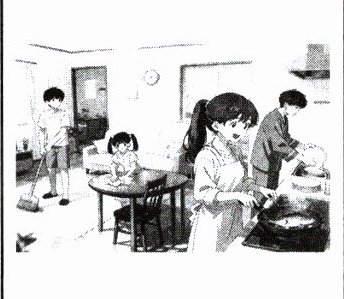
Doing chores
We, we, we are doing chores at home.
Mum, Mum, Mum is
Doing chores
We, we, we are doing chores at home.
Mum, Mum, Mum is
答案:One possible version:
Doing chores
We, we, we are doing chores at home.
Mum, Mum, Mum is cooking fish.
Dad, Dad, Dad is washing the dishes.
Brother, Brother, Brother is sweeping the floor.
I, I, I am cleaning the table.
We are all busy but happy.
Doing chores
We, we, we are doing chores at home.
Mum, Mum, Mum is cooking fish.
Dad, Dad, Dad is washing the dishes.
Brother, Brother, Brother is sweeping the floor.
I, I, I am cleaning the table.
We are all busy but happy.
解析:
【分析】
首先我们需要观察图片里每个家庭成员正在做的家务:妈妈在煎鱼,爸爸在洗碗,哥哥在扫地,小女孩在擦桌子。然后要仿照童谣给出的开头句式“X, X, X is doing sth.”来补全内容,最后可以加上一句总结性的话语,让童谣完整通顺。
【解析】
1. 观察图片:妈妈在厨房煎鱼,对应表达“cooking fish”,按照句式写成“Mum, Mum, Mum is cooking fish.”
2. 爸爸在洗碗,对应表达“washing the dishes”,写成“Dad, Dad, Dad is washing the dishes.”
3. 哥哥在扫地,对应表达“sweeping the floor”,写成“Brother, Brother, Brother is sweeping the floor.”
4. 小女孩在擦桌子,对应表达“cleaning the table”,写成“I, I, I am cleaning the table.”
5. 最后添加总结句“We are all busy but happy.”使童谣内容更完整。
【答案】
One possible version:
Doing chores
We, we, we are doing chores at home.
Mum, Mum, Mum is cooking fish.
Dad, Dad, Dad is washing the dishes.
Brother, Brother, Brother is sweeping the floor.
I, I, I am cleaning the table.
We are all busy but happy.
【知识点】
现在进行时运用,英语看图写话,家务类词汇
【点评】
本题结合生活场景,考察学生的图片观察能力与英语现在进行时的运用能力,要求学生能准确识别家务动作并用地道的英语表达,贴近日常,有助于提升学生的英语实际运用能力。
【难度系数】
0.7
首先我们需要观察图片里每个家庭成员正在做的家务:妈妈在煎鱼,爸爸在洗碗,哥哥在扫地,小女孩在擦桌子。然后要仿照童谣给出的开头句式“X, X, X is doing sth.”来补全内容,最后可以加上一句总结性的话语,让童谣完整通顺。
【解析】
1. 观察图片:妈妈在厨房煎鱼,对应表达“cooking fish”,按照句式写成“Mum, Mum, Mum is cooking fish.”
2. 爸爸在洗碗,对应表达“washing the dishes”,写成“Dad, Dad, Dad is washing the dishes.”
3. 哥哥在扫地,对应表达“sweeping the floor”,写成“Brother, Brother, Brother is sweeping the floor.”
4. 小女孩在擦桌子,对应表达“cleaning the table”,写成“I, I, I am cleaning the table.”
5. 最后添加总结句“We are all busy but happy.”使童谣内容更完整。
【答案】
One possible version:
Doing chores
We, we, we are doing chores at home.
Mum, Mum, Mum is cooking fish.
Dad, Dad, Dad is washing the dishes.
Brother, Brother, Brother is sweeping the floor.
I, I, I am cleaning the table.
We are all busy but happy.
【知识点】
现在进行时运用,英语看图写话,家务类词汇
【点评】
本题结合生活场景,考察学生的图片观察能力与英语现在进行时的运用能力,要求学生能准确识别家务动作并用地道的英语表达,贴近日常,有助于提升学生的英语实际运用能力。
【难度系数】
0.7