三、阅读理解
A
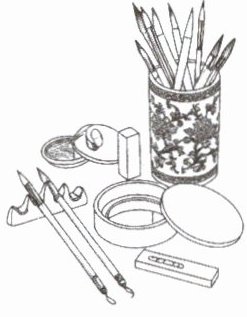
Chinese calligraphy, or shufa, is a way of writing Chinese characters(文字)using special brushes made of animal hair. The tips of these brushes are shaped like a pen's point.
To make ink, water is put on an inkstone, and an inkstick is ground in circles on it. The inksticks are often made from pine(松木)or oil, and some have pretty designs. When the ink is ready, the brush is dipped(浸)in it and used to write on a type of rice paper called Xuan paper. This paper is good for keeping the writing for a long time.
The inkstone, inkstick, brush, and Xuan paper are known as the "Four Treasures of the Study". These tools are also used for a painting type called ink wash painting.
Ink wash paintings are mostly black, gray, and white, but they're not boring. They focus on the spirit of the thing being painted, not just how it looks. The brushwork is free and shows the painter's feelings. Landscape(风景)ink wash paintings are like dreams of real places, showing nature's beauty and history.
In ancient China, educated people were able to read and write, and also were good at calligraphy and painting. Both need careful brush control and lots of practice. When the artwork is done, it's often put on a scroll(卷轴)and given as a gift. Isn't that cool?
(
A. Shufa.
B. Xuan paper.
C. Inksticks.
D. Inkstones.
(
A. Plastic.
B. Animal hair.
C. Wood.
D. Paper.
(
A. To hold the inkstick.
B. To make ink.
C. To dry the brush.
D. To store the rice paper.
(
A. The looks of the thing being painted.
B. The bright colours used.
C. The spirit of the thing being painted.
D. The historical value of the painting.
(
A. The history of Chinese calligraphy.
B. Chinese calligraphy and ink wash painting tools.
C. The importance of education in ancient China.
D. The different styles of Chinese paintings.
A
Chinese calligraphy, or shufa, is a way of writing Chinese characters(文字)using special brushes made of animal hair. The tips of these brushes are shaped like a pen's point.
To make ink, water is put on an inkstone, and an inkstick is ground in circles on it. The inksticks are often made from pine(松木)or oil, and some have pretty designs. When the ink is ready, the brush is dipped(浸)in it and used to write on a type of rice paper called Xuan paper. This paper is good for keeping the writing for a long time.
The inkstone, inkstick, brush, and Xuan paper are known as the "Four Treasures of the Study". These tools are also used for a painting type called ink wash painting.
Ink wash paintings are mostly black, gray, and white, but they're not boring. They focus on the spirit of the thing being painted, not just how it looks. The brushwork is free and shows the painter's feelings. Landscape(风景)ink wash paintings are like dreams of real places, showing nature's beauty and history.
In ancient China, educated people were able to read and write, and also were good at calligraphy and painting. Both need careful brush control and lots of practice. When the artwork is done, it's often put on a scroll(卷轴)and given as a gift. Isn't that cool?
(
A
) 22. What is Chinese calligraphy also known as?A. Shufa.
B. Xuan paper.
C. Inksticks.
D. Inkstones.
(
B
) 23. What material are the special brushes for Chinese calligraphy made of?A. Plastic.
B. Animal hair.
C. Wood.
D. Paper.
(
B
) 24. What is the use of an inkstone in Chinese calligraphy?A. To hold the inkstick.
B. To make ink.
C. To dry the brush.
D. To store the rice paper.
(
C
) 25. What is the main focus of ink wash paintings?A. The looks of the thing being painted.
B. The bright colours used.
C. The spirit of the thing being painted.
D. The historical value of the painting.
(
B
) 26. What is the main idea of the passage?A. The history of Chinese calligraphy.
B. Chinese calligraphy and ink wash painting tools.
C. The importance of education in ancient China.
D. The different styles of Chinese paintings.
答案:22 - 26 ABBCB
解析:
【解析】
22. 根据文章第一段第一句“Chinese calligraphy, or shufa”,可知中国书法也被称为shufa,故选A。
23. 根据文章第一段第一句“using special brushes made of animal hair”,可知书法用的特殊毛笔是由动物毛制成的,故选B。
24. 根据文章第二段“To make ink, water is put on an inkstone, and an inkstick is ground in circles on it.”,可知砚台是用来制墨的,故选B。
25. 根据文章第四段“They focus on the spirit of the thing being painted, not just how it looks.”,可知水墨画注重所画事物的神韵,故选C。
26. 文章先介绍了中国书法的相关工具,又介绍了水墨画的特点等内容,整体围绕书法和水墨画的工具及相关知识展开,故选B。
【答案】
22-26 ABBCB
【知识点】
细节理解题、主旨大意题
【点评】
本文介绍了中国书法与水墨画的相关知识,考查学生对文章细节信息的提取能力以及对文章主旨的归纳能力,有助于学生了解中国传统文化。
【难度系数】
0.7
22. 根据文章第一段第一句“Chinese calligraphy, or shufa”,可知中国书法也被称为shufa,故选A。
23. 根据文章第一段第一句“using special brushes made of animal hair”,可知书法用的特殊毛笔是由动物毛制成的,故选B。
24. 根据文章第二段“To make ink, water is put on an inkstone, and an inkstick is ground in circles on it.”,可知砚台是用来制墨的,故选B。
25. 根据文章第四段“They focus on the spirit of the thing being painted, not just how it looks.”,可知水墨画注重所画事物的神韵,故选C。
26. 文章先介绍了中国书法的相关工具,又介绍了水墨画的特点等内容,整体围绕书法和水墨画的工具及相关知识展开,故选B。
【答案】
22-26 ABBCB
【知识点】
细节理解题、主旨大意题
【点评】
本文介绍了中国书法与水墨画的相关知识,考查学生对文章细节信息的提取能力以及对文章主旨的归纳能力,有助于学生了解中国传统文化。
【难度系数】
0.7